Coming across a reference to William Humphrey, I checked Wikipedia to see if he was the same writer whose memoir I read, and enjoyed, for a graduate course in literature of the Southwest. This is what I found:
“Humphrey attended Southern Methodist University and the University of Texas (perhaps at the Austin campus since his papers are archived in their library), but never graduated. He left Texas as soon as he could.”
“He left Texas as soon as he could.”
Well, we all have our days.
 The memoir’s title, Farther Off from Heaven, might be significant. I don’t remember anything about Humphrey’s childhood in the Piney Woods during the Depression that would have made him want to stay.
When started this post, all I intended to do was share that line about leaving Texas–it’s so sudden, so abrupt, such a seeming non-sequitur, yet rife with implication, open to all manner of inference, that it struck me as drop-dead funny.
Since I’m here, however, I’ll go a little further and make a couple of points about Humphrey as a writer, and about literature and popular taste and publishing.
First, Humphrey’s early years in Texas paid off: according to his NYT obituary, “… he retained the memory of his boyhood in Red River County as a most intense experience.”
“Humphrey wrote fiction that addressed the Southern past. He once asserted, “I am a destroyer of myths. My whole work has shown the danger and falseness of myths..[especially] the myth of the South” (“Notes on the Orestia,” 38; MS at Harry Ransom Humanities Research Center, University of Texas at Austin).”
Next, some critical commentary:
“His second novel, The Ordways, was reviewed by the ‘New York Times as “Funny, vivid and moving, this is a fine piece of work and a delight to read,” and was compared to the writings of William Faulkner and Mark Twain. His books received high praise when they were first published, even from fellow writers. He went on to publish a dozen more books.”
“To pick up Humphrey’s extraordinary new novel is to hold an embodiment of grief in your hands. The unrelenting anguish that suffuses this story [is] almost unbearable to behold. It is possible to get through it because the stark poetry of Humphrey’s work is enthralling.” (Newsweek)
“Minor, but interesting and admirable. It has been a long time since Humphrey has enjoyed a commercial success, but he has dedicated his life to his writing with a fidelity all too rare in a culture that encourages facile success and empty honor.” (Jonathan Yardley, writing in The Washington Post (issue of 5 July 1992)
“Funny, vivid, and moving.” “Stark poetry . . . enthralling.” “Fidelity all too rare.” “Compared to the writings of William Faulkner and Mark Twain.”
And now, the un-funny punch line:
“His published works, while still available in French translation, largely have been out of print until recently.”
Thank you, France, for keeping American literature alive.
Oh. Did you catch that other funny bit in the critical commentary?
“His books received high praise when they were first published, even from fellow writers.”
Well, fellow writers aren’t always generous with high praise. William Faulkner had some choice words not praising Ernest Hemingway; Hemingway responded with choice words of his own. Mary McCarthy had some extremely choice words about Lillian Hellman; Lillian Hellman held her tongue but sued for libel.
On the other hand, the writers I know are generous. They read, critique, advise, encourage, open their networks, spread the word.
Some admit to feeling a little envious at another’s success—I myself turn downright green—but they get over it and keep on helping.
And that’s the Truth.
************
While I’m promoting William Humphrey’s work, I’ll also promote my latest publication.
 Robert Lopresti picked my short story “Mine Eyes Dazzle” as The Best Mystery Story I Read This Week:
“As you probably know by now, I read a lot of short stories. I seldom take the time to reread one of them, but I did this one. . . . clever story.” (May 12, 2024)
Another generous writer spreading the word.
“Mine Eyes Dazzle” appears in the eclipse-themed anthology DARK OF THE DAY, edited by Kaye George. (Down and Out Books, April 1, 2024)
 I said, flippantly, that I’ve lost my algebra. (I wasn’t working problems when I found that out. It just came to me one day that I’ve lost it.) I then discovered he wrote that down. Never be flippant with doctors.
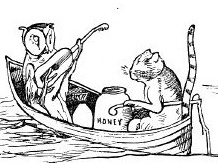 And that I can recite the first 20 lines of The Canterbury Tales in Middle English (learned in 1981) and “The Owl and the Pussycat” (learned in 1953 from hearing it so often).
 (When it comes to math, the more abstract, the better. I made A’s in arithmetic, but it wasn’t fun, figuring out the width of a piece of fabric you made by sewing together two other pieces, each 10 inches wide, with a seam requiring 2 inches on each side folded over. Except the book didn’t describe the allowance for the seam in such straightforward terms. It took four of us seventh-grade girls twenty minutes to figure that out, and one of us could sew. We kept forgetting the 4 inches. I don’t know how long it took the boys. You know it’s bad when you remember a problem from 1964.)
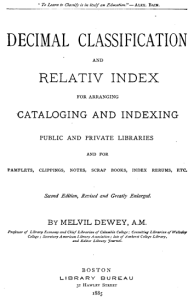 (To read my rendition of the Dewey decades, you’ll have to scroll down that page to “Dewey Marches On.” There’s some introductory stuff before it.)
 M. K. Waller