Friday Fictioneers: Thingies

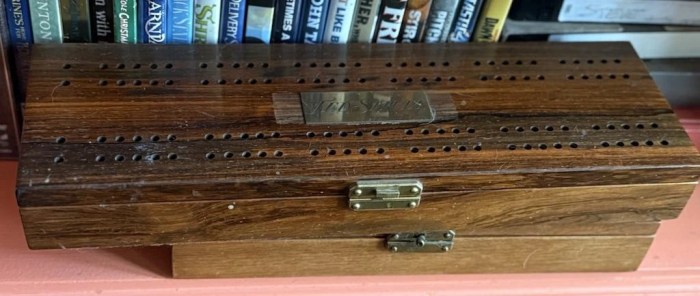
several wooden cribbage boards, stacked one on top of another
PHOTO PROMPT © Ted Strutz

Word count: 100


“What’s that?”

“What’s what?”

“That wooden thingie.”

“A flute case?”

“Flute cases don’t have holes.”

“Those look like holes you stick little thingies into.”

“What kind of thingies?”

“Little thingies. They’re called, like, widgets.”

“But what’s the wooden thingie for?”

“It looks like part of a game.”

“We need one of those books. Like a backwards dictionary. Where you look up a picture.”

“How do you look up a picture?”

“Well, there’s some kind of book where you can do that.”

“What’s it called?”

“Wait! I remember. The game.  My aunt plays it. It’s called ‘cabbage.’”

“We need a librarian.”

***

FRIDAY FICTIONEERS is a weekly challenge to write a 100-word story in response to a photo prompt. To read other Friday Fictioneers’ stories, click on the frog. To participate, find the rules and the photo prompt at Rochelle Wisoff-Fields’ blog.

 

In Flanders Fields

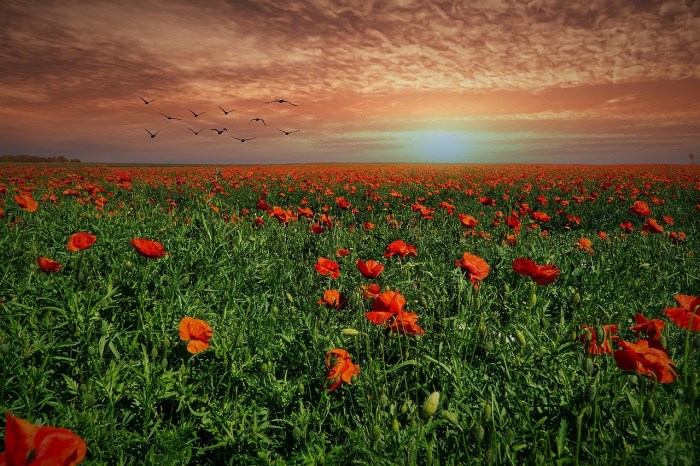
In Flanders fields the poppies blow
Between the crosses, row on row,
    That mark our place; and in the sky
    The larks, still bravely singing, fly
Scarce heard amid the guns below.
We are the Dead. Short days ago
We lived, felt dawn, saw sunset glow,
    Loved and were loved, and now we lie,
        In Flanders fields.
Take up our quarrel with the foe:
To you from failing hands we throw
    The torch; be yours to hold it high.
    If ye break faith with us who die
We shall not sleep, though poppies grow
        In Flanders fields.

***


The Story Behind the Poppies of Flanders Fields

John McCrae

Image by Benita Welter from Pixabay

“We cannot escape history.”

Fellow-citizens, we cannot escape history. We of this Congress and this administration, will be remembered in spite of ourselves. No personal significance, or insignificance, can spare one or another of us. The fiery trial through which we pass, will light us down, in honor or dishonor, to the latest generation.. . . . 

— Abraham Lincoln, Message to Congress, 1862


A Soft-looking, Middle-aged Woman


She is a soft-looking, middle-aged woman,
whose bust and stomach are always holding a get-together.

In the summer of 1982, while enrolled in a graduate seminar in contemporary women’s fiction, I happened across the above sentence. I was delighted. The description was so right. I didn’t have to memorize it. The image it evoked was vivid enough that the words, along with the author’s name, stayed with me.

Today I finally hunted it down: “The Pleading Woman,” in The Eatonville Anthology, by Zora Neale Hurston


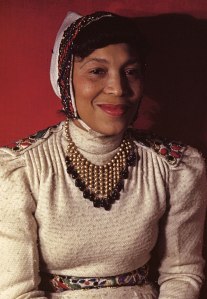
Zora Neale Hurston (January 7, 1891 – January 28, 1960) was an American writer, anthropologistfolklorist, and documentary filmmaker. She portrayed racial struggles in the early-20th-century American South and published research on Hoodoo and Caribbean Vodou.[3] The most popular of her four novels is Their Eyes Were Watching God, published in 1937. She also wrote more than 50 short stories, plays, an autobiography, ethnographies, and many essays.” — Wikipedia

Hurston’s unpublished works are still being released.

The Life of Herod the Great: A Novel came out in January 2025:

“A never before published novel from beloved author Zora Neale Hurston, revealing the historical Herod the Great—not the villain the Bible makes him out to be but a religious and philosophical man who lived a life of valor and vision.”


***

Image of Zora Neale Hurston by Carl van Vechten via Wikipedia