
“Recollected in Tranquillity”

Image of Blue plaque, 3 Kensington Court Gardens, Kensington, London, home from 1957 until his death in 1965

In  the movie Tom and Viv, about poet T. S. Eliot and his first wife, Vivien Haigh-Wood, Eliot’s character says that poetry is an “escape from emotion.”* When I heard that, a percentage of my brain defaulted to English 2310 (British Poetry from 1798. or something like that) and Wordsworth’s statement that poetry is the “spontaneous overflow of powerful feelings: it takes its origin from emotion recollected in tranquillity.”

Dr, Thomas Brasher said the key to Wordsworth’s phrase is “recollected in tranquillity.”** Poetry written in the grip of emotion usually turns out to be poetry which, reread the next day, must be revised and edited before it is “good.” Wordsworth composed much of his poetry while taking long walks and later dictated it to his to his sister Dorothy.
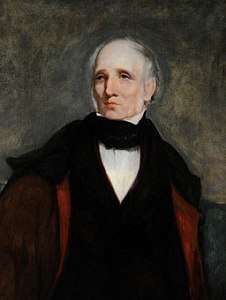
William Wordsworth

Everything I write should be recollected in tranquility. That is, I should wait at least twenty-four hours and edit before publishing.

Fiction I edit like crazy for days and days. In one case, for years.

But blog posts—no. I edit like crazy as I write, but that really isn’t adequate.

As a consequence, when I read old posts, I’m often embarrassed.

In twenty-four hours, this one may embarrass me. But I’ll risk it. When it comes to blog posts, my vanity slips a little.

*

*Eliot’s full statement: “Poetry is not a turning loose of emotion, but an escape from emotion; it is not the expression of personality, but an escape from personality.” Which echoes what Wordsworth wrote.

** I remember so much Dr. Brasher said. If you read the work he assigned and listened in class, you remembered. No lectures, just close textual analysis. I took three courses he taught. One of the two best, and most interesting, professors I ever had.

Dr. Brasher also said Eliot was “an intellectual snob,” but I doubt that I will find that on the Internet.

***

Image of Wordsworth by Anonymous via Wikipedia

Image of Blue plaque, 3 Kensington Court Gardens, Kensington, London, home from 1957 until his death in 1965 by Edwardx, licensed under CC SA-BY 4.0. Via Wikipedia

I include no photo of Eliot because those published on Wikipedia their owners assert they are under copyright and have filed claims against Wikipedia.

“The Year Is Going; Let Him Go”

For seventeen years after the death of his best friend, Arthur Henry Hallam, at twenty-two, Alfred Tennyson worked on the elegy In Memoriam. In effect, he wrote through his grief.

One of the last cantos in the book, “Ring Out, Wild Bells,” signifies the end of grief, the casting aside of the heartaches and pain of the old year, the return of faith, and the hope of a new and better way of life. Legend has it that Tennyson was inspired by hearing church bells on New Year’s Eve.

“It is an accepted English custom to ring English Full circle bells to ring out the old year and ring in the new year over midnight on New Year’s Eve. Sometimes the bells are rung half-muffled for the death of the old year, then the muffles are removed to ring without muffling to mark the birth of the new year.” (Wikipedia)

The poem was published in 1850. Read it slowly. Words composed 170 years ago are as alive as if Tennyson had written them with the upcoming New Year’s Eve in mind.

I need to hear them now. Maybe you do, too.

#

Ring out, wild bells, to the wild sky,
The flying cloud, the frosty light:
The year is dying in the night;
Ring out, wild bells, and let him die.
Ring out the old, ring in the new,
Ring, happy bells, across the snow:
The year is going, let him go;
Ring out the false, ring in the true.
Ring out the grief that saps the mind
For those that here we see no more;
Ring out the feud of rich and poor,
Ring in redress to all mankind.
Ring out a slowly dying cause,
And ancient forms of party strife;
Ring in the nobler modes of life,
With sweeter manners, purer laws.
Ring out the want, the care, the sin,
The faithless coldness of the times;
Ring out, ring out my mournful rhymes
But ring the fuller minstrel in.
Ring out false pride in place and blood,
The civic slander and the spite;
Ring in the love of truth and right,
Ring in the common love of good.
Ring out old shapes of foul disease;
Ring out the narrowing lust of gold;
Ring out the thousand wars of old,
Ring in the thousand years of peace.
Ring in the valiant man and free,
The larger heart, the kindlier hand;
Ring out the darkness of the land,
Ring in the Christ that is to be.
#

The musical setting by Charles Gounod omits two of the poem’s stanzas.

Texas Spring: Loveliest of Flowers


Loveliest of trees, the cherry now
Is hung with bloom along the bough,
And stands about the woodland ride
Wearing white for Eastertide.

Now, of my threescore years and ten,
Twenty will not come again,
And take from seventy springs a score,
It only leaves me fifty more.

And since to look at things in bloom
Fifty springs are little room,
About the woodlands I will go
To see the cherry hung with snow.

~ A. E. Housman, “Loveliest of Trees”

Image by gmoyer via pixabay.com