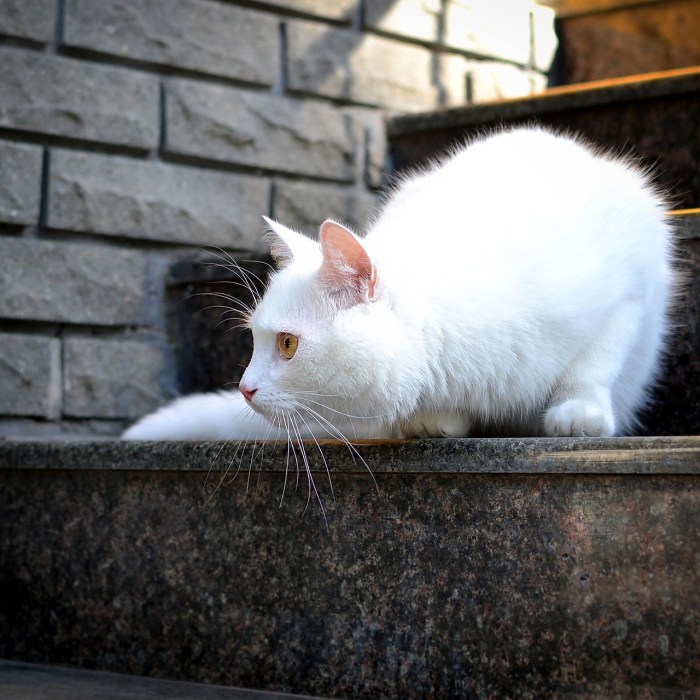
Pangur Ban: A 9th-Century Irish Monk and His Cat

I and Pangur Bán, my cat,
‘Tis a like task we are at;
Hunting mice is his delight,
Hunting words I sit all night.

Better far than praise of men
‘Tis to sit with book and pen;
Pangur bears me no ill-will,
He, too, plies his simple skill.

‘Tis a merry thing to see
At our tasks how glad are we,
When at home we sit and find
Entertainment to our mind.

Oftentimes a mouse will stray
In the hero Pangur’s way;
Oftentimes my keen thought set
Takes a meaning in its net.

‘Gainst the wall he sets his eye
Full and fierce and sharp and sly;
‘Gainst the wall of knowledge I
All my little wisdom try.

When a mouse darts from its den,
O! how glad is Pangur then;
O! what gladness do I prove
When I solve the doubts I love.

So in peace our task we ply,
Pangur Bán, my cat, and I;
In our arts we find our bliss,
I have mine, and he has his.

Practice every day has made
Pangur perfect in his trade;
I get wisdom day and night,
Turning darkness into light.

***

“‘Pangur Bán is an Old Irish poem written in about the 9th century at or near Reichenau Abbey, in what is now Germany, by an Irish monk about his cat. Pangur Bán, ‘White Pangur’, is the cat’s name, Pangur possibly meaning ‘a fuller’. Although the poem is anonymous, it bears similarities to the poetry of Sedulius Scottus, prompting speculation that he is the author. In eight verses of four lines each, the author compares the cat’s happy hunting with his own scholarly pursuits.

“The poem is preserved in the Reichenau Primer (Stift St. Paul Cod. 86b/1 fol 1v) and now kept in St. Paul’s Abbey in the Lavanttal. . . .

“In 2016, Jo Ellen Bogart and Sydney Smith published a picture book based on the poem called The White Cat and the Monk.”

English translation by Robin Flower (1912, The Poem Book of the Gaef)

—From Wikipedia

Read the original Old Irish version at Wikipedia.

Hear The White Cat and the Monk read aloud on Youtube.

National Poetry Month Is Come–But Not Gone

“The only thing we have to fear is fear itself.”

The ON / ly THING / we HAVE / to FEAR / is FEAR / it SELF

A perfect iambic hexameter line.

If Shakespeare had written it in blank verse:

The only thing we have to fear is fear
Itself.

The rhythm most natural to the English language.

Repetition. Alliteration.

Short, common words.

Musical.

Easily remembered.

Poetry.

“The only thing we have to fear is fear itself.”

                                – Franklin D. Roosevelt, “First Inaugural Address”

Happy National Poetry Month!

***


Image of fear by Janusz Walczak from Pixabay

Image of courage by Danny See Chuan Seng from Pixabay

“Recollected in Tranquillity”

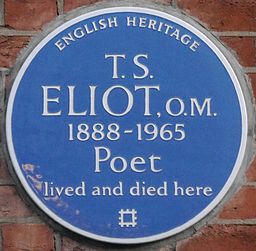
Image of Blue plaque, 3 Kensington Court Gardens, Kensington, London, home from 1957 until his death in 1965

In  the movie Tom and Viv, about poet T. S. Eliot and his first wife, Vivien Haigh-Wood, Eliot’s character says that poetry is an “escape from emotion.”* When I heard that, a percentage of my brain defaulted to English 2310 (British Poetry from 1798. or something like that) and Wordsworth’s statement that poetry is the “spontaneous overflow of powerful feelings: it takes its origin from emotion recollected in tranquillity.”

Dr, Thomas Brasher said the key to Wordsworth’s phrase is “recollected in tranquillity.”** Poetry written in the grip of emotion usually turns out to be poetry which, reread the next day, must be revised and edited before it is “good.” Wordsworth composed much of his poetry while taking long walks and later dictated it to his to his sister Dorothy.

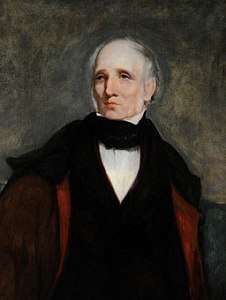
William Wordsworth

Everything I write should be recollected in tranquility. That is, I should wait at least twenty-four hours and edit before publishing.

Fiction I edit like crazy for days and days. In one case, for years.

But blog posts—no. I edit like crazy as I write, but that really isn’t adequate.

As a consequence, when I read old posts, I’m often embarrassed.

In twenty-four hours, this one may embarrass me. But I’ll risk it. When it comes to blog posts, my vanity slips a little.

*

*Eliot’s full statement: “Poetry is not a turning loose of emotion, but an escape from emotion; it is not the expression of personality, but an escape from personality.” Which echoes what Wordsworth wrote.

** I remember so much Dr. Brasher said. If you read the work he assigned and listened in class, you remembered. No lectures, just close textual analysis. I took three courses he taught. One of the two best, and most interesting, professors I ever had.

Dr. Brasher also said Eliot was “an intellectual snob,” but I doubt that I will find that on the Internet.

***

Image of Wordsworth by Anonymous via Wikipedia

Image of Blue plaque, 3 Kensington Court Gardens, Kensington, London, home from 1957 until his death in 1965 by Edwardx, licensed under CC SA-BY 4.0. Via Wikipedia

I include no photo of Eliot because those published on Wikipedia their owners assert they are under copyright and have filed claims against Wikipedia.

Fifty Springs Are Little Room

Loveliest of Trees

Loveliest of trees, the cherry now
Is hung with bloom along the bough,
And stands about the woodland ride
Wearing white for Eastertide.

Now, of my threescore years and ten,
Twenty will not come again,
And take from seventy springs a score,
It only leaves me fifty more.

And since to look at things in bloom
Fifty springs are little room,
About the woodlands I will go
To see the cherry hung with snow.


I post this poem every spring as a reminder that life is brief, and that wildflowers blanket Texas fields and roadsides for only a few weeks each year. Fifty springs—or fewer—are little room in which to look at them. Seize the day. Go out and see the bluebonnets.

*

“Loveliest of Trees” by A. E. Housman (1859-1936)

Image of bluebonnets by lisadh42 via Pixabay

Pyrenees…Special Breeze…Do You Know This Poem?

In the original post, I asked whether anyone could identify the poem beginning

“Oh, somewhere there are people who
Have nothing in the world to do
But sit among the Pyrenees . . .”

Author N, M, Cedeno provided the answer: “Midsummer Melancholy,” by Margaret Fishback (1900-1985).

She also provided a link to the entire (?) poem on The Berkshire Edge

***

I heard this poem recited on Anyone for Tennyson?, a series that ran on PBS from 1976-78. I haven’t been able to find it online.

If you know the author and/or a book in which the poem appears, please leave the name/title in a comment.

Such a Kerfuffle O’er a Runcible Spoon

[I don’t know why several paragraphs are jammed together.
I double-spaced. I triple-spaced.
But the paragraphs insist on bunching up
in an unattractive and almost unreadable lump.
My apologies.
I tried.]

Today I answer the question—Exactly what is a runcible spoon?

You no doubt remember that Edward Lear’s Owl and Pussy-Cat use one at their wedding breakfast:

“They dined on mince, and slices of quince,
   Which they ate with a runcible spoon;” . . . 
Since the term isn’t in general usage, many readers don’t understand it but accept it as a Lear-ism and ask no further.
Those who do go further and consult Merriam-Webster find it is “a sharp-edged fork with three broad curved prongs,”—but MW cites no sources, a no-no in scholarly circles. Some sources claim it’s a spork.
Wikipedia goes on and on about runcible spoons but offers no definitive answer. It includes a long list of authors, screenwriters, composers, and others who’ve used the word runcible. These two jump out at me:
  • Paul McCartney‘s 2001 album Driving Rain includes the track “Heather” which features the lyrics: “And I will dance to a runcible tune / With the queen of my heart”. McCartney has explained the connection to “The Owl and the Pussycat” in various interviews since its release.
  • In Lemony Snicket‘s 2006 The End, an island cult eats using only runcible spoons
Such a kerfuffle over something that should be as plain as the nose on the Pussy-Cat’s face.
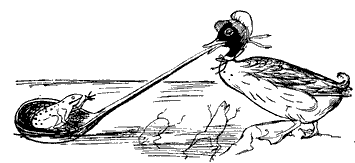
Lear himself defines the term—not in O&P, but in a lesser-known work. In Twenty-Six Nonsense Rhymes and Pictures, he writes of
The Dolumphious Duck,
Who caught Spotted Frogs for her dinner
With a runcible spoon
and provides a picture:


Tricia Christensen, writing in LanguageHumanities, notes that

A Latin word runcare means to weed out. This word could explain the Dolumphious Duck’s fishing process with a runcible spoon. The duck is really weeding out the frogs from the water.

That should settle the question. But it doesn’t.

For one thing, it seems to me that eating mince and slices of quince with a runcible spoon would be difficult if not downright messy.

And Christensen notes that Lear also applies the adjective to a goose, a hat, and a wall. Wikipedia points to a runcible cat and a Rural Runcible Raven. None of the aforementioned, at least as we understand them, resembles a ladle.

“Despite the nebulous meaning of the words runcible spoon,” she says, “they trip off the tongue with delight and account for their many uses by other authors.”

So—what is a runcible spoon? It’s nonsense.

What else would it be? It comes from the brain of Edward Lear.

###

Except, to muddy the water:

Wikipedia dates publication of “The Owl and the Pussy-Cat” at 1870.

Here’s a photo of a George III Sterling runcible spoon by Eley & Fearn, L0ndon, 1817

George III Sterling Silver runcible spoon – by Eley & Fearn, London. TonyGosling, CC BY-SA 4.0, via Wikimedia Commons


Maybe the item wasn’t originally called a runcible spoon. Maybe the adjective was applied post-1870. I don’t know.

More nonsense.

Emily Dickinson: Dear March – Come In

Dear March — Come in —
How glad I am —
I hoped for you before —

Put down your Hat —
You must have walked —
How out of Breath you are —
Dear March, Come right up the stairs with me —
I have so much to tell —

I got your Letter, and the Birds —
The Maples never knew that you were coming — till I called
I declare — how Red their Faces grew —
But March, forgive me — and
All those Hills you left for me to Hue —
There was no Purple suitable —
You took it all with you —

Who knocks? That April.
Lock the Door —
I will not be pursued —
He stayed away a Year to call
When I am occupied —
But trifles look so trivial
As soon as you have come

That Blame is just as dear as Praise
And Praise as mere as Blame —

~ Emily Dickinson

***

I post this poem every March.

***

Image by Alexandra_Koch licensed under CC0 via pixabay.com

The Road to Bethlehem

THE ROAD TO BETHLEHEM

If as Herod, we fill our lives with things and again things;
If we consider ourselves so important that we must fill
Every moment of our lives with action;
When will we have the time to make the long slow journey
Across the burning desert as did the Magi;
Or sit and watch the stars as did the shepherds;
Or to brood over the coming of the Child as did Mary?
For each one of us there is a desert to travel,
A star to discover,
And a being within ourselves to bring to life.

~ Author Unknown

Casper (name)

Journey of the Magi (1902) by James Tissot. Public domain. Via Wikipedia.

*

“The Road to Bethlehem” appears on other websites, where it’s attributed to Anonymous. If you know who wrote it, please share the name and, if possible, other documentation, in a comment, so I can give the poet credit for his creation and can search for copyright information. Until I know more, I will assume the poem is in the public domain. If it’s under copyright, I’ll delete it.

*

Find “The Road to Bethlehem” on these pages:

http://macrina-underthesycamoretree.blogspot.com/2009/12/desert-star-emerging-life.html
http://blueeyedennis-siempre.blogspot.com/2010/11/advent-prayer-and-poems-i.html

The Road to Bethlehem

THE ROAD TO BETHLEHEM

If as Herod, we fill our lives with things and again things;
If we consider ourselves so important that we must fill
Every moment of our lives with action;
When will we have the time to make the long slow journey
Across the burning desert as did the Magi;
Or sit and watch the stars as did the shepherds;
Or to brood over the coming of the Child as did Mary?
For each one of us there is a desert to travel,
A star to discover,
And a being within ourselves to bring to life.

~ Author Unknown

Casper (name)

Journey of the Magi (1902) by James Tissot. Public domain. Via Wikipedia.

*

“The Road to Bethlehem” appears on other websites, where it’s attributed to Anonymous. If you know who wrote it, please share the name and, if possible, other documentation, in a comment, so I can give the poet credit for his creation and can search for information about copyright. Until I know more, I will assume the poem is in the public domain. If it’s under copyright, I’ll delete it.

*

Find “The Road to Bethlehem” on these pages:

http://macrina-underthesycamoretree.blogspot.com/2009/12/desert-star-emerging-life.html
http://blueeyedennis-siempre.blogspot.com/2010/11/advent-prayer-and-poems-i.html

The Road to Bethlehem

THE ROAD TO BETHLEHEM

If as Herod, we fill our lives with things and again things;
If we consider ourselves so important that we must fill
Every moment of our lives with action;
When will we have the time to make the long slow journey
Across the burning desert as did the Magi;
Or sit and watch the stars as did the shepherds;
Or to brood over the coming of the Child as did Mary?
For each one of us there is a desert to travel,
A star to discover,
And a being within ourselves to bring to life.

~ Author Unknown

Casper (name)
Journey of the Magi (1902) by James Tissot. Public domain. Via Wikipedia.

*

“The Road to Bethlehem” appears on other websites, where it’s attributed to Anonymous. If you know who wrote it, please share the name and, if possible, other documentation, in a comment, so I can give the poet credit for his creation and can search for information about copyright. Until I know more, I will assume the poem is in the public domain. If it’s under copyright, I’ll delete.

*

Find “The Road to Bethlehem” on these pages:

http://macrina-underthesycamoretree.blogspot.com/2009/12/desert-star-emerging-life.html
http://blueeyedennis-siempre.blogspot.com/2010/11/advent-prayer-and-poems-i.html

What Happens

Harlem

What happens to a dream deferred?

Does it dry up
like a raisin in the sun?
Or fester like a sore—
And then run?
Does it stink like rotten meat?
Or crust and sugar over—
like a syrupy sweet?

Maybe it just sags
like a heavy load.

Or does it explode?

— Langston Hughes, 1951

***

https://upload.wikimedia.org/wikipedia/commons/f/fc/LangstonHughes.jpg
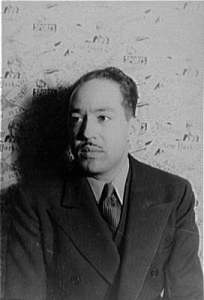
Langston Hughes, 1936, by Carl Van Vechten. Public domain.

#AtoZChallenge 2020: Q Is for Quotation and a Queen


From William Shakespeare’s Romeo and Juliet, Act I, scene iv


MERCUTIO: O, then I see Queen Mab hath been with you.
She is the fairies’ midwife, and she comes
In shape no bigger than an agate stone
On the forefinger of an alderman,
Drawn with a team of little atomies
Over men’s noses as they lie asleep;
Her wagon spokes made of long spinners’ legs,
The cover, of the wings of grasshoppers;
Her traces, of the smallest spider web;
Her collars, of the moonshine’s wat’ry beams;
Her whip, of cricket’s bone; the lash, of film;
Her wagoner, a small grey-coated gnat,
Not half so big as a round little worm
Pricked from the lazy finger of a maid;
Her chariot is an empty hazelnut,
Made by the joiner squirrel or old grub,
Time out o’ mind the fairies’ coachmakers.
And in this state she gallops night by night
Through lovers’ brains, and then they dream of love;
O’er courtiers’ knees, that dream on curtsies straight;
O’er lawyers’ fingers, who straight dream on fees;
O’er ladies’ lips, who straight on kisses dream,
Which oft the angry Mab with blisters plagues,
Because their breaths with sweetmeats tainted are.
Sometimes she gallops o’er a courtier’s nose,
And then dreams he of smelling out a suit;
And sometimes comes she with a tithe-pig’s tail
Tickling a parson’s nose as ‘a lies asleep,
Then dreams he of another benefice.
Sometimes she driveth o’er a soldier’s neck,
And then dreams he of cutting foreign throats,
Of breaches, ambuscadoes, Spanish blades,
Of healths five fathom deep; and then anon
Drums in his ear, at which he starts and wakes,
And being thus frighted, swears a prayer or two
And sleeps again. This is that very Mab
That plats the manes of horses in the night
And bakes the elflocks in foul sluttish hairs,
Which once untangled much misfortune bodes.
This is the hag, when maids lie on their backs,
That presses them and learns them first to bear,
Making them women of good carriage.
This is she!


#ATOZ Challenge: B Is for Bowser


In my A post I mentioned the mistake I made in signing up for the A to Z Challenge: I registered my blog as “Author/Writer (craft of writing, stories, memoir),” instead of “Other and Miscellaneous.”

It really doesn’t matter. I mean, there are mistakes, and there are mistakes.

For letter B, I’m writing about another of my mistakes. It’s more of a mistake. But I can’t go right to the heart of the matter. There’s backstory to be dealt with. If you’ll be patient for just a little while, I’ll get there.

Here goes.

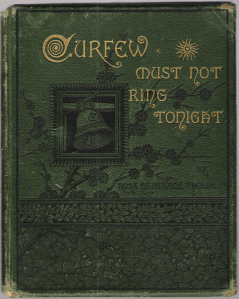
I planned, as much as I ever plan these posts, to write about a parody of the narrative poem “Curfew Must Not Ring Tonight,” written in 1867 by Rose Hartwick Thorpe, when she was sixteen years old.

Set in 17th century England, the poem tells the story of Bessie, a young woman whose lover, Basil Underwood, has been imprisoned by the Puritans and sentenced to die that night at the sound of the curfew bell. Oliver Cromwell is expected to arrive that night, but after the bell has rung. Bessie begs the sexton not to ring the bell; he says he’s never failed to ring curfew and that he won’t fail to ring it tonight. But Bessie is determined to save her lover. The next lines describe her heroic actions.
Wild her eyes and pale her features, stern and white her thoughtful brow,
As within her secret bosom, Bessie made a solemn vow.
She had listened while the judges read, without a tear or sigh,
‘At the ringing of the curfew, Basil Underwood must die.’
And her breath came fast and faster, and her eyes grew large and bright;
One low murmur, faintly spoken. ‘Curfew must not ring tonight!’

She with quick step bounded forward, sprang within the old church-door,
Left the old man coming slowly, paths he’d trod so oft before.
Not one moment paused the maiden, But with eye and cheek aglow,
Staggered up the gloomy tower, where the bell swung to and fro;
As she climbed the slimy ladder, on which fell no ray of light,
Upward still, her pale lips saying, ‘Curfew shall not ring tonight!’

She has reached the topmost ladder, o’er her hangs the great dark bell;
Awful is the gloom beneath her, like the pathway down to hell.
See! the ponderous tongue is swinging; ’tis the hour of curfew now,
And the sight has chilled her bosom, stopped her breath, and paled her brow.
Shall she let it ring? No, never! Her eyes flash with sudden light,
As she springs, and grasps it firmly: ‘Curfew shall not ring tonight!’

Out she swung – far out. The city seemed a speck of light below ―
There twixt heaven and earth suspended, as the bell swung to and fro.
And the sexton at the bell-rope, old and deaf, heard not the bell,
Sadly thought that twilight curfew rang young Basil’s funeral knell.
Still the maiden, clinging firmly, quivering lip and fair face white,
Stilled her frightened heart’s wild throbbing: ‘Curfew shall not ring tonight!’

It was o’er, the bell ceased swaying; and the maiden stepped once more
Firmly on the damp old ladder, where, for hundred years before,
Human foot had not been planted. The brave deed that she had done
Should be told long ages after. As the rays of setting sun
Light the sky with golden beauty, aged sires, with heads of white,
Tell the children why the curfew did not ring that one sad night.

When Cromwell arrives, she tells him her story, and, touched by her heroism, he lets Basil live. Basil emerges from the prison expecting to die but instead finds Bessie holding his pardon. And—

In his brave, strong arms he clasped her, kissed the face upturned and white,
Whispered, ‘Darling, you have saved me, curfew will not ring tonight.’

For years, “Curfew” was exceedingly popular: A favorite of Queen Victoria, it provided inspiration for a play and and for three silent movies. It was recited by one of the characters in Anne of Green Gables. It also serves as the basis for chamber music composed by Richard Cohn for the Music & Magic Lantern Slides project. View a performance on Youtube.

Now. I know I haven’t gotten to Bowser and Bleh yet, but the hour is late, and I am tired, so I’m off to bed.

In other words, B Will Not Be Writ Tonight.

Texas Spring: Loveliest of Flowers


Loveliest of trees, the cherry now
Is hung with bloom along the bough,
And stands about the woodland ride
Wearing white for Eastertide.

Now, of my threescore years and ten,
Twenty will not come again,
And take from seventy springs a score,
It only leaves me fifty more.

And since to look at things in bloom
Fifty springs are little room,
About the woodlands I will go
To see the cherry hung with snow.

~ A. E. Housman, “Loveliest of Trees”

Image by gmoyer via pixabay.com

Lines That Shut Your Eyes


Twelve-year-old Emma Graham and elderly Mr. Root sit outside the grocery store in a little town in the mountains of Maryland, discussing poetry. From Martha Grimes’ Fadeaway Girl:

“What’s the poem, Mr. Root?”

. . . It was a paperback, not very thick. I saw it was the poetry of Robert Frost. “But I thought you didn’t like Robert Frost. You were all against ‘Stopping by Woods on a Snowy Evening.’ Remember?”

“That one, yeah. But he’s wrote a couple of good ones. I kind of put ’em in between Emily’s, you know, . . .”  Mr. Root cleared his throat and intoned in a sing-song fashion:

This saying good-by on the edge of the dark—

It shut my eyes, that line did, as sure as someone passing a hand over them. “Oh,” I said.

“What?”

“Nothing.”

He read on, although I was still back there on the edge of the dark.

Then he came to:

I wish I could promise to lie in the night
And think of an orchard’s ar-bo-re-al plight
When slowly (and nobody comes with a light)
Its heart sinks lower under the sod.

My eyes snapped shut again. I had never heard anything so fearfully sad. I bit my lip to keep from crying. I could almost see it, the trees too young to be left alone, waiting for someone or something to come, and finally knowing no one ever would.

“Yep,” said Mr. Root. “Some of his, well, I’d say he knows what he’s talking about. Straight talk. That’s what Frost was really good at, none of those namby-pamby poems about Greek urns and stuff. Nope”—he held up the book—”just plainspoken, to-the-point words about nature and stuff.”

“Mr. Root,” I said, “I don’t think he’s plainspoken. He means a lot more than what he seems to be saying.” . . .

Mr. Root pushed his feed cap back on his head and scratched his forehead. . . .

“What do you mean by that?” His eyes narrowed as if I were insulting him.

I didn’t want to talk about it; I don’t know why I had to open my big mouth. “Well, I think he means something different from what he’s saying. Or seems to be saying.” . . .

I asked Mr. Root if I could borrow the book for a minute, and he handed it to me.

“And could I have a piece of paper and use your pencil?”

He tore off a little sheet and handed that to me, too, along with his pencil. “Whatcha doin’?”

“Just copying.”

I wrote the last lines on the paper and folded it up and stuck it in my change purse.

***

Are there any lines of poetry or prose that shut your eyes?