Fibber McGee’s Closet


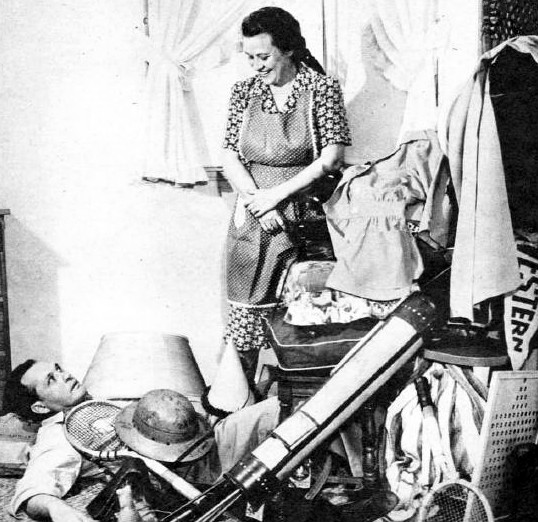
One Saturday when I was twelve, my mother, brandishing a dust mop, flushed a mouse out of my Fibber McGee’s closet.

My cat, Ashley, brought in as a consultant, caught the mouse, his first, and pranced toward me with his offering.

I screamed and jumped onto the bed.

Ashley dropped the mouse.

The mouse ran back into the closet.

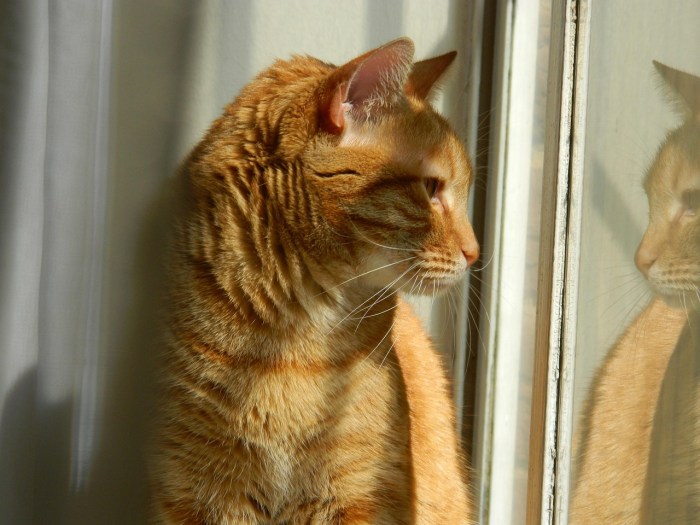
Ashley spent the rest of the afternoon sitting on the windowsill, staring out across the yard, refusing my mother’s pleas to try again.

“Ashley was proud of himself. He was bringing you a present. You hurt his feelings.” My mother spent the rest of the day glaring at me. It wasn’t about Ashley’s feelings.

Ashley resigned from his post as Head of Household Rodent Control.

I spent the rest of the day trying to civilize the closet.

I have no idea what happened to the mouse.

I don’t remember Fibber McGee’s closet myself, but I was told it was a dead ringer for mine.

*

Read about Fibber McGee and Molly at Wikipedia.

Listen to recordings of over 1,000 episodes of Fibber McGee and Molly at Internet Archive. (And if you come across the episode in which the phrase “Politics makes strange bedfellows” generates some confusion and considerable laughter, please leave its number in a comment.)

***

Image of mouse by Zachariah Kyle Pieterse from Pixabay

Image of cat by Zachariah Kyle Pieterse from Pixabay

Image of Fibber McGee’s closet by Dell Publications. Publisher and copyright information are on the magazine’s page 3., Public domain, via Wikimedia

Pangur Ban: A 9th-Century Irish Monk and His Cat

I and Pangur Bán, my cat,
‘Tis a like task we are at;
Hunting mice is his delight,
Hunting words I sit all night.

Better far than praise of men
‘Tis to sit with book and pen;
Pangur bears me no ill-will,
He, too, plies his simple skill.

‘Tis a merry thing to see
At our tasks how glad are we,
When at home we sit and find
Entertainment to our mind.

Oftentimes a mouse will stray
In the hero Pangur’s way;
Oftentimes my keen thought set
Takes a meaning in its net.

‘Gainst the wall he sets his eye
Full and fierce and sharp and sly;
‘Gainst the wall of knowledge I
All my little wisdom try.

When a mouse darts from its den,
O! how glad is Pangur then;
O! what gladness do I prove
When I solve the doubts I love.

So in peace our task we ply,
Pangur Bán, my cat, and I;
In our arts we find our bliss,
I have mine, and he has his.

Practice every day has made
Pangur perfect in his trade;
I get wisdom day and night,
Turning darkness into light.

***

“‘Pangur Bán is an Old Irish poem written in about the 9th century at or near Reichenau Abbey, in what is now Germany, by an Irish monk about his cat. Pangur Bán, ‘White Pangur’, is the cat’s name, Pangur possibly meaning ‘a fuller’. Although the poem is anonymous, it bears similarities to the poetry of Sedulius Scottus, prompting speculation that he is the author. In eight verses of four lines each, the author compares the cat’s happy hunting with his own scholarly pursuits.

“The poem is preserved in the Reichenau Primer (Stift St. Paul Cod. 86b/1 fol 1v) and now kept in St. Paul’s Abbey in the Lavanttal. . . .

“In 2016, Jo Ellen Bogart and Sydney Smith published a picture book based on the poem called The White Cat and the Monk.”

English translation by Robin Flower (1912, The Poem Book of the Gaef)

—From Wikipedia

Read the original Old Irish version at Wikipedia.

Hear The White Cat and the Monk read aloud on Youtube.

Brandon and the Shepherd

Once upon a time, a long time ago, when I was a lot younger but still old enough to know better, someone decided I should teach a children’s Sunday school class.

I don’t remember who came up with the idea, but I’m sure they knew I was a career co-dependent, constitutionally unable to say, No. Even when No would have been the sensible answer. Even when I knew, somewhere in the mists of my subconscious, that Yes would lead to disaster.

So I said, Yes, and spent Sunday mornings for the next several months perched on a small green-painted wooden chair, one of the very same chairs I’d occupied when I was four years old, in the very same classroom of the Fentress United Methodist Church.

Around me sat four or five children ranging in age from, say, four to ten. Nice children, polite, good listeners. But one stands out in my memory: Brandon.

His family lived one small-town block from me. They owned an enormous horse—white, gray, perhaps dappled, I don’t remember exactly—but I do remember driving by their house and seeing in the yard tiny Brandon in the saddle atop that great big horse. I don’t think the child was afraid of anything.

Brandon had straight blonde hair and, when I was around him, a perpetual smile. There was also a perpetual twinkle in his eye. He was beyond cute.

Anyway, regarding Sunday school—you can probably see where this is heading:

On the day in question, we were going great guns, singing and praying and playing a Sunday school game. Then, aided by my David C. Cook teacher’s guide, I told the Bible story.  The children hung on my every word.

Thus armed with a false sense of security, I read, “Jesus said, ‘These people need a shepherd.'” Then, because I believe all terms should be clearly defined, I paused and said, “Now, do we all know what a shepherd is?”

Brandon spoke up. “Yeah. It’s a dog.”

Well, when you’re right, you’re right.


***

I have used Brandon’s real name. I don’t think his mother will mind. If she’d rather, I’ll change it.

***


Image of Egyptian shepherd by Jarek from Pixabay

Image of German shepherd by Goran Horvat from Pixabay

Friday Fictioneers: Thingies

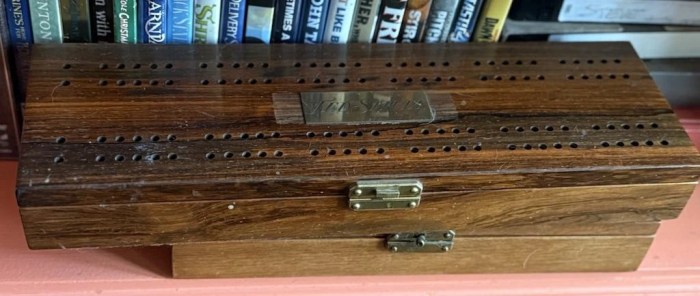
several wooden cribbage boards, stacked one on top of another
PHOTO PROMPT © Ted Strutz

Word count: 100


“What’s that?”

“What’s what?”

“That wooden thingie.”

“A flute case?”

“Flute cases don’t have holes.”

“Those look like holes you stick little thingies into.”

“What kind of thingies?”

“Little thingies. They’re called, like, widgets.”

“But what’s the wooden thingie for?”

“It looks like part of a game.”

“We need one of those books. Like a backwards dictionary. Where you look up a picture.”

“How do you look up a picture?”

“Well, there’s some kind of book where you can do that.”

“What’s it called?”

“Wait! I remember. The game.  My aunt plays it. It’s called ‘cabbage.’”

“We need a librarian.”

***

FRIDAY FICTIONEERS is a weekly challenge to write a 100-word story in response to a photo prompt. To read other Friday Fictioneers’ stories, click on the frog. To participate, find the rules and the photo prompt at Rochelle Wisoff-Fields’ blog.


In Flanders Fields

In Flanders fields the poppies blow
Between the crosses, row on row,
    That mark our place; and in the sky
    The larks, still bravely singing, fly
Scarce heard amid the guns below.
We are the Dead. Short days ago
We lived, felt dawn, saw sunset glow,
    Loved and were loved, and now we lie,
        In Flanders fields.
Take up our quarrel with the foe:
To you from failing hands we throw
    The torch; be yours to hold it high.
    If ye break faith with us who die
We shall not sleep, though poppies grow
        In Flanders fields.

***


The Story Behind the Poppies of Flanders Fields

John McCrae

Image by Benita Welter from Pixabay

“We cannot escape history.”

Fellow-citizens, we cannot escape history. We of this Congress and this administration, will be remembered in spite of ourselves. No personal significance, or insignificance, can spare one or another of us. The fiery trial through which we pass, will light us down, in honor or dishonor, to the latest generation.. . . . 

— Abraham Lincoln, Message to Congress, 1862


A Soft-looking, Middle-aged Woman


She is a soft-looking, middle-aged woman,
whose bust and stomach are always holding a get-together.

In the summer of 1982, while enrolled in a graduate seminar in contemporary women’s fiction, I happened across the above sentence. I was delighted. The description was so right. I didn’t have to memorize it. The image it evoked was vivid enough that the words, along with the author’s name, stayed with me.

Today I finally hunted it down: “The Pleading Woman,” in The Eatonville Anthology, by Zora Neale Hurston


Zora Neale Hurston (January 7, 1891 – January 28, 1960) was an American writer, anthropologistfolklorist, and documentary filmmaker. She portrayed racial struggles in the early-20th-century American South and published research on Hoodoo and Caribbean Vodou.[3] The most popular of her four novels is Their Eyes Were Watching God, published in 1937. She also wrote more than 50 short stories, plays, an autobiography, ethnographies, and many essays.” — Wikipedia

Hurston’s unpublished works are still being released.

The Life of Herod the Great: A Novel came out in January 2025:

“A never before published novel from beloved author Zora Neale Hurston, revealing the historical Herod the Great—not the villain the Bible makes him out to be but a religious and philosophical man who lived a life of valor and vision.”


***

Image of Zora Neale Hurston by Carl van Vechten via Wikipedia

National Poetry Month Is Come–But Not Gone

“The only thing we have to fear is fear itself.”

The ON / ly THING / we HAVE / to FEAR / is FEAR / it SELF

A perfect iambic hexameter line.

If Shakespeare had written it in blank verse:

The only thing we have to fear is fear
Itself.

The rhythm most natural to the English language.

Repetition. Alliteration.

Short, common words.

Musical.

Easily remembered.

Poetry.

“The only thing we have to fear is fear itself.”

                                – Franklin D. Roosevelt, “First Inaugural Address”

Happy National Poetry Month!

***


Image of fear by Janusz Walczak from Pixabay

Image of courage by Danny See Chuan Seng from Pixabay

Beetle Mentality

Here’s how it works:

A beetle has six legs.

You remove one for economy.

Then it doesn’t walk straight so you remove another one.

Then it walks too slowly.

So you say, “We might as well kill it off.”

It works for ladybugs. Dragonflies. Butterflies. Medicare. Medicaid. Social Security. The Postal Service. Anything.

No matter how well it’s working in the first place.

Of course, you can stomp on it and kill it outright, but that’s so gross. People might think you wanted it dead.

*

Definition of “Beetle Mentality” thanks to The Royal, a British television series broadcast from 2003-2011.

***

Image of ladybug by Anja from Pixabay

Image of dragonfly by Alexsandr Grigoriev from Pixabay

Image of butterfly by minka2507 from Pixabay

Lincoln’s 2nd Inaugural Address

“With malice toward none with charity for all with firmness in the right as God gives us to see the right let us strive on to finish the work we are in to bind up the nation’s wounds, to care for him who shall have borne the battle and for his widow and his orphan ~ to do all which may achieve and cherish a just and lasting peace among ourselves and with all nations.”

—Abraham Lincoln, March 4, 1865

“Recollected in Tranquillity”

Image of Blue plaque, 3 Kensington Court Gardens, Kensington, London, home from 1957 until his death in 1965

In  the movie Tom and Viv, about poet T. S. Eliot and his first wife, Vivien Haigh-Wood, Eliot’s character says that poetry is an “escape from emotion.”* When I heard that, a percentage of my brain defaulted to English 2310 (British Poetry from 1798. or something like that) and Wordsworth’s statement that poetry is the “spontaneous overflow of powerful feelings: it takes its origin from emotion recollected in tranquillity.”

Dr, Thomas Brasher said the key to Wordsworth’s phrase is “recollected in tranquillity.”** Poetry written in the grip of emotion usually turns out to be poetry which, reread the next day, must be revised and edited before it is “good.” Wordsworth composed much of his poetry while taking long walks and later dictated it to his to his sister Dorothy.

William Wordsworth

Everything I write should be recollected in tranquility. That is, I should wait at least twenty-four hours and edit before publishing.

Fiction I edit like crazy for days and days. In one case, for years.

But blog posts—no. I edit like crazy as I write, but that really isn’t adequate.

As a consequence, when I read old posts, I’m often embarrassed.

In twenty-four hours, this one may embarrass me. But I’ll risk it. When it comes to blog posts, my vanity slips a little.

*

*Eliot’s full statement: “Poetry is not a turning loose of emotion, but an escape from emotion; it is not the expression of personality, but an escape from personality.” Which echoes what Wordsworth wrote.

** I remember so much Dr. Brasher said. If you read the work he assigned and listened in class, you remembered. No lectures, just close textual analysis. I took three courses he taught. One of the two best, and most interesting, professors I ever had.

Dr. Brasher also said Eliot was “an intellectual snob,” but I doubt that I will find that on the Internet.

***

Image of Wordsworth by Anonymous via Wikipedia

Image of Blue plaque, 3 Kensington Court Gardens, Kensington, London, home from 1957 until his death in 1965 by Edwardx, licensed under CC SA-BY 4.0. Via Wikipedia

I include no photo of Eliot because those published on Wikipedia their owners assert they are under copyright and have filed claims against Wikipedia.

It’s in the Kitchen

Him: I emailed you a picture.

Me: Of what?

Him: Look at the picture.

Me: Okay. But what is it?

Him: It’s in the kitchen. Just look at the picture.

Me: [Looking at picture] THAT’S IN THE KITCHEN?

Him: Uh-huh. I put a bowl over it.

Me: WHAT KIND IS IT?

Him: I don’t know.

Me: [Seeing no rattles and defaulting to lowercase] It’s probably a good, helpful snake. But it’s still a snake.

Him: I’m surprised it stayed still long enough for me to put the bowl over it. I don’t know what to do. I could call maintenance. Or try to rehome it myself.

Me: CALL MAINTENANCE.

Him: [Hanging up phone] They say it’s not an emergency.

Me: If I’d reported it, it would be an emergency. I’d have talked in capital letters.

Him: I guess I’ll go to Walmart.

Me: Will they send somebody?

Him: Yeah. In a couple of hours.

Exit Him.

Me: I guess I’ll memorialize the event in a blog post.

Snake: Two hours? These idiots are going to keep me stuck in this dinkey little kitchen for two hours? I’ve got to get back down to the creek. The family will start to worry. Austin: people crowding in, buildings shooting up, concrete and asphalt creeping across the natural landscape, exhaust fumes fouling the air.  Progress. This town sure ain’t what it used to be.

Later.

Him: I sent you another picture. For size comparison.

Me: [Looking at picture] Maybe capital letters weren’t warranted after all.


***

Him did not really hang up the phone. Him pressed a button. But old language dies hard, and in my posts, phones are still hung up.