The latest installment in the continuing story of Alien Resort.

~ Telling the Truth, Mainly
The latest installment in the continuing story of Alien Resort.
Yesterday we posted a review of Elizabeth Buhmann’s novel BLUE LAKE. Today we hear from the author herself:
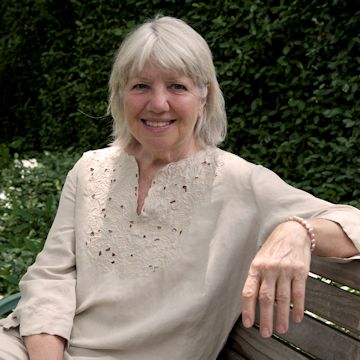 Where did you get the idea for Blue Lake?
A friend told me something about her family history. Her grandmother, who was born in 1910, had 12 children. By the time the last child came along, her oldest daughter was in her twenties, childless, and wishing she could have a baby. So that youngest child was given to her sister and grew up believing that her sister was her mother and her mother was her grandmother.
The way my friend told it, the situation played out without great trauma—the little girl learned that she was adopted in the usual sort of way. But to me, the possibilities for very deep emotional upheaval were striking, just depending on the circumstances. For my main character, Regina, being given to her sister was a disaster, and the feelings of betrayal, rejection, and abandonment are intense.
Why the mid-century setting?
Another friend, who read a very early draft of this story, said, “It’s great but the setting in time falls between contemporary and historical. Can’t you tell the same story set in present day?”
The answer is no. For two reasons. One: too many things that happen in the story could not happen now. Advances in forensic science, victim services, and child protection would be expected to change the outcome at nearly every stage. And yet I think that many of the old attitudes and assumptions—especially about female victims, racial prejudice, and the sovereignty of the family—are stubbornly alive today.
Two: There is a shape to that era—the twenties, the Crash, the Depression, World War II, emerging modernism—that is unique and still shapes our world experience. And I don’t think anyone disputes that the Old South continues to haunt us.
This book is very different from your first!
It is! LAY DEATH AT HER DOOR was a much riskier project, having a protagonist who was in so many ways also an antagonist. And it was contemporary. And although the crimes reached back decades, the truth about them was entirely accessible in the end.
In Blue Lake, the violence reaches back so far in the past, and in a time when the truth about an isolated incident could so much more easily slip out of reach forever, that it felt to me as though Regina would never be able penetrate the mystery. It was a challenge to lead her to the answers she so desperately needed.
Always murder! Why do you write about murder?
To me it is the ultimate drama, when human emotions result in one person killing another. I try to treat murder with respect, for the extreme and shocking act that it is for real. I love a good cozy mystery as much as the next person, but I cannot write one. Murder is a deadly serious topic—could not be more so.
I also read mysteries and thrillers that feature serial killers, though these are not my favorites at all. These murders are committed by people who fall well outside the realm of normal human emotional response. I am more interested in a murder that is understandable, so to speak.
I would not go so far as to say that we are all capable of killing another human being. I have no idea whether that is true—probably not? But I think we all recognize and experience emotions which, if we were tested to a limit and beyond, could make us really want to kill another person.
Laws are quite clear about issues such as self-defense and justifiable homicide, but our individual perceptions of these concepts, in extreme and highly emotional circumstances, can be quite elastic. And it may well be that anyone who murders has a deeply flawed character. But character flaws are universally human, too.
Elizabeth Buhmann is originally from Virginia, where both of her novels are set. Growing up as the daughter of an Army officer, she lived in France, Germany, New York, Japan, and Saint Louis. She graduated magna cum laude from Smith College, Northampton, Massachusetts, and has a PhD in Philosophy from the University of Pittsburgh. For twenty years she worked for the Texas Attorney General as a researcher and writer on criminal justice and crime victim issues. Her first murder mystery, Lay Death at Her Door, earned a starred review from Publisher’s Weekly and twice reached the Amazon Top 100 (paid Kindle). Elizabeth lives in Austin, Texas, with her husband and dog. She is an avid gardener, loves murder mysteries, and is a long-time student of Tai Chi.
 BLUE LAKE: A Mystery is available at https://www.amazon.com/Blue-Lake-Mystery-Elizabeth-Buhmann-ebook/dp/B07SKJ1CF4/
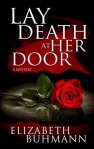
LAY DEATH AT HER DOOR is available at https://www.amazon.com/Lay-Death-at-Her-Door-ebook/dp/B07D7YPNC2
The climb might be tough and challenging, but the view is worth it.
~ Victoria Arlen & Chloe Davis-Waller

“Rural Virginia, 1945. The Second World War had just ended when Alice Hannon found the lifeless body of her five-year-old daughter, Eugenie, floating in Blue Lake. The tragedy of the little girl’s death destroyed the Hannon family.
“More than twenty years later, Alice’s youngest daughter, Regina, returns home after a long estrangement because her father is dying. She is shocked to discover, quite by accident, that her sister’s drowning was briefly investigated as a murder at the time.
“For as long as she can remember, Regina has lived in the shadow of her family’s grief. She becomes convinced that if she can discover the truth about Eugenie’s death, she can mend the central rift in her life. With little to go on but old newspapers and letters, the dead girl’s hairpin, and her own earliest memories, Regina teases out a family history of cascading tragedy that turns her world upside down.”
When I began Elizabeth Buhmann’s BLUE LAKE, I was–I’m ashamed to say–afraid I would be disappointed. Her first novel, LAY DEATH AT HER DOOR, was so well constructed, clues so obviously placed, that I should have been able to predict the ending–but so deftly woven into the plot that the last chapter was a complete surprise. More than a surprise–a shock. That novel was so good, I knew BLUE LAKE couldn’t match it.
I was wrong. BLUE LAKE is different from its predecessor, of course, but just as well written and just as suspenseful. And when I reached the end, I said, “I should have known.”
BLUE LAKE does not disappoint.
Buhmann hides things in plain sight–the mark of a good mystery writer, and the delight of every mystery reader.
Tomorrow I’ll post an interview with Elizabeth Buhmann.
Read the book: https://www.amazon.com/Blue-Lake-Mystery-Elizabeth-Buhmann-ebook/dp/B07SKJ1CF4/
FTC Disclaimer: Elizabeth Buhmann is a friend and fellow writer. When we were both members of Austin Mystery Writers, I read the first chapters of BLUE LAKE in draft form and then waited impatiently for it to reach publication. The synopsis above is quoted from Amazon. The rest is mine. Nobody told me what to think or to say, and I posted because I wanted to. I bought the ebook with my very own money. No reviewers were bribed in the writing of this review.
Author N. M. Cedeno writes about Detective Dave Fugitt’s recent presentation to Heart of Texas Sisters in Crime chapter. Detective Fugitt is a member of Austin Police Department’s Homicide Unit.
 Logo provided by Sisters in Crime- Heart of Texas Chapter
At the June Sisters in Crime – Heart of Texas meeting, Detective Dave Fugitt presented an overview of the Austin Police Department Homicide Unit. Local mystery author and Travis County Assistant District Attorney Mark Pryor introduced Det. Fugitt as the best homicide investigator in the Austin Police Department. In his capacity as ADA, Mr. Pryor and Det. Fugitt have worked together on murder cases in Travis County.
Fugitt is a member of the Homicide Investigators of Texas and the International Homicide Investigators Association. The International Homicide Investigators Association holds annual symposiums for detectives from around the world. During these meetings, detectives share ideas for solving cold cases and keep up to date on new techniques and technology in forensics and crime solving. The association also holds regional training events around the United States.
As an APD homicide investigator Fugitt has…
View original post 679 more words
We’re pleased to announce that “Invisible Men Invade Earth” was named audience favorite at the Central Arts Short Film Battle in Hurst last night. It competed with “Don’t Die” by Cody Lovorn from San Antonio.
As winner, “Invisible Men” will compete with other 2019 audience favorites later in the year.
After the Battle, a 90-minute feature film, The Monster of Phantom Lake, produced by Film Battle organizer Christopher Mihm, was shown. The Creative Spotlight terms Mihm a “retro-styled director.” Of the film, it says,
“Made on a nearly non-existent budget, this B-movie went on to garner much critical acclaim, appear in many genre-based film festivals, win multiple awards, and continues to screen across the world.”
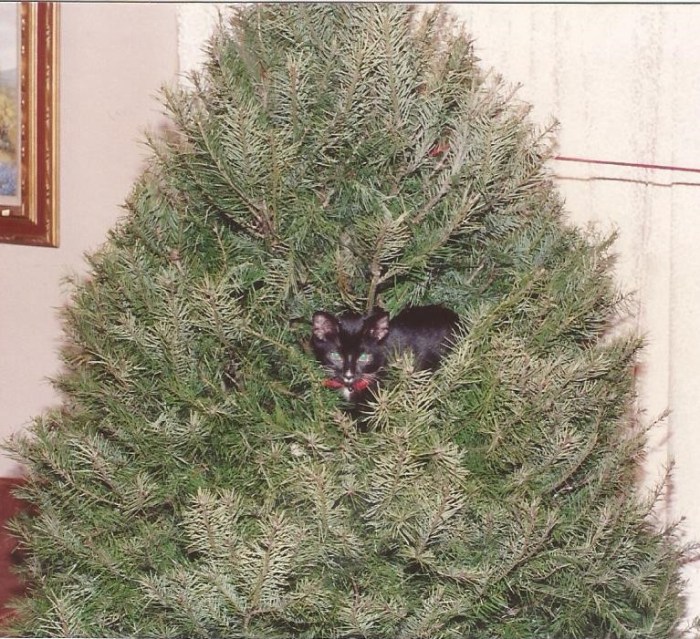
Without further ado, here are pictures of writer-director-producer-camera man-sound engineer-casting director-key grip-best boy-etc. David Davis, stars William the Cat and Ernest the Cat, and one wall of the theatre.


Photos of David Davis by Kathy Waller
Photo of wall by David Davis
Photos of William and Ernest by Charla, our vet tech cat minder, for whom William and Ernest always pose nicely, because they like her more than they like David and me

So I stagger and wobble and run into door jambs.
The door jamb part really isn’t in the same category as the other two, because staggering and wobbling are relatively new, but I’ve been door-challenged all my life.
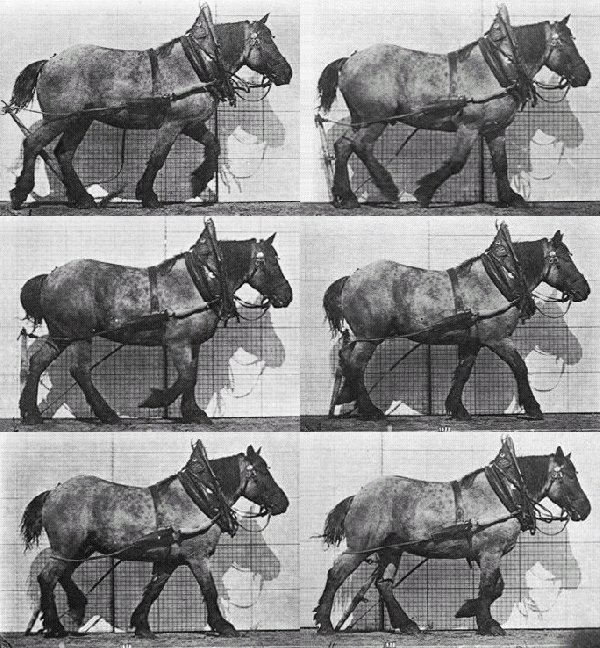
Once when I was eight, visiting my Aunt Laura and Uncle Joe, the phone rang and I was the only one in the house. I ran from the kitchen and across the dining room, headed for the far end of the hallway, where the phone resided. When I got to the door from the dining room to the hall, I caught the sleeve of my sleeveless blouse–I trust you understand that–on the strike plate. I backed off and started over and caught my blouse on the strike plate–same blouse, same strike plate. I backed off and started over and got hung up a third time. On my fourth effort, I gave up on running and walked. That worked.
I’ve never repeated the strike plate episode, but I frequently collide with door jambs–usually when leaving the boss’ office–and I clip the corners of tables. I’m told the root cause lies in my corpus callosum and to just keep on colliding. It’s somehow worse when the boss is an attorney. I’ve learned to live with it.
But staggering and wobbling haven’t been going on all that long. I don’t have vertigo; I just get off balance. I know why I don’t get around as easily as I should–unsteadiness occurs when I don’t eat enough and when I don’t get enough sleep. Insufficient exercise is a contributing factor. I haven’t gotten much exercise for the past three-point-five years. There are both good reasons and excellent excuses for that.
Things are looking up. Last month I bought a Fitbit, which counts my steps and does various other helpful things. I’ve been using it, walking with purpose. I participated in two virtual hikes around Yosemite–Vernal Falls (15,000 steps) and Valley Loop (35,800 steps)–and now I’m hiking the Pohono Trail (62,500 steps). Twice I’ve been awarded stars for doing over 5,000 steps in one day. Today I began four miles of switchbacks that, instructions say, should save my knees and give me the opportunity to look back on what I’ve passed. If they think I’m going to look down from a switchback, they can just think again.
Well, anyway, when the oncologist heard my sad story, he said, Would you like a referral to physical therapy for balance? David said, Yes. From his answer, and the speed with which he gave it, I infer that he’s getting tired of my leaning on him just in case.
So I’m now in physical therapy for balance. In my personal lexicon, physical therapy means young, skinny people telling me to do things I don’t want to do. My spirit wars against it. I’ve discovered–all right, I already knew–I cannot walk a white line while sober. I cannot stand on one leg without tipping over. I can stand on a little square of foam rubber with my eyes closed for a minute without reeling, mostly. I can do more than I can’t do. That’s promising.
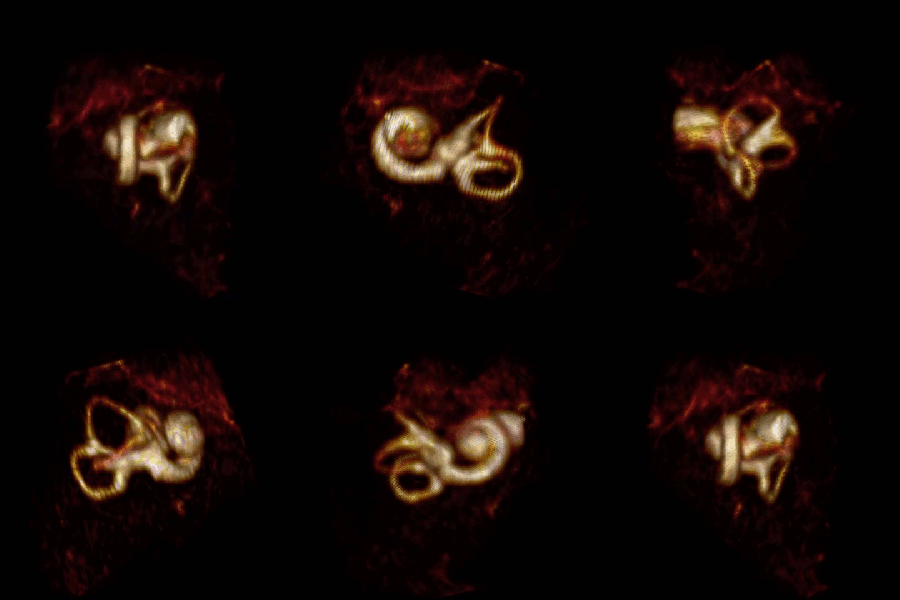
Nevertheless, the therapist arranged a hearing test. I said, Oh no, I hear just fine, but I knew the left ear is better than the right. After the first test, the audiologist arranged for two more tests to find out if there’s anything vestibular going on that might affect my balance. They will check me for nystagmus. They might be able to help me.
Oh, joy. They will find something vestibular and then help me with more physical therapy. I will never get out of that place.
But despite all my moaning about PT, I accepted the prospect of hearing and vestibular problems with dignity and grace.
Then, two days ago, while waiting for the veterinarian to call William to the examination room, I picked up a magazine and it fell open to an article about Old Dog Vestibular Syndrome, “a sudden, non-progressive disturbance of balance.”
“Most dogs present with the sudden onset of loss of balance, disorientation, head tilt, and irregular jerking eye movements called ‘nystagmus’. Many dogs will become reluctant to stand or walk. Most dogs will lean or fall in the direction of their head tilt.”
They also stagger and wobble.
The good news is that most dogs recover.
And they do it without physical therapy.
Since I read that, I’m doing without dignity and grace.
In less than an hour, David and I will have been married fifteen years and nine hours. Or slightly less; the wedding began at 2:00 p.m., but with all the singing and marching and reading and plighting, it was probably 2:30 before the minister told us we could leave. To me, it seems like we’ve been married only a few months. I don’t how it seems to to David, and I’m not going to ask.
 Anyway, we’re celebrating with a night at the Omni Hotel at Barton Creek, where we’re conferring, consorting, and otherwise hob-nobbing with our brother and sister wizards. Or as David would put it, we’re mixing with the quality.
I spent the morning and part of the afternoon at the Mokara Spa, getting nails, hair, and face done. Fifteen years ago it wouldn’t have taken that long, but things happen.
David took before and after pictures. I don’t know whether After will look much different from Before, but in real life, I walked out of that place looking a lot better than I did when I went in. I had color in my face. Or, more accurately, on it.
When I was thirteen, my mother handed me a lipstick and said, “Use it. You’re very pale.” She was the only mom in Creation who wished her daughter would use more make-up. I didn’t know how bad it was until I was in my forties, when I saw a picture of myself sitting in the church choir. Everyone else looked normal. I looked several shades past anemic.
It’s a Waller thing. My grandfather was tanned by the sun, but when he rolled up his khakis to wade into the river (on some mission related to his boat or his trotlines) his legs were unimaginably white. After meeting one of my cousins, David delicately and in a voice filled with concern, asked me if she had some kind of illness or condition. No, I said, that’s what’s known as alabaster skin. Unfortunately, I missed the alabaster, but I got the pallor. Until I get embarrassed, at which time I turn beet red.
 A dermatologist once said to me, “Well, you have blonde skin, you know.” His tone was downright accusatory. I got my father’s black hair, which comes from the other side of his family. I know they don’t go together, but it’s not my fault. I have no control over my DNA.
Anyway, the Mokara make-up lady has me looking downright alive. She also did a pretty good haircut. I showed her a ten-year-old picture and she got about as close as anyone could get.
What, you might ask, did David–the other half of this anniversary thing–do while I was being gussied up? What he does every day. He sat with his Chromebook and worked on Alien Resort and whatever else he works on. I never know what he’s doing until he tells me a newspaper has picked up his cartoon or that a film festival is going to screen one of his videos.
Which brings this post to a turn I didn’t expect it to take: while I was writing this, David forwarded me an email from Central Arts of Hurst Short Film Series – Round Three saying that his “Invisible Men Invade Earth” will be screened this Saturday, June 29. It will be
“competing against “Don’t Die” and, based on audience reaction and input, a winner will be crowned at the conclusion of the evening. The winning film will then be invited back at the end of the screening series to compete in a “Battle Royale” to see which film is crowned “King” (or “Queen” or “Non-gender-specific Monarch,” take your pick)! SO, in the interest of giving your film the best chance to win, we very much encourage you to invite EVERYONE you know to this event!”
“Invisible Men” has garnered positive responses (“sweet and innocent”; “a film you can tell he made just because he wanted to”) at all showings, and it stars the cats (last-minute unscripted but welcome appearance), so I can, with confidence, pronounce it the best film of the year, bar none.
Nevertheless, if you’re in the Hurst-Euless-Bedford-Dallas-Fort Worth-Oklahoma area this Saturday evening, feel free to drop in (although they say to get a ticket early because they often turn people away at the door). And if you come, vote for David’s film. Because the other people in attendance might have poor taste and vote wrong.
We don’t know when the Monarch will be named. The film festival is a monthly event. The first in the series was in December 2018, so we assume the competition will be held toward the end of this year. We’ll let you know, since we are encouraged to invite EVERYONE we know. David appreciates all compliments, admiration, adulation, and adoration that come his way, and I’m sure he’d be okay with his film’s being crowned. The ultimate designation, though, is weird. That’s what an Austin reviewer called it. High praise. It’s an Austin thing.
So that’s the story of our anniversary celebration. The only things omitted are 1) the steak; half of mine is in the refrigerator, none of his resides there; and 2) the tantrum I had when, after both David and I spent a half-hour searching for the photographs I had transferred from my camera to the Google Drive, and after David said, How do you stand the mouse opening and closing tabs when you’re not looking and I said, I cuss under my breath, and he figured out how to fix it, almost—as I said, after all that, I discovered about four hundred words had disappeared from this post and the deletion couldn’t be undone and all revisions were gone gone gone.
It wasn’t much of a tantrum, because I knew I should have saved before running off after errant photos, but then, WordPress shouldn’t have autosaved an incomplete document.
And the mouse, which I’m certain is to blame, should have minded its own business.
If you’ve gotten this far without wishing the missing four hundred words had never been reconstituted, bless your heart. Now I have to go wash off all this makeup and fade into the background.
***
Wedding photo by Atelier Wong
Why I am not a prolific writer:


Same old excuse, but better than none.
The scale at the doctor’s office today said I’d lost eight pounds over the past six weeks. I said I didn’t think so. I’d been working at it, but for only three weeks, and not that hard.*
The nurse said, “The scale downstairs doesn’t match this one, so if you used that one last time . . .”
I used that one. Sad but accurate.
But my slacks fit better. Not perfectly, because they never do. They’re too long in the stride.
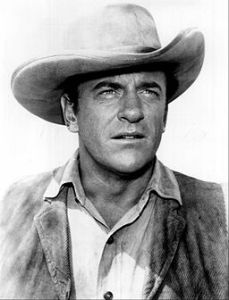
So Matt Dillon and I have something in common. We don’t have our slacks tailored. Too much trouble.
Does anybody else remember Gunsmoke? I thought of it because I thought of my slacks. That’s the kind of day it is. Most days are like that. It takes me forever to complete a task because I think of something else and something else and before long I’m doing something else.
They say people who like to read should never open a dictionary, because they see one word, and then another, and another, and another, and the blog post they began on June 12th isn’t finished till June 20th.
People like that shouldn’t open Facebook either.
*Working hard ends in disaster.
A book review from Ink-Stained Wretch Renee Kimball
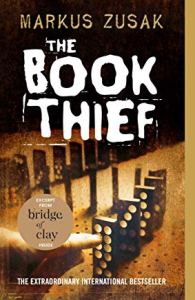 Marcus Zusak published The Book Thief in 2005, and despite his initial personal misgivings, it was an instant success. It is a story of ordinary people trying to survive under extraordinary conditions, and a girl who loved books.
It is also a mournful story, and not one that you can simply close the cover and walk away from, it follows you. It seeks answers to thorny questions – it forces uncomfortable responses.
What is immediately clear is Marcus Zusak is a sensitive writer. His idea for the book began in Zusak’s childhood – his parents of Austrian-German descent grew up under Nazi rule. After having a family, they told their stories to their children around the kitchen table. Zusak remembered those stories, and they became the soil in which The Book Thief grew. (Random House, 2009) (Book photo, Amazon.com)
Zusak provides a surprise on the first page –we meet the…
View original post 889 more words
From It’s a Long Story . . .
The sky is a little clearer than the last time I photographed this bridge.


Excellent advice for anyone who wants to write a novel–from Noreen Cedeno at Ink-Stained Wretches
Don’t do what I did.
First, I learned how to write. Then, I learned how not to write. Then, I had to relearn how to write again.
 When I first started writing, each story was a new adventure with new characters and settings. Stories ideas would come into my brain, marinate for a few days, and then I’d start working. I didn’t make a conscious plan to create stories in any particular genre. I wrote stories for me, telling the stories I wanted to tell as the ideas came to me. Having analyzed and written short stories during my education, the process came naturally to me. I simply sat down and began working, knowing the story needed a strong opening, rising action, a climax, and a dénouement.
As I grew more confident in my work and began submitting my short stories to magazines, I thought I’d figured out how to…
View original post 482 more words
 The wide sweep of the river across the alluvial land was far from road or path and devoid of dwellings, so there were no passers-by to stop and stare, to pause for a little and then go on to spread the news.
They were in a world by themselves down there by the river. A timeless world, and comfortless.
Grant and Rodgers had exhausted professional post-mortems long ago, and had got no further. Now they were just two men alone in a meadow on a chilly spring day. They sat together on the stump of a fallen willow, Grant watching the slow sweep of the questing drag, Rodgers looking out across the wide flats of the valley floor.
‘This is all flooded in winter,’ he said. ‘Looks quite lovely, too, if you could forget the damage it’s doing.’
“‘Swift beauty come to pass
Has drowned the blades that strove”,’
Grant said.
‘What is that?’
‘What an army friend of mine wrote about floods.
“Where once did wake and move
The slight and ardent grass.
Swift beauty come to pass
Has drowned the blades that strove.'”
‘Nice,’ Rodgers said.
‘Sadly old-fashioned,’ Grant said. ‘It sounds like poetry. A fatal defect, I understand.’
‘Is it long?’
‘Just two verses and the moral.’
‘What is the moral?’
“‘O Final Beauty, found
In many a drownéd place,
We love not less thy face
For lesser beauties drowned.'”
Rodgers thought it over. ‘That’s good, that is,’ he said. ‘Your army friend knew what he was talking about. I was never one for reading poems in books–I mean collections, but magazines sometimes put verses in to fill up the space when a story doesn’t come to the bottom of the page. You know?’
‘I know.’
‘I read a lot of these, and every now and then one of them rings a bell. I remember one of them to this day. It wasn’t poetry properly speaking, I mean it didn’t rhyme, but it got me where I lived. It said:
“My lot is cast in inland places,
Far from sounding beach
And crying gull,
And I
Who knew the sea’s voice from my babyhood
Must listen to a river purling
Through green fields,
And small birds gossiping
Among the leaves.”
‘Now, you see, I was bred by the sea, over at Mere Harbour, and I’ve never quite got used to being away from it. You feel hedged in, suffocated. But I never found the words for it till I read that. I know exactly how that bloke felt. “Small birds gossiping!”‘
The scorn and exasperation in his voice amused Grant, but something amused him much more and he began to laugh.
‘What’s funny?’ Rodgers asked, a shade defensively.
‘I was just thinking how shocked the writers of slick detective stories would be if they could witness two police inspectors sitting on a willow tree swapping poems.’
~ Josephine Tey, To Love and Be Wise
A brief look at three of Josephine Tey’s other mysteries is found at Ink-Stained Wretches.
An essay about the [remarkable] Josephine Tey at “Josephine Tey – A Very Private Person.”
* A Project Gutenberg Canada Ebook *
…
Title: To Love and Be Wise
Author: Josephine Tey [Elizabeth MacKintosh] (1896-1952)
Date of first publication: 1950
Place and date of edition used as base for this ebook: London: Peter Davies, February, 1953
Date first posted: 18 May 2008
Date last updated: 18 May 2008
Project Gutenberg Canada ebook #120
This ebook was produced by: David T. Jones, Donald Perry, Mark Akrigg & the Online Distributed Proofreading Team at http://www.pgdpcanada.net
Cover of To Love and Be Wise from amazon.com.
“Constitutional morality cannot be martyred
at the altar of social morality.”
~ Chief Justice of India
“Majority cannot trump Constitution,” The Times of India, September 6, 2018


 M. K. Waller