The Maven: A Poe-ish Poem for Halloween. Again.

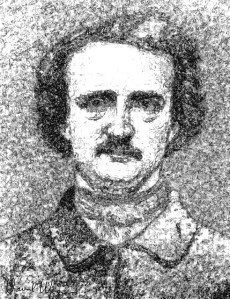
2018-10-20 ttm pixabay poe cc0 pd writer-17565_640

I would say this post is back by popular demand, but I’d be lying. No one has demanded it. I post it because it’s almost Halloween, and because I had fun writing it way back when, and because I want to.

To learn why I wrote it, read on. If you don’t care why I wrote it, skip the next part, but the poem will be easier to understand if you just keep reading.

*****

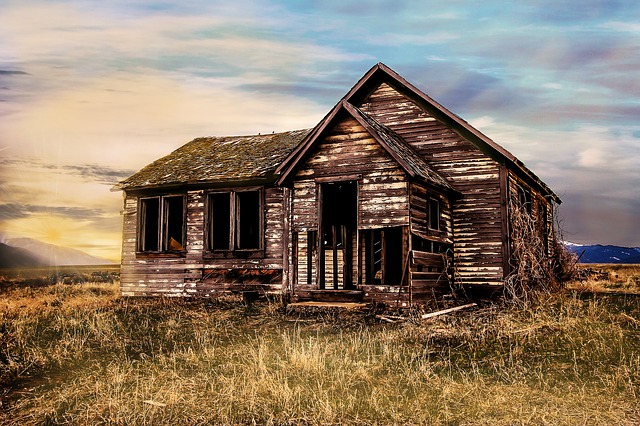
Why? Because–A friend called to confirm that David and I would meet her and her husband the next day for the Edgar Allan Poe exhibit at the Harry Ransom Center. She mentioned that her house was being leveled for the second time in three years*: “There are thirteen men under my house.”

I hooked up Edgar Allan Poe with the number thirteen and house with Usher and wrote the following verse.

Note: Tuck and Abby are my friends’ dogs.

Another note: Maven means expert. I looked it up to make sure.

*

THE MAVEN

To G. and M. in celebration
of their tenth trimester
of home improvement,
with affection.
Forgive me for making
mirth of melancholy.

Once upon a midnight dreary, while I pondered weak and weary

Over many a quaint and curious volume of forgotten lore,

While I nodded, nearly napping, suddenly there came a rapping,

As of someone gently tapping, tapping at my chamber floor.

“‘Tis some armadillo,” said I, “tapping at my chamber floor,

Only this, and nothing more.”
Ah, distinctly I remember it was in the dry September,

And my house was sinking southward, lower than my bowling score,

Pier and beam and blocks of concrete, quiet as Deuteron’my’s cat feet,

Drooping like an unstarched bedsheet toward the planet’s molten core.

“That poor armadillo,” thought I, “choosing my house to explore.

He’ll squash like an accordion door.”
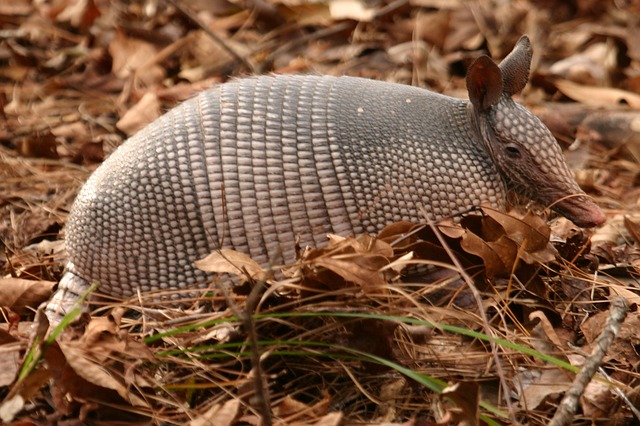
“Tuck,” I cried, “and Abby, come here! If my sanity you hold dear,

Go and get that armadillo, on him all your rancor pour.

While he’s bumping and a-thumping, give his rear a royal whumping,

Send him hence with head a-lumping, for this noise do I abhor.

Dasypus novemcinctus is not a beast I can ignore

Clumping ‘neath my chamber floor.”

While they stood there prancing, fretting, I imparted one last petting,

Loosed their leashes and cried “Havoc!” and let slip the dogs of war.

As they flew out, charged with venom, I pulled close my robe of denim.

“They will find him at a minimum,” I said, “and surely more,

Give him such a mighty whacking he’ll renounce forevermore

Lumbering ‘neath my chamber floor.”

But to my surprise and wonder, dogs came flying back like thunder.

“That’s no armadillo milling underneath your chamber floor.

Just a man with rule and level, seems engaged in mindless revel,

Crawling round. The wretched devil is someone we’ve seen before,

Measuring once and measuring twice and measuring thrice. We said, ‘Señor,

Get thee out or thee’s done for.'”

“Zounds!” I shouted, turning scarlet. “What is this, some vill’nous varlet

Who has come to torment me with mem’ries of my tilting floor?”

Fixing myself at my station by my floundering foundation,

Held I up the quaint and curious volume of forgotten lore.

“Out, you cad!” I said, “or else prepare to sleep beneath my floor,

Nameless there forevermore.”

Ere my words had ceased resounding, with their echo still surrounding,

Crawled he out, saluted, and spoke words that chilled my very core.

“I been down there with my level, and those piers got quite a bevel.

It’s a case of major evolution: totter, tilt galore.

Gotta fix it right away, ma’am, ‘less you want your chamber floor

At a slant forevermore.”

At his words there came a pounding and a dozen men came bounding

From his pickup, and they dropped and disappeared beneath my floor.

And they carried beam and hammer and observed no rules of grammar,

And the air was filled with clamor and a clanging I deplore.

“Take thy beam and take thy level and thy failing Apgar score

And begone forevermore.”

But they would not heed my prayer, and their braying filled the air,

And it filled me with despair, this brouhaha that I deplore.

“Fiend!” I said. “If you had breeding, you would listen to my pleading,

For I feel my mind seceding from its sane and sober core,

And my house shall fall like Usher.” Said the leader of the corps,

“Lady, you got no rapport.”

“How long,” shrieked I then in horror, “like an ominous elm borer,

Like a squirrely acorn storer will you lurk beneath my floor?

Prophesy!” I cried, undaunted by the chutzpah that he flaunted,

And the expertise he vaunted. “Tell me, tell me, how much more?”

But he strutted and he swaggered like a man who knows the score.

Quoth the maven, “Evermore.”

He went off to join his legion in my house’s nether region

While my dogs looked on in sorrow at that dubious guarantor.

Then withdrawing from this vassal with his temperament so facile

I went back into my castle and I locked my chamber door.

“On the morrow, they’ll not leave me, but will lodge beneath my floor

Winter, spring, forevermore.”

So the hammering and the clamoring and the yapping, yawping yammering

And the shrieking, squawking stammering still are sounding ‘neath my floor.

And I sit here sullen, slumping in my chair, and dream the thumping

And the armadillo’s bumping is a sound I could adore.

For those soles of boots from out the crawlspace ‘neath my chamber floor

Shall be lifted—Nevermore!

*

The reason the house was leveled twice in three years is a story in itself, not to be told here.

All in the April Evening

On Good Friday several years ago, I posted “All in the April Evening,” words and music by Sir Hugh Roberton, based on a poem by Katharine Tynan.

Good Friday is past, but music and poetry shouldn’t be limited, so I post it again.

Roberton modified the poet’s words slightly; his version is the one I use. A link to the poem is here.

Links to performances and biographies of the composers follow.

Years ago my voice teacher introduced me to the song. Now I can’t sing it, because I can’t even hear it without tears.

***

All in the April evening
April airs were abroad
The sheep with their little lambs
Passed me by on the road
The sheep with their little lambs
Passed me by on the road
All in the April evening
I thought on the lamb of god

The lambs were weary and crying
With a weak human cry
I thought on the lamb of god
Going meekly to die
Up in the blue blue mountains
Dewy pastures are sweet
Rest for the little bodies
Rest for the little feet

But for the lamb, the Lamb of god
Up on the hilltop green
Only a cross, a cross of shame
Two stark crosses between

All in the April evening
April airs were abroad
I saw the sheep with the lambs
And thought on the Lamb of God

***

All in the April Evening
Sung by the Glasgow Orpheus Choir
Directed by Sir Hugh Roberton”

All in the April Evening”
Instrumental performed by the Grimethorpe Colliery Band

***

—from Wikipedia:

Sir Hugh Stevenson Roberton (23 February 1874 – 7 October 1952) was a Scottish composer and Britain’s leading choral-master.

“Roberton was born in Glasgow, where, in 1906, he founded the Glasgow Orpheus Choir. For five years before that it was the Toynbee Musical Association. A perfectionist, he expected the highest standards of performance from its members. Its voice was a choir voice, its individual voices not tolerated. He set new standards in choral technique and interpretation. For almost fifty years until it disbanded in 1951, on the retirement of its founder, the Glasgow Orpheus Choir had no equal in Britain and toured widely enjoying world acclaim. Their repertoire included many Scottish folk songs arranged for choral performance, and Paraphrases, as well as Italian madrigals, English motets and the music of the Russian Orthodox Church. The choir also performed the works of BachHandelFelix MendelssohnPeter CorneliusBrahms and others.

“He wrote the choral work (words by Katharine TynanAll in the April Evening, and the popular songs Westering Home and Mairi’s Wedding.

“He was a pacifist and member of the Peace Pledge Union. For this reason both he and the Glasgow Orpheus Choir were banned by the BBC from broadcasting during the Second World War.”

*

from Wikipedia:

Katharine Tynan (23 January 1859 – 2 April 1931) was an Irish writer, known mainly for her novels and poetry.

“Tynan was born into a large farming family in ClondalkinCounty Dublin, and educated at St. Catherine’s, a convent school in Drogheda. Her poetry was first published in 1878. She met and became friendly with the poet Gerard Manley Hopkins in 1886. Tynan went on to play a major part in Dublin literary circles, until she married and moved to England; later she lived at ClaremorrisCounty Mayo when her husband was a magistrate there from 1914 until 1919.

“For a while, Tynan was a close associate of William Butler Yeats (who may have proposed marriage and been rejected, around 1885), and later a correspondent of Francis Ledwidge. She is said to have written over 100 novels. Her Collected Poems appeared in 1930; she also wrote five autobiographical volumes.“

Superscripts have been deleted from the Wikipedia articles.

***

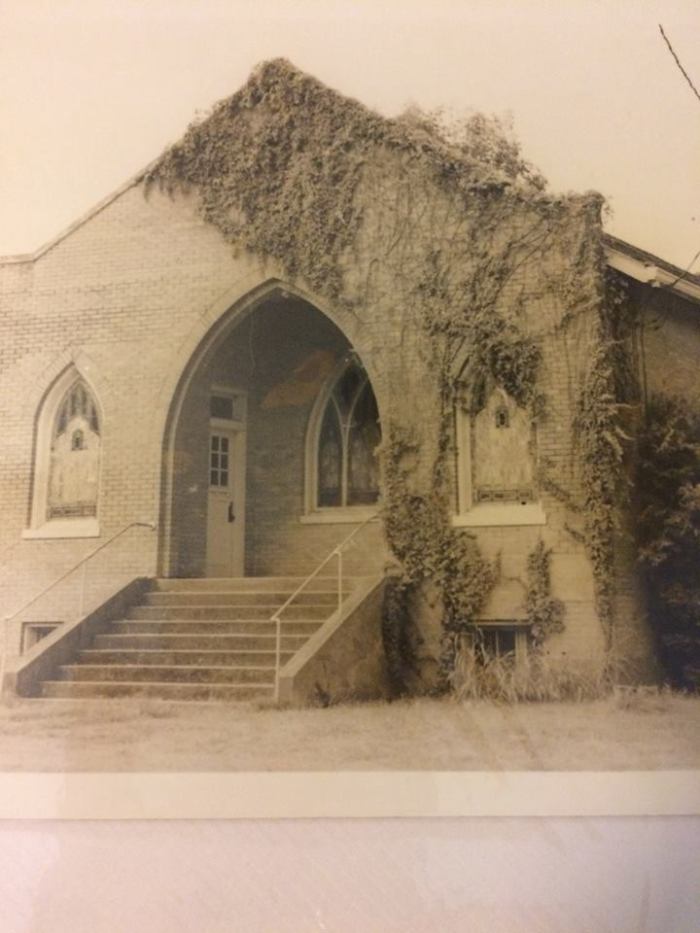
Presbyterian Church, Fentress, Texas
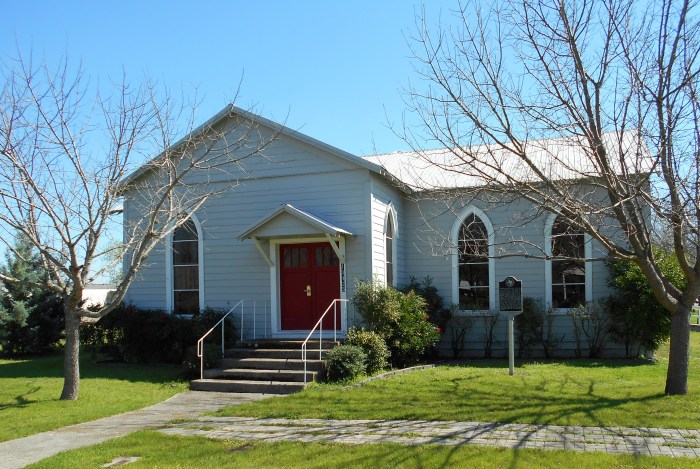
Fentress United Methodist Church
(Fentress Community Church)

Emily Dickinson: Dear March – Come In

Dear March — Come in —
How glad I am —
I hoped for you before —

Put down your Hat —
You must have walked —
How out of Breath you are —
Dear March, Come right up the stairs with me —
I have so much to tell —

I got your Letter, and the Birds —
The Maples never knew that you were coming — till I called
I declare — how Red their Faces grew —
But March, forgive me — and
All those Hills you left for me to Hue —
There was no Purple suitable —
You took it all with you —

Who knocks? That April.
Lock the Door —
I will not be pursued —
He stayed away a Year to call
When I am occupied —
But trifles look so trivial
As soon as you have come

That Blame is just as dear as Praise
And Praise as mere as Blame —

~ Emily Dickinson

***

I post this poem every March.

***

Image by Alexandra_Koch licensed under CC0 via pixabay.com

The Road to Bethlehem

THE ROAD TO BETHLEHEM

If as Herod, we fill our lives with things and again things;
If we consider ourselves so important that we must fill
Every moment of our lives with action;
When will we have the time to make the long slow journey
Across the burning desert as did the Magi;
Or sit and watch the stars as did the shepherds;
Or to brood over the coming of the Child as did Mary?
For each one of us there is a desert to travel,
A star to discover,
And a being within ourselves to bring to life.

~ Author Unknown

Casper (name)

Journey of the Magi (1902) by James Tissot. Public domain. Via Wikipedia.

*

“The Road to Bethlehem” appears on other websites, where it’s attributed to Anonymous. If you know who wrote it, please share the name and, if possible, other documentation, in a comment, so I can give the poet credit for his creation and can search for copyright information. Until I know more, I will assume the poem is in the public domain. If it’s under copyright, I’ll delete it.

*

Find “The Road to Bethlehem” on these pages:

http://macrina-underthesycamoretree.blogspot.com/2009/12/desert-star-emerging-life.html
http://blueeyedennis-siempre.blogspot.com/2010/11/advent-prayer-and-poems-i.html

Emily Dickinson: dear March

Carrie Juettner’s post reminded me of a post I need to put up. I post it nearly every year, but this year time got away from me, and I’m almost too late. The last lines of the poem, however, are appropriate for the time, though. Especially if April in Texas turns out to be as hot as March 26 was. And it will be.

***

Dear March — Come in —
How glad I am —
I hoped for you before —

Put down your Hat —
You must have walked —
How out of Breath you are —
Dear March, Come right up the stairs with me —
I have so much to tell —

I got your Letter, and the Birds —
The Maples never knew that you were coming — till I called
I declare — how Red their Faces grew —
But March, forgive me — and
All those Hills you left for me to Hue —
There was no Purple suitable —
You took it all with you —

Who knocks? That April.
Lock the Door —
I will not be pursued —
He stayed away a Year to call
When I am occupied —
But trifles look so trivial
As soon as you have come

That Blame is just as dear as Praise
And Praise as mere as Blame —

~ Emily Dickinson

***

These websites about the Bulb River are worth clicking over to see. The 35,000 hyacinths reach full bloom in early May.

https://www.atlasobscura.com/places/the-bulb-river-sandwich-massachusetts

The picture below automatically embeds when I add the link to the page. If the copyright holder objects to its appearance here, I will delete the link.

You’ve Never Seen Anything Like This Blooming River Of Flowers In Massachusetts

The Road to Bethlehem

THE ROAD TO BETHLEHEM

If as Herod, we fill our lives with things and again things;
If we consider ourselves so important that we must fill
Every moment of our lives with action;
When will we have the time to make the long slow journey
Across the burning desert as did the Magi;
Or sit and watch the stars as did the shepherds;
Or to brood over the coming of the Child as did Mary?
For each one of us there is a desert to travel,
A star to discover,
And a being within ourselves to bring to life.

~ Author Unknown

Casper (name)

Journey of the Magi (1902) by James Tissot. Public domain. Via Wikipedia.

*

“The Road to Bethlehem” appears on other websites, where it’s attributed to Anonymous. If you know who wrote it, please share the name and, if possible, other documentation, in a comment, so I can give the poet credit for his creation and can search for information about copyright. Until I know more, I will assume the poem is in the public domain. If it’s under copyright, I’ll delete it.

*

Find “The Road to Bethlehem” on these pages:

http://macrina-underthesycamoretree.blogspot.com/2009/12/desert-star-emerging-life.html
http://blueeyedennis-siempre.blogspot.com/2010/11/advent-prayer-and-poems-i.html

A Mind Unhinged

Here’s my latest post at Austin Mystery Writers.

Austin Mystery Writers's avatarAustin Mystery Writers

So you start writing your post about the incomparable Josephine Tey’s mystery novels two weeks before it’s due but don’t finish, and then you forget, and a colleague reminds you, but the piece refuses to come together, and the day it’s due it’s still an embarrassment, and the next day it’s not much better, and you decide, Oh heck, at this point what’s one more day? and you go to bed,

and in the middle of the night you wake to find twenty pounds of cat using you as a mattress, and you know you might as well surrender, because getting him off is like moving Jello with your bare hands,

Elisabet Ney: Lady Macbeth, Detail Elisabet Ney: Lady Macbeth, Detail (Photo credit: Wikipedia) Attribution: Ingrid Fisch at the German language Wikipedia.  GNU_Free_Documentation_License

so you lie there staring at what would be the ceiling if you could see it, and you think, Macbeth doth murder sleep…. Macbeth shall sleep no more,

and…

View original post 1,054 more words