A dove strolled across our patio last week. Soft brown, a graceful, gentle visitor.
 Squirrels appear occasionally but finding no acorns, swish their tails and move on.
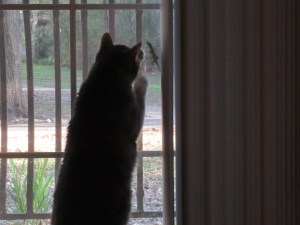
Last week, two chameleons crawled up the screen, prompting Ernest to move.
Ours is a quiet life.
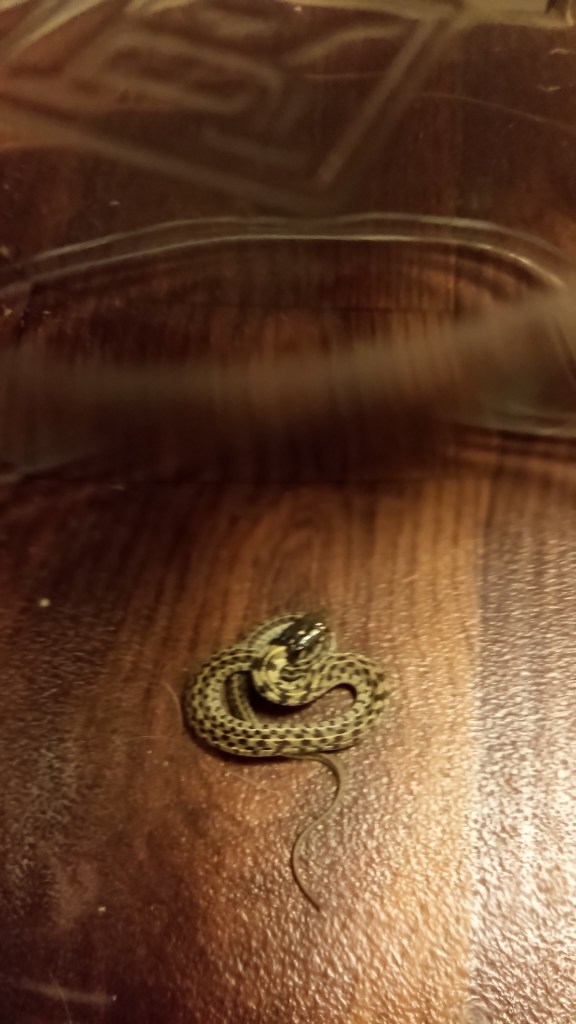
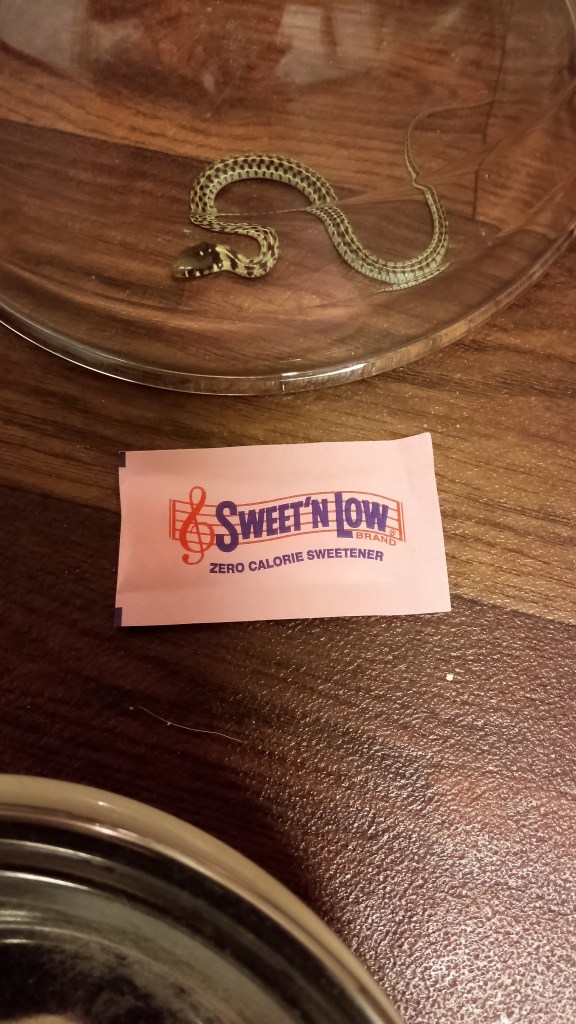
Then one afternoon David said, “There’s a snake on the patio.”
He said it in the voice he uses to announce the arrival of the Amazon truck. Nothing to get excited about.
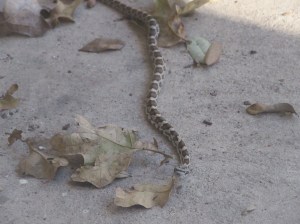 I went berserk. Grabbed the camera, ran to the window. But before memorializing the event, I checked the tail and the complexion. The tail was small and pointy, and the spots were spots, not diamonds. I relaxed.
But it was a snake nonetheless.
Please spare me the explanation that snakes are God’s creatures, that they eat rats and other things that aren’t good for us, that they merit respect and benevolence.
I know they’re God’s creatures, but so are sharks, and I don’t care to cozy up to them either.
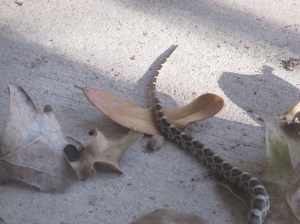 I once held the rear end of a boa constrictor and know snakes are soft and silky and sweet when they’re not swallowing goats.
But I take the Biblical view—a snake is a serpent. If it stays in its tree where I can’t see it and doesn’t try to strike up a conversation or ooze down and bruise my heel or the heels of my pets or my livestock, then I won’t try to bruise its head.
But if it has rattles on its tail or venom in its fangs, or if it surprises me by its presence, then I’ll grab the nearest shotgun and try to blow it to 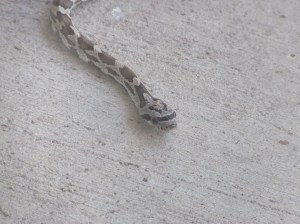 kingdom come, although I know practically nothing about shotguns because the only time I got to shoot one my daddy made me aim it into the river.
I don’t want serpents on my patio, and I don’t want to wake up and find one in my bedroom, which is where this one was headed. It slithered up to the glass, looked in, then settled into the sliding door track and headed out looking for means of ingress.
David had already taken preventive measures against marauding humans. Not trusting the sliding door’s lock, 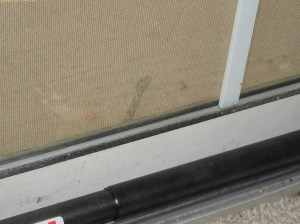 he’d braced one of my never-used canes in the track inside. When the snake’s intent became obvious, David quickly stuffed a wad of paper towels in whatever space might have remained and replaced the cane.
Unable to enter, snake went along and went along. David got the big square meter stick, compliments of the Lockhart State Bank back in the ’60s, went outside, reached over the grille work, and flicked the snake off the patio. It took several flicks, but David was gentle. The snake looked surprised and a little disgusted at being launched into flight and landing on the rocks 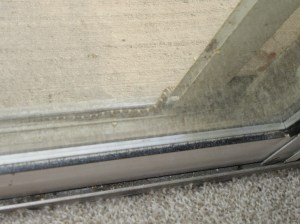 outside. But he showed no sign of pain.
I have admit to feeling a little sorry for the visitor. Temperatures are dropping, and if I lived outside, I’d seek warmer accommodations, too.
In fact, after spending six days without heat during the February Freeze of 2021, I’m tempted to go out and gather every mammal, every bird, every chameleon, and march them, two by two, inside for the winter.
But not snakes. Both the biting kind and the tempting 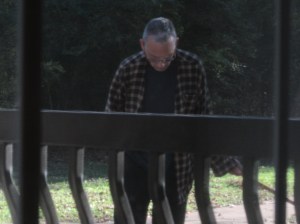 kind belong as far away from me as I can keep them.
I gave away my dad’s shotgun, which is fortunate, because if I woke up and saw a snake, I’d probably blow myself up trying to shoot it.
But I’m going to put that Lockhart State Bank meter stick beside my bed. Just in case.
 M. K. Waller