Minna

A Jersey Lily, portrait of Lillie Langtry
Image via Wikipedia

Mama was livid.

“Judge Dunne proposed and you refused him? Minna, I’ve been sewing your trousseau since Christmas. You said you had him hook, line, and sinker.”

I did say that. But during six months of parlor-sitting with Milroy Dunne, I started thinking about Papa. When he was Colonel Veazey of the Texas Militia, he took the whole family to the war down in Cuba.

Milroy would never measure up to Papa. Marrying him would be like marrying a legal brief.

In June, Judge Dunne and I were outside watching fireflies when he dropped to one knee. I helped him up and told him I was taking my new teaching certificate and heading west.

“Don’t worry, Mama,” I said. “The Judge will survive. And I’ll be the best-dressed teacher west of the Pecos.”

As it happened, I was the best-dressed anything west of the Pecos. Around Wrangle, Texas, at least. Tea gowns didn’t serve for mopping floors or comforting a child with a revolted stomach. White linen didn’t serve for battling Harvey Lubeck.

Harvey was sixteen, too old for school but he’d been kept back. He was smart but idle. He proposed to drive me crazy.

Not overtly, of course. Dirt in the water bucket. A snake in Imogene Culpepper’s desk. Ink spilled on the floor, a permanent stain. A string of disasters, and Harvey’s blue eyes always twinkling from across the room.

Then one day he asked to be excused. Suspicious, I followed. He disappeared behind the boys’ privy and returned carrying the biggest, nastiest vinegarroon I ever saw.

“You hellion.” I grabbed his ear and dragged him inside, vinegarroon and all.

“Bend over.” I unhooked the board of education from its peg and whacked him three times on his backside. Then I stood panting, my knees all wobbly.

Harvey’s lower lip trembled. “You’ll git it now, Miss Petticoats. My daddy’ll fix you.” He tore out of the building.

“His daddy’s mean,” said Imogene.

After school, as usual, I swept and straightened. Then I sat down to wait.

Two hours later, I heard hoof beats. I was alone in a gray waste of cenizo and prickly pear.

When I heard boots ascending the steps, I willed myself to stand and hold my head high.

A burly, red-haired man opened the door. “You the one whupped my boy?”

I nodded.

He lumbered up the aisle, then stopped and removed his sweat-stained hat. “Ma’am, I thank you for what you done. Boy’s been needin’ a good whuppin’.”

He stuck out his hand. We shook.

“Harvey says you’re pretty as the Jersey Lily. We seen her when she come through Langtry a few years back. B’lieve Harvey’s right.” He put his hat back on. “You keep that boy in line, now. Make him act proper.”

Nodding, he headed for the door.

I sank onto my chair.

When my hands stopped quivering, I took up pen and paper and began: “Dear Judge Dunne.”

According to Mama’s last letter, the Judge was still pining.

***********

“Minna” first appeared in Chaos West of the Pecos, vol. 15 (2011), under the title “A Day in the Life of a One-room School Teacher.”

Image of Lillie Langtry by John Everett Millais [Public domain], via Wikimedia Commons

Ranching I: Goat

A goat inside a barn.
Image via Wikipedia

The tomatoes live.

So does the pepper.

It’s a minor miracle. Sometime between Friday night and Saturday noon, the door to the bathroom, where the crops were hidden, was left open. I found the leaves on one side of the pepper in tatters.

Notice how gracefully I employed the passive voice in the preceding sentence. Not a whit of blame did I assign.

Both David and I admitted we might have left the door open.

I don’t know who ate the leaves.

I suspect William. He’s always shown more interest in plants. Ernest eats sweaters and blankets.

But I’m not sure, and I don’t want to be unfair, so I continue to speak of the incident in the passive.

Discovery of the serrations sent me running to the veterinarian, who said that, considering the size of the helping, the amount of time that had passed since its ingestion, and the absence of symptoms, the only consequence might be a tummy ache. No tummy ache ensued.

It’s possible, of course, that no one ate anything. There may be little bits of leaf drying up under the refrigerator. Everything else, including two flash drives, ends up there.

But back to the crops. When I wrote the post about farming, I didn’t mean to imply that I’ll be plowing and planting. I have nothing to plow. It’s patio farming or nothing.

Neither did I mean to imply that I’ve ever lived on a farm. I lived in town. The farm was several miles away, on the other side of the river. I did most of my work on the town side.

Our house sat on a quarter-acre on one end of the block; the other quarter-acre (and other half of the block) was fenced, and at one time or other over the years served as home to sheep, chickens, horses, and calves.

So instead of farming, I really ranched.

My pet goat, Whitey, lived there, briefly. A friend of my parents had given her to me, and she resided with the sheep (which were, I suppose, a holdover from World War II, when mutton was common in our area).

When my father and my uncle loaded the sheep into the trailer to transport them to new accommodations on the farm, Whitey jumped in, too.

Years later it dawned on me that no one took heroic measures to remove Whitey from the trailer or to snare her during the unloading and bring her home where she belonged.

I suspect the lapse was deliberate. The “patch,” as we called it, beside the house, was fenced with hog wire, which was just the size and shape for a goat with a fully developed set of horns to push her head through, but not designed to allow her to pull it back. Whitey would push through to get a bite of greener grass, discover she was stuck, and bleat until my mother appeared with the wire cutters. As soon as Mother got back into the house, the bleating would start again.

After a time, the fence looked shabby.

It’s no wonder, then, that when Whitey jumped into the trailer, no one tried to dissuade her from leaving. My father would come home from the farm and report that he’d seen Whitey teaching sheep to climb over barbed wire fences.

I was sorry she was gone, but I got over it. We had never been really close.

It isn’t easy to bond with an animal who butts you down every time you turn your back.

Image of goat inside a barn by jcfrog (IMG_5072) [CC-BY-2.0 (www.creativecommons.org/licenses/by/2.0)], via Wikimedia Commons.

AROW80 Sunday Report 1

Title screen for Burbank Films Australia's 198...
Image via Wikipedia

Progress since Wednesday:

  • Write 500 words a day on Molly: 0/0

  • Go to bed by 11:00 p.m.: 2/4

  • Exercise 30 minutes: 0/4

No excuses.

One step forward: I realized what must be done to untangle a major snarl in the plot.

If you’d like to see how others are doing, click here.

Image by Burbank Films Australia; Restoration credit: Myself, TaranWanderer (DVD Ltd. DVD release) [Public domain], via Wikimedia Commons

AROW80 Report

Präzisionswürfel
Image via Wikipedia

Although I don’t mind reporting my progress, or lack of it, I do mind reporting it on my own blog, to be read by people who know me.

Since Monday night, I’ve written over 1300 words. They don’t apply to Molly, which was my intent, but they do apply. It’s something.

Regarding the goal about getting to bed earlier, I’m at 50%. And I was only thirty  minutes over on the night I was up late.

Regarding the goal about exercise, I’m at 0%. There’s room for improvement.

The embarrassment of recording more failure than success is likely to prompt me to do better the second half of the week. Which is no doubt the reasoning behind AROW80.

Vida Woodward Waller

The woman on the left in the photograph above is my father’s mother, Vida Maud Woodward Waller. On the left is his father’s sister, Jessie Waller Meadows. The photo was taken, I believe, sometime before 1910.

Aunt Jessie lived to be nearly ninety, so I knew her well. I didn’t know my grandmother. She died in 1920, when my father was five years old. By the time I was born, thirty-one years later, she was rarely spoken of. Her younger sister, Nettie Watkins, who volunteered to be “Nanny,” and my grandfather’s sister-in-law, Bettie Waller, told me a little about her.

Here is what I know.

She was short and had red hair. She was the seventh of nine children in a family that remained close all their lives.

She had beautiful hands, and she was vain about them. She paid her older sister, Bruce, to take her turn at doing dishes so the hot, soapy water wouldn’t spoil her hands. In the mornings, before she and her brothers and sisters went into the field to pick cotton, she carefully wrapped and stitched each finger in strips of cotton fabric. Then she put on work gloves. “That just fascinated me,” Aunt Nettie said. “And she always slept in gloves.”

There wasn’t a horse in the county that she couldn’t handle.

She scandalized the town by being the first girl to ride astride, wearing a split skirt. (And judging from the photograph, she corrupted Aunt Jessie.)

She and my grandfather eloped. Her mother did not approve of my grandfather as a son-in-law. I don’t know what Granny’s objections were, but having known my grandfather, I imagine some were justified. We all loved him dearly, but he could try one’s patience.

She drove like a maniac and regularly plowed the car into a high curb or a fence post or a bridge abutment and had to send for my grandfather to get the bumper unstuck.

She had a wonderful sense of humor, and she loved babies. (No one told me that. I inferred it from being around her sisters.)

She had her first child in 1911, and the others in 1913, 1915, 1917, and 1919. All boys. One day when she was in town, she heard a woman say, “There’s that Mrs. Waller. She has a baby every year.” My grandmother turned around and said, “No, I have my babies every two years.” End of conversation. The tradition was convenient for the entire family: if you knew how old one of the sons was, you could easily calculate the ages of the others. From there, you could fill in most of the cousins.

She could do, and did, whatever needed to be done. If bedtime came and all the boys’ pajamas were in the wash, she sat down at the machine and sewed up a batch of pajamas. If she wanted a fence around the yard, she went out and put up a fence. I suspect she found out fairly early in her marriage that building a fence was quicker than waiting for my grandfather to build one. (See, try one’s patience, above.)

She tended to be plump but wanted the hourglass figure that was the fashion. She laced her corsets so tightly that during every dress fitting, she fainted. One dressmaker became so frightened at the prospect of a client who routinely toppled over that she refused to sew for her any more. (I should note that the Woodward family was known for its fainters, men as well as women, so the corset might not have been entirely to blame. They were a hardy family, not a nerve in the bunch, but under stress they fainted.)

She would dress up for a party, stand before the mirror, and say, “I don’t look good enough.” And she would stay at home.

She had a strong will. No one ran over her.

The morning of the day she died, she was preparing to make a cake for Donald’s third birthday. She went outside to draw kerosene to fill the kitchen stove, and some of the liquid spilled onto her robe. When she lit the stove, the robe ignited. She panicked and ran. Maurice and Joe, seven and nine years old, knew how to smother the flames, but they panicked, too, and could only scream. Bill, Donald, and Graham, the youngest at eight months, were there as well. Graham, of course, didn’t remember his mother. Donald and my father always said they remembered nothing about that day, but I believe my father did.

She was buried the next day, on her thirtieth birthday.

The Pledge

Title screen for Burbank Films Australia's 198...
Image via Wikipedia

My promise to post daily in April having crashed and burned, I now set out on a new adventure: A Round of Words in 80 Days.

I’m starting late, so my round will comprise only 73 days. But, as Huckleberry Finn says, that ain’t no matter.

A Round of Words in 80 Days bills itself as “The Writing Challenge That Knows You Have a Life.”

Funny–every time I’m positive I don’t have one, I discover I do. This time it was the notorious newsletter. I kept adding and fixing and writing and rewriting, all week long, and finding one more thing to do. It went out Saturday and is slightly shorter than Gone With the Wind.

At this rate, my literary legacy will be titled, The Collected Newsletters of Kathy Waller.

So again I take The Pledge.

The first requirement is to post measurable goals.  Here are mine:

I will

  1. write 500 words a day on Molly, 5 days a week;
  2. exercise for 30 minutes, 5 days a week;
  3. go to bed between 9:30 and 11:00 p.m. every night, including Friday and Saturday.

Those goals are easily measured. Listed in order of importance, they would be reversed, but this is a writing challenge, so writing stays on top.

The second requirement is to sign up by linking this post to the ROW80 list.

The third requirement is to check in on Sundays and Wednesdays.

The final requirement is to end this post and start working on #3.

*****

Image by Burbank Films Australia; Restoration credit: Myself, TaranWanderer (DVD Ltd. DVD release) [Public domain], via Wikimedia Commons

Working the soil

I’ve decided: I’m going into farming.

It was an impulsive decision, of course. Like all the others.

A scanned red tomato, along with leaves and fl...
Image via Wikipedia

On my way into HEB this morning, passing shelves packed with plants, I had a vision: homegrown tomatoes. Red, sweet, tart, fleshy, seedy, from-vine-to-table tomatoes. Real tomatoes.

Bacon and tomato sandwiches.

I selected two hardy specimens and set them in the baby seat of my shopping cart.

A recently blossomed flower on a Quadrato d'As...
Image via Wikipedia

Then my eye fell on the bell pepper plants, and I had another vision: $1.18 each, regular price.

That’s today. Goodness knows how much they’ll cost tomorrow.

I selected one pepper plant and set it in the shelf at the front of the cart.

Then I pushed them all over the store so people could appreciate my virtue.

It is a truth universally acknowledged that God made the country and man made the town.

I shall sow little seraphic seeds, regenerating the asphalt jungle.

I shall be a veritable Wordsworth, taking solace in nature.

Five minutes into planting, I shall start to itch, but a poet must sacrifice for his art, and I’m determined to have at least one decent tomato before summer is over.

It won’t be easy, though. I come from a long line of farmers, there’s not an agrarian bone in my body. I spent my life wandering among the cotton wagons lined up at the gin scale, but I can’t tell you when the ginning begins. August? Late July?

Cotton
Image via Wikipedia

Every summer, I asked what people meant when they talked about the square, and my mother would launch into a detailed description of the maturation of the cotton plant. I never got the picture.

I know what a nice stand of maize looks like, and I can identify a corn field burning up in the sun (South Carolina, summer 1986), but that’s about all. I know that oats are very green and very pretty in winter.

I should be ashamed of myself. My father loved nothing more than getting on a tractor and plowing, watching the black soil turn. He and Mother talked crops and cows over dinner.

I, on the other hand, spent my life with my nose in a book. In summers, I took my nose out long enough to go swimming and horseback riding, but most of that was done between chapters. I named all the cows, but I saw them as pets.

My body was in the country. My mind was in the bookmobile.

But now I’m returning to my roots.

I brought the plants home, set the tomatoes in front of the microwave and the pepper on the table. (Counter space is at a premium here.)

When William jumped onto the table, as I knew he would, I put the pepper in the sink.

Before I go to bed, I’ll put all three plants into the bathtub and close the bathroom door. Cows you can trust; cats you can’t.

Tomorrow I’ll buy potting soil, get out the Benadryl, and make myself a farm.

And then I’m going to apply for my government subsidy.

*****

Thanks to William Cowper ( “The Sofa,” from The Task ) for writing, “God made the country and man made the town.” Thanks to Jane Austen (Pride and Prejudice) for writing the rest of that sentence.

Image of tomato by David Besa from Sonoma, USA (Flickr) [CC-BY-2.0 (www.creativecommons.org/licenses/by/2.0)], via Wikimedia Commons

Image of bell pepper (Quadrati d’Asti Giallo) by JayMGoldberg (Own work) [Public domain], via Wikimedia Commons
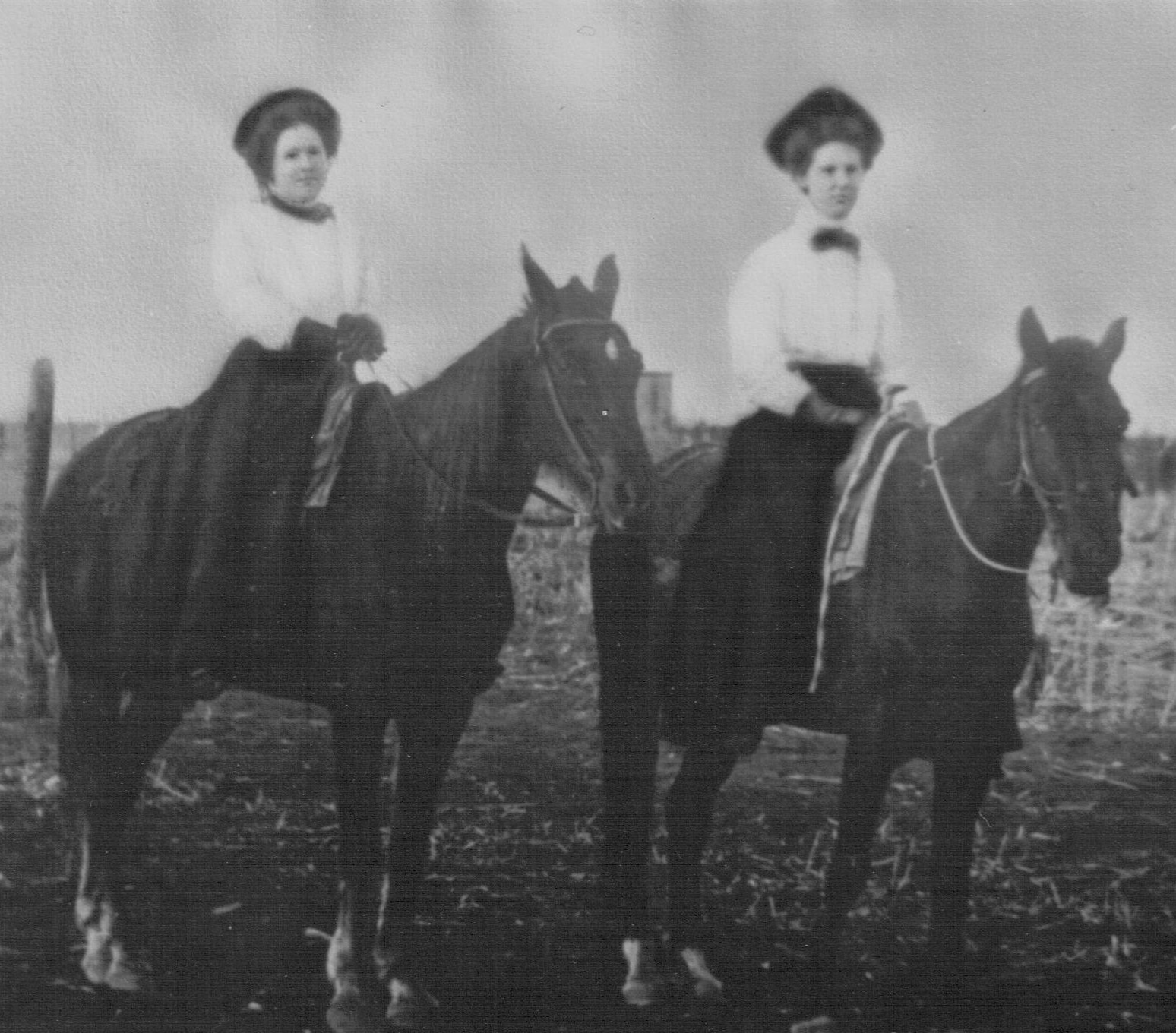
Image of cotton boll by KoS (Own work) [Public domain], via Wikimedia Commons

Olio

I started to write a post about the free online to-do list I found: Toodle-do. You can list tasks and goals and make notes and set due dates and start dates and set it to send an e-mail each morning to remind you what you’re supposed to do for the day. You can spend hours setting up your list, deciding whether things look better in green or blue or pink or salmon or beige.

Cropped screenshot of Myrna Loy from the trail...
Image via Wikipedia

Then I thought about Myrna Loy in Mr. Blandings Builds His Dream House. She’s telling the painter what colors she wants the various rooms painted, describing the colors in the  most specific terms possible. I googled the scene and found it on Youtube, and I watched it, and she is just marvelous.

I noticed a link to an episode of What’s My Line when Myrna Loy was the guest challenger, so I watched it. I’d never realized how much she looked like my Great-Aunt Elizabeth.

Cropped screenshot of Claudette Colbert from t...
Image via Wikipedia

My grandmother looked  like Claudette Colbert, and right down the column was a clip of the episode with Claudette Colbert as the guest challenger, so I watched that, too.

Then I watched episodes of What’s My Line with Bette Davis, Lucille Ball, Paul Newman and Joanne Woodward, Elizabeth Taylor, and Jonathan Winters.

Jonathan Winters as a truck driver
Image via Wikipedia

After that, I watched Jonathan Winters on the Steve Allen Show; and on the Jack Paar Show, first playing the Voice of Spring just arrived from the forest, and then improvising with a stick; and then as Maudie Frickert on the Dean Martin Show; and then being interviewed by Jack Paar in England, first playing a British gentleman and then playing an American tourist; and then in a recently-discovered clip, playing an airline pilot; and then on the Dean Martin Show, improvising with props in an attic.

I read a comment that reminded me that Jonathan Winters was in It’s a Mad Mad Mad Mad World. Because I had just seen a link to the entire movie of Mr. Blandings Builds His Dream House, I decided to see whether I could find a link to the entire Mad World movie. I couldn’t.

Remembering that I had intended to copy the link to Myrna Loy choosing paint colors, I again googled it and so found myself back on the page with all the links to What’s My Line. I was tempted to watch the one with Alfred Hitchcock and the one with Grace Kelly as well, but a look at the clock reminded me that I had begun this post with the intention of finishing it tonight and then moving on to write a piece I have to send to a Story Circle Network friend who edits one of its newsletters.

I volunteered to write a column for April, but that was in January. Actually, I volunteered for February if she couldn’t find anyone else, but she did, so I’m April, and it’s due tomorrow, and oh, how I wish I’d done it in February and gotten it over with. But I didn’t.

I e-mailed the editor this morning and told her I hadn’t forgotten, even though for several weeks I had, and said I would send it to her. I intended to write it this morning and e-mail it, but the muse was busy helping someone else–I don’t have a muse of my own, mine comes from a temp agency–so I’m hoping that the pressure of a deadline will come to my aid tomorrow well before breakfast.

Now for the other things that were to go into this post: I was going to write about all my Franklin planners, particularly the ones that were stolen from my car one night while I slept, along with a can of asparagus, and I was going to refer to Alice Flaherty’s observation in The Midnight Disease, and quoted in my last Teaser Tuesday, that to-do lists don’t cure procrastination because people who procrastinate know exactly what they’re not doing, and I was also going to point out that although Toodle-do sends me a daily e-mail saying that each of the three tasks I entered is overdue, said Toodle-do cannot make me open and read said e-mail.

That’s what I was going to write about before I thought about Myrna Loy. I will mention that Myrna Loy was also an outstanding citizen who held benefits for my hero, John Henry Faulk, back in the ’50s when he was blacklisted, but then I would have to go into everything about John Henry and the First Amendment and the Constitution and James Madison and Louis Nizer and John Henry’s court case and Molly Ivins and various other things, and I would also remember that last Thanksgiving we had lunch with friends at Green Pastures, the Faulk family home, which John Henry’s sister turned into a restaurant, and that it sits among old live oaks and has peacocks strutting about the lawn, and that it isn’t far from here, and that they start you off with a milk punch (3 C vanilla ice cream, 1-1/2 C milk, 1/2 C bourbon, 1/4 C white rum, 1 jigger brandy, 3 ice cubes, nutmeg, combine and blend until consistency of milkshake, serve in wine glasses and sprinkle nutmeg on top, makes about 5 C) that is to die for and that I drank both mine and David’s and was quite relaxed and rather jolly throughout the buffet luncheon.

Isn’t it amazing how you can manage to come up with 900 words when you don’t have to write but can’t eke out a half-dozen when you do.

And, Susan, if you’re reading this, don’t you dare tell Lee how far behind I am.

For a look at what I did the rest of my day/year/life, please watch this video:

http://www.addadhdblog.com/age-activated-add/#71ec7

Doris Day, Richard Chamberlain, & Lew Ayres

Doris Day an Bord der USS Juneau Lizenz: Besch...
Image via Wikipedia

Doris Day is eighty-eight today. Or eighty-seven or eighty-nine. The number doesn’t matter. To celebrate, we watched Send Me No Flowers. Not her best–I much prefer Lover, Come Back–but we were limited to whatever we could find on streaming. She’s still cute. Rock Hudson and Tony Randall are still cute. They’re part of my childhood. I like them. So sue me. Doris Day is also good to animals.

*

*

*

American actor Richard Chamberlain, cropped fr...
Image via Wikipedia

Richard Chamberlain was seventy-seven several days ago. When I was ten, he was Dr. Kildare on TV. All the girls in the fifth grade were simply agog. He sang, too.

I’m going to post this to meet the midnight deadline. Then I’m going to come back and write some more.

*****

That was totally unprofessional, but until I’m paid to do this, I shall take liberties.

*****

In one episode, Dr. Kildare sang. Actually, he sang in more than one episode, but I remember best his rendition of “Hi Lili Hi Lo.” Here’s a link to a video accompanied by the song.

*****

Lew Ayres starred in the film Young Dr. Kildare in 1938, and went on to star in several more Dr. Kildare movies. According to Wikipedia, he was offered the starring role in the NBC television series. Ayres requested that he show have no cigarette advertising. The network refused and the part went to Richard Chamberlain. That was in 1961.

Rocking the boat over tobacco was a very Lew Ayres thing to do. Denied guaranteed entry to the Medical Corps in World War II, he declared himself a conscientious objector. Faced with unwelcome publicity, the government revised the rules. Ayres joined the Medical Corps and served in the Pacific.

Lew Ayres was one of those actors, like Charles Laughton and Audrey Hepburn–who brought class to a show–whether Johnny Belinda or Mary Tyler Moore–by just showing up on the screen. That class obviously wasn’t an act.

Here’s a link to Young Dr. Kildare. In its entirety.

*****

Now that I’ve demonstrated my own deficiency in the class department–posting an unfinished piece shows an appalling lack of respect for my readers, as well as for myself as a writer–and now that I’ve groveled sufficiently–I’ll put an end to this.

Thanks for your support.


Here we go again.

Here we go again.

April 1, 11:38 p.m., I’m working as fast as I can to finish Hotshots! so it will go out tomorrow–today no longer being an option–and I remember that I said I would blog every day this month.

So I close Hotshots!, open To write is to write is to write, and start typing. Not thinking, just typing.

11:41. Charlie Rose is conversing with Roger Rosenblatt and Stanley Fish. They’re saying all kinds of memorable things about writing, but I’m not fast enough to write them down.

11:44. But here are some scraps. Writing is for some students the site of anxiety. Couldn’t get Harvard students to get anything original out of themselves until he closed the door and said, “Write. No throat clearing. Write.”

11:46 Clip of Ian McEwan. Beginnings are difficult. You finally find yourself in control. That’s the real pleasure. How can you not write? But always craving to reach the end.

11:47  It’s in my DNA. To figure things out and explain to other people. Same joy as teaching, but teaching is harder–pesky students aren’t always cooperative.

11:48 Rarely know what I’m thinking before I write. Don’t have anything to explain. Living in the mystery and discovering what you’ve said when you look back. Write what you know? Shelley: Must learn to imagine what we know.

11:49 Write what you want to know. A problem or a puzzle you want to figure out what’s going on.

11:50 Satisfaction from teaching. Don’t want to let them down. Writing lonely. Give self to students selflessly. If you fail them, you want the time back.

11:51 How do you know when it’s finished? Have a feeling, like music. Easier to know when finished than to know when begun. Eliminate the first paragraph.

11:52 In search of something. In search of answers. Then surprise when what you’ve written raises a question you didn’t know before and you want to follow it. We express ourselves, and the selves we express are different.

11:53 Quotation–last lines from “Dover Beach.” Writing makes suffering beautiful. Quotation–from George Herbert’s “The Forerunners.” Verbal thing that knocks your socks off.

11:55 Goodnight.

The effect of blogging on the Cicada rhythms

Main health effects of sleep deprivation (See ...
Image via Wikipedia

WordPress directs us today to On Techies’ “Blog More. It’s Good for Your Health.

For scientific details, On Techies directs us to Scientific American’s Blogging–It’s Good for You: The therapeutic value of blogging becomes a focus of study.

The latter article cites research done by neurologist Alice W. Flaherty, author of The Midnight Disease, which was the subject of yesterday’s Tuesday Teaser. Despite the quotations I used–I displayed them because I liked them, not because they reflected content–the book reports serious scientific research. And it’s fascinating.

Flaherty, who studies hypergraphia and writer’s block, notes “‘that drives are involved [in blogging] because a lot of people do it compulsively,’… Also, blogging might trigger dopamine release, similar to stimulants like music, running and looking at art.”

The article also cites the work of University of Texas professor James Pennebaker, who for nearly twenty years has been studying the link between writing about personal emotional trauma and a strengthened immune system as well as an increased sense of well-being.

Now. Do I have to be told all this about writing? No. I’ve known about Dr. Pennebaker for years. I’ve known about Dr. Flaherty for years (fewer than about Dr. Pennebaker, but still years). I didn’t know about the finer points of the articles, but I believe what they say.

I question the part about blogging improving memory and sleep, because I tend to do my blogging between 10:00 p.m. and 2:00 a.m., and all that adds to is sleep deprivation. Nothing good comes of sleep deprivation, sleep debt, disordered sleep patterns, or messed up Cicada rhythms (to use my husband’s phraseology). I am a living example, and if you don’t believe me, you can look it up.

In addition, while I was blogging every day, I still spent a disgusting amount of time trying to remember why I’d opened the refrigerator.

But overall, I agree that blogging helps the blogger. When I posted daily, I had more energy–at least mentally–and I got more writing done. I had to produce a post a day, so I had to think. Even if I ended up  inviting Emily Dickinson to guest, I had to find the appropriate poem and a photograph to go with it.

Having to think is not a bad thing.

Furthermore, I was more fluent. Pressure of a deadline required me to come up with a topic and the words to follow. Practice increased my ability to come up with more words, and faster.

What happens when I slack off? More slacking off.

What can I write about? I can’t think of anything to write about. If I don’t have to write today, I’ll leave it until tomorrow. Or the day after.

Blah. Blah. Blah.

I sound as if I’m back in junior high.

I even start to slack off in my reading and commenting on other blogs.

Stopping the daily post seemed, at the time, the right move.

But I had concerns.

Sure enough, eschewing has led to more eschewing.

I received an e-mail today from NaBloPoMo reminding me to add my blog to its April blogroll if I intend to post every day.

So I suppose it’s time to resurrect the obsession/compulsion/addiction/hypergraphia and see what happens: Improved sleep or no sleep, plus T-cells or minus T-cells, arhythmical Cicadas and all.

It’s already 1.75 hours after my bedtime.

But I’m wide awake.

All this dopamine is doing wonders for my mental state. Five more minutes and I’ll progress from cheerful to ecstatic and I might make it to the border of downright manic.

Now. What in the world will I write about?

Tuesday Teaser 6

Teaser Tuesdays is a weekly bookish meme, hosted by Miz B of Should Be Reading. Anyone can play along. Just do the following:

  • Grab your current read.
  • Open to a random page.
  • Share two (2) “teaser” sentences from somewhere on that page.
  • BE CAREFUL NOT TO INCLUDE SPOILERS! (Make sure that what you share doesn’t give too much away! You don’t want to ruin the book for others!)
  • Share the title and author too, so other TT participants can add the book to their TBR lists if they like your teasers.

My teasers:

Cover of "The Midnight Disease: The Drive...
Cover via Amazon

“As Eyler Coates puts it, ‘We’ve always heard that a million monkeys banging on a million typewriters will eventually produce a masterpiece. Now, thanks to the Internet, we know this is not true.'”

***

“It turns out that problems such as procrastination are usually better treated by putting the writer in the appropriate limbic or motivational state than by cognitive strategies such as making To Do lists. Most procrastinators are very aware of exactly what they are not doing.” ~ Alice W. Flaherty, The Midnight Disease: The Drive to Write, Writer’s Block, and the Creative Brain


Fish Tales

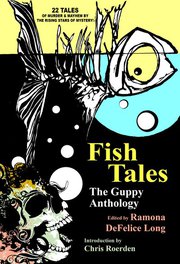
The poor, half-eaten fish to the left graces the cover of Fish Tales: The Guppy Anthology.

Guppies is a chapter of Sisters in Crime, an organization dedicated to the promotion of mysteries written by women.

Guppies is short for The Great Unpublished.

The title is misleading: a number of Guppies are very published, but they remain in the chapter to school the rest of us.

Fish Tales, a collection of twenty-two stories written by Guppies, was recently released as an ebook. A hard copy will soon be available.

I don’t have a story in the anthology, but one of my critique partners, Kaye George, does. It’s titled, “The Truck Contest.”

Kaye’s first book, Choke, will be published by Mainly Murder Press this May. Its protagonist, Imogene Duckworthy of Saltlick, Texas, aspires to be a private investigator.

Immy has written two articles for Hotshots!, the Sisters in Crime Heart of Texas Chapter newsletter. The article in the November 2010 issue explains how to qualify as a private investigator. In the February issue, Immy discusses advice she will give if her three-year-old daughter, Nancy Drew Duckworthy, ever stops playing with Barbie dolls and asks how to be a PI. The November article is informative, but if you really want to know how Immy approaches her cases (she isn’t a private eye yet, but she still manages to have cases), read the one in the February issue. It’s Immy in a nutshell.

But back to Fish Tales. The ebook is available from several major vendors. I’m getting ready to purchase one to read on my computer. I’d like to wait for the print version, but I’m in a bit of a rush. There’s a slim possibility that “The Truck Contest” might be about Immy. I’m becoming addicted to her. She’s a hoot.

Tuesday Teaser 5 (on Thursday)

Teaser Tuesdays is a weekly bookish meme, hosted by Miz B of Should Be Reading. Anyone can play along. Just do the following:

  • Grab your current read.
  • Open to a random page.
  • Share two (2) “teaser” sentences from somewhere on that page.
  • BE CAREFUL NOT TO INCLUDE SPOILERS! (Make sure that what you share doesn’t give too much away! You don’t want to ruin the book for others!)
  • Share the title and author too, so other TT participants can add the book to their TBR lists if they like your teasers.

My teasers:

She said, “You play your cards quite close, don’t you, Thomas.”

He said, “I have no cards at all.”

Elizabeth George, This Body of Death