“With malice toward none with charity for all with firmness in the right as God gives us to see the right let us strive on to finish the work we are in to bind up the nation’s wounds, to care for him who shall have borne the battle and for his widow and his orphan ~ to do all which may achieve and cherish a just and lasting peace among ourselves and with all nations.”
Image of Blue plaque, 3 Kensington Court Gardens, Kensington, London, home from 1957 until his death in 1965
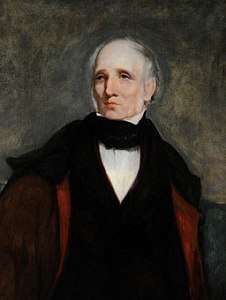
In the movie Tom and Viv, about poet T. S. Eliot and his first wife, Vivien Haigh-Wood, Eliot’s character says that poetry is an “escape from emotion.”* When I heard that, a percentage of my brain defaulted to English 2310 (British Poetry from 1798. or something like that) and Wordsworth’s statement that poetry is the “spontaneous overflow of powerful feelings: it takes its origin from emotion recollected in tranquillity.”
Dr, Thomas Brasher said the key to Wordsworth’s phrase is “recollected in tranquillity.”** Poetry written in the grip of emotion usually turns out to be poetry which, reread the next day, must be revised and edited before it is “good.” Wordsworth composed much of his poetry while taking long walks and later dictated it to his to his sister Dorothy.
William Wordsworth
Everything I write should be recollected in tranquility. That is, I should wait at least twenty-four hours and edit before publishing.
Fiction I edit like crazy for days and days. In one case, for years.
But blog posts—no. I edit like crazy as I write, but that really isn’t adequate.
As a consequence, when I read old posts, I’m often embarrassed.
In twenty-four hours, this one may embarrass me. But I’ll risk it. When it comes to blog posts, my vanity slips a little.
*
*Eliot’s full statement: “Poetry is not a turning loose of emotion, but an escape from emotion; it is not the expression of personality, but an escape from personality.” Which echoes what Wordsworth wrote.
** I remember so much Dr. Brasher said. If you read the work he assigned and listened in class, you remembered. No lectures, just close textual analysis. I took three courses he taught. One of the two best, and most interesting, professors I ever had.
Dr. Brasher also said Eliot was “an intellectual snob,” but I doubt that I will find that on the Internet.
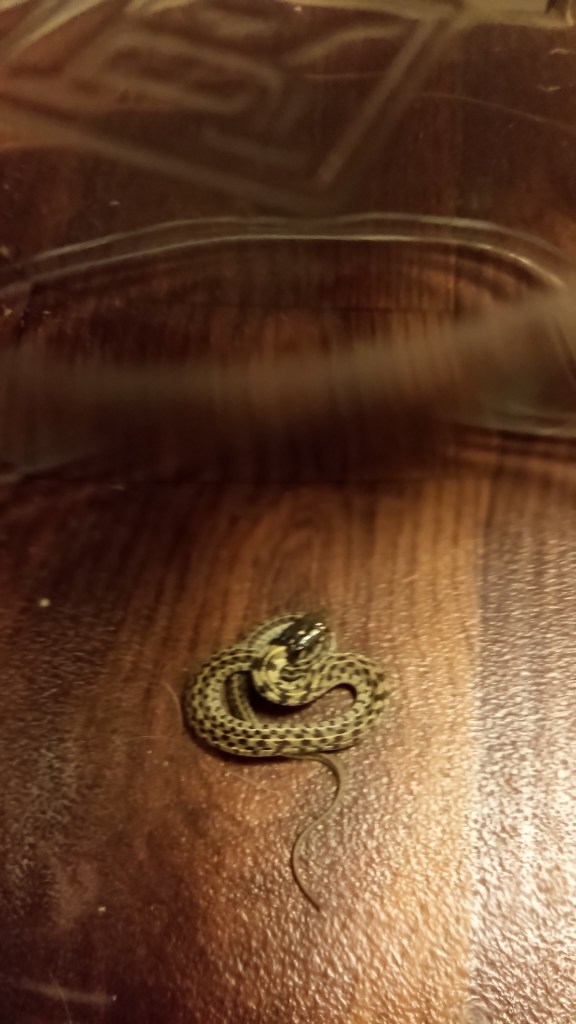
Him: It’s in the kitchen. Just look at the picture.
Me: [Looking at picture] THAT’S IN THE KITCHEN?
Him: Uh-huh. I put a bowl over it.
Me: WHAT KIND IS IT?
Him: I don’t know.
Me: [Seeing no rattles and defaulting to lowercase] It’s probably a good, helpful snake. But it’s still a snake.
Him: I’m surprised it stayed still long enough for me to put the bowl over it. I don’t know what to do. I could call maintenance. Or try to rehome it myself.
Me: CALL MAINTENANCE.
Him: [Hanging up phone] They say it’s not an emergency.
Me: If I’d reported it, it would be an emergency. I’d have talked in capital letters.
Him: I guess I’ll go to Walmart.
Me: Will they send somebody?
Him: Yeah. In a couple of hours.
Exit Him.
Me: I guess I’ll memorialize the event in a blog post.
Snake: Two hours? These idiots are going to keep me stuck in this dinkey little kitchen for two hours? I’ve got to get back down to the creek. The family will start to worry. Austin: people crowding in, buildings shooting up, concrete and asphalt creeping across the natural landscape, exhaust fumes fouling the air. Progress. This town sure ain’t what it used to be.
Later.
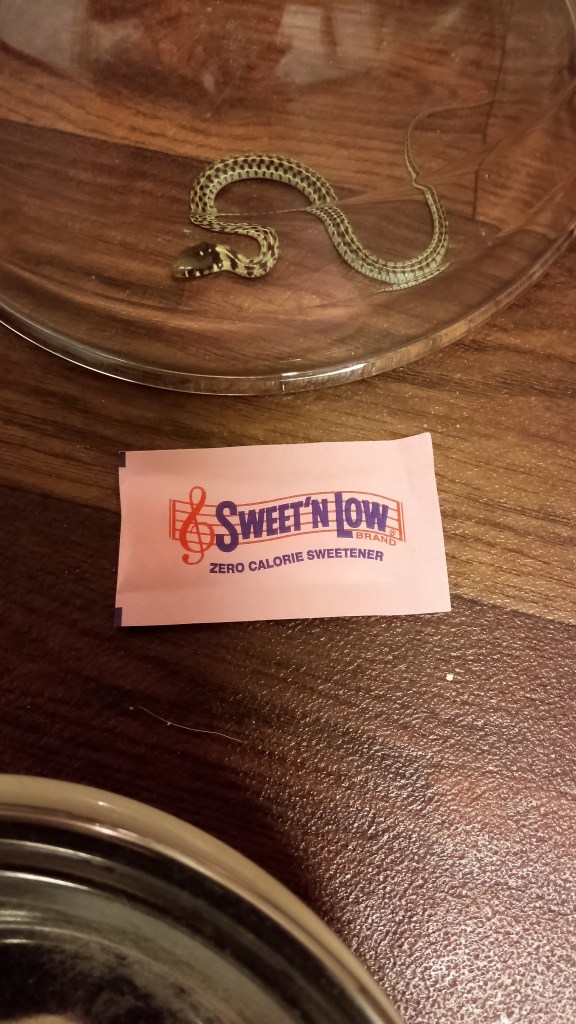
Him: I sent you another picture. For size comparison.
Me: [Looking at picture] Maybe capital letters weren’t warranted after all.
***
Him did not really hang up the phone. Him pressed a button. But old language dies hard, and in my posts, phones are still hung up.
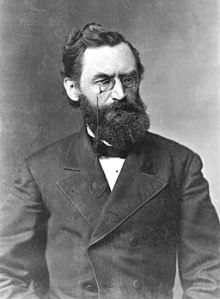
I confidently trust that the American people will prove themselves … too wise not to detect the false pride or the dangerous ambitions or the selfish schemes which so often hide themselves under that deceptive cry of mock patriotism: “Our country, right or wrong!” They will not fail to recognize that our dignity, our free institutions and the peace and welfare of this and coming generations of Americans will be secure only as we cling to the watchword of true patriotism: “Our country — when right to be kept right; when wrong to be put right.”
Carl Shurz, Speech expanding upon his famous statement in the Senate many years before, at the Anti-Imperialistic Conference, Chicago, Illinois (17 October 1899)
I posted the following on Facebook, against my better judgment, and now post it here, also against my better judgment. I hope you will not think less of me for my confession. I just have to vent.
(My final draft shows a space between paragraphs. The post you’re reading doesn’t. I can’t fix it. I am sorry if you find it difficult to read. WordPress does this occasionally. I apologize for criticizing the host platform in public, but I just have to vent.)(
(WordPress also published this post without my telling it to. Maybe AI has taken over.)
*
A neurologist recently asked if I’d noticed any cognitive decline. Well, I’m not going to admit to that.
I said, flippantly, that I’ve lost my algebra. (I wasn’t working problems when I found that out. It just came to me one day that I’ve lost it.) I then discovered he wrote that down. Never be flippant with doctors.
I haven’t used algebra since 1970 except to do comparative shopping in the grocery store, and I haven’t done that for about thirty years, since they started putting price per serving on the shelves. I think it reasonable that I lost my algebra. I found worksheets online and started practicing again but have decided it’s not worth it.
I also think it’s reasonable that I no longer carry my address book in my head, and that I rarely know what day it is since I don’t work and can ask my husband, who keeps up with those things.
I’m shall remind the doctor that I now write publishable, and published, fiction and can still spot a typo at 30 paces (in other people’s stuff).
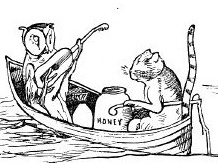
And that I can recite the first 20 lines of The Canterbury Tales in Middle English (learned in 1981) and “The Owl and the Pussycat” (learned in 1953 from hearing it so often).
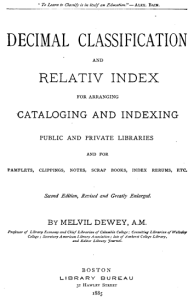
And that I once explained two sections of the Texas Probate Code in a song sung to the tune of “The Battle Hymn of the Republic. And the Dewey Decimal decades, t00. I consider them nothing short of brilliant.
English majors have cognitive functions that are just as well developed as those of math majors.
(Years ago I told an internist I thought my brain was going. He said, “I’m not going to write that down. Insurance companies don’t like it.” He understood flippancy. I hope my insurance doesn’t care about my algebra. Maybe I shouldn’t confess here, but the neurologist needs to read it, though he probably won’t. I’ll give him the URL anyway.)
(I loved algebra and am sorry it’s gone.)
(I lost my trig by the end of the summer after I took the course. I loved it, too, but never really understood the practical applications except for something about measuring the height of a flagpole. I think. Or s0mthing. It was just a bunch of abstractions for me to play with.)
(I didn’t get the practical applications of algebra either. More abstractions, and such beautiful symmetry and balance.)
(When it comes to math, the more abstract, the better. I made A’s in arithmetic, but it wasn’t fun, figuring out the width of a piece of fabric you made by sewing together two other pieces, each 10 inches wide, with a seam requiring 2 inches on each side folded over. Except the book didn’t describe the allowance for the seam in such straightforward terms. It took four of us seventh-grade girls twenty minutes to figure that out, and one of us could sew. We kept forgetting the 4 inches. I don’t know how long it took the boys. You know it’s bad when you remember a problem from 1964.)
(On the other hand, Mrs. Bessie Fricke, my fourth-grade teacher, ensured that all of her students knew their multiplication tables, but good. I still know them.)
(l thought I was odd, setting up little equations in my head in the grocery store, until I learned the math teacher did it that way, too.)
(To read my rendition of the Dewey decades, you’ll have to scroll down that page to “Dewey Marches On.” There’s some introductory stuff before it.)
And that’s what I know, and don’t know. It’s the truth. And it’s all I’m going to confess.
Coming across a reference to William Humphrey, I checked Wikipedia to see if he was the same writer whose memoir I read, and enjoyed, for a graduate course in literature of the Southwest. This is what I found:
“Humphrey attended Southern Methodist University and the University of Texas (perhaps at the Austin campus since his papers are archived in their library), but never graduated. He left Texas as soon as he could.”
“He left Texas as soon as he could.”
Well, we all have our days.
The memoir’s title, Farther Off from Heaven, might be significant. I don’t remember anything about Humphrey’s childhood in the Piney Woods during the Depression that would have made him want to stay.
When started this post, all I intended to do was share that line about leaving Texas–it’s so sudden, so abrupt, such a seeming non-sequitur, yet rife with implication, open to all manner of inference, that it struck me as drop-dead funny.
Since I’m here, however, I’ll go a little further and make a couple of points about Humphrey as a writer, and about literature and popular taste and publishing.
First, Humphrey’s early years in Texas paid off: according to his NYT obituary, “… he retained the memory of his boyhood in Red River County as a most intense experience.”
“Humphrey wrote fiction that addressed the Southern past. He once asserted, “I am a destroyer of myths. My whole work has shown the danger and falseness of myths..[especially] the myth of the South” (“Notes on the Orestia,” 38; MS at Harry Ransom Humanities Research Center, University of Texas at Austin).”
Next, some critical commentary:
“His second novel, The Ordways, was reviewed by the ‘New York Times as “Funny, vivid and moving, this is a fine piece of work and a delight to read,” and was compared to the writings of William Faulkner and Mark Twain. His books received high praise when they were first published, even from fellow writers. He went on to publish a dozen more books.”
“To pick up Humphrey’s extraordinary new novel is to hold an embodiment of grief in your hands. The unrelenting anguish that suffuses this story [is] almost unbearable to behold. It is possible to get through it because the stark poetry of Humphrey’s work is enthralling.” (Newsweek)
“Minor, but interesting and admirable. It has been a long time since Humphrey has enjoyed a commercial success, but he has dedicated his life to his writing with a fidelity all too rare in a culture that encourages facile success and empty honor.” (Jonathan Yardley, writing in The Washington Post (issue of 5 July 1992)
“Funny, vivid, and moving.” “Stark poetry . . . enthralling.” “Fidelity all too rare.” “Compared to the writings of William Faulkner and Mark Twain.”
And now, the un-funny punch line:
“His published works, while still available in French translation, largely have been out of print until recently.”
Thank you, France, for keeping American literature alive.
Oh. Did you catch that other funny bit in the critical commentary?
“His books received high praise when they were first published, even from fellow writers.”
Well, fellow writers aren’t always generous with high praise. William Faulkner had some choice words not praising Ernest Hemingway; Hemingway responded with choice words of his own. Mary McCarthy had some extremely choice words about Lillian Hellman; Lillian Hellman held her tongue but sued for libel.
On the other hand, the writers I know are generous. They read, critique, advise, encourage, open their networks, spread the word.
Some admit to feeling a little envious at another’s success—I myself turn downright green—but they get over it and keep on helping.
And that’s the Truth.
************
While I’m promoting William Humphrey’s work, I’ll also promote my latest publication.
“As you probably know by now, I read a lot of short stories. I seldom take the time to reread one of them, but I did this one. . . . clever story.” (May 12, 2024)
Another generous writer spreading the word.
“Mine Eyes Dazzle” appears in the eclipse-themed anthology DARK OF THE DAY, edited by Kaye George. (Down and Out Books, April 1, 2024)
When I pretend I’m gay I never feel that way I’m only painting the clouds with sunshine When I hold back a tear To make a smile appear I’m only painting the clouds with sunshine
Ailing Kathy Waller Watches Eclipse from Hotel Bedroom
but Claims Holding Back Tears Unnecessary, She’s Fine Hillsboro Partly Cloudy, Street Lights Kick On but That’s About It
That really is about it. Few blanks to fill in. I came down with something Saturday night, slept most of Sunday, drank Coke, watched NASA’s broadcast of the eclipse on TV (Mazatlan, Torreon, Kerrville, Dallas, Little Rock, Cleveland . . . ), drank more Coke, ate a few saltine crackers, slept most of Monday. Drove home Tuesday.
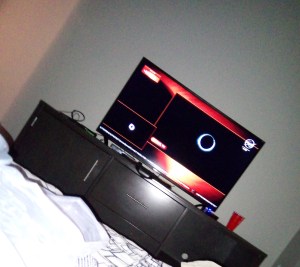
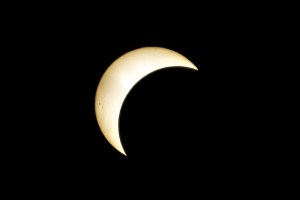
Total eclipse 2024, Dallas, TX, via NASA, viewed from hotel room, Hillsboro, TX
I didn’t wake with a song in my head Tuesday morning but on the drive was suddenly gifted with the one referenced above.
Published in 1929, the song “encourages listeners to embrace a mindset that seeks out the silver lining in every cloud, finding solace and joy in even the darkest of times.”
That description doesn’t reflect my feelings about my eclipse experience. In the first place, it wasn’t, metaphorically, “the darkest of times”; it was a little bug, a mild under-the-weatherness, a minor malady leading to a minor disappointment. In the second place, it wasn’t “the darkest of times” in reality either; every cloud in the partly cloudy sky had a silver lining. It didn’t get dark at all. That could have been a major disappointment, but frankly, my dears, I felt too ratty to care.
(Oh, all right, I admit to having a couple of evil thoughts at hearing people in Dallas, only 56.36 miles northeast of the room where I lay wallowing in my misery, whoop it up in pitch-black dark at midday. And I decided the Greeks might be right about weasels.)
OldTimemusic.com references Bing Crosby’s recording of “Painting the Clouds with Sunshine,” but I prefer Jean Goldkette’s version, vocal by Frank Munn, recorded in 1929. I like the music of that era. The arrangement is so bouncy that the singer couldn’t be near tears.
People watching from outdoor Eclipseboro–Eclipseboro Park, Main Street Eclipseboro, Cosmic Cowboy Eclipse Festival, Eclipse Carnival, Eclipseboro Landing, or Parking and Pancakes at First Methodist Church, for example–might have seen the moon move across the sun even if not in total darkness; I didn’t ask. I did snap a picture through the window during totality, but the flash sort of dulled the effect.
And that is the story of Kathy and David’s Excellent Eclipse Adventure 2024.
For women my age, “Pollyanna” needs no explanation. For the younger generation, there are the links. There are several movie adaptations, going back to a 1920 version starring Mary Pickford, but the only real, true Pollyanna was released by Disney in 1960.
The script writer said, “In the book, Pollyanna was so filled with happiness and light that I wanted to kick her. In the old days, she came on like Betty Hutton. Now, she is shy. We have an adult drag advice out of her. … instead of making her the ‘glad girl’ of the book, we’ve simmered her cheerfulness down to merely emphasize the things-could-be-worse attitude.”
Pollyanna and, a couple of years later, Disney’s The Parent Trap, made Hayley Mills the god of millions of American girls’ idolatry. It’s fashionable to sneer a bit (as I did in the title) at Pollyanna’s “glad girl” personality, but I saw the movie again, more than fifty years after seeing it the first time, and still liked it. The script writer did well, toning down Pollyanna’s robust and saccharine optimism, and making her a sweet little girl who’s taken her father’s philosophy to heart.
*
Composer Joe Burke also wrote “Tiptoe Through the Tulips” and “Carolina Moon.”
Lyricist Al Durbin also wrote “We’re in the Money” and “September in the Rain.”
This morning, I woke, as I often do, with a song in my head. Today’s selection: “His Eye is on the Sparrow.” Every few minutes, I break out into song: “I sing because I’m happyyyy . . .”
The hymn is infinitely more beneficial to my mental health, and, I’m sure, to David’s, than the recent “Pop Goes the Weasel.” Not only can those lyrics grow tiresome, but recently, decades after learning the song, I realized it might not have a happy ending.
The verse I learned:
All around the mulberry bush The monkey chased the weasel. The monkey thought t’was all in fun. Pop! goes the weasel.
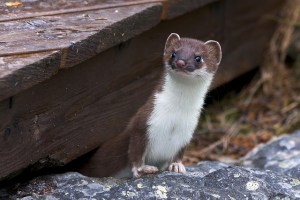
As a child, I sang mindlessly. It’s occurred to me, however, that the word weasel has some negative connotations. One definition is, “a sneaky, untrustworthy, or insincere person.” In The Wind in the Willows, weasels were villains. In the Greek culture, the weasel is believed to be a sign of bad luck, even evil.
If the song’s weasel is untrustworthy, and has led the monkey to believe the chase is all in fun, but then turns and goes Pop! . . . that sounds like bad luck for the monkey.
Wikipedia, which contains a long and comprehensive entry about the song, mentions nothing of the kind, so perhaps my interpretation derives from either my maladjusted mind or my propensity for reading and writing crime fiction. (One critique partner, after reading my latest story, which came to me in a dream, said, “What do you think about at night?”)
Anyway, I’ve decided to forget about monkeys and weasels and sing because I’m happyyyyy.
I’m happy because even as I type, we’re headed north to view the solar eclipse directly in its path over Texas. Something about travel brings out the blogger in me; as soon as we hit the interstate, I’m moved to get out the laptop, fire up the hotspot, run down batteries, and write.
Not the appropriate response.
After spending the Covid years, followed by the knee and foot surgery years, cooped up in the house, I should be glorying in the beautiful Texas landscape rolling by my window. But on this stretch of interstate there’s not much to glory in. What used to be miles and miles of flat grassland is now miles and miles of city interspersed with Buccee’s and McDonald’s. I’d rather stare at a monitor.
We’re traveling early in hopes of missing bumper-to-bumper traffic. A million visitors are expected in Texas this weekend, and on a good day, at least 800,000 traverse this route. At the same time.
With millions more across the nation watching the eclipse, and many of them writing about it, my thousand words won’t add much.
Except –we’ve already experienced three singular events:
Only a few miles from home, David swerved, without colliding with another car, into the left lane to avoid something big and flat lying directly in front of us. Our good fortune leads me to suspect that the Greeks were wrong: the weasel, which I’d been thinking of, but not singing about, all morning, is really a good omen.
I connected the hotspot all by myself, without asking David, again, to remind me how. And I did that even though the process initially went wrong–something new, I swear–and clicking brought up a different screen. Faced with a list of every network in Central Texas except ours, I calmly started over and made it work. And–and here’s the third event–
One of the networks on the list was labeled FBI Surveillance van. The most exciting thing that’s happened since the hogs ate my brother.* Maybe I shouldn’t mention the FBI online, but it might be the most exciting thing that happens this weekend. If you’re ever asked, please bear witness to my voluntary statement that I did not attempt to hack into that network. If they don’t believe that, I can only hope Leavenworth allows laptops.
I say the unexpected network might be the most exciting thing because, while astronomers predict a solar eclipse, meteorologists predict cloud cover, possibly rain. At least in our vicinity. At first, I felt pretty low at the prospect of driving 132 miles one way and not seeing the sun disappear. Last October, we drove about 100 miles to see cloud cover, and in 2017, we drove to Missouri to see the moon cover part of the sun and the light dim almost imperceptibly.**
Then I remembered I’m a native Texan, a certified old-timer, and that the unofficial State Motto is, “Sure Could Use Some Rain.”*** So I adjusted my attitude. Let it rain.
I promise not to complain about cloud cover either. The other State Motto is, “If You Don’t Like the Weather in Texas, Just Wait.” Things change.
I do worry about visitors from far away, however. Like the couple who live in Norway, in the Arctic Circle. They say they’ve never been to Texas and look forward to seeing it. If it rains, they’ll see Vermont instead. Well, maybe Houston; it sometimes rains there, too.
Okay, we’re here. Laptop and phone batteries in fine shape. Snacks in fine shape, from Tuna Creations to individually packaged microwavable soup to apples to Wheat Thins to pecans to popcorn. Plus paper towels, plasticware, reusable microwavable soup bowls (new addition). And, I’m sure, other things I don’t know about. David is always prepared.
My father said that no man should get married until he’d first lived as a bachelor for at least six months and learned to take care of himself. He lived with his widowed father for years before marrying and was an excellent cook and housekeeper.
David was a bachelor for a long time, too. He can do anything.****I lived alone for years and am a mess.*****
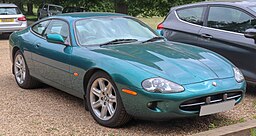
We’ll see what happens. Probably what NASA predicts, but maybe not. Maybe we’ll see an omen of a future more terrible than the weasel ever thought of: possibly the release of an Eternal Bat and a Blue Jaguar that will destroy the stars and mankind; or Homeland Security hijacking the “biblical event” (how and why have not been explained).
But that is fodder for another post. Or not, depending on the Jaguar.
*
*My mother used to say that. I don’t have a brother. Neither did my mom. It’s Texas talk.
**We chose Blue Springs because I have family there. Seeing them made up for the eclipse.
***The official State Motto is “Friendship.” No comment.
****Except make pies. My father made a killer chocolate meringue pie.
*****I’m not being facetiously self-effacing. Everyone who knows me well will back me up.
*
That’s probably not the kind of jaguar that will be released, but it’s the only picture of a blue jaguar that I could find.
Loveliest of trees, the cherry now Is hung with bloom along the bough, And stands about the woodland ride Wearing white for Eastertide.
Now, of my threescore years and ten, Twenty will not come again, And take from seventy springs a score, It only leaves me fifty more.
And since to look at things in bloom Fifty springs are little room, About the woodlands I will go To see the cherry hung with snow.
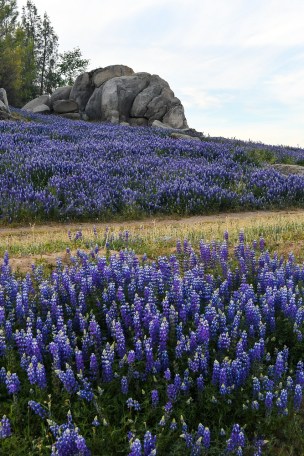
I post this poem every spring as a reminder that life is brief, and that wildflowers blanket Texas fields and roadsides for only a few weeks each year. Fifty springs—or fewer—are little room in which to look at them. Seize the day. Go out and see the bluebonnets.








 M. K. Waller