Blog

Veterans Day: World War II – PFC Bill Waller

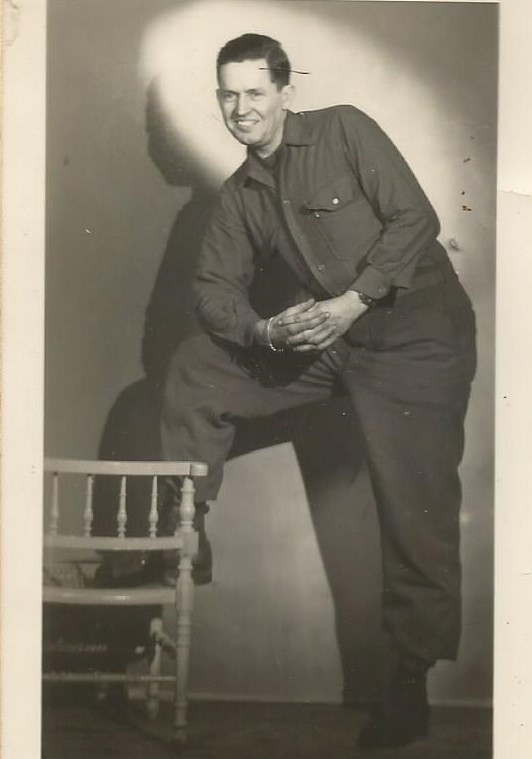
My father, Billie Waller, volunteered for the U.S. Army early in 1941.

He served in World War II in Northern Europe. He drove onto Omaha Beach on June 19th, 1944.

He refused all promotion.

He said the coldest winter he’d ever known was the one he spent in Cologne.

He repeatedly fell for a prank played by fellow soldiers: Knowing he had lost his sense of hearing, they would signal that a bomber was approaching and run; then, when he dived into a foxhole, they laughed. When Major Yarborough, the officer he drove for, finally happened to see, and so realized that one man under his command couldn’t hear and others were endangering him, he got the one out of harm’s way and disciplined the rest (how the Major did the latter, I don’t know).

My father was sent from the front lines in Germany to spend the last months of the war as an ambulatory patient in a Paris hospital, deaf from bomb concussion.

He arrived in Dallas, where my mother was living and working, before dawn on October 23, 1945, and handed his hearing aids to his mother-in-law with instructions not to tell my mother. Mother-in-law told. After several days of yelling to make herself heard, my mother told him to get the hearing aids and wear them. He’d been afraid she wouldn’t love a deaf husband.

He gave my mother his uniforms and said, “Get rid of these.”

He kept his dog tags, some foreign coins, and a cigar holder given him by a Belgian farmer.

He delighted his mother-in-law by saying, “Oh la la!”

He had dinner ready every night when my mother got home from work. He specialized in chocolate pies topped by a mountain of meringue. Removing one from the oven, he flipped it upside-down onto the oven door and had to serve it as a pudding.

He was turned down for a job in warehousing because he was deaf (ironic, since he later worked in supply in Air Force Civil Service). He got a job in a toy store, where he sold a tricycle to a couple with a little boy. After the sale, he learned the trike was a demo, the only one the store had, and the only one it was likely to get in the foreseeable future. Having been overseas, he wasn’t familiar with shortages on the homefront. (My mother said if he had known, he’d have been tempted to sell it anyway, because he believed little boys who wanted tricycles shouldn’t have to wait.)

On May 1, his birthday, he took the day off and spent it with Yarborough (no longer Major) in Fort Worth. When he didn’t return timely for the birthday dinner she’d cooked, complete with chocolate cake with fudge icing, my mother cried and cried. She realized later, she said, laughing, that at that point, my dad had lived with Yarborough a lot longer than he’d lived with her, and that the two men probably had more in common.

After six months in Dallas, he achieved the dream that had kept him going throughout his years away. If my mother had worked for another six months, she would have had reinstatement privileges with Civil Service, but she didn’t hesitate. The San Marcos River was the only place he wanted to be, or would ever want to be. They moved to Fentress.

My mother said that of all the men she knew who served in World War II, he was the least changed.  He came home and was again just Bill, with the quiet, dry sense of humor and the twinkle in his blue eyes. He put the war behind him and went on with life.

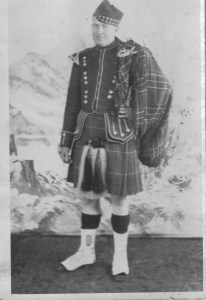
When he spoke of his service, he confined himself to people he’d known and the lighter side of daily life. While stationed in Scotland he and some friends had their pictures taken in traditional dress. He said one of the men, when changing back into uniform, forgot to take off the socks, and got back to the base wearing the photographer’s argyles. 

He made a few observations: He respected General Omar Bradley but had a low opinion of Patton. 

But he didn’t share stories of combat. He’d written my mother, “I’ve seen things you wouldn’t believe. I’ll tell you when I get home.” He never told.

Two remarks he made years later suggest why:

My mother told me about the first: When his brother Donald and others were talking about looting that occurred on the battlefield, my father, who’d been silent, suddenly said, “I’ve seen them cut off fingers to get rings.”

He made the second comment in my presence: My uncle’s stepson, who had served in the military but seen no combat, was looking forward to watching the movie Anzio on television. He said, “I can’t imagine hitting the beach and running into enemy fire like that.” My father replied, “There’s nowhere else to go.”

Such memories aren’t conducive to going on with life.

In 1964, when President Eisenhower’s memoir of D-Day and the Invasion was published serially in the San Antonio newspaper, he read it. Occasionally, he said, “No, that’s not quite right . . .” or, “He’s forgotten about . . .”

The one thing he couldn’t leave in the past was his deafness. The hearing aid didn’t filter out ambient noise, and he often walked out of gatherings–family get-togethers, wedding receptions, church dinners–that he would otherwise have enjoyed. He left Civil Service because his job at the time required taking sensitive, detailed information over the telephone, and he was afraid of making a mistake, which could have cost lives.

In 1967 and 1968, surgery at the VA hospital in Houston restored hearing in both of his ears and allowed him to lead a normal life.

In the summer of 1981, he finally expressed a desire to attend a reunion of the men he’d served with. An angina attack sent him to the hospital that weekend instead. He didn’t get another opportunity to see them again.

***

The cigar holder lived–and still lives–in the silver chest. I’ve known about it practically all my life and occasionally took it out and examined it when I was a child–but it took decades for me to realize its meaning. The farmer didn’t give a cigar holder to just some young man passing through; he gave it to an American GI, one among thousands he’d waited and hoped for, who was risking his life to free the Belgian people, and all of Europe, from the tyranny of Nazi Germany. The cigar holder represented gratitude, and more. In my mind’s eye, I see my my father and that farmer talking about the weather and how the crops were doing–if any arable land hadn’t been overrun by bootsoles and tanks. They’d have been speaking different languages, of course, but the language of farmers, and of friendship, is universal. And since my father was involved, they’d also have been laughing.

***

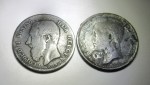
Two 50-centime Belgian coins.

Left, the profile of King Leopold II, dated 1888 or 1886.

Right, the profile of King Albert, date obscured by tarnish. Albert succeeded Leopold in 1909.

A dose of silver polish and elbow grease and more will be revealed.

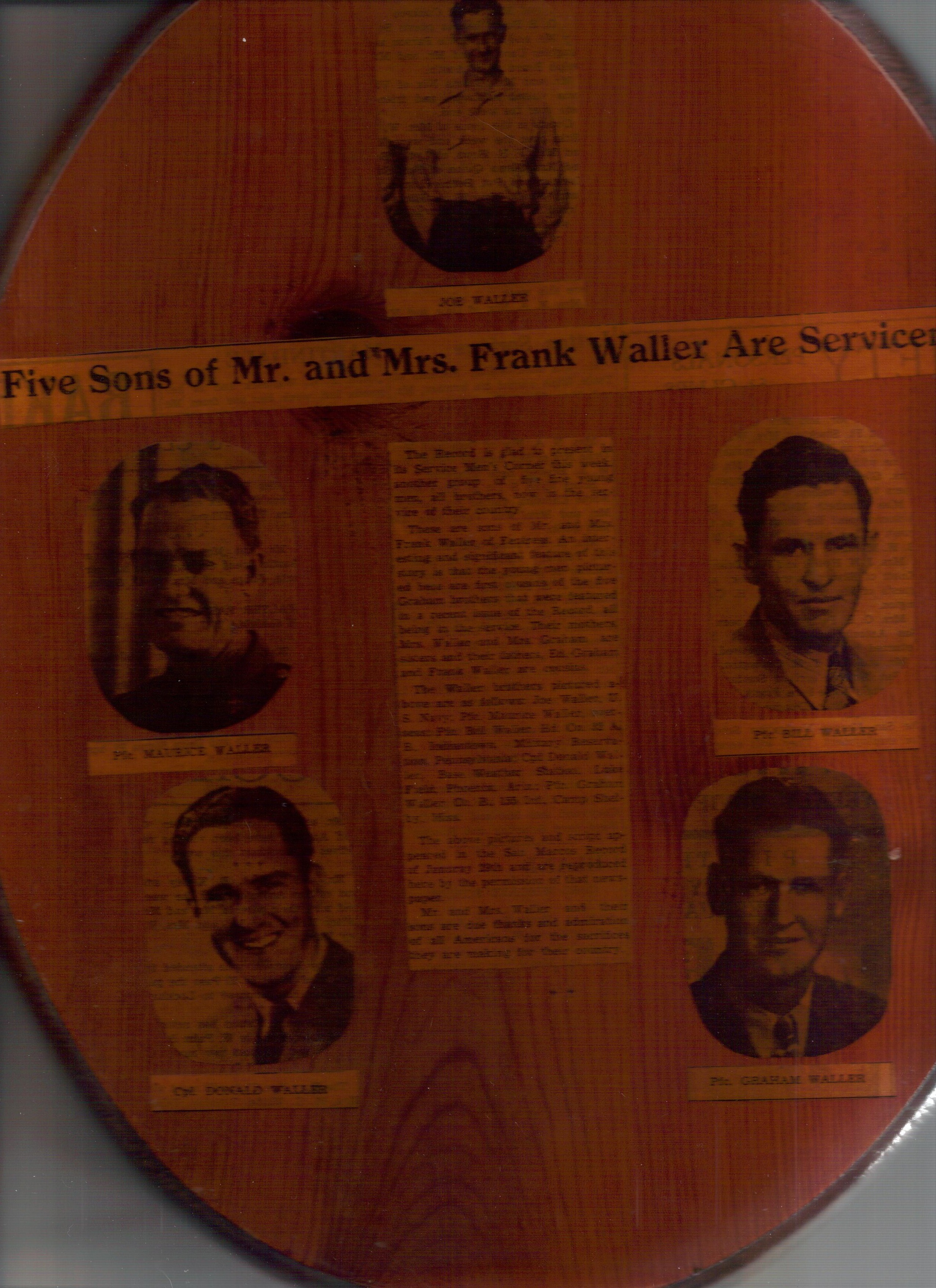
Veterans Day: World War II – The Waller Boys

Clockwise from lower left: Donald Waller, Maurice Waller, Joe Waller, Bill Waller, Graham Waller.

Five Sons of Mr. and Mrs. Frank Waller Are Servicemen

The Record is glad to present in its Service Men’s Corner this week another group of five fine young men, all brothers, now in the service of their country.

These are sons of Mr. and Mrs. Frank Waller of Fentress. An interesting and significant feature of this story is that the young men pictured here are first cousins of the five Graham brothers that were featured in a recent issue of the Record, all being in the service. Their mothers, Vida Waller and Bruce Graham, are sisters and their fathers, Ed. Graham and Frank Waller, are cousins.

The Waller brothers pictured above are as follows: Joe Waller, U. S. Navy; Pfc. Maurice Waller, overseas; Pfc. Bill Waller, Hd. Co. 32 A. B., Indiantown Gap, Pennsylvania; Cpl. Donald Waller, Base Weather Station, Luke Field, Phoenix, Ariz.; Pfc. Graham Waller, Co. B. 155 Inf., Camp Shelby, Miss.

The above pictures and script appeared in the San Marcos Record of January 29th and are reproduced here by the permission of that newspaper.

Mr. and Mrs. Waller and their sons are due thanks and admiration of all Americans for the sacrifices they are making for their country.

Source: Lockhart (TX) Post Register, 1943

*****

Joe, Donald, and Graham served in the Pacific. Bill and Maurice served in Northern Europe. All returned. Bill came home deaf from bomb concussion and spent the next twenty years telling curious children that his hearing aid was a telephone. In 1967 and ’68, a new surgery being taught at the VA hospital in Houston restored his conversational hearing.

Veterans Day: Henry Waller, Letter from France, 1918

*


AMERICAN Y.M.C.A.
ON ACTIVE SERVICE WITH THE AMERIAN EXPEDITIONARY FORCE

July 23, 1918

Dear Mother and Sisters,

After a lengthy but very interesting overseas journey, we at last arrived at our point of destination. Perhaps you can imagine how proud we were to see land after a weeks ride on a crowded boat; and I want to say right here that there is no prettier country under the blue sky than that with which these people are blessed and for which they are making a sacrifice to hold. Any picture you might imagine I think would hardly do the real France justice.

The streets of the city where we landed, and through which we marched to our camp on the outskirts, was lined with old men, women and children, for that is about all there is left to welcome the soldiers.

We are comfortably located in tents now in the suburbs of a city of 100,000 population, a very pretty place. We are provided with plenty to drink, good water, I mean, plenty of good fresh meat and lots of other good things to eat. The Y.M.C.A. here, as in the states, look after our interests in the usual way. The hospital accommodations are excellent, but so far, fortunately, few of us have had to avail ourselves of their service.

Altho I have seen very little of the country as yet, I can readily see why these people are so patriotic and so willing to make sacrifice for their country; it is such a pretty and prosperous land. Picture some large & irrigated truck farm and you have an idea of the appearance of this country It is harvest time now, and the people are blessed with an abundant crop. They grow most everything there is to eat.

On the surface there is little evidence of grief or mourning on the part of these people, not withstanding the fact that most every family have lost one or more members. The women and children, for that is all you see, except occasionally a few return from the front on a short furlough, are always up and going, and the spirit of self-sacrifice and determination is such that defeat for them is out of the question.

Mama, we are quite a ways from the firing line now and as yet have seen little of the real war that you read of in the states; yet we are close enough to see the effects and to feel that not all of the paper reports are fiction. I don’t know just how long we shall remain here. But for my part, I am anxious to get into the very thick of it all.

Our branch of the service affords us an opportunity so see a great deal of the country–to see history in the making, to learn the custom and characteristics of the people first hand.

Now Mama, regardless of how close to the front we are placed, or what kind of work we shall be called upon to do you should not worry in the least about me but rather be proud that you can contribute in this way, what little I may be able to do, to this cause, and share with me the praise, if any, and the blessing that all who serve, keeping in mind the high ideal for which we are here, shall receive.

I have never been in better spirits nor in better health. The weather is fine, very similar to N.Y. Over coats are comfortable at times. I shall not write more now for I don’t know how much will pass, and too there is some poor censor that will have to read this with scores of others. Take good care of yourself, and give my love to all the family.

With lots of love to you and sisters from

Your loving Son

Henry

*

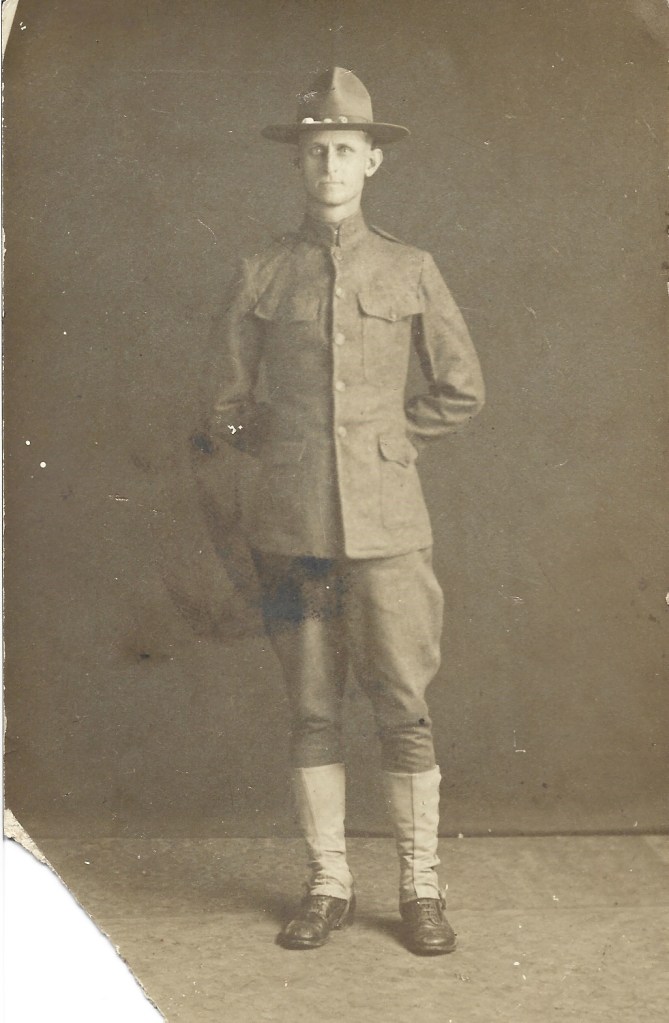
Henry Waller was my grandfather’s younger brother. What I know about him:

He was born in 1887, in Guadalupe County, Texas. His parents were Ophelia Ann Graham Waller and Edward Pettus Waller. He served as either superintendent or principal of the rural school at Staples, Texas, near his family’s farm.

Thirty years old when the United States entered World War I, he enlisted in the army and served overseas. A transcription of a letter he sent to his mother and his sisters, Ethel and Jessie, appears above.

He was already drinking to excess when he enlisted. By the time the war was over, his alcoholism had progressed so far that he refused to return home–because, he said, he didn’t want his mother to see what he’d become.

He lived the rest of his life in New York City. I have a snapshot of him standing with friends, wearing a straw katie and looking well and happy.

I don’t know how he supported himself, but there came a time when he was unable to do so, and when his family in Texas could no longer support him adequately. In 1933, he committed suicide. He is buried at the Masonic Cemetery in Prairie Lea, Texas.

How much his experience in combat contributed to his alcoholism, I don’t know.

Pyrenees…Special Breeze…Do You Know This Poem?

In the original post, I asked whether anyone could identify the poem beginning

“Oh, somewhere there are people who
Have nothing in the world to do
But sit among the Pyrenees . . .”

Author N, M, Cedeno provided the answer: “Midsummer Melancholy,” by Margaret Fishback (1900-1985).

She also provided a link to the entire (?) poem on The Berkshire Edge

***

I heard this poem recited on Anyone for Tennyson?, a series that ran on PBS from 1976-78. I haven’t been able to find it online.

If you know the author and/or a book in which the poem appears, please leave the name/title in a comment.

Thinking of Heaven

No heaven will not ever Heaven be

Unless my cats are there to welcome me.

–Anonymous

***
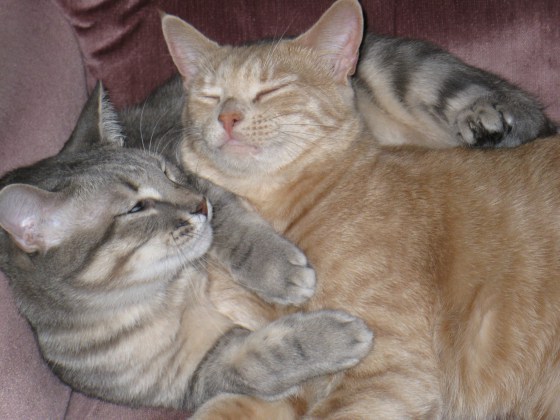
Ernest, William, Alice B Toeclaws, and Chloe
Unpictured: Christabel, Ms. Siamese, Nicole, Ashley,
Mr. Peyton, Ten-Thirty, Miss Kitty, Tinker,
Olivia, Bunny, Edith, Pitti-Sing, and many others
Alice B. Toeclaws
Chloe

The Maven: A Poe-ish Poem for Halloween. Again.

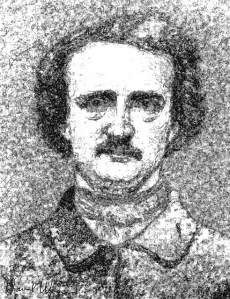
2018-10-20 ttm pixabay poe cc0 pd writer-17565_640

I would say this post is back by popular demand, but I’d be lying. No one has demanded it. I post it because it’s almost Halloween, and because I had fun writing it way back when, and because I want to.

To learn why I wrote it, read on. If you don’t care why I wrote it, skip the next part, but the poem will be easier to understand if you just keep reading.

*****

Why? Because–A friend called to confirm that David and I would meet her and her husband the next day for the Edgar Allan Poe exhibit at the Harry Ransom Center. She mentioned that her house was being leveled for the second time in three years*: “There are thirteen men under my house.”

I hooked up Edgar Allan Poe with the number thirteen and house with Usher and wrote the following verse.

Note: Tuck and Abby are my friends’ dogs.

Another note: Maven means expert. I looked it up to make sure.

*

THE MAVEN

To G. and M. in celebration
of their tenth trimester
of home improvement,
with affection.
Forgive me for making
mirth of melancholy.

Once upon a midnight dreary, while I pondered weak and weary

Over many a quaint and curious volume of forgotten lore,

While I nodded, nearly napping, suddenly there came a rapping,

As of someone gently tapping, tapping at my chamber floor.

“‘Tis some armadillo,” said I, “tapping at my chamber floor,

Only this, and nothing more.”

Ah, distinctly I remember it was in the dry September,

And my house was sinking southward, lower than my bowling score,

Pier and beam and blocks of concrete, quiet as Deuteron’my’s cat feet,

Drooping like an unstarched bedsheet toward the planet’s molten core.

“That poor armadillo,” thought I, “choosing my house to explore.

He’ll squash like an accordion door.”

“Tuck,” I cried, “and Abby, come here! If my sanity you hold dear,

Go and get that armadillo, on him all your rancor pour.

While he’s bumping and a-thumping, give his rear a royal whumping,

Send him hence with head a-lumping, for this noise do I abhor.

Dasypus novemcinctus is not a beast I can ignore

Clumping ‘neath my chamber floor.”

While they stood there prancing, fretting, I imparted one last petting,

Loosed their leashes and cried “Havoc!” and let slip the dogs of war.

As they flew out, charged with venom, I pulled close my robe of denim.

“They will find him at a minimum,” I said, “and surely more,

Give him such a mighty whacking he’ll renounce forevermore

Lumbering ‘neath my chamber floor.”

But to my surprise and wonder, dogs came flying back like thunder.

“That’s no armadillo milling underneath your chamber floor.

Just a man with rule and level, seems engaged in mindless revel,

Crawling round. The wretched devil is someone we’ve seen before,

Measuring once and measuring twice and measuring thrice. We said, ‘Señor,

Get thee out or thee’s done for.'”

“Zounds!” I shouted, turning scarlet. “What is this, some vill’nous varlet

Who has come to torment me with mem’ries of my tilting floor?”

Fixing myself at my station by my floundering foundation,

Held I up the quaint and curious volume of forgotten lore.

“Out, you cad!” I said, “or else prepare to sleep beneath my floor,

Nameless there forevermore.”

Ere my words had ceased resounding, with their echo still surrounding,

Crawled he out, saluted, and spoke words that chilled my very core.

“I been down there with my level, and those piers got quite a bevel.

It’s a case of major evolution: totter, tilt galore.

Gotta fix it right away, ma’am, ‘less you want your chamber floor

At a slant forevermore.”

At his words there came a pounding and a dozen men came bounding

From his pickup, and they dropped and disappeared beneath my floor.

And they carried beam and hammer and observed no rules of grammar,

And the air was filled with clamor and a clanging I deplore.

“Take thy beam and take thy level and thy failing Apgar score

And begone forevermore.”

But they would not heed my prayer, and their braying filled the air,

And it filled me with despair, this brouhaha that I deplore.

“Fiend!” I said. “If you had breeding, you would listen to my pleading,

For I feel my mind seceding from its sane and sober core,

And my house shall fall like Usher.” Said the leader of the corps,

“Lady, you got no rapport.”

“How long,” shrieked I then in horror, “like an ominous elm borer,

Like a squirrely acorn storer will you lurk beneath my floor?

Prophesy!” I cried, undaunted by the chutzpah that he flaunted,

And the expertise he vaunted. “Tell me, tell me, how much more?”

But he strutted and he swaggered like a man who knows the score.

Quoth the maven, “Evermore.”

He went off to join his legion in my house’s nether region

While my dogs looked on in sorrow at that dubious guarantor.

Then withdrawing from this vassal with his temperament so facile

I went back into my castle and I locked my chamber door.

“On the morrow, they’ll not leave me, but will lodge beneath my floor

Winter, spring, forevermore.”

So the hammering and the clamoring and the yapping, yawping yammering

And the shrieking, squawking stammering still are sounding ‘neath my floor.

And I sit here sullen, slumping in my chair, and dream the thumping

And the armadillo’s bumping is a sound I could adore.

For those soles of boots from out the crawlspace ‘neath my chamber floor

Shall be lifted—Nevermore!

*

The reason the house was leveled twice in three years is a story in itself, not to be told here.

81st Wedding Anniversary

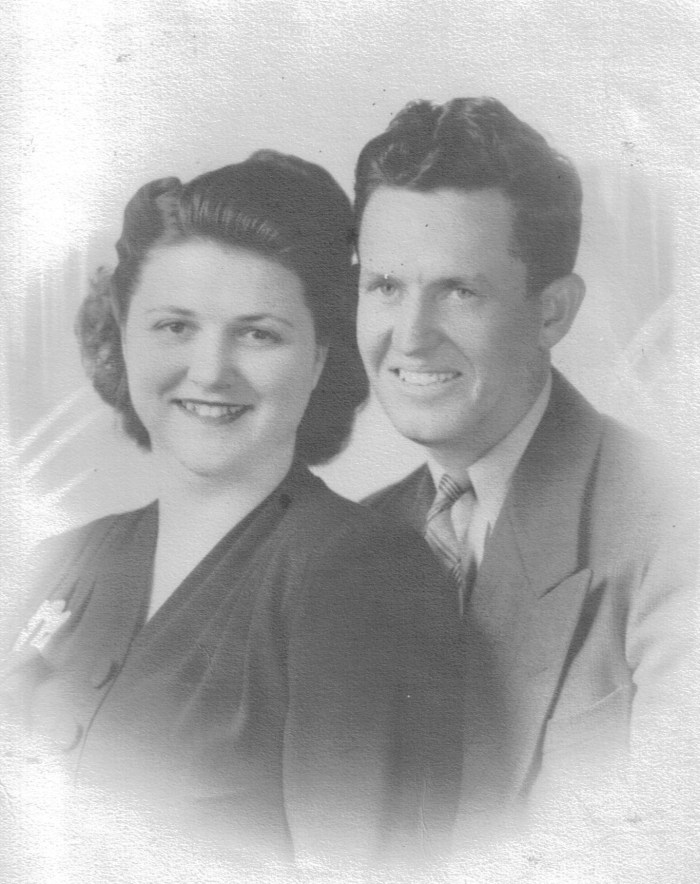
My parents, Billie and Crystal Barrow Waller, were married on October 24, 1942. Today is their 81st anniversary.

They married on a Saturday afternoon at the home of the Baptist minister in San Marcos. My father’s first cousin and my grandmother Barrow’s best friend, Carmen Barber Harper, served as witness.

On Monday, my mother, an office manager at Fort Sam Houston in San Antonio, turned in a change-of-name form. Major Joseph, whom she’d worked for for nearly two years, called her into his office and said, “Miss Barrow, what have you done?”

She told him she’d married.

“How long have you known this man?”

“Six years.”

“Oh.” He seemed relieved to know she hadn’t formed a wartime alliance with a GI after a two-day acquaintance. “Where is your husband?”

He was at the house she shared with her mother and her younger sisters. In a week he would be rejoining his unit in Southern California.

“Miss Barrow, go home and stay there.”

She stayed there until my father’s leave was over.


When my father arrived in California, he found his unit had already shipped out. He rode a flatcar, guarding tanks, to Hershey, Pennsylvania, where he was stationed until he left for England, Scotland, England, France, Belgium, Germany, and again France.

My mother stayed in San Antonio, working at Fort Sam Houston. When her military employers moved to Dallas, she and her mother and sisters moved there.

My father returned home from service on October 23, 1945, one day before their third anniheversary. Six months later, my mother resigned her job and they moved to my dad’s home town of Fentress.

I was born on their ninth anniversary.

BSP: Alien Whisperer

David’s short video Alien Whisperer was screened at the Gulf Coast Film Festival in Clear Lake, Texas, last weekend.

David doesn’t like to do BSP–Blatant Self-Promotion–so I help him out. I guess that makes it Blatant Spouse Promotion.

Alien Whisperer isn’t on David’s YouTube channel yet, but here’s a link to Invisible Men Invade Earth, my favorite of his videos. It was named What the Fest Judges’ Pick at Dallas’ Pocket Sandwich Theater in 2017.

Judges liked Invisible Men because it has a “purity”–which is a departure from the usual description of his videos as “weird”–but I like it because it features our William and Ernest. Asked how he got William and Ernest to follow direction, he said that he figured “if you set up a camera on a tripod, cats will do something.”

To see more of David’s videos, go to Youtube.com and search for @daviddavisvideo.


Review: Manning Wolfe’s Dead by Proxy

Manning Wolfe’s latest, DEAD BY PROXY, is out today. Here’s my take on it:

When defense attorney Byron Douglas must flee New York City before a mob hitman takes him out—and the Feds decline to help—he designs an unofficial witness protection program, fakes his own death, and disappears.

And the reader assumes he’ll spend the rest of the book living on the fringes of society, making no friends, keeping a low profile.

Wrong. Here’s where the author throws in a twist. Byron takes the opportunity to practice criminal defense law under a new identity, and suddenly he’s in the spotlight—the courtroom, the headlines—and lying not only to casual acquaintances, but to police, to judges, to everyone. He’s trapped in a web of lies. And thanks to his high-profile job, he’s looking over his shoulder double time.

From now on, it’s twist after twist: hitmen surface, a dead man returns, another dead man views his own body at the morgue. And finally a murderer is exposed.

Reading DEAD BY PROXY is like playing a game of literary Twister. Kudos to Manning Wolfe for serving up a suspenseful—and fun—book.

***

FTC Disclaimer: I received an Advance Review Copy of Dead by Proxy and then purchased a copy for my Kindle. I paid for the ebook with my very own money. Nobody paid me to write this review. Nobody threatened me to get me to write it. Nobody said I’d better like the book or else. The words are all mine, and so are the ideas.

Such a Kerfuffle O’er a Runcible Spoon

[I don’t know why several paragraphs are jammed together.
I double-spaced. I triple-spaced.
But the paragraphs insist on bunching up
in an unattractive and almost unreadable lump.
My apologies.
I tried.]

Today I answer the question—Exactly what is a runcible spoon?

You no doubt remember that Edward Lear’s Owl and Pussy-Cat use one at their wedding breakfast:

“They dined on mince, and slices of quince,
   Which they ate with a runcible spoon;” . . . 
Since the term isn’t in general usage, many readers don’t understand it but accept it as a Lear-ism and ask no further.
Those who do go further and consult Merriam-Webster find it is “a sharp-edged fork with three broad curved prongs,”—but MW cites no sources, a no-no in scholarly circles. Some sources claim it’s a spork.
Wikipedia goes on and on about runcible spoons but offers no definitive answer. It includes a long list of authors, screenwriters, composers, and others who’ve used the word runcible. These two jump out at me:
  • Paul McCartney‘s 2001 album Driving Rain includes the track “Heather” which features the lyrics: “And I will dance to a runcible tune / With the queen of my heart”. McCartney has explained the connection to “The Owl and the Pussycat” in various interviews since its release.
  • In Lemony Snicket‘s 2006 The End, an island cult eats using only runcible spoons
Such a kerfuffle over something that should be as plain as the nose on the Pussy-Cat’s face.
Lear himself defines the term—not in O&P, but in a lesser-known work. In Twenty-Six Nonsense Rhymes and Pictures, he writes of
The Dolumphious Duck,
Who caught Spotted Frogs for her dinner
With a runcible spoon
and provides a picture:


Tricia Christensen, writing in LanguageHumanities, notes that

A Latin word runcare means to weed out. This word could explain the Dolumphious Duck’s fishing process with a runcible spoon. The duck is really weeding out the frogs from the water.

That should settle the question. But it doesn’t.

For one thing, it seems to me that eating mince and slices of quince with a runcible spoon would be difficult if not downright messy.

And Christensen notes that Lear also applies the adjective to a goose, a hat, and a wall. Wikipedia points to a runcible cat and a Rural Runcible Raven. None of the aforementioned, at least as we understand them, resembles a ladle.

“Despite the nebulous meaning of the words runcible spoon,” she says, “they trip off the tongue with delight and account for their many uses by other authors.”

So—what is a runcible spoon? It’s nonsense.

What else would it be? It comes from the brain of Edward Lear.

###

Except, to muddy the water:

Wikipedia dates publication of “The Owl and the Pussy-Cat” at 1870.

Here’s a photo of a George III Sterling runcible spoon by Eley & Fearn, L0ndon, 1817

George III Sterling Silver runcible spoon – by Eley & Fearn, London. TonyGosling, CC BY-SA 4.0, via Wikimedia Commons


Maybe the item wasn’t originally called a runcible spoon. Maybe the adjective was applied post-1870. I don’t know.

More nonsense.

Song of the Day: Her Beauty Was Sold . . .

She’s only a bird in a gilded cage,
A beautiful sight to see,
You may think she’s happy and free from care,
She’s not, though she seems to be,
‘Tis sad when you think of her wasted life,
For youth cannot mate with age,
And her beauty was sold, for an old man’s gold,
She’s a bird in a gilded cage.

*

This song was playing in my brain when I woke yesterday morning.

I thought that if I posted it, I might stop singing it.

David would be grateful.

*

Facts:

Sylvester Stallone sings the song in his guest spot of The Muppet Show. Elmo sings the first verse of this song when he is a pet bird in a bird cage in the Elmo’s World segment Pets on Sesame Street.Wikipedia

*

Read the rest of the song—and hear a recording—at https://www.lyricsondemand.com/t/traditionallyrics/abirdinagildedcagelyrics.html

“Rain, rain, rain, rain! Today!”

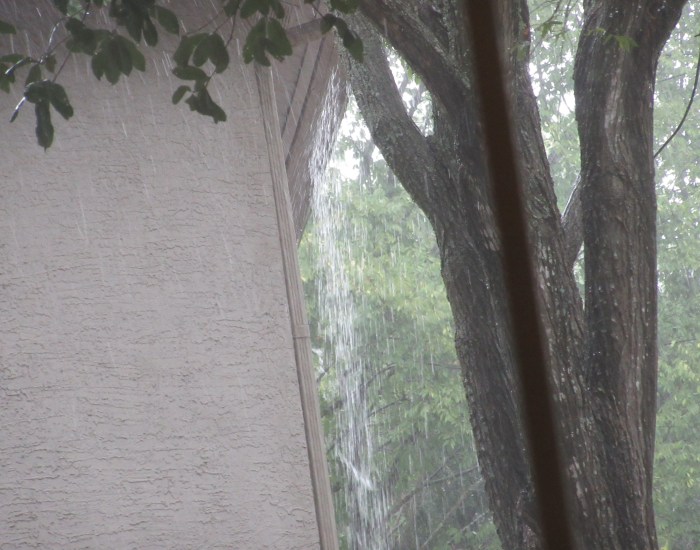
It’s pretty pathetic when, upon glancing through the window and seeing water falling from the sky, you 1) scream for your spouse to come look, and 2) grab a camera to memorialize the event.

It’s even worse when your spouse runs in and checks the Internet to make sure you’re not experiencing a collective hallucination.

The phenomenon lasted about five minutes. If that. The local weather website showed the cell right above us and nowhere else.

According to lore I learned in childhood, we damp ones have been 1) living right and/or 2) paying the preacher.

Rain cascading off roof of neighboring building. Austin, Texas. August 1, 2023.

*

*Post title taken from “Rain Song,” 110 in the Shade, book by N. Richard Nash, lyrics by Tom Jones, music by Harvey Schmidt. More about that later.