Veterans Day: World War II – PFC Bill Waller

My father, Billie Waller, volunteered for the U.S. Army early in 1941.

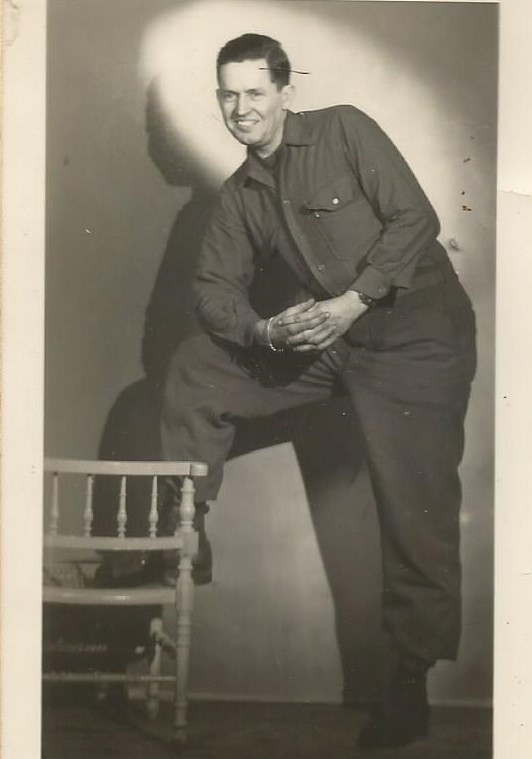
He served in World War II in Northern Europe. He drove onto Omaha Beach on June 19th, 1944.

He refused all promotion.

He said the coldest winter he’d ever known was the one he spent in Cologne.

He repeatedly fell for a prank played by fellow soldiers: Knowing he had lost his sense of hearing, they would signal that a bomber was approaching and run; then, when he dived into a foxhole, they laughed. When Major Yarborough, the officer he drove for, finally happened to see, and so realized that one man under his command couldn’t hear and others were endangering him, he got the one out of harm’s way and disciplined the rest (how the Major did the latter, I don’t know).

My father was sent from the front lines in Germany to spend the last months of the war as an ambulatory patient in a Paris hospital, deaf from bomb concussion.

He arrived in Dallas, where my mother was living and working, before dawn on October 23, 1945, and handed his hearing aids to his mother-in-law with instructions not to tell my mother. Mother-in-law told. After several days of yelling to make herself heard, my mother told him to get the hearing aids and wear them. He’d been afraid she wouldn’t love a deaf husband.

He gave my mother his uniforms and said, “Get rid of these.”

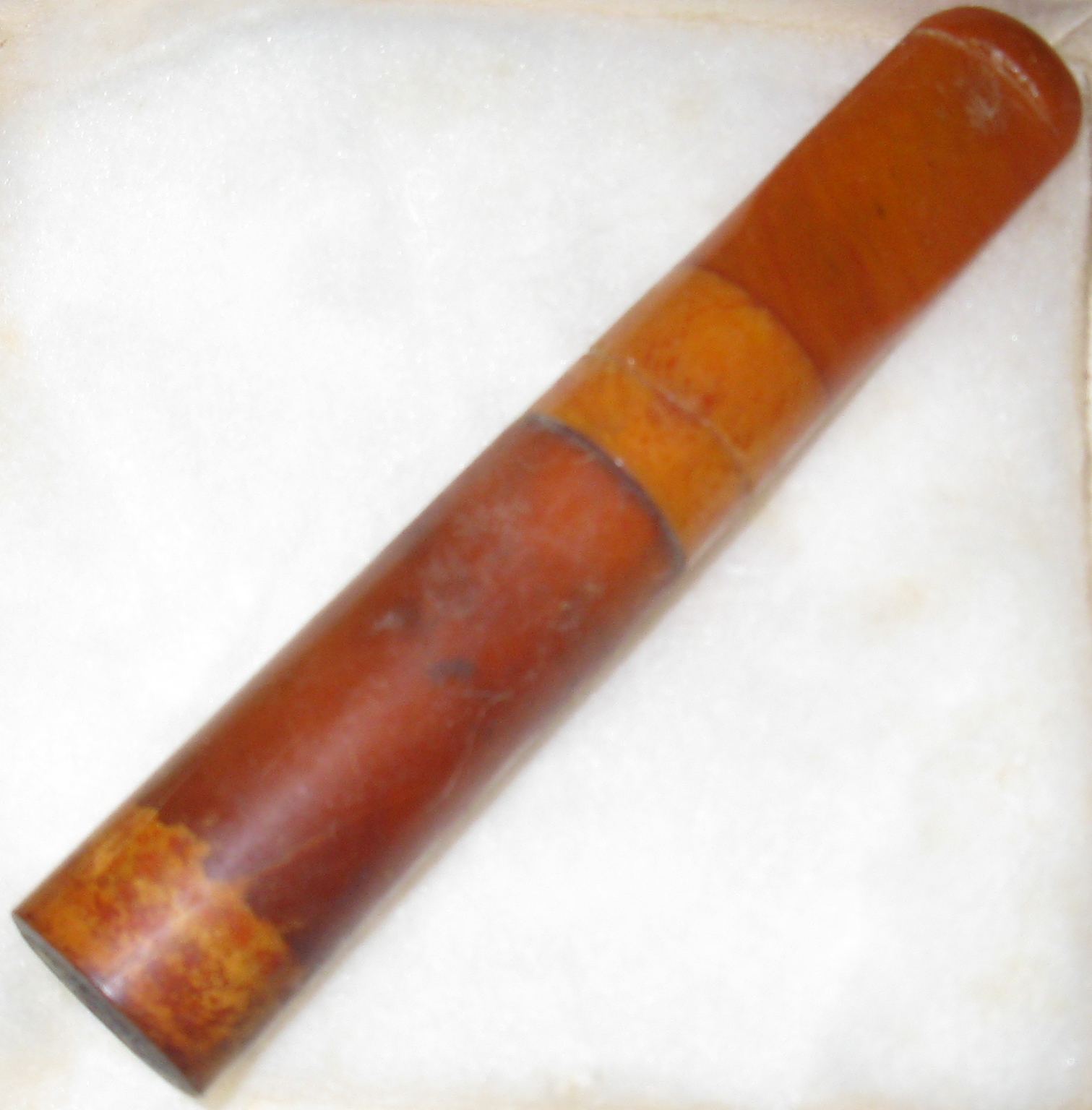
He kept his dog tags, some foreign coins, and a cigar holder given him by a Belgian farmer.

He delighted his mother-in-law by saying, “Oh la la!”

He had dinner ready every night when my mother got home from work. He specialized in chocolate pies topped by a mountain of meringue. Removing one from the oven, he flipped it upside-down onto the oven door and had to serve it as a pudding.

He was turned down for a job in warehousing because he was deaf (ironic, since he later worked in supply in Air Force Civil Service). He got a job in a toy store, where he sold a tricycle to a couple with a little boy. After the sale, he learned the trike was a demo, the only one the store had, and the only one it was likely to get in the foreseeable future. Having been overseas, he wasn’t familiar with shortages on the homefront. (My mother said if he had known, he’d have been tempted to sell it anyway, because he believed little boys who wanted tricycles shouldn’t have to wait.)

On May 1, his birthday, he took the day off and spent it with Yarborough (no longer Major) in Fort Worth. When he didn’t return timely for the birthday dinner she’d cooked, complete with chocolate cake with fudge icing, my mother cried and cried. She realized later, she said, laughing, that at that point, my dad had lived with Yarborough a lot longer than he’d lived with her, and that the two men probably had more in common.

After six months in Dallas, he achieved the dream that had kept him going throughout his years away. If my mother had worked for another six months, she would have had reinstatement privileges with Civil Service, but she didn’t hesitate. The San Marcos River was the only place he wanted to be, or would ever want to be. They moved to Fentress.

My mother said that of all the men she knew who served in World War II, he was the least changed.  He came home and was again just Bill, with the quiet, dry sense of humor and the twinkle in his blue eyes. He put the war behind him and went on with life.
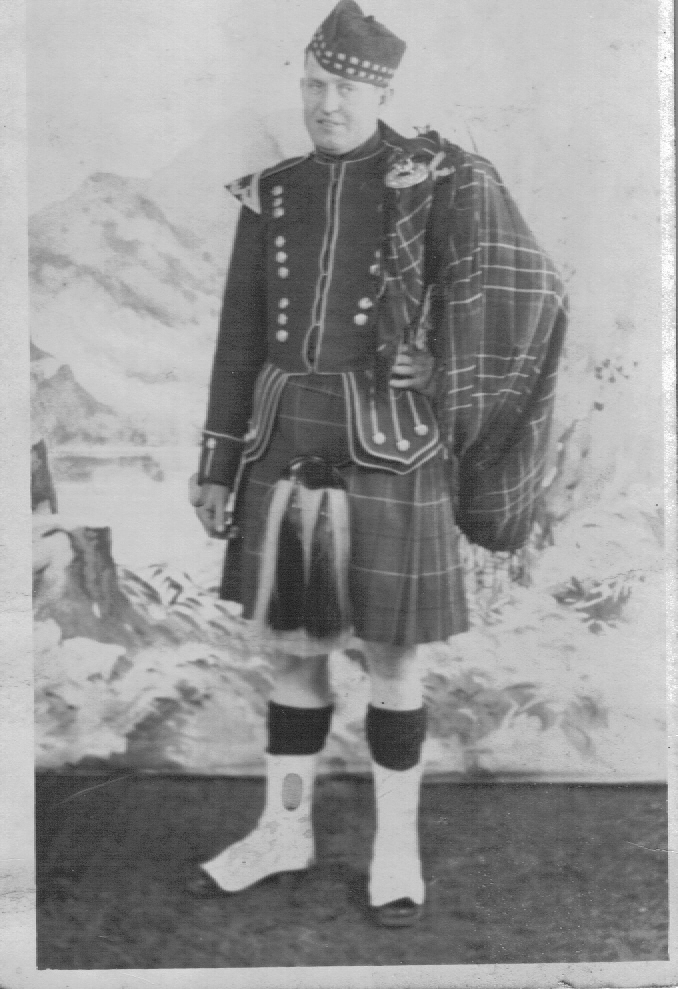
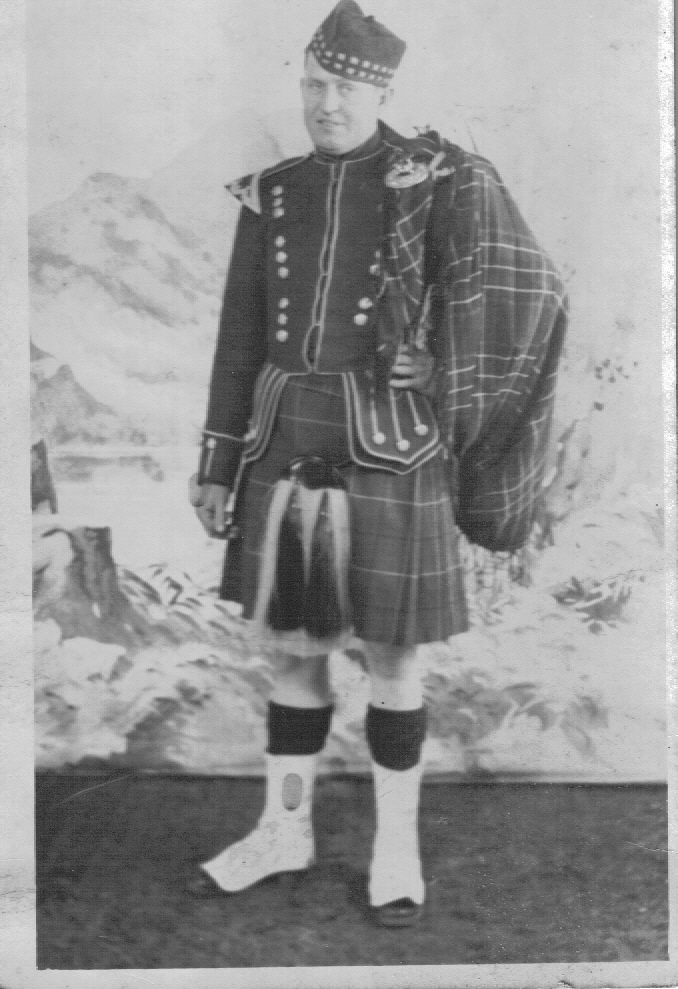
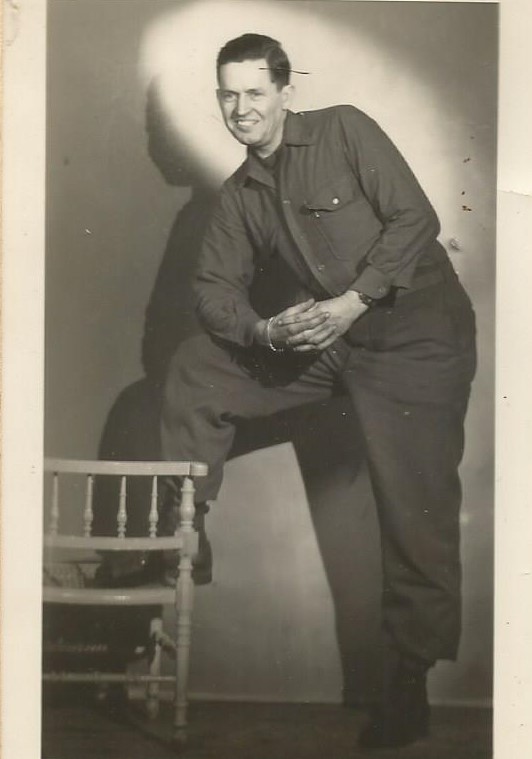
When he spoke of his service, he confined himself to people he’d known and the lighter side of daily life. While stationed in Scotland he and some friends had their pictures taken in traditional dress. He said one of the men, when changing back into uniform, forgot to take off the socks, and got back to the base wearing the photographer’s argyles. 

He made a few observations: He respected General Omar Bradley but had a low opinion of Patton. 

But he didn’t share stories of combat. He’d written my mother, “I’ve seen things you wouldn’t believe. I’ll tell you when I get home.” He never told.

Two remarks he made years later suggest why:

My mother told me about the first: When his brother Donald and others were talking about looting that occurred on the battlefield, my father, who’d been silent, suddenly said, “I’ve seen them cut off fingers to get rings.”

He made the second comment in my presence: My uncle’s stepson, who had served in the military but seen no combat, was looking forward to watching the movie Anzio on television. He said, “I can’t imagine hitting the beach and running into enemy fire like that.” My father replied, “There’s nowhere else to go.”

Such memories aren’t conducive to going on with life.

In 1964, when President Eisenhower’s memoir of D-Day and the Invasion was published serially in the San Antonio newspaper, he read it. Occasionally, he said, “No, that’s not quite right . . .” or, “He’s forgotten about . . .”

The one thing he couldn’t leave in the past was his deafness. The hearing aid didn’t filter out ambient noise, and he often walked out of gatherings–family get-togethers, wedding receptions, church dinners–that he would otherwise have enjoyed. He left Civil Service because his job at the time required taking sensitive, detailed information over the telephone, and he was afraid of making a mistake, which could have cost lives.

In 1967 and 1968, surgery at the VA hospital in Houston restored hearing in both of his ears and allowed him to lead a normal life.

In the summer of 1981, he finally expressed a desire to attend a reunion of the men he’d served with. An angina attack sent him to the hospital that weekend instead. He didn’t get another opportunity to see them again.

***
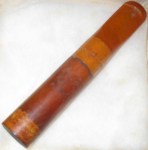
The cigar holder lived–and still lives–in the silver chest. I’ve known about it practically all my life and occasionally took it out and examined it when I was a child–but it took decades for me to realize its meaning. The farmer didn’t give a cigar holder to just some young man passing through; he gave it to an American GI, one among thousands he’d waited and hoped for, who was risking his life to free the Belgian people, and all of Europe, from the tyranny of Nazi Germany. The cigar holder represented gratitude, and more. In my mind’s eye, I see my my father and that farmer talking about the weather and how the crops were doing–if any arable land hadn’t been overrun by bootsoles and tanks. They’d have been speaking different languages, of course, but the language of farmers, and of friendship, is universal. And since my father was involved, they’d also have been laughing.

***

Two 50-centime Belgian coins.
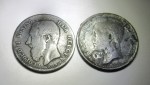
Left, the profile of King Leopold II, dated 1888 or 1886.

Right, the profile of King Albert, date obscured by tarnish. Albert succeeded Leopold in 1909.

A dose of silver polish and elbow grease and more will be revealed.
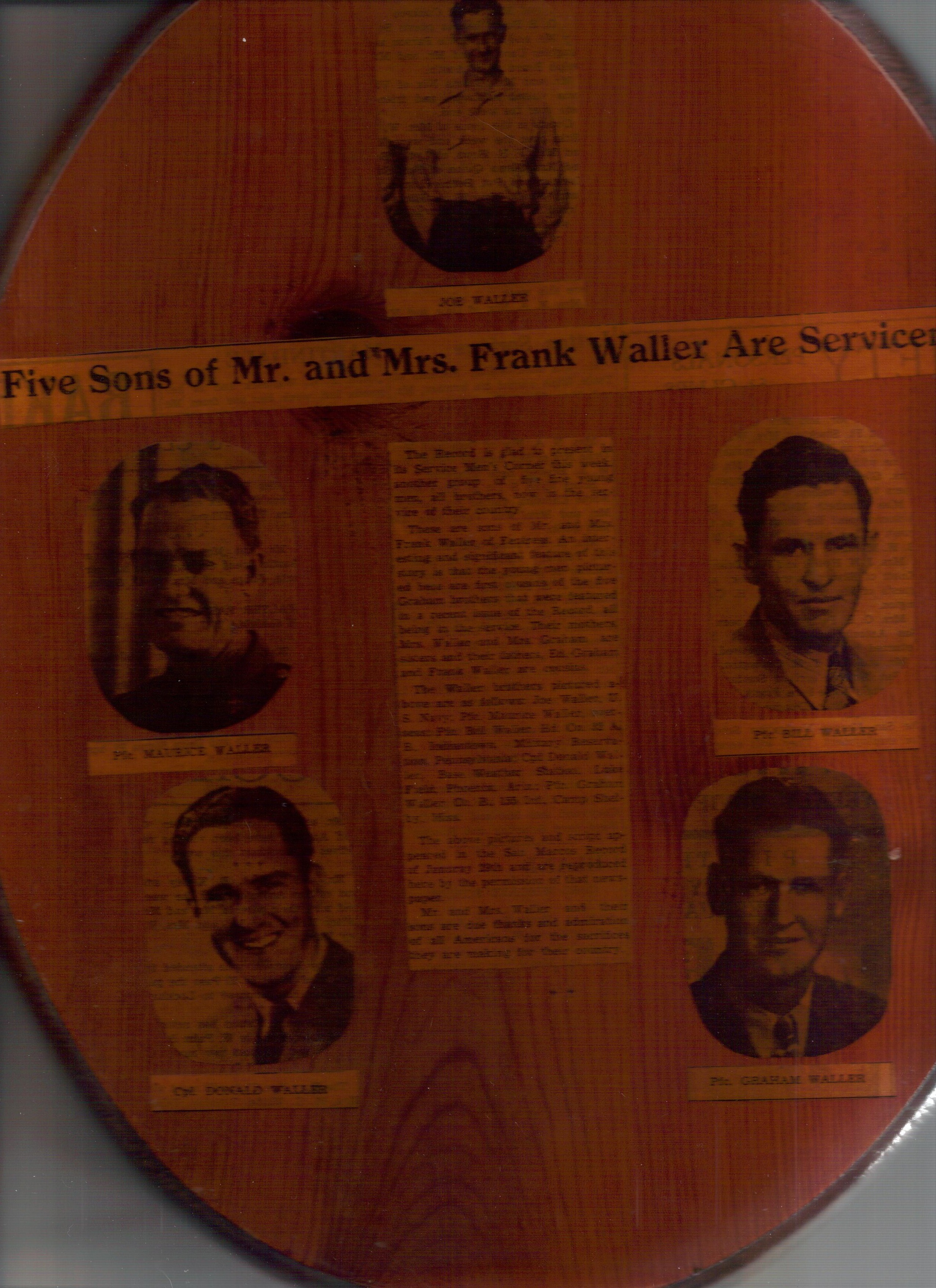
Veterans Day: World War II – The Waller Boys

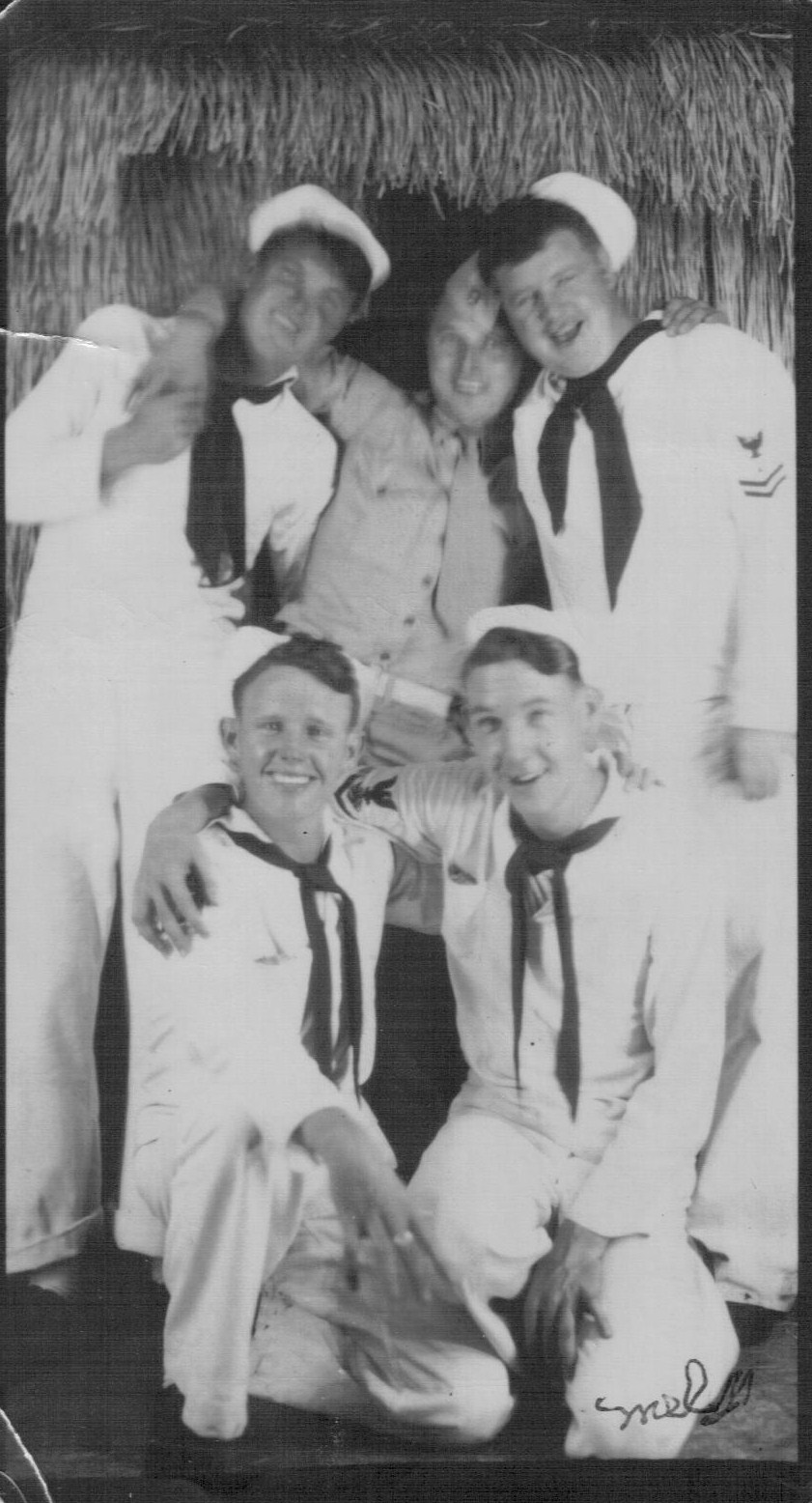
Clockwise from lower left: Donald Waller, Maurice Waller, Joe Waller, Bill Waller, Graham Waller.

Five Sons of Mr. and Mrs. Frank Waller Are Servicemen

The Record is glad to present in its Service Men’s Corner this week another group of five fine young men, all brothers, now in the service of their country.

These are sons of Mr. and Mrs. Frank Waller of Fentress. An interesting and significant feature of this story is that the young men pictured here are first cousins of the five Graham brothers that were featured in a recent issue of the Record, all being in the service. Their mothers, Vida Waller and Bruce Graham, are sisters and their fathers, Ed. Graham and Frank Waller, are cousins.

The Waller brothers pictured above are as follows: Joe Waller, U. S. Navy; Pfc. Maurice Waller, overseas; Pfc. Bill Waller, Hd. Co. 32 A. B., Indiantown Gap, Pennsylvania; Cpl. Donald Waller, Base Weather Station, Luke Field, Phoenix, Ariz.; Pfc. Graham Waller, Co. B. 155 Inf., Camp Shelby, Miss.

The above pictures and script appeared in the San Marcos Record of January 29th and are reproduced here by the permission of that newspaper.

Mr. and Mrs. Waller and their sons are due thanks and admiration of all Americans for the sacrifices they are making for their country.

Source: Lockhart (TX) Post Register, 1943

*****

Joe, Donald, and Graham served in the Pacific. Bill and Maurice served in Northern Europe. All returned. Bill came home deaf from bomb concussion and spent the next twenty years telling curious children that his hearing aid was a telephone. In 1967 and ’68, a new surgery being taught at the VA hospital in Houston restored his conversational hearing.

Father’s Day 2021: He Made Us Laugh

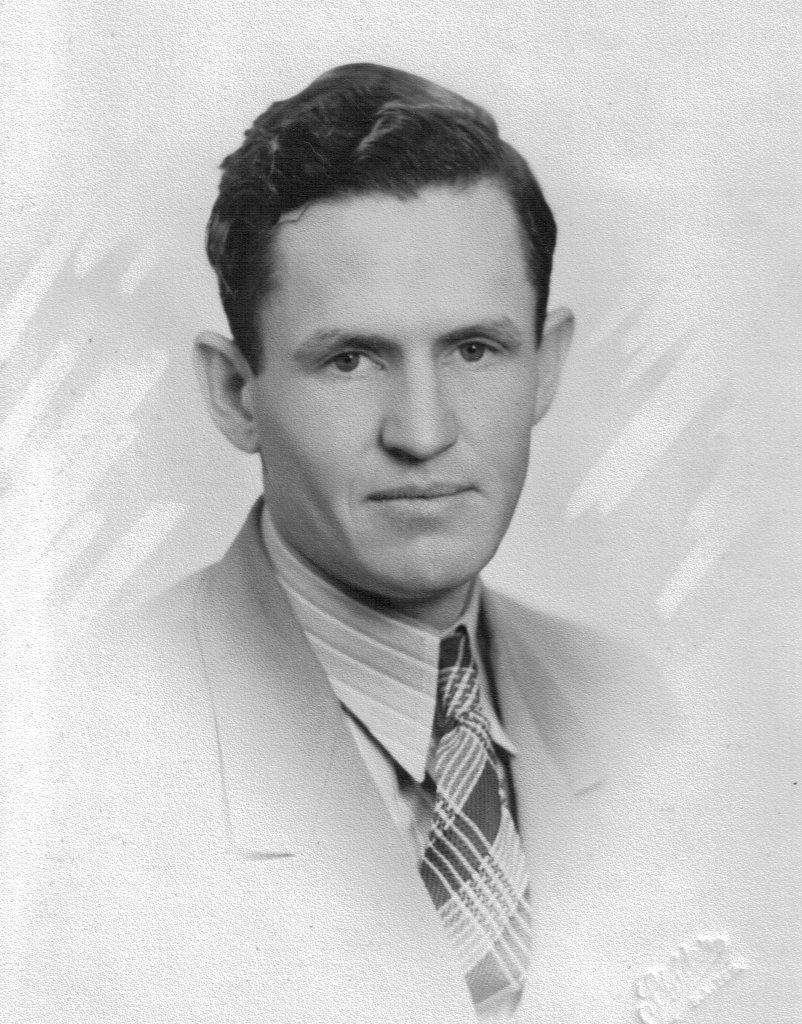
My father, Bill (Billie) Waller, May 1, 1915 – September 8, 1983

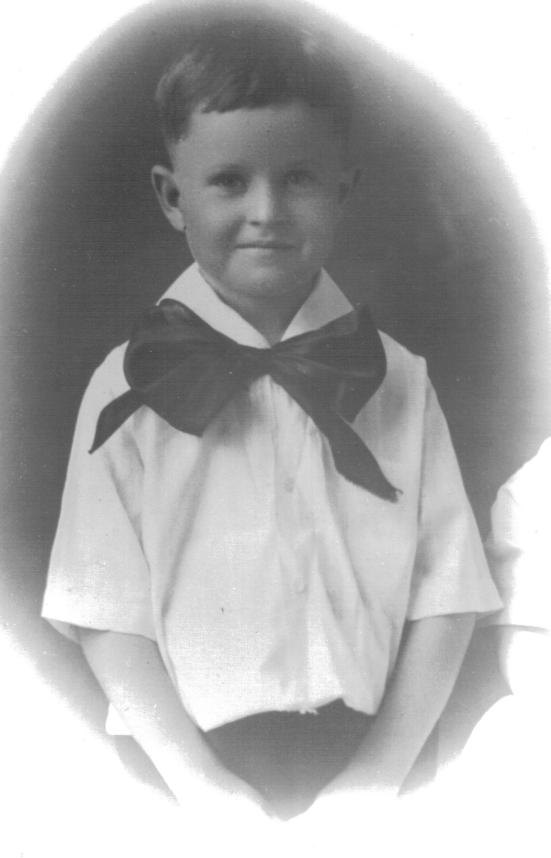
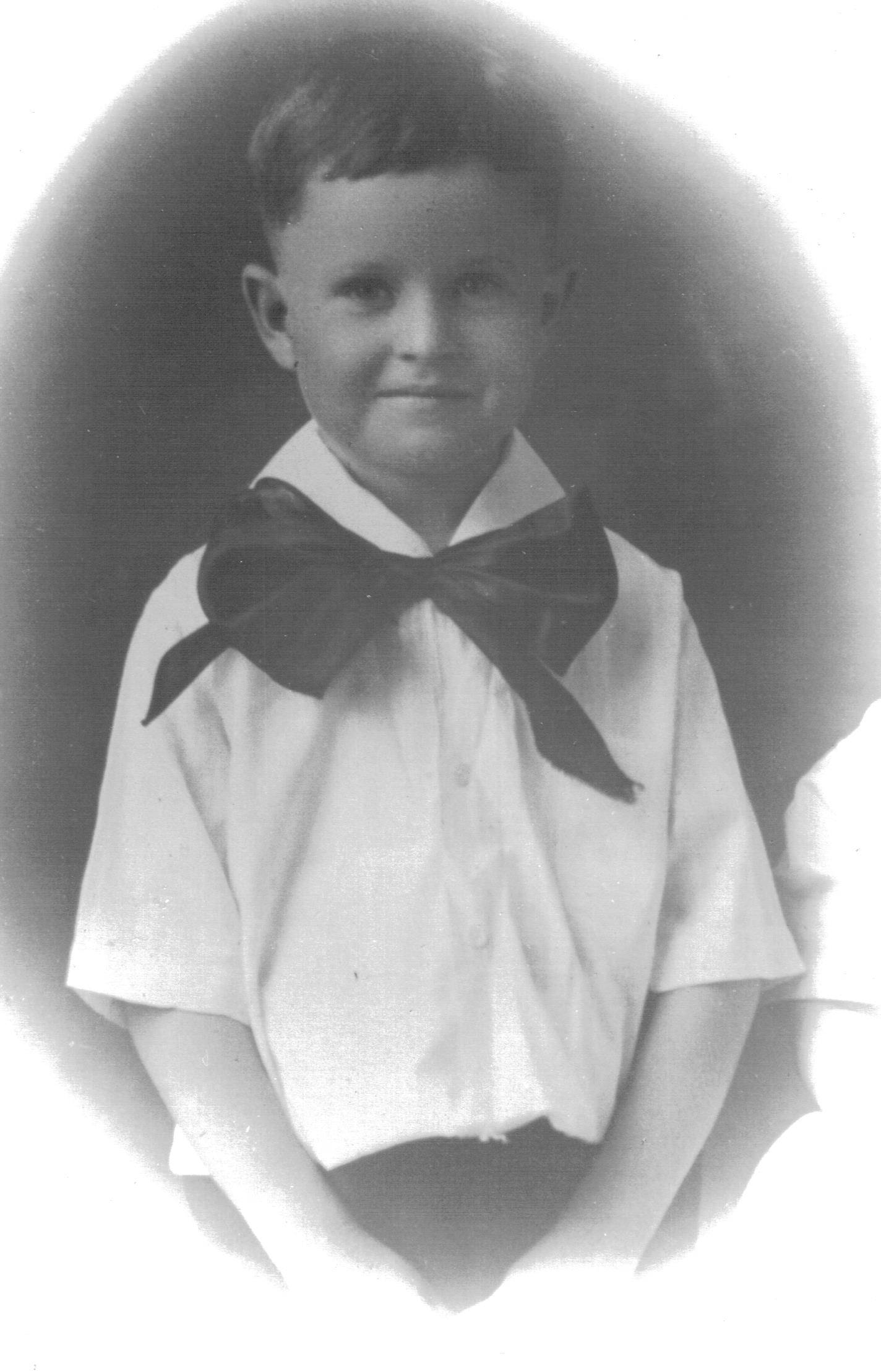
Billie Waller, ca. 1921

I remember, in no particular order–

He loved horses. When he was in the saddle, they knew who was in charge. He didn’t have to force them.

He loved driving—down backroads to see how much it had rained, or just for the pleasure of driving. He said my horse Scarlett “rode like a Cadillac,” his highest praise. He appreciated a smooth ride. Scarlett was the only Cadillac he owned.

When children started school at seven, he started at five. His mother had just died, and sending him to school with the two older brothers was easier than keeping him at home with the two younger. He had to repeat first grade.

He quit school before his senior year to farm full-time. His father didn’t think graduating was important. No one else could have convinced him to finish—except maybe one of his mother’s sisters, if she’d thought about trying.

One of his high school teachers told me, “Your daddy was just terrible. He said the funniest things. I was only couple of years older, and he was so funny, I never could get mad at him.” It was genetic. He got it from his mother’s family.

Early 1940s

He created ridiculous fictions my mother then repeated all over town. (“Bill Waller, I am never going to believe another thing you say.” She always believed it.) He learned the art from two his of his maternal uncles.

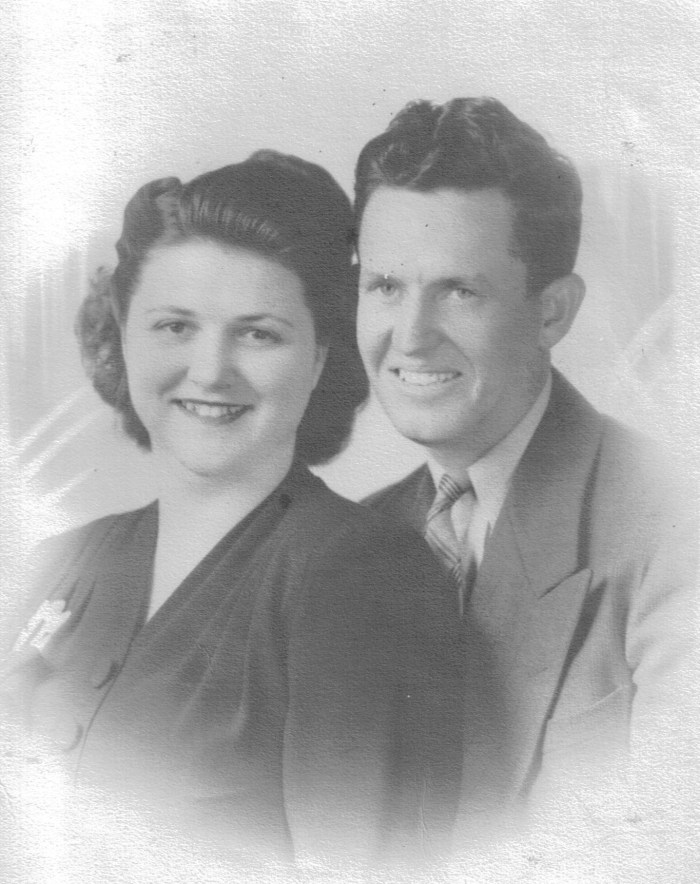
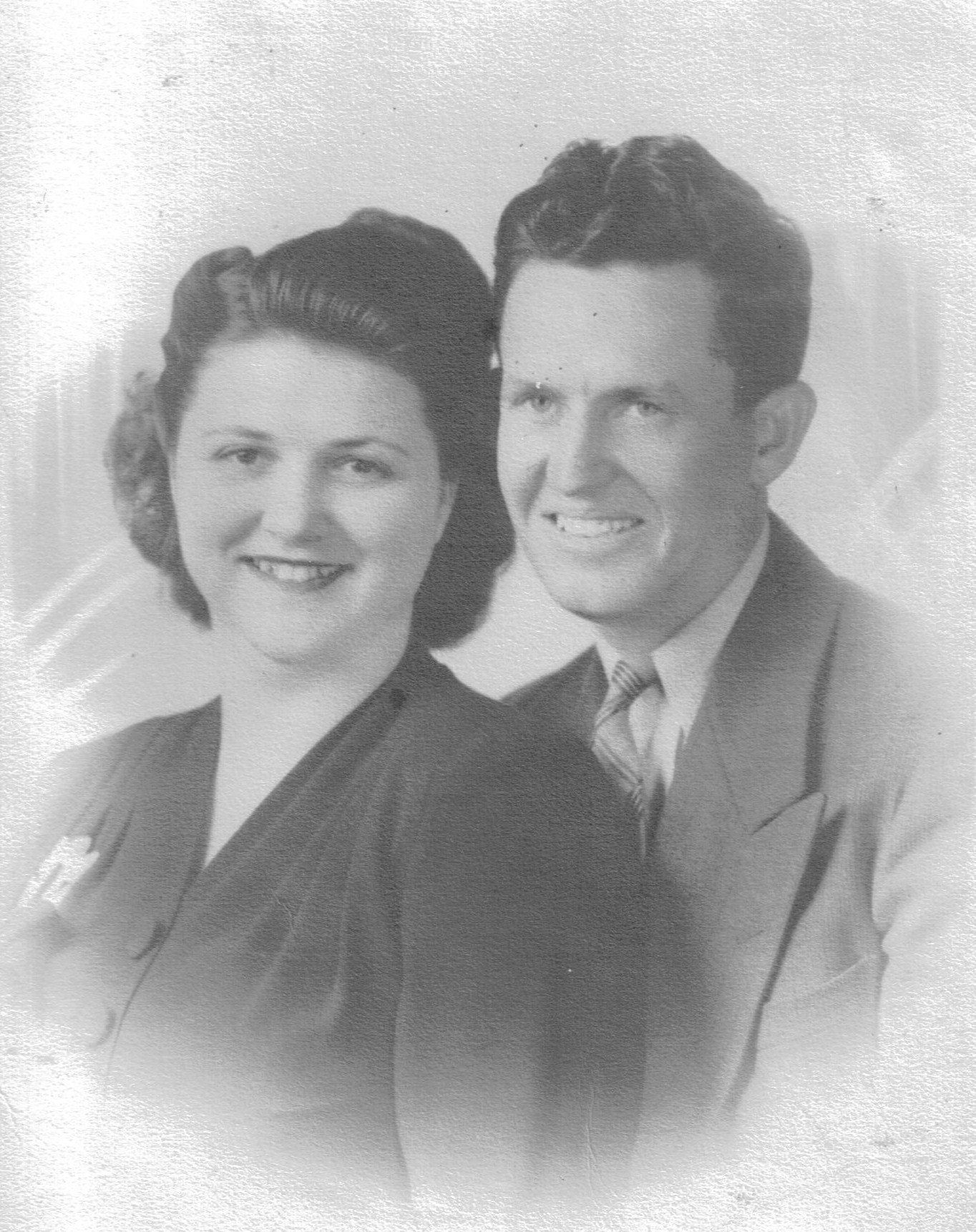
My parents, Crystal Barrow Waller & Billie Waller, October 1942.

He always gave me five-dollar bills to go to movies that cost fifty cents, including popcorn and Coke, and told me to keep the change. (I didn’t.)

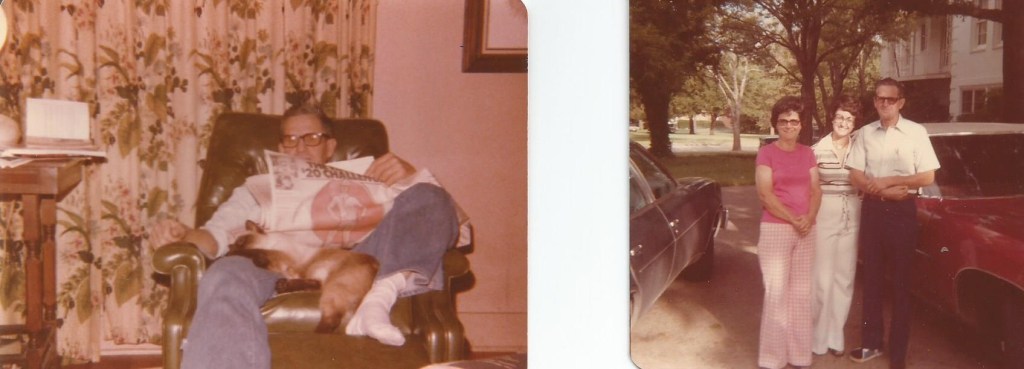
He believed dogs and cats belonged outside but when the Siamese draped herself across his feet in bed at night, he let her lie. The Collie didn’t let him or his pickup out of her sight. He made sure she was in the truck before he left in it.

At home with Nicole, the Siamese, an uninvited but kindly tolerated guest, late 1960s; and with Crystal and Kathy, ca. 1974.

When I called home to say I’d locked the keys (and the spare keys) in the car, he rescued me, no matter what the time or how long the drive, without a word said. Every time.

He pointed out spelling errors on signage. The most memorable was tresspassing, on a sign commissioned by the local water company.

He said he spent half of his life waiting for me to find my shoes.

He told me to keep plenty of money in my purse and the gas tank full, but when I said shouldn’t we fill up before leaving Seguin, he said we’d wait till we got home. We ran out of gas on the country road two miles short of our destination, with only maize fields and a river between us and fuel. He walked; my dress shoes and I waited in the car.

He loved being outside and doing manual labor—cutting brush, stretching barbed wire, plowing and planting, watching the soil turn, working cattle. After a day of doing manual labor for a salary.

He made stunning chocolate and lemon meringue pies.

He liked sardines but said they should be eaten on the riverbank with a can of pork-and-beans.

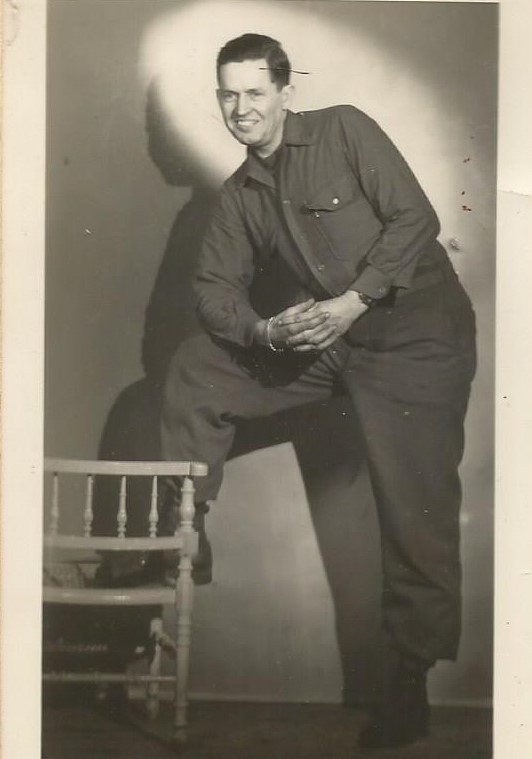
In uniform, early 1940s
Pvt. Bill Waller, Scotland, ca. 1943-44 (U.S. Army, not British)

He sent me to college, including three years in a dorm, financing it by periodically selling one of Opal’s offspring. Opal was a White-faced Hereford a neighbor had given me when I was eleven after her mother rejected her at birth.

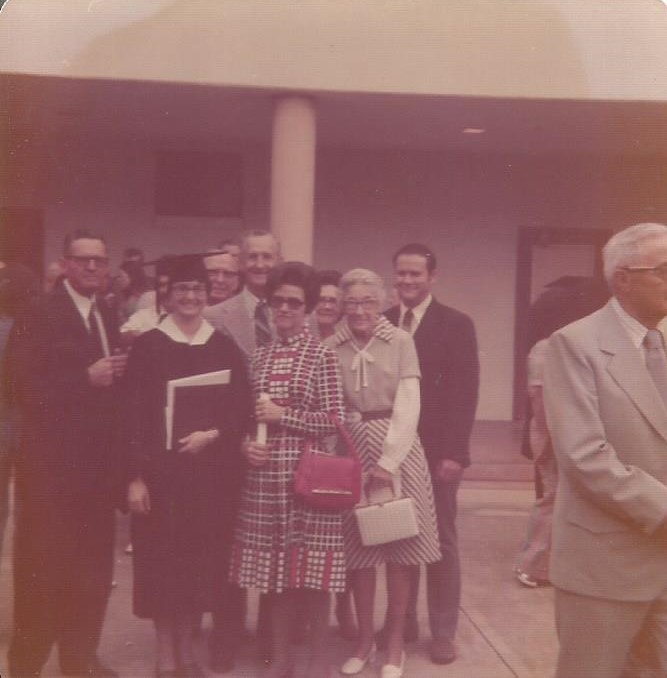
SWTSU graduation, August 1973. Bill, Kathy, Joe (“Bub”) Dauchy, Joe Waller,
Crystal, Mary Veazey Worden, Aunt Bettie Waller, Jim King.

When his brother called from up the street to say my grandfather, who lived next door, had set fire to a pile of brush in the small pasture next to his house, and it was getting dark and the wind was getting up, and somebody ought to do something, but he had to live next door to him . . . he drove two blocks, dragged a water hose through the yard, and said, “I’m putting out that fire before you burn up the whole town.” He was the only one of five sons who could do that and not get in trouble. He was the only one who would risk getting in trouble. (Trouble being a brief parental cold shoulder.)

He read the newspaper starting at the back. He read every word of local “county” papers, right down to the phone numbers in the want-ads. He read magazines. No books. Until he retired, when he picked up my copy of I Know Why the Caged Bird Sings and plowed through it. So I started giving him books.

He came home from World War II deaf from bomb concussion. Because his hearing aid didn’t filter out ambient noise, and he was embarrassed to have to ask people to repeat what they’d said, he left church dinners, large family gatherings, and other social events, early, often just taking off and walking home by himself. He quit a job that depended on his using the telephone, because he thought he might get information communicated to him—serial numbers of airplane parts—wrong, and cause a tragedy. When he took off his hearing aid at night, he was gone.

When I was eleven, his hearing aid broke. He sat through the public school week evening program in the school auditorium and heard absolutely nothing.

After twenty years of deafness, he had surgery to restore conversational hearing and his original personality surfaced. He enjoyed mixing with people. He engaged in long telephone conversations with friends. He got a kick out of Archie Bunker.

He watched The Muppet Show every Saturday evening. Every time Kermit the Frog flung his arms around and said, “Ya-a-a-a-a-a-ay,” he shook with silent laughter.

He stood in the churchyard after services checking the dates on inspection stickers on windshields, just killing time. Occasionally he found one that had expired.

He was good to old ladies. He got their cats out of trees He charged Miss Blanche’s ancient car’s ancient battery every six months or so (because she drove only every six months or so). She called every Halloween and said, “Tell Bill to get up her and get some popcorn balls before the kids get them all.”

He worked best alone, I think because, although he could do a multitude of things, he figured out how to do them as we went along. He passed that gene along to me.

He was a gregarious loner.

He was solid and dependable.

He made us laugh.

He died suddenly and unexpectedly and too young.

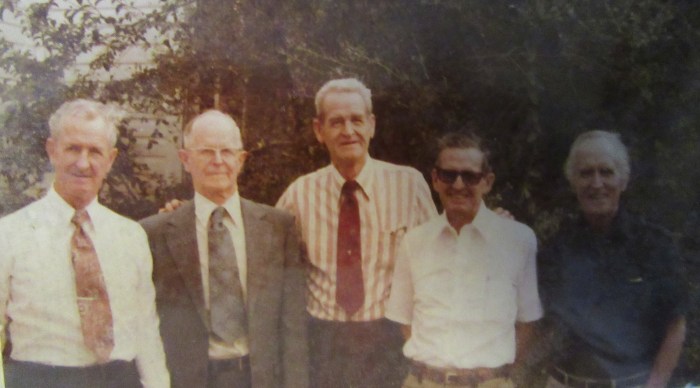
Four brothers and a cousin: Joe Waller, Rob Waller, Graham Waller, Bill Waller, Donald Waller, ca. 1980.

You’re Sixty

Today would have been my mother’s ninety-eighth birthday. On last May 1, my father would have been one hundred.

When I take the time to really think about that, it’s mind-boggling. I can’t imagine them at those ages.

Mother used to tell a story about my great-aunt Lydia’s sixtieth birthday. Lydia, her mother, her two younger sisters, and two of her nieces–my mother and her youngest sister, who was generally referred to as “that cute little Betty,”*–went to dinner to celebrate.

Back home, my great-grandmother put on her nightgown and got into the big four-poster bed in Lydia’s downstairs bedroom. The other women sat around her and did what they always did when they got together–talked and laughed. No topic was off limits and everything was funny. A quiet child could learn a lot in those sessions.

That night, my great-grandmother, whom the younger ones called Grannygirl, sat propped against her pillows, old but still the quintessential sharp-witted (and sharp-tongued) Southern belle. While the others talked, she said nothing.

Finally, looking into the distance, such as it was, she uttered a single sentence: “Lydia, you’re sixty.” Her tone was contemplative, but it also carried an undertone of surprise.

In the silence that followed, Lydia said yes, she was.

A few minutes later, still gazing somewhere above her descendants’ heads, Grannygirl broke in again. “Lydia, you’re sixty.

Again, Lydia agreed she was.

Another few minutes passed and Grannygirl said it once more: “Lydia, you’re sixty.

Obviously having heard enough on that topic, Lydia responded, a bit sharply, “Well, Mother what does that make you?”

End of conversation.

I thought of that story because, like Grannygirl trying to get used to having a sixty-year-old daughter, I can’t quite get used to the idea of my parents at the century mark. At the same time, I believe, were they alive today, they would not have changed. I know, however, that to them, I would be radically different.

I wish they could have attended my wedding. I wish they could know my husband. I wish they could read this blog and my fiction. I wish they could read the pieces I’ve published. I wish they could know that, though I miss them terribly,  I’m secure and happy.

One thing I’m certain of: If my parents had been here to celebrate my birthday a few years ago, we would  have gone out to dinner, and then we would have come home and changed into more comfortable clothes. And then, while we sat in the living room talking about anything and everything, my mother would at some point have looked into the distance and said, “Kathy, you’re sixty.”

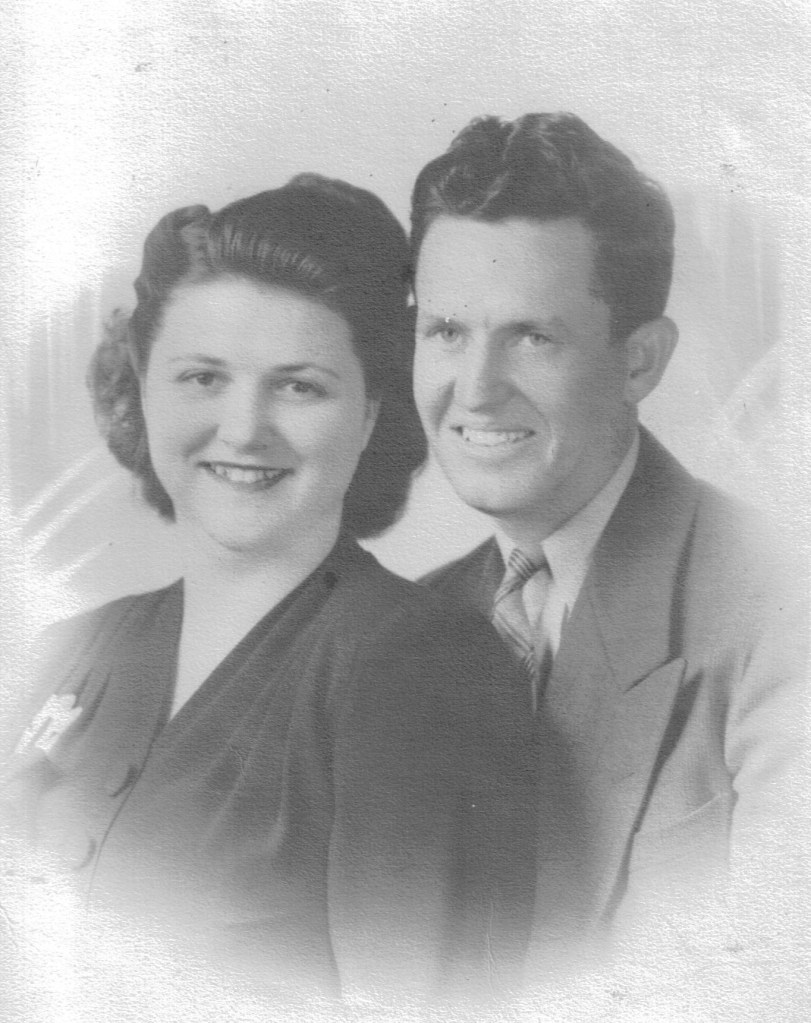
Crystal Barrow Waller and Billie Waller, 1942

*

*Betty was short, had red hair and a sweet Irish face, and was drop-dead funny. She was everybody’s favorite, her nieces and nephews adored her, and she left us much too soon.

betty-and-kathy-19521
Betty and Kathy, 1952

Billie

bill at 5 yrs 001
Billie Waller, 5 years old, 1920

My father would have been ninety-nine years old today.

In September, he’ll have been gone for thirty-one years.

It’s easier to imagine him as the child in this picture

than to imagine him at ninety-nine.

Of two things, however, I’m certain:

If here were here today,

his blue eyes would still be twinkling,

and

 he would still be making us laugh.

###

When I was a child, my three cousins looked like my mother,

and my grandmother, and my aunts,

but I didn’t look like anyone.

I felt like an outsider and decided I’d been adopted,

although old photographs and witness testimony indicated otherwise.

It was years before I realized I looked like someone after all.

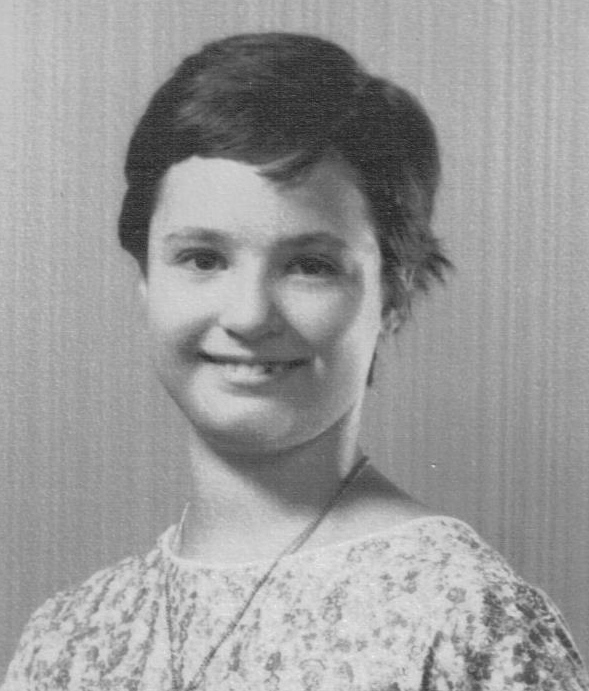
Kathy Waller, 8 years old, 1960

Billie

bill at 5 yrs 001
Billie Waller, 5 years old, 1920

My father would have been ninety-eight years old today.

In September, he’ll have been gone for thirty years.

It’s easier to imagine him as the child in this picture

than to imagine him at ninety-eight.

Of two things, however, I’m certain:

If here were here today,

his blue eyes would still be twinkling,

and

 he would still be making us laugh.

Veterans Day 2012: The Waller Boys

Clockwise from lower left: Donald Waller, Maurice Waller, Joe Waller, Bill Waller, Graham Waller.

Five Sons of Mr. and Mrs. Frank Waller Are Servicemen

The Record is glad to present in its Service Men’s Corner this week another group of five fine young men, all brothers, now in the service of their country.

These are sons of Mr. and Mrs. Frank Waller of Fentress. An interesting and significant feature of this story is that the young men pictured here are first cousins of the five Graham brothers that were featured in a recent issue of the Record, all being in the service. Their mothers, Vida Waller and Bruce Graham, are sisters and their fathers, Ed. Graham and Frank Waller, are cousins.

The Waller brothers pictured above are as follows: Joe Waller, U. S. Navy; Pfc. Maurice Waller, overseas; Pfc. Bill Waller, Hd. Co. 32 A. B., Indiantown Gap, Pennsylvania; Cpl. Donald Waller, Base Weather Station, Luke Field, Phoenix, Ariz.; Pfc. Graham Waller, Co. B. 155 Inf., Camp Shelby, Miss.

The above pictures and script appeared in the San Marcos Record of January 29th and are reproduced here by the permission of that newspaper.

Mr. and Mrs. Waller and their sons are due thanks and admiration of all Americans for the sacrifices they are making for their country.

Source: Lockhart (TX) Post Register, 1943

*****

Joe, Donald, and Graham served in the Pacific. Bill and Maurice served in Northern Europe. All returned. Bill came home deaf from bomb concussion and spent the next twenty years telling curious children that his hearing aid was a telephone. In 1967 and ’68, a new surgery being taught at the VA hospital in Houston restored his conversational hearing.

…considering what you have to work with

Crystal and Bill Waller. October, 1942

My mother told a story about the first time she hosted Thanksgiving dinner in her own home. She’d laid out the china and the crystal and the sterling and the silver gravy boat my grandmother insisted every married woman must have (even when the married woman was going to live near an oil field where the silver would immediately turn black.)

Finished with the table, she indulged in whimsy. She went outside and picked some purple wildflowers she thought particularly unattractive. (“Ugly” was her exact word.) She arranged them and placed them on the table.

When my grandmother arrived, Mother said, “What do you think of my centerpiece?”

My grandmother, missing the humor, replied, “Well, dear, I think you did as well as can be expected, considering what you had to work with.”

That line entered the Waller Book of Familiar Quotations. We used it for every achievement: making pies, mowing the lawn, climbing on top of the house to turn the TV antenna, explaining first semester grades from college: I did as well as can be expected, considering what I have to work with.

I wish my parents could read that story. I wish they could see other things I’ve written. They would laugh at Miss Pinksie Craigo whacking her cane against a chair, and Mr. Archie Parsons using his favorite (marginally) un-blasphemous expletive, and Aunt Lydia…Oh my, I can just imagine them reading about Aunt Lydia.

Some old ladies are worth more than an ode. Some, however, are marked 75% off–too good to resist.

My parents were generous. They gave me language and laughter. I think they would approve of the way I’m using them. They would be pleased to know I’m trying.

If I could ask, I believe they would also grant permission: We gave you words. Use them as you will. No secrets. No holding back.

With such a blessing, a writer doesn’t have to be ruthless or to rob anyone.

She just has to do as well as can be expected, considering what she has to work with.