Excerpt: Lynna Williams’ “Personal Testimony”

In yesterday's post I wrote about Lynna Williams' story "Personal Testimony." Here are the first three paragraphs of the story.
###

“The last night of church camp, 1963, and I am sitting on the front row of the junior mixed-voice choir looking out on the crowd in the big sanctuary tent. The tent glows, green and white and unexpected, in the Oklahoma night; our choir director, Dr. Bledsoe, has schooled us in the sudden crescendos needed to compete with the sounds cars make when their drivers cut the corner after a night at the bars on Highway 10 and see the tent rising out of the plain for the first time. The tent is new to Faith Camp this year, a gift to God and the Southern Baptist Convention from the owner of a small circus who repented, and then retired, in nearby Oklahoma City. It is widely rumored among the campers that Mr. Talliferro came to Jesus late in life, after having what my mother would call Life Experiences. Now he walks through camp with the unfailing good humor of a man who, after years of begging hardscrabble farmers to forsake their fields for an afternoon of elephants and acrobats, has finally found a real draw: His weekly talks to the senior boys on “Sin and the Circus?” incorporate a standing-room-only question-and-answer period, and no one ever leaves early.

“Although I will never be allowed to hear one of Mr. Talliferro’s talks—I will not be twelve forever, but I will always be a girl—I am encouraged by his late arrival into our Fellowship of Believers. I will take my time, too, I think: first I will go to high school, to college, to bed with a boy, to New York. (I think of those last two items as one since, as little as I know about sex, I do know it is not something I will ever be able to do in the same time zone as my mother.) Then when I’m fifty-two or so and have had, like Mr. Talliferro, sufficient Life Experiences, I’ll move back to west Texas and repent.

“Normally, thoughts of that touching—and distant—scene of repentance are how I entertain myself during evening worship service. But tonight I am unable to work up any enthusiasm for the vision of myself sweeping into my hometown to be forgiven. For once my thoughts are entirely on the worship service ahead.”

 ###

Yesterday I wrote that the narrator of “Personal Testimony” is eleven years old. When I discovered the excerpt, I was reminded she’s really twelve. I’ll correct my error. My narrator in “Personal Experience,” however, continues to be eleven.

September SinC-Up: Lynna Williams’ Gift of Voice

On my way home from work one night in the ’90s, I heard actress Judith Ivey on Selected Shorts, reading “Personal Testimony,” a short story by Lynna Williams.

The narrator is eleven-year-old Ellen Whitmore, a preacher’s daughter from Fort Worth, who is at Southern Baptist summer camp in Oklahoma. At evening services, when campers are expected to witness to their experiences of sin and repentance, Ellen demonstrates a talent that catches the attention of fifteen-year-old Michael. Although he’s reputed to be most spiritual boy in camp, Michael has what Ellen’s brother calls “Jesus Jaw”– he has plenty to say but can’t complete a simple sentence: “I just–I mean, it’s just so–I just . . .” He tells Ellen he wishes he could speak about his spiritual life as easily as she can speak about hers, so, following her mother’s example, she offers to help. Within days, she has a thriving business writing personal testimonies for older campers, a gratifying popularity, and a fat stack of bills stashed in her Bible at John 3:16. Her adventure in capitalism ends at the summer’s final service, when she sees her father in the congregation, realizes he knows, and makes one last and very public attempt to avoid his wrath.

I’ve heard that people don’t laugh aloud when alone. That’s not true. I sailed down I-35 guffawing and then quickly broke out in tears.

(I hate it when writers manipulate me like that. It’s just one more skill to covet.)

I’d been writing off and on for a few years but hadn’t produced anything even marginally successful. A small circle of friends and family liked the pieces I showed them, but they also liked me– most of the time–and they weren’t seasoned critics anyway. The writing was bad. I was frustrated. Not knowing what was wrong, I couldn’t make it right. Classes and workshops didn’t help.

The night I heard Judith Ivey read, all that changed. I didn’t experience an epiphany, per se, but there was a definite moment of enlightenment: My best work was bad because it had no voice. I had no voice. The nearest I could manage was a small-time literary critic in love with semicolons.

Listening to “Personal Testimony,” I heard Lynna William’ voice and knew what I should do.

My work should sound natural to my ear. Informal. Fluid. First person narration by a self-absorbed eleven-year-old girl with attitude, precocious in some areas and in others absolutely clueless. That comprised Enlightenment, Part I.

Then came Enlightenment, Part II: I’ve been hearing that voice most of my life. It’s the one I think in. I didn’t have to worry about copying Williams–it’s my voice, too. I’d just never recognized its potential.

Not long after hearing “Personal Testimony,” I allowed the eleven-year-old in my head to dictate a story while I wrote. Then she dictated another. And they worked.

My inner child is different from Ellen, as is only right. Mine is sharper, has more attitude. I have no idea why.

A year ago, my eleven-year-old suddenly morphed into a forty-year-old woman. She has so much attitude she’s scary. Now there’s a third voice, very different from the other two, stronger and scarier even than the forty-year-old. The third voice came as a relief. I’d wondered whether the pre-teen was all I had. What if everything I wrote came from the same source and sounded just like what had come before? The child is fun to listen to, for a while, but after a time, she can become wearing. I spend enough time with her as it is. Readers would soon get their fill.

There are some things that can’t be learned in a classroom. An instructor might have told me my work lacked voice, but he couldn’t have said how to find the right fit.

I’m indebted to Lynna Williams for helping me to hear a girl’s voice, and to recognize its value. She inspired hope. She showed me that if I listen, the eleven-year-old in my head will tell me what I need to know.

 ###

Lynna Williams teaches creative writing at Emory University. Read excerpts from “Personal Testimony” at Google Books. The story also appears in Texas Bound: Stories by Texas Writers, Read by Texas Readers. This book comes with an audiobook on cassette tape featuring Judith Ivey’s reading.

Several sermons that appear online refer to “Personal Testimony.” Read one of them here.

###

Do you like dark and compelling mysteries? That’s how a reader describes Elizabeth Buhmann’s first novel, Lay Death at Her Door. I’m tagging Elizabeth. Click here to visit her blog and read another post in Sisters in Crime’s September SinC-Up.


Elegance

Dinner with the cast of Giant at El Paisano in Marfa, Texas.


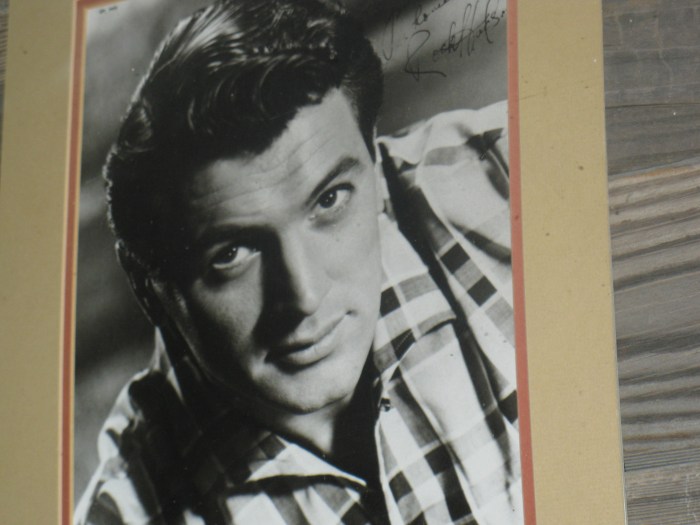
Photographs of James Dean, Elizabeth Taylor, and Rock Hudson by Kathy Waller shot from photographs hanging in El Paisano Hotel, Marfa, Texas

Sam Clemens’ Mother

Portrait of Samuel Clemens as a youth holding ...
Portrait of Samuel Clemens as a youth holding a printer’s composing stick with letters SAM. Daguerreotype; sixth plate. Plate mark: Scovill. Inscribed in case well: G.H.[?] Jones Jonco? / Hannibal Mo / 1850 / Nov. 29th. On case pad: Samuel L. Clem-/ens – [illegible] / Taken Dec. 1850 / Age 15. (Photo credit: Wikipedia)

*

*

*

*

*

*

*

*

*

My mother had a great deal of trouble with me, but I think she enjoyed it.

               ~ Mark Twain

*

*

*

*

*

*

*

*

*

*

Enhanced by Zemanta

The Dog That Bit People

Airedale Terrier
Airedale Terrier (Photo credit: Wikipedia)

Having spent the week engaged in selfish pursuits, I wanted to do one good deed before midnight–less than half an hour from now.

I’ve chosen to share a story: Keith Olbermann reading James Thurber’s “The Dog That Bit People.”

I met Thurber in fifth grade, when all students, K-12, were herded into

English: Front of the James Thurber House, loc...
Front of the James Thurber House, located at 77 N. Jefferson Avenue in Columbus, Ohio. Built in 1873, it is listed on the National Register of Historic Places, and it is a part of a Register-listed historic district, the Jefferson Avenue Historic District. (Photo credit: Wikipedia)

the auditorium to hear high school students practice for an upcoming Interscholastic League prose reading competition. Cullen Myers Dauchy read “The Night the Ghost Got In.”

By the end of the first page, I was in love.

Five years later, I had the pleasure of preparing Thurber’s “The Dog That Bit People” for the same competition. Although I never read it in contest–it fell under category C, and for three years in a row, the contest manager drew A or B–I loved the story of Muggs, who sank his teeth into everyone except Mrs. Thurber–and he went for her once–and in old age, walked through the house muttering like Hamlet following his father’s ghost.

I can’t share Thurber’s drawing of Muggs, so I’ve posted a photo from Wikipedia. This dog looks sweet, not grumpy, and Muggs was “a big, burly, choleric dog,” so for the full effect, you’ll have to imagine him with wearing a frown.

Muggs lived in the house on Jefferson Avenue, also pictured here.

Oops. I’ve missed the deadline.

But happy listening anyway.

The Dog That Bit People, Part 1

The Dog That Bit People, Part 2

Related Articles

Dear March

A close up of a daffodil.
Image via Wikipedia

Dear March — Come in —
How glad I am —
I hoped for you before —

Put down your Hat —
You must have walked —
How out of Breath you are —
Dear March, Come right upstairs with me —
I have so much to tell —

I got your Letter, and the Birds —
The Maples never knew that you were coming — till I called
I declare — how Red their Faces grew —
But March, forgive me — and
All those Hills you left for me to Hue —
There was no Purple suitable —
You took it all with you —

Who knocks? That April.
Lock the Door —
I will not be pursued —
He stayed away a Year to call
When I am occupied —
But trifles look so trivial
As soon as you have come

That Blame is just as dear as Praise
And Praise as mere as Blame —

~ Emily Dickinson

*****

Image of daffodil by Nanda93 (Own work) [Public domain], via Wikimedia Commons

Excerpt

Rosary...

The footfall of a spider in Ramona’s room had not been light enough to escape the ear of that watching lover outside. Again Alessandro’s tall figure arose from the floor, turning towards Ramona’s window; and now the darkness was so far softened to dusk, that the outline of his form could be seen. Ramona felt it rather than saw it, and stopped praying. Alessandro was sure he had heard her voice.

“Did the Senorita speak?” he whispered, his face close at the curtain. Ramona, startled, stopped her rosary, which rattled as it fell on the wooden floor.

“No, no, Alessandro,” she said, “I did not speak.” And she trembled, she knew not why. The sound of the beads on the floor explained to Alessandro what had been the whispered words he heard.

“She was at her prayers,” he thought, ashamed and sorry. “Forgive me,” he whispered, “I thought you called;” and he stepped back to the outer edge of the veranda, and seated himself on the railing. He would lie down no more. Ramona remained on her knees, gazing at the window. Through the transparent muslin curtain the dawning light came slowly, steadily, till at last she could see Alessandro distinctly. Forgetful of all else, she knelt gazing at him. The rosary lay on the floor, forgotten. Ramona would not finish that prayer, that day. But her heart was full of thanksgiving and gratitude, and the Madonna had a better prayer than any in the book.

~ Helen Hunt Jackson, Ramona

*****

Image of rosary by miqul via Flickr. Creative Commons Attribution 2.0 Generic License.


Day 26: Emily, tippling

I taste a liquor never brewed,
From tankards scooped in pearl;
Not all the vats upon the Rhine
Yield such an alcohol!

Inebriate of air am I,
And debauchee of dew,
Reeling, through endless summer days,
From inns of molten blue.

When landlords turn the drunken bee
Out of the foxglove’s door,
When butterflies renounce their drams,
I shall but drink the more!

Till seraphs swing their snowy hats,
And saints to windows run,
To see the little tippler
Leaning against the sun!

~ Emily Dickinson