Yesterday I loved Nancy Drew. Today I love washing machines.
The latest model is a year old, and it’s still a minor miracle. It balances the load, pours in about a teacup of water, goes swish . . . swish . . . swish . . . and, when it’s finished, plays Schubert’s “The Trout.”
Delightful.
I intended to write more about washing machines, but I’ve decided instead to address a misconception related to my novel in progress: the use of the title Miss.
One of my characters, Miss Emma, is what used to be called a little old lady. She’s a widow with a forty-year-old son.
Two editors who’ve critiqued the early chapters have the character should be called Mrs. Emma, because Miss is reserved for unmarried women.
No.
Miss is an all-purpose title. I understand the issue can be confusing, but I know whereof I speak:
Miss Ethel, Miss Edna, Miss Pearl, Miss Beulah, Miss Louise, and Miss Bessie were spinsters.
Miss Blanche, Miss Gladys, Miss Minnie, Miss Mamie, and Miss Cora were widows.
Miss Jessie, Miss Bettie, Miss Katie Maude, Miss Sammie, Miss Polly, Miss Carmen, Miss Essie, Miss Janie, Miss Lily, and Miss Sallie were married.
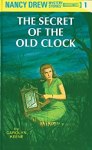
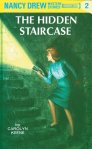
For my eighth Christmas, my grandmother gave me two Nancy Drew Mysteries: The Secret of the Old Clock and The Hidden Staircase.
And I fell in love.
Nancy Drew was so lucky. She was eighteen years old and had a housekeeper, a steady boyfriend, two best girlfriends, and a blue convertible. The convertible seemed to have a perpetually full tank of gasoline. She was also a blonde, which meant she had fun.*
Her father, prominent River Heights lawyer Carson Drew, was not the average parent. He rarely, if ever, asked where she’d been all day, and when he found out, he never said anything like, “Nancy, the next time you climb into a moving van driven by thugs and hide under a rug, you’ll be grounded till you’re thirty.” Or, for that matter, “Time to get serious, Nancy. Either enroll in Emerson College and start working on a degree, or find yourself a job. You can’t play detective for the rest of your life.”
Hannah Gruen cooked and cleaned, so Nancy did no chores. Boyfriend Ned Nickerson escorted her to dances when appropriate but otherwise stayed busy at Emerson College and didn’t get underfoot. Friends—tomboy George, whose pet phrase was, in 1959, an anachronistic “Hypers! You slay me!”; and George’s “plump” cousin Bess—provided companionship as well as help with investigations.
What was there not to love? Well, Nancy herself wasn’t perfect. She teased Bess about being plump; I didn’t like that. And her unfailing self-confidence sometimes grated; I’d have been happier if she’d expressed self-doubt now and then.
But she was eighteen and could take off in her convertible, wind blowing through her hair, seeking and finding adventure, solving mysteries along the way. To an eight-year-old convinced she’ll never be old enough for a driver’s license, much less a car, Nancy’s freedom sounded like heaven.
But Nancy wasn’t a party girl; she took detective work seriously. She solved mysteries because she wanted to help people.
In The Clue of the Tapping Heels, for example, she helped restore a child’s trust fund. In The Secret of the Wooden Lady, she found the lost figurehead belonging to a historic clipper and helped the captain establish clear title to the ship. In The Clue of the Leaning Chimney, while looking for a valuable Chinese vase she stumbled upon a gang using immigrants as slave labor. In The Secret in the Jewel Box, she reunited Madame Alexandra with her long-lost grandson, a prince.
In addition to enjoying the stories, I picked up some interesting bits of information. From The Clue of the Black Keys, I learned about obsidian; from The Clue of the Leaning Chimney, about kaolin.
And Madame Alexandra, her long-lost grandson, and Mr. Faber, the jeweler who created the ornate jewel box, took on new meaning when I later read about the Tsarina Alexandra of Russia, Tsarevitch Alexei, and the Faberge eggs.
I said earlier that I fell in love with Nancy Drew mysteries, but I could just as well have said I was hooked. Two years after I read the first ones, I was penciling, in my neatest handwriting, letters to Joske’s Department Store:
Dear Sir:
Please send me the following books:
1 copy of The Secret in the Old Attic $2.00 1 copy of The Clue of the Tapping Heels $2.00
Please charge my account.
My mother signed them. It was, after all, her account.
By my eleventh birthday, I’d moved along, fallen in love with Zane Grey’s westerns—society ladies from the East meeting up with cowboys down on the Mexican border, very romantic—and was writing to Joske’s about those.
But even though I no longer read Nancy Drews, I’m still hooked—on mysteries. Every time I pick up an Agatha Christie, a P. D. James, a Ruth Rendell, an Elizabeth George, a Martha Grimes, a Tana French, a Donna Leon, a . . . as I said, I’m hooked.
Nancy Drew made me a mystery reader. And Nancy is the reason I write mysteries.
From what my friends tell me, a lot of them are in the same boat.
That Nancy Drew has a lot to answer for.
***
How did we know blondes have more fun? Television told us so.
kangaroo: on a multiple choice test, an answer that is so obviously incorrect that no examinee with the sense God promised a monkey would ever select it
I learned about kangaroos in a senior level education course. There were two professors, one who taught testing and measurement and another who taught what I think of as the softer side of counseling. The info about kangaroos came from the T&M prof. He frowned upon them.
After a test covering the softer side, a student informed the SS prof that he’d included several kangaroos. He’d never heard the term. He also didn’t appear concerned.
Concern. Sometime I’ve got it. Sometimes I don’t.
If I were concerned about sincerity, truth, design; about beauty and art; about, to quote the Duke, preserving the unities, I would end, as I began, with kangaroos.
But I have nothing more to say about them. And the videos I’ve examined don’t do a thing for me.
So for kangaroos, substitute kittens.
***
“Now,” says the duke, “after to-night we can run in the daytime if we want to. Whenever we see anybody coming we can tie Jim hand and foot with a rope, and lay him in the wigwam and show this handbill and say we captured him up the river, and were too poor to travel on a steamboat, so we got this little raft on credit from our friends and are going down to get the reward. Handcuffs and chains would look still better on Jim, but it wouldn’t go well with the story of us being so poor. Too much like jewelry. Ropes are the correct thing—we must preserve the unities, as we say on the boards.” ~ Mark Twain, Huckleberry Finn
Around the year 1900, several miles outside the little farming community of Fentress, Texas, a boy working in the field looked up and saw a funnel cloud. He ran home, shouting that that a tornado was coming.
The family gathered in the kitchen. They were frantic. The whirling black cloud was headed directly for the house. At any second, it would hit. All they could do was pray.
So they dropped to their knees and closed their eyes, and the father prayed the only prayer he could think of:
“Father, for what we’re about to receive, make us truly thankful.”
And then he jumped to his feet and shouted, “Oh, no! That won’t do!”
***
The story is true. My great-aunt Bettie Waller, who had known the principals, told it while her husband, Uncle Maurice, sat by and shook with silent laughter. Last fall, while going through old pictures, I found a piece of paper with story notes written on it—in my great-aunt Ethel’s handwriting—a scrap of the history of a small place.
***
Epilogue: The tornado turned, missed the house, and hit the barn. Neither humans nor animals were harmed.Everyone was truly thankful.
I did not sleep last night—I mean, I did not sleep at all—and no sleep means no post. Not the post I’d planned anyway.
Here’s the thing: I didn’t sleep last night because I’d been writing the Day H post. I was engaged. I was focused—hyperfocused. My brain buzzed. I was on. I was up. I was wired.
That is my process: I’m most creative at night. And once my brain starts buzzing, it doesn’t stop.
I completed the post, clicked Publish, went to bed. . . .
. . . breathed deeply, emptied my mind, mentally repeated Ommmmmmmmmmmmm, breathed deeply, emptied my mind . . . thrashed around . . .
Three hours later, I got up, read for a while. Drank two cups of chamomile tea, which proved neither soporific nor tasty.
And here I am, nearly midnight, still awake. But not for long.
I’m writing, true. But hyperfocusing? Buzzing? On? Up? Wired?
Day H. I’ve worked my way from “Herman” (a kitchen monster) through “Here’s the latest from SIP” (bo-ring) to “Husband,” which I should have thought of in the first place.
Here’s the low-down.
After careers focusing on criminal codes and tax codes, David Davis creates. His Alien Resortcartoon has appeared in newspapers in the United States, Great Britain, and Australia.
A little background on that: Coy crash landed his spaceship on a Pacific island and has since been joined by other ETs—Plucky, Deadpan, and Lmao—who help him write comics. A group of earthlings, the Beacons of Night and their leader, Rash Lambert, oppose the efforts of Coy and his friends (“We stand for a united earth. If you were born here, you’re one of us. When Alien Resort makes comics, they’re stealing our jobs.”)
Before becoming a cartoonist, David Davis produced, directed, wrote, and sometimes acted in sci-fi videos. His work has appeared at the 2017 Fort Worth Indie Film Showcase; the 2017 Dallas Medianale; the 2012 Boomtown Film and Music Festival in Beaumont, Texas, and the 2012 CosmiCon and Sci-Fi Film Festival in Roswell, New Mexico, as well as other venues.
Last Saturday, his first animated video, Blood Bank, was screened at the Dallas Alt Fiction film festival—online, of course, in the comfort of everyone’s living room.
He’s recently completed a second animated short-short: Time Capsule.
In all his creative endeavors, David is self-taught. He also excels at producing award-winners on a shoestring. Where some directors spend millions, David reaches into a drawer, pulls out a vegetable steamer, applies a few special effects, and—voila! a spaceship rises from the ground and makes for Venus. Or somewhere in the vicinity.
Aha! face mask! So obvious! So timely. A post about Sheltering in Place Day 18, when you realized you would be going to the doctor on Day 21 sans mask, and you decided you had to have one, so you would buckle down and make one.
But then you think back over the experience, the tea towels, the patterns, the videos, the having to ask David for needle and thread because, manual dexterity not being your number one attribute, you gave up on that kind of thing years ago, and he’s a better seamstress than you ever were anyway.
You remember how fast you gave up on mask-making, and just as fast, you give up on writing about giving up on making them.
In “B Is for Bowser,” I announced that I would write about a mistake I’d made. In Part 1, I said I would get to the heart of the matter the next day. Then things (Day C and Day D) happened. I didn’t get to it the next day or the next.
On Day E, however, my egregious error will be revealed.
I’ll recap (“B Is for Bowser”) as fast as I can:
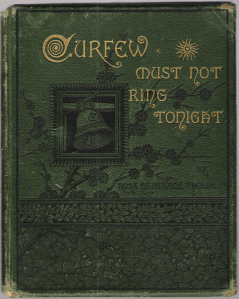
There’s an old narrative poem entitled “Curfew Must Not Ring Tonight,” about young Bessie, who saves her lover from a death sentence by climbing to the top of the bell tower and clinging to the bell’s clapper, preventing curfew from sounding when the rope is pulled.
Famous in its time, the poem is almost forgotten now. Its best-known modern use might be Katharine Hepburn’s recitation in the movie Desk Set.
Now to the Egregious Error:
Years ago, I ran across a parody of “Curfew Must Not Ring Tonight”—”Bowser Must Not Bark Tonight.”
It tells the story of Bessie, a young woman who fears the family dog will chase away her boyfriend when he comes courting. Papa says the dog must guard the melon patch and therefore cannot be tied. To ensure that John Henry gets all the way to the front door, Bessie takes matters into her own capable hands.
I don’t know why I thought about the poem—maybe I was running through mental files for a B-word and came up with Bowser—but I love the parody and thought it a likely topic for a post, so, before looking for “Curfew,” I googled, Bowser must not bark tonight.
Nothing.
Bowser shall not bark tonight. Nothing. Bowser will not . . . Added poem and parody and other likely keywords. Nothing.
Or not exactly nothing. The very first hit, before all the methods of teaching a dog not to bark, was Exodus 11:7—”But among the Israelites not a dog will bark at any person or animal. Then you will know that the LORD makes a distinction between Egypt and Israel.” (New International Version)
Talk about dreams shattered and balloons burst. Google, access point to the universe, was a big, fat liar. Second only to the knothead who failed to enter “Bowser” into the database.
Coming up: one spoiled B-post. “Curfew” alone was nothing. Without the parody, why bother?
A mistake, a mistake, a palpable mistake. But a reasonable one.
Had anyone been looking over my shoulder, I’d have blushed from shame. Because I was unobserved, I ate a Cadbury egg and determined to turn shame into a story.
Authorship of “Towser Shall Be Tied Tonight” is attributed to Anonymous, so, assuming it’s in the public domain, I include the entire poem. BloggerWilliam Lee says, “As far as I know the writer is still unknown and if still living probably wishes to remain ‘Anon.’ but I would have loved to meet him or her because it is the kind of poetry I like.” I’d love to meet the author, too.
Slow the Kansas sun was setting,
O’er the wheat field far away,
Streaking all the air with cobwebs
At the close of one hot day;
And the last rays kissed the forehead
Of a man and maiden fair,
He with whiskers short and frowsy,
She with red and glistening hair,
He with shut jaws stern and silent;
She with lips all cold and white,
Struggling to keep back the murmur,
“Towser shall be tied tonight.”
“Papa,” slowly spoke the daughter,
“I am almost seventeen,
And I have a real true lover,
Though he’s rather young and green;
But he has a horse and buggy
And a cow and thirty hens, – –
Boys that start out poor, dear Papa,
Make the best of honest men,
But if Towser sees and bites him,
Fills his eyes with misty light,
He will never come again, Pa;
Towser must be tied tonight.”
“Daughter,” firmly spoke the farmer,
(Every word pierced her young heart
Like a carving knife through chicken
As it hunts the tender parts) – –
“I’ve a patch of early melons,
Two of them are ripe today;
“Towser must be loose to watch them
Or they’ll all be stole away.
I have hoed them late and early
In dim morn and evening light;
Now they’re grown I must not lose them;
Towser’ll not be tied tonight.”
Then the old man ambled forward,
Opened wide the kennel door,
Towser bounded forth to meet him
As he oft had done before.
And the farmer stooped and loosed him
From the dog-chain short and stout;
To himself he softly chuckled,
“Bessie’s feller must look out.”
But the maiden at the window
Saw the cruel teeth show white;
To herself she fiercely whispered, – –
“Towser must be tied tonight.”
Then the maiden’s brow grew thoughtful
And her breath came short and quick,
Till she spied the family clothesline,
And she whispered, “That’s the trick.”
From the kitchen door she glided
With a plate of meat and bread;
Towser wagged his tail in greeting,
Knowing well he would be fed.
On his well worn leather collar,
Tied she then the clothesline tight,
All the time her white lips saying:
Towser shall be tied tonight.”
To the melon patch she took him
As he bounded at her side
To an apple tree she led him.
And the knot she firmly tied.
“There’s Pa’s melons, you must guard them
All day long you stay right here
When John Henry comes to see me
He’ll be safe and have no fear”
And her steps were light and happy
As she thought of joy so bright
When her lover would be coming
Towser would be tied tonight
Up the path the young man sauntered
With his eyes and cheeks aglow;
For he loved the red-haired maiden
And he meant to tell her so.
But her little brother, William
In a fit of boyish glee,
Had untied the slender clothesline,
From the harvest apple tree.
Then old Towser heard the footsteps,
Raised his bristles, fixed for fight, – –
“Bark away,” the maiden whispers;
“Towser, you are tied tonight.”
Then old Towser bounded forward,
Passed the open kitchen door;
Bessie screamed and quickly followed,
But John Henry’d gone before.
Down the path he sped most quickly,
For old Towser set the pace;
And the maiden close behind them
Showed them she was in the race.
There’s the clothesline, can she get it?
And her eyes grew big and bright;
Then she sprung and grasp it firmly;
“Towser must be tied tonight.”
Often times a little minute
Forms the destiny of men.
You can change the fate of nations
By the stroke of one small pen.
Towser made one last long effort,
Caught John Henry by the pants,
But John Henry kept on running
For he thought that his last chance.
But the maiden held on firmly,
And the rope was drawn up tight,
All the time her white lips saying
“Towser must be tied tonight”
Then the father heard the racket;
With long strides he soon is there,
Where John Henry and the maiden,
Crouching, for the worst prepare.
At his feet John tells his story,
Shows his clothing soiled and torn;
And his face so sad and pleading,
Yet so white and scared and worn,
Touched the old man’s heart with pity,
Filled his eyes with misty light.
“Take her, boy, and make her happy, – –
Towser shall be tied tonight.”
***
“Curfew Must Not Ring Tonight” sometimes appears as “Curfew Shall Not Ring Tonight.”
***
The Blogging from A to Z Challenge master list appears here. It’s up to 510 blogs. Something for everyone.
I then promised to finish Day B on Day D. Day D would have been titled D is for Dog.
Unfortunately, this afternoon, I sprayed a solution of Clorox and water in the wrong direction and disinfected my eyes. And thus Dog turned into Disinfect. And Darn.
Seven hours later, my left eye isn’t in the best of shape—it sees but doesn’t feel like seeing. According to the reflection in my hand mirror, it doesn’t feel like being seen, either.
Furthermore, applying a cold compress to the left eye precludes typing with the left hand.
I hate to do this, but Day B, Part 2 will post on Day E.
In my A post I mentioned the mistake I made in signing up for the A to Z Challenge: I registered my blog as “Author/Writer (craft of writing, stories, memoir),” instead of “Other and Miscellaneous.”
It really doesn’t matter. I mean, there are mistakes, and there are mistakes.
For letter B, I’m writing about another of my mistakes. It’s more of a mistake. But I can’t go right to the heart of the matter. There’s backstory to be dealt with. If you’ll be patient for just a little while, I’ll get there.
Set in 17th century England, the poem tells the story of Bessie, a young woman whose lover, Basil Underwood, has been imprisoned by the Puritans and sentenced to die that night at the sound of the curfew bell. Oliver Cromwell is expected to arrive that night, but after the bell has rung. Bessie begs the sexton not to ring the bell; he says he’s never failed to ring curfew and that he won’t fail to ring it tonight. But Bessie is determined to save her lover. The next lines describe her heroic actions.
Wild her eyes and pale her features, stern and white her thoughtful brow, As within her secret bosom, Bessie made a solemn vow. She had listened while the judges read, without a tear or sigh, ‘At the ringing of the curfew, Basil Underwood must die.’ And her breath came fast and faster, and her eyes grew large and bright; One low murmur, faintly spoken. ‘Curfew must not ring tonight!’
She with quick step bounded forward, sprang within the oldchurch-door, Left the old man coming slowly, paths he’d trod so oft before. Not one moment paused the maiden, But with eye and cheek aglow, Staggered up the gloomy tower, where the bell swung to and fro; As she climbed the slimy ladder, on which fell no ray of light, Upward still, her pale lips saying, ‘Curfew shall not ring tonight!’
She has reached the topmost ladder, o’er her hangs the great dark bell; Awful is the gloom beneath her, like the pathway down to hell. See! the ponderous tongue is swinging; ’tis the hour of curfew now, And the sight has chilled her bosom, stopped her breath, and paled her brow. Shall she let it ring? No, never! Her eyes flash with sudden light, As she springs, and grasps it firmly: ‘Curfew shall not ring tonight!’
Out she swung – far out. The city seemed a speck of light below ― There twixt heaven and earth suspended, as the bell swung to and fro. And the sexton at the bell-rope, old and deaf, heard not the bell, Sadly thought that twilight curfew rang young Basil’s funeral knell. Still the maiden, clinging firmly, quivering lip and fair face white, Stilled her frightened heart’s wild throbbing: ‘Curfew shall not ring tonight!’
It was o’er, the bell ceased swaying; and the maiden stepped once more Firmly on the damp old ladder, where, for hundred years before, Human foot had not been planted. The brave deed that she had done Should be told long ages after. As the rays of setting sun Light the sky with golden beauty, aged sires, with heads of white, Tell the children why the curfew did not ring that one sad night.
When Cromwell arrives, she tells him her story, and, touched by her heroism, he lets Basil live. Basil emerges from the prison expecting to die but instead finds Bessie holding his pardon. And—
In his brave, strong arms he clasped her, kissed the face upturned and white, Whispered, ‘Darling, you have saved me, curfew will not ring tonight.’
For years, “Curfew” was exceedingly popular: A favorite of Queen Victoria, it provided inspiration for a play and and for three silent movies. It was recited by one of the characters in Anne of Green Gables. It also serves as the basis for chamber music composed by Richard Cohn for the Music & Magic Lantern Slides project. View a performance on Youtube.
Now. I know I haven’t gotten to Bowser and Bleh yet, but the hour is late, and I am tired, so I’m off to bed.
As I wrote in Monday’s not-Theme Reveal, my A to Z Writing Challenge has no theme. Officially, it’s listed as “Other and Miscellaneous.” The Archon’s Den blogger claims “chaos and confusion” as a recurring theme. I wish I’d thought of that.
Anyway, the obvious and easiest A topic is April.
On April 1, 1968, my junior English class put out a special issue of the school newspaper.
(The school was small; we twelve were the only juniors.)
One article reported the purchase of new and badly needed uniforms for the girls’ basketball team. A drawing of the outfit was included. The shorts were of your plain garden variety, but the top featured cap sleeves, a bib enhanced with vertical pin tucks and pearl buttons, and a Peter Pan collar. There might have been a ruffle somewhere. They would spend off seasons in cold storage.
Ford Mustang logo.
A second article reported that the school would buy two new Ford Mustangs for use in an onsite driver’s ed. course in the fall. At the time, students had to travel ten miles to a larger district to earn the credit. Driving a Mustang, which Ford had been producing for only four years, was a Certified Big Deal.
A third item announced that the girls’ choir would sing at President Lyndon B. Johnson’s campaign rallies that summer, which, of course meant nationwide travel. Dredging up words from the junior English vocabulary list, the reporter quoted the choir director: She said we’d been spuriously honored and that the tour would go a long way toward ending the mal de mer running rampant through the student body. I think she also said the girls were proud to be invited, and that she was sure they would continue to prosit.
Copies were distributed at the beginning of first period. Paper staff, mouths shut and expressions innocent, waited. The response was more than gratifying.
Sitting in the front row of geometry class, the co-editor and I watched the teacher/girls’ coach, brow wrinkled, examining the new basketball uniform and wondering aloud who had chosen it and why she hadn’t been asked for input. She didn’t say it looked gosh-awful, which must have taken immense restraint. While she was puzzling, the team, most of whom sat behind us, showed no restraint. They said plenty.
In the hallway between classes, students raved about the Mustangs. The district was small—high school enrollment numbered no more than fifty—and had to watch its pennies, so its splurging on two sports cars was almost too good to be true. One 1950 Chevy would have made a splash.
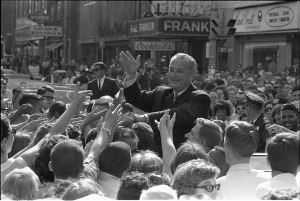
Johnson greeting a crowd, 1966.
With the exception of the co-editors, choir members hadn’t been informed that they would sing at political rallies. They appeared confused but accepted the story. It made sense; we knew a number of patriotic songs.
No one mentioned that the night before, President Johnson had announced on national television, “I shall not seek, and I will not accept, the nomination of my party for another term as your president.” No one asked why the student body was seasick. The choir director, who doubled as our English teacher, issued a compliment. She said the quotation sounded just like her.
Finally, about noon, someone noticed the date on the first page—April 1—and we were busted.
Readers were good sports. They laughed; no one chewed us out.
Some were disappointed: The choir wouldn’t sing at rallies, and the business about the Mustangs was too good to be true.
But sighs of sorrow were as nothing compared to the sighs of relief: Peter Pan collars were out.
***
Note: The choir would been happy to sing for a different candidate, but Hubert Humphrey forgot to invite us.
***
I hoped last fall’s Great Unearthing would produce a copy of the April Fools’ issue. No such luck. I would like to read it again. I would love to see the drawing of that uniform. It would make a fine illustration when U rolls around.
***
I just checked the A to Z master list and discovered that I slipped up and registered my theme not as “Other and Miscellaneous,” but as “Author/Writer (craft of writing, stories, memoir).” That is unfortunate, because the only things I know about craft are that it would be wrong to put a colon after the are in this sentence, that the lack of a properly placed Oxford comma drives me crazy, and that the price of a dedicated, supportive critique group is above rubies.
For the second year in a row, I’ll participate in April’s A to Z Writing Challenge—twenty-six posts, one every day in April except Sundays. So far, nearly four hundred blogs appear on the master list, here. About half have announced themes: history, books, education, animals, gaming, parenting, personal, women’s interests, and on and on.
I didn’t do a Theme Reveal post, because because that would require me to know the theme. I registered under Other and Miscellaneous. I’m not about to say, “I’m going to write about _____,” only to get stuck at Q. If a theme emerges, we’ll know in May.
If I were going for the obvious, I’d spend April posting about sheltering in place. This is day 16. David has picked up groceries at the Walmart parking lot several times. We’ve placed small orders, trying to fill some gaps. Tonight I found myself considering which I would prefer, Wolf Brand Chili or sardines. The surprise was that both sounded appetizing. I chose something else.
Federal social distancing guidelines now extend through April 30. Davis household guidelines were extended that far two weeks ago, and we’ll go further if necessary. We don’t want to expose ourselves to the contagion, and we don’t want to expose anyone else. We’re grateful for those whose work allows us to retreat.
I hope reading this post isn’t as dull as writing it has been. If it has been, please don’t mention that in the comments.
As to comments, I want to thank the folks who’ve been reading, liking, and commenting while I’ve been doing none of those. I’m on my way to get a good night’s sleep, after which I’ll work on getting up the gumption to do better.
We saw a couple social distancing in the green space yesterday. A walk in the park can be gumption inducing. I’ll put it on tomorrow’s agenda.
Day 10, 11, or 12, I don’t remember, of sheltering in place. I stayed in for a week earlier in the month, then went out twice, the second time unnecessary and stupid. Anyway, it feels like more than 10, 11, or 12 days.
But self-quarantine is necessary for David and me, and for the rest of the city, the state, and the country. I could look on it as my patriotic duty. Because it is.
I fell off #ROW80, in part because I’m so good at falling off challenges, but I shall pick it up now.
My goal, after a late start, was to add 4,000 words to my WIP by March 26. Tomorrow is check-in day. Well.
I got the goal down to something like 2100. I can’t do that much in 23 hours–or maybe I can; I think I’ve produced that many words in a day before. Once.
Best case scenario, I’ll get down to business tomorrow and write a couple of scenes. Last month I did two without dithering to get them almost perfect. I might do that again.
We shall see.
Now about Sheltering Place.
I’m good at it. I’m good at anything that allows for sitting around. I’m beginning to have an itch to get outside and walk up and down the sidewalk. The small outdoors on the other side of my window is usually empty. A few people walk their dogs up and down the sidewalk. I could walk all over the complex without meeting anyone. Or could, when people were working elsewhere. Maybe they still are.
I’m also getting the itch to write. I think about the WIP every day and have mentally composed a lot. Mental composition doesn’t always transfer to the page, though, especially when I look at the blank page and forget what was in my brain. Characters stop talking and there goes the sparkling dialogue.
That’s what I haven’t been doing. What I have been doing.
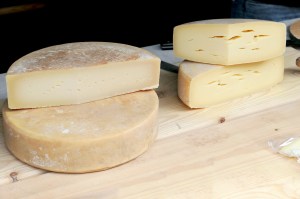
Cheese. Mine was cheddar, but cheddar obviously doesn’t interest photographers.
Washing cheese, frozen entree packaging, and cottage cheese. We leave delivered and picked up food in the trunk of the car for the time it takes for the virus to die, and longer to make sure, but perishable items come inside, where they meet soap and water.
I used hot water, of course, and in so doing probably cooked the cheese. The frozen entrees are in the freezing getting freezer burn. The boxes collapsed from the scrubbing, so I trashed them. The thin sheet of plastic covering the food doesn’t provide adequate protection, hence freezer burn. But I don’t mind a little freezer burn. Desperate times call for desperate measures.
When David, the shopper, tried to buy hand sanitizer, shelves were already empty. I ordered some from Amazon. It was supposed to arrive the 13th, then the 16th, then the 29th, but it showed up on the 23rd. I soaped it up. This brand was the only one with 70% alcohol available when I ordered. I bought several 17-ounce bottles and two small ones we can carry with us. The labels are in Chinese. There is some irony in that, but irony is all it is. I’m grateful to have it.
Alcohol wipes are on the way. The 29th, I think today’s email said. We have some isopropyl alcohol (70%); our alcohol swabs are about an inch square. Not the best for disinfecting more than an inch square.
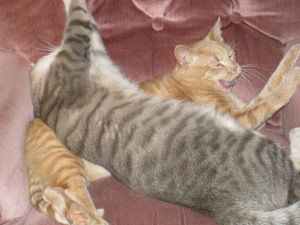
Tonight I wiped down the recliner with sanitizer gel on a paper towel. I don’t know if that’s effective in the first place, and in the second, I don’t know why I picked on the chair, since I’ve been sitting in it forever without concern. Anyway, after a while, Ernest the Cat jumped onto the footrest and lay down and stayed for about thirty minutes. When he jumped down, I realized there might be a problem. I wetted a towel and managed to wipe down his right side before he gave me a dirty look, flew down the hall and disappeared under the bed.
Ernest
Knowing he was capable of holing up there for hours, David sprayed some calming mist under the bed–we use it to get him to the doctor–and later I found him in the living room. I was able to wipe down his left side and his paws. He didn’t like the paw part but was too calm to get up and leave. I was still worried, because I don’t know that rinsing with a not very damp cloth is sufficient, and I didn’t get between his toes. He sticks his right paw in water several times and licks it before drinking.
On the other side of the issue, by the time I got to the footrest, the sanitizer had receded into the paper towel, there wasn’t much on it in the first place, and the paper was almost if not completely dry when I finished. I don’t think much was transferred, if any. And I’ve never seen him wash anything except his face and paws. Guy cats don’t appear to bathe as often as girl cats.
I thought about putting him in the bathtub and shampooing him. Under the circumstances, he would be justified in shredding me, and I would take it as my just due. It’s a small bathroom with a small closet. Nowhere to hide. But it wouldn’t have been pretty.
I worried. Then I didn’t. Now, thinking about it, I’m worrying again. I wonder if we should take him to the ER (his second home). He seems fine. I don’t know whether to go to bed or sit up and worry. It’s already after midnight, and I need sleep, but he’s my baby. And I’m programmed to worry.
So here we are. A 300-word post about #ROW80 becomes a post about decontaminating packages of cheese becomes another cat post. And words, words, words.
Not necessarily a positive. Composing anything gives me the feeling that I’ve written. And it satisfies the itch. Getting down to business tomorrow may be more difficult that I thought.
But in difficult times, I think about the British. Bombs aren’t falling. This isn’t the Blitz. They did what had to be done. So will I.
 Yesterday I loved Nancy Drew. Today I love washing machines.



















 M. K. Waller