Books for Soldiers: Can You Help?


A U.S. Army chaplain is requesting donations of books to help soldiers he is counseling. His wish list is here, on the Amazon site.


Operation Paperback, a nonprofit organization that collects and sends “gently used” books to members of the military and their families, has approved his request.


If you can buy a gift book, Amazon will send it directly to the chaplain.


 ###

I thank mystery novelist Sandra Parshall, a Facebook friend, for sharing this information and the Amazon link. Visit Sandra at her website and on Facebook.


Enhanced by Zemanta

Poems for My Nieces by Abbie Taylor

Abbie Taylor, one of my fellow bloggers at Writing Wanglers & Warriors, shared with the WW&W readers a poem she wrote for a thirteen-year-old girl. It might not have made me smile when I was thirteen, but now it does, so I’m sharing it with you.

Wranglers's avatarWriting Wranglers and Warriors

I just received word from Wilda Morris that one of my poems is a March winner in her monthly poetry challenge on her blog. Last month’s challenge was to write a lullaby poem so I wrote one for my niece Isabella who is ten years old. You can read it plus other winning poems here.

Isabella’s not the only niece for whom I wrote a poem. Anna isn’t technically my niece, but she’ll be my step-niece in July when her mother marries my brother. After visiting them in Florida last Christmas, I was inspired to write the following poem which will appear in my new chapbook, That’s Life: New and Selected Poems, to be published by Finishing Line Press.

THAT’S LIFE

 For Anna


Oh you of thirteen years,

when told you can’t go to the mall

or sleep over with a friend,

please understand that’s the…

View original post 61 more words

Monkey Mind

I am a distractible adult. I suffer from Monkey Mind.*

I wasn’t a distractible child. I listened in class, turned my assignments in on time, and made the honor roll. It’s true that I didn’t practice the piano or the clarinet as I should have, but there were extenuating circumstances.

Regarding the piano, my mother encouraged me and saw that a certain miminum standard was observed. But she also said she wanted me to learn to play well enough for the piano to be a pleasure rather than a burden.

The piano was a pleasure. I amused myself for hours playing pieces I wanted to play.

Pieces I wanted to play included anything my teacher hadn’t assigned. Scales, arpeggios, Czerny exercises–all those repetitive activities designed to develop skill–fell into the didn’t-want-to column.

As a result, the piano is now a major frustration, and I wish Mother had declared all-out war on her musical slacker.

The clarinet situation was more complex. As a fifth- and sixth-grader, I played daily for my own amusement, and for the amusement of my white-faced Hereford, Marie, who stood on her side of the fence while I entertained from a lawn chair on mine.

But when the euphoria triggered by receipt of my very own Boosey and Hawkes in its very own case had worn off, I realized that, in the hands of a novice, the clarinet is at best a noisemaker. And in concert, the trumpet gets all the good parts, like the melody. Practice was all tootle-tootle-tootle-rest-ooh-ooh-ooh-rest-tootle-tootle-tootle-rest-tootle-rest-rest-rest-repeat.

I loved music, so listening to myself was misery. My mother loved music as well, so being part of a captive audience must have been worse. Consequently, I believe my mother, realizing the clarinet would never be a pleasure to me or to anyone else in the family, except Marie, made certain accommodations. Possibly something like, The less tootling I have to listen to, the less I’ll nag her about the piano.

(No. That’s unfair, even in jest. Music was in my mother’s DNA. She’d have gladly put up with all the tootling I thought necessary.)

(For his part, my father was a saint. He used to joke that when he didn’t want to listen to something–or someone–he turned off his hearing aid. But he kept it on through all my noise. I know because twenty years later, Mother told me that during one evening’s tootling, “Polly Wolly Doodle,” to be exact, he looked up and said, “She’s playing a song.”)

 ###

Well. Having concluded that digression, whose connection to the rest of this post isn’t clear to me either, I’ll return to the original topic, and say that, aside from a talent for locking myself out of my car, the tendency to ditsiness lay dormant until a sudden surge six years ago this month. That’s when I left my position as a paralegal (and the structure it provided) to stay home and write. Or, to be more specific, when I bought a laptop and discovered wireless connectivity.

It’s strange how a device that should aid writers can be such a hindrance. Even when good intentions coincide with opportunity, there’s that tempting little Firefox icon lurking at the bottom of the screen. Throw in a tinge of curiosity about anything at all–the current state of your email inbox, the definition of a particular word, the spelling of distractibility, a peek at who’s doing what on Facebook, how old Peter Vaughn is and what Billie Whitelaw, who married him in 1952, looks like, since you know you’ve seen her but you can’t for the life of you remember her face . . . and you have to know now, and then one click leads to another . . .

It’s a slippery slope.

Anyway, I chose to write about Monkey Mind because after sitting in this coffee shop, staring at a blank LibreWriter screen and watching my mentor across the table just typing away, I grew restless, both physically and mentally. After a time, I gave up and in, opened Firefox, and surrendered to the lure of the Web.

Then a funny thing happened. Surfing usually stops the jiggliness I feel when staring at a blank page. Instead, the feeling increased. My mind scattered. My hands shook. To make things worse, an intense irritability set in. I was not in good shape.

Finally, just as I was ready to slam my laptop closed and stalk out, a word unrelated to icons and mice floated through my brain: hunger. Breakfast was only a distant memory. I wobbled to the counter. One orange juice and one banana later, jiggliness abated and writing began.

End of story.

###

Now for the Moral, which I direct to all those people–and they know who they are–who claim Monkey Mind is completely psychological, a self-indulgence created by literary Camilles, would-be writers who like to talk the talk but don’t want to walk the walk:

The Moral

Monkey Mind can’t always be cured by meditation, relaxation, Artist Dates, discipline, yoga, warm showers, outlining, daily affirmations, or a good swift kick.

Sometimes the only cure for Monkey Mind is lunch.

###

 * a Buddhist term meaning “unsettled; restless; capricious; whimsical; fanciful; inconstant; confused; indecisive; uncontrollable” ~ Wikipedia

Enhanced by Zemanta

Loveliest, Again


Loveliest of trees, the cherry now
Is hung with bloom along the bough,
And stands about the woodland ride
Wearing white for Eastertide.


Now, of my threescore years and ten,
Twenty will not come again,
And take from seventy springs a score,
It only leaves me fifty more.


And since to look at things in bloom
Fifty springs are little room,
About the woodlands I will go
To see the cherry hung with snow.

April in Texas: A Mild Madness

I’ve said before, and loudly, that my Tennessee ancestors must have rolled into Central Texas in April, when the wildflowers were in bloom. Otherwise, like General Philip Sheridan, they would have chosen to rent out Texas and live in Hell.

My friend from Cleveland disagrees. He says the Wallers and the Grahams settled here because, as far as they looked in any direction, they didn’t see snow. He might be right. Perspectives on weather are heavily influenced by experience. I’ve never had to shovel snow, so I feel free to whinge about the heat.

April is a special time here. It’s the month when the landscape explodes with color, and a mild madness descends. People go wildflower hunting. Purists cruise around just looking. Artists set up easels and canvases and palettes and paint en plein air. We all risk snakebite to capture shots of family and friends amongst the bluebonnets.

And I post A. E. Housman’s “Loveliest of Trees” as a reminder that April isn’t forever.

dscn1655


This year I’m starting early.  My friend Mary googled “Texas Hill Country Wildflowers” and sent me one of the links: image after image of spring landscapes. I’m sharing it here. The site loads in stages, so patience is called for.

Mary’s Link

https://www.google.comsearch?q=texas+hill+country+wildflowers&client=firefox-a&hs=khH&rls=org.mozilla:en-US:official&tbm=isch&tbo=u&source=univ&sa=X&ei=_bZsUeu1FcKXqAHLhYCgDQ&ved=0CD8QsAQ&biw=1280&bih=885

###

Austin’s Lady Bird Johnson Wildflower Center, formerly the National Wildflower Research Center, seeks to “increase the sustainable use and conservation of native wildflowers, plants and landscapes.” According to her biographer, Mrs. Johnson’s legacy as First Lady “was to legitimize environmental issues as a national priority. The attitudes and policies she advanced have shaped the conservation and preservation policies of the environmental movement since then.” The Center’s comprehensive website addresses science, history, legislation, tourism, conservation, education–all areas Mrs. Johnson’s interest in the natural environment touched on.

Lady Bird Johnson Wildflower Center http://www.wildflower.org/


The Texas Hill Country is beautiful in spring, but other parts of the state are just as lovely. Here are some more links to information about the best places to see wildflowers.

Texas Wildflower Heaven
http://www.texaswildflowerheaven.com/

Wildflower Sightings
http://www.wildflowersightings.org/

Texas Bluebonnet Sightings
http://www.texasbluebonnetsightings.com/

Bluebonnet - Image by SarahBelham - via morguefile.com
Bluebonnet – Image by SarahBelham – via morguefile.com


Enhanced by Zemanta

The Trees, the Birds, and the Patio

Have I mentioned that I can open a locked 1977 Chevy Malibu with a large paperclip in under a minute? And a locked 1977 Buick LeSabre with a metal coat hanger in under thirty seconds? That’s if the metal hanger is coated with plastic and if you discount the time it takes to go into Wal-Mart to buy it.

I was musing on cars and paperclips this afternoon during a pause in my drive home from Writers Who Write. I’d arrived at the coffee shop where we meet feeling rather jiggly in both mind and body, possibly because I’d been awake for only thirty minutes, most of which I’d spent en route. The banana and iced mocha I counted as breakfast didn’t help, so three hours later I left feeling just as jiggly as when I’d come in.

On the way home, I pulled into Trader Joe’s. The voice inside my head–the same one that told me to slow down only seconds before I hit the Black Angus cow back in 1996–had already warned me to go straight home. But guilt over ceding grocery shopping to David for most of the past four years overcame intuition, also known as good sense, and I stopped anyway.

There I faced a dilemma: what to do with the laptop lying on the passenger seat. I knew I should take it in with me, so I reached into the back seat, brought forth several large grocery sacks, and piled them on top of it.

That’s one advantage of Austin’s disposable plastic bag ban–I forget mine so often that I have to buy a reusable from the HEB cashier nearly every time I shop. There are enough of those things in my car to hide several laptops and a baby elephant besides.

Now. Here’s where the pause I mentioned earlier started. Satisfied no one could see the laptop, maybe, I shouldered my purse, picked up one of the grocery bags, and headed for Trader Joe’s. No more than a dozen steps later, I did a U-turn, headed back to the car, and peered through the window. Just as I’d expected, the ring of keys still hung from the ignition. Laying my hand on the hood, I felt a vibration. The car was running.

(Said car is ten years old. Because it’s been sitting in the sun, the red paint has begun to oxidize, so the outside looks totally disreputable, but it runs beautifully, knock wood. If the A/C hadn’t been on, I might not have felt a vibration at all.)

Well. My first impulse was to dump my purse onto the hood and follow it with my forehead. So I did. My second impulse was to hide a couple of cars away and wait for a burglar to break in for the laptop. Then I had a better idea. I stood up straight, head up, shoulders back, and asked myself, “What would Nancy Drew do (if she’d left her cell phone at home?)”

I’m certain she would do something more dramatic than finding a real phone and calling Ned Nickerson. But I’m not Nancy. I marched into Trader Joe’s, asked (in the most pitiful voice I could manage) to use the phone, and called David. He said he would run right over. I headed for the produce.

Back at the car, I set my own HEB insulated reusable shopping bag, with groceries, on the trunk. The putative temperature was 68 degrees, but sunshine had warmed the metal to at least 400, and I figured with any luck the salmon I’d bought might be cooked by the time I got home. Later I decided acting on whimsy might not be wise and took both the groceries and myself to a small, sandy promontory in the shade of a live oak tree at the other end of the car. Leaning against the tree’s trunk, I remembered other trees I’ve known:

The first high school I taught in was built around an open patio. Two young live oak trees grew on one side of it, outside the library. They were about the size of the tree I stood under while I waited for David.

The patio was a lovely spot. Students sat on the steps and at picnic tables during lunch, and the honors banquet was held there on spring evenings, and one pep rally that’s best forgotten (and that I’ll write about sometime) took place there. It was, as I said, lovely. Everyone who visited the school commented on its loveliness.

And time passed, and the live oaks flourished.

Then the birds arrived. And things began to go downhill.

The birds took up residence in the trees. Others joined them, and more and more, until the trees were thick with birds.

Birds, like cats, have no idea of the rules. They chattered and shrieked. They flew into glass doors and into windows overlooking the patio, unsettling students and teachers holding class on the insides of the windows. Unlike cats, they displayed no concern for personal hygiene. The patio did not smell nice. People stopped gathering there. They would have stopped walking by it at all if they’d been able to get to class any other way.

The Powers That Were made a number of humane attempts to get the birds to leave. They hung tin pans in the trees. They draped rubber snakes in the trees. They swatted at the birds with tennis rackets. Swatting might strike some as inhumane, but it was nothing compared to the alternative. This was, after all, a community dedicated to guns and hunting. Anyway, the same students who’d been traumatized when birds hit their windows got quite a kick watching the swatters flit about the patio, swiping at thin air.

At this point I must digress. I have admitted elsewhere that I sometimes exaggerate. Hyperbole is my favorite literary device. What I’ve written about the birds, however, is true. If anyone doubts my veracity, I can call on at least a hundred other eyewitnesses to back me up.

But back to my story. I was leaning against that live oak in front of Trader Joe’s, reminiscing, when I spotted my rescuer about three lanes over. I waved. He pulled his car into a space across from me.

“Did you call from a pay phone?” he said. Then he kissed me hello and unlocked the car.

That’s when I remembered, one more time, how lovely it is to have a husband who is as kind as my father was. My father never complained about retrieving my keys from locked cars, either.

Of course, that was before 1977, when I learned to use a paperclip.


Enhanced by Zemanta

Happy St. Patrick’s Day to All

I should extend my own Happy St. Patrick’s Day message to you all, and perhaps I will later today, but I’ll never be able to offer a nicer one than this. In addition to the beautiful clover, the cat looks just my sweet Alice B Toeclaws, whose autobiography I hope one day to write.

Please take this opportunity to visit The Bonny Blog. The posts there lift the spirit.

The Passive-aggressive Imp

In the 1980s, I was among about a zillion public school teachers introduced to the promise of CAI–Computer Assisted Instruction.

When computers replaced the classroom teacher, as they eventually would, students would learn gladly, each at his own pace. Discipline problems would  disappear, because there would be no dissonance in the new student-teacher relationship. Computers were neutral. There would be no personality conflicts, because computers had no personalities. They neither took offense nor gave it. There would be no frustration, no irritation, no anger, no unhappy track record, no grudges, no bias, no impatient sighs, no rolling of eyes, no gnashing of teeth, nothing from either student or computer to upset our little CRT-filled Edens.

In other words, as soon as the teacher withdrew to the sidelines and left teaching to the expert, all would be well.

Uh-huh.

Fast-forward to 2014.

For the past hour I’ve been trying to register for a week-long writing class–The Damned Rough Draft, to be specific. I belong to the sponsoring organization. To receive the member discount, I must enter my user name and password.

I don’t know my user name and password. I didn’t know I had a user name and password. There is a hazy slip of memory that might touch on receiving something like that, perhaps written on the back of the new card. But during a recent purse purge, a handful of cards were relegated to a stack somewhere that isn’t a memory at all.

So I emailed a friend who was engaged in the same pursuit. She had figured out her username and suggested I follow her pattern, fill in my possible username, and click Forgot Email.

I did. I entered my email address and requested the password be sent to my account. Clicked Okay. Nothing. Started humming in hopes of keeping my blood pressure down. Clicked Okay again. Clicked many, many more times. If I’d found a student clicking away like that, our personalities would have conflicted immediately.

I clicked some more.

Nada.

So here I sit, frustrated, irritated, staring at the one thing standing between me and my precious Damned Rough Draft, this laptop, the portal through which the wonky registration page enters my sight. And I think, Computer Assisted Instruction, yeah, right.

Because I don’t care how neutral this machine is supposed to be, I’m as irritated as all get-out with the damned passive-aggressive little imp. And although I’m tempted to stay here and click click click, just to let it know I won’t be beaten, I shall give in and go to bed.

Because the tune I’ve been humming through this ordeal is “If I Had a Hammer.” And if I don’t get out of here, I shall be overcome by temptation and write a whole new verse to that song.

Enhanced by Zemanta

Laura Oles presents Inside Photo Secrets for Authors, March 9 @ Sisters in Crime (Austin) – Free and Open to the Public

Laura Oles
Laura Oles

Inside Photo Secrets for Authors

Storytelling through photography has long been a powerful method of connecting people emotionally. For authors and writers, the use of photography can greatly assist in reaching and retaining readers. However, the digitization of photography has left the public largely confused about this new medium’s rules and regulations.

At Sisters in Crime – Austin’s March 9 meeting, member Laura Oles, a photo industry journalist and author of Digital Photography for Busy Women, will cover some current issues surrounding digital photography.

Topics to be covered will include:

  • Basic guidelines for using photos on your author blog & website
  • Creative Commons: What it is and why it matters
  • When you can and cannot use photos you find online
  • How to determine if a photo has been edited (for fictional story lines, etc)
  • What metadata is and what it tells you about the photo
  • How to use photography to strengthen your author page and blog posts
  • Tips for taking that perfect author headshot
  • Examples & resources for writers to find photos to use under license
  • General photography tips for powerful imagery
  • Why authors should use Pinterest & how to get started

Laura Oles was fortunate enough to have entered the digital photography industry long before Photoshop had become a verb. She is a founding team member of Pixel Magic Imaging, which was purchased by DNP Photo Imaging America in 2006, and has continued to advocate for digital solutions that improve the experience for shooters of all skill levels. She spent over ten years building and leading sales and marketing teams and understands the challenges of helping businesses establish a strong, unique presence in a crowded marketplace.

Laura has published over 200 articles in industry and consumer magazines and has been a columnist for Digital Camera Magazine, Memory Makers Magazine, Picture Business, PhotoInduced, ClubMom (now Cafe Mom) and others. Her book, Digital Photography for Busy Women, was named a photography category finalist in USA Book News.com’s ‘Best Books’ awards. In addition, she has served as an expert speaker for a variety of imaging conferences and conventions across the country. She continues to consult and write for the digital photo industry.

Sisters in Crime Heart of Texas Chapter (Austin) meets the second Sunday of each month at 2:00 p.m., at Recycled Reads, 5335 Burnet Road, Austin. Meetings are free and open to the public.

Enhanced by Zemanta

Hypotenuse

What was I thinking? Obviously not much.

For a previous WordPress photo challenge (Object), I posted

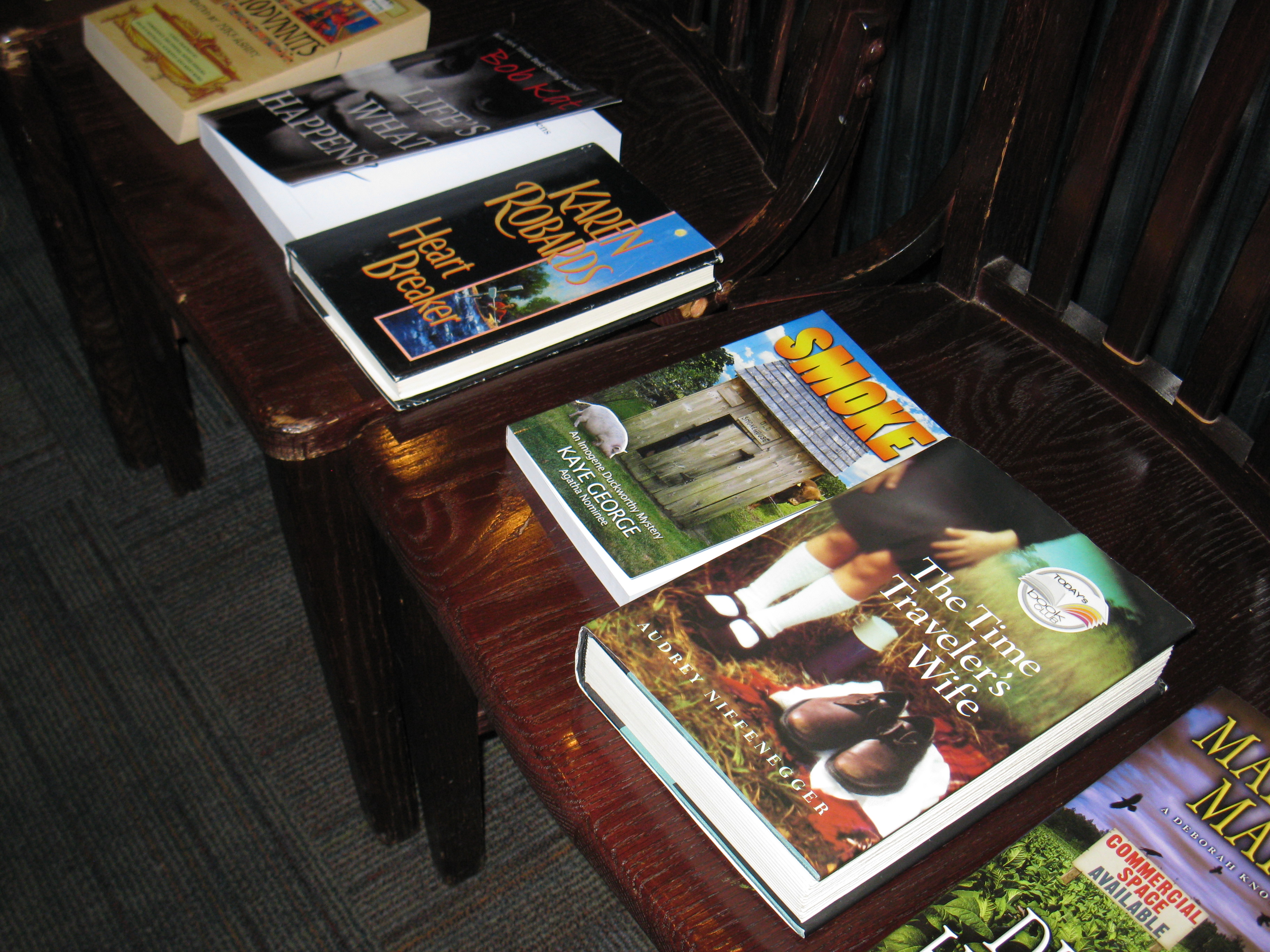
Sisters in Crime Heart of Texas Chapter Book Swap, December 2013

I don’t know why. I’d already picked out several shots I liked better, such as

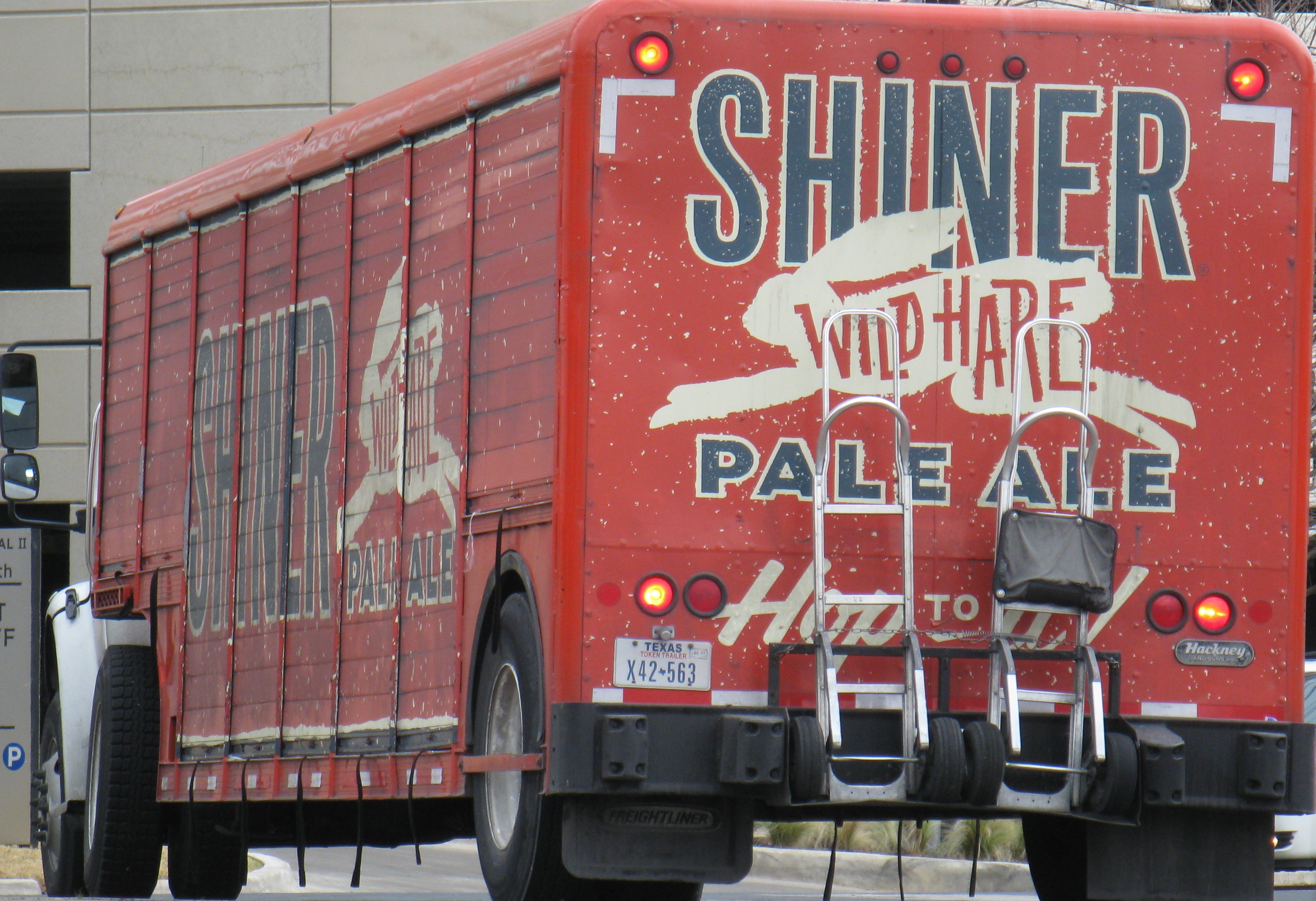
Shiner Beer truck parked at Valero gas station and convenience store, February 4, 2014

and

William's foot on my brand new Kindle, October 21, 2014
William putting his stamp of approval on my new Kindle, October 21, 2014

either of which is more interesting than books on chairs.

But at the last minute the books jumped out and said, Pick me! So I did. I was later appalled at how foolish the photo looked in comparison to those other bloggers posted.

On the other hand, considered as geometric shapes–two right triangles formed from a rectangle, their common hypotenuse composed of mysteries–the picture assumes a significance bordering on the semi-artistic.

Had I cropped more precisely, or had I posted before midnight, I might have observed that before now. But probably not.

You see, I didn’t discover the books formed a hypotenuse by studying the photograph. I saw it while composing this post. I wrote the word diagonal to describe the line of books, and suddenly saw triangles.

In other words, I didn’t know what I knew until I’d written it.

It sounds backward, especially to people who’ve been told they must outline before they write. Which is practically everyone who passed through an English class before the process theory taught by Donald Murray, Ken Macrorie, Peter Elbow, and other teachers was widely recognized. Writing as process allows students to use language to discover what they know and think before they try to organize.

(Ironically, most of those early outliners could have told their teachers that outlining with an empty head doesn’t work.)

When Gertrude Stein says writers have the daily miracle, this must be what she means: allowing language to lead, using the hand to stimulate the mind, being surprised by your own creation, discovering yourself through words you’ve written.

Thinking with a pen, or a keyboard, in hand works for anyone willing to put words on paper or pixels on a monitor.

Results vary, of course.

Stephen King starts writing and ends up with The Shining.

I start writing and end up seeing triangles.

On this day, triangles are miracle enough.

Enhanced by Zemanta

Love Poem for Valentine’s Day

I

The Owl and the Pussy-Cat went to sea
In a beautiful pea-green boat:
They took some honey, and plenty of money
Wrapped up in a five-pound note.
The Owl looked up to the stars above,
And sang to a small guitar,
“O lovely Pussy, O Pussy, my love,
What a beautiful Pussy you are,
You are,
You are!
What a beautiful Pussy you are!”

II
Pussy said to the Owl, “You elegant fowl,
How charmingly sweet you sing!
Oh! let us be married; too long we have tarried,
But what shall we do for a ring?”
They sailed away, for a year and a day,
To the land where the bong-tree grows;
And there in a wood a Piggy-wig stood,
With a ring at the end of his nose,
His nose,
His nose,
With a ring at the end of his nose.
III
“Dear Pig, are you willing to sell for one shilling
Your ring?” Said the Piggy, “I will.”
So they took it away, and were married next day
By the turkey who lives on the hill.
They dined on mince and slices of quince,
Which they ate with a runcible spoon;
And hand in hand, on the edge of the sand,
They danced by the light of the moon,
The moon,
The moon,
They danced by the light of the moon.

~ Edward Lear

***

Enhanced by Zemanta

Sharing

I’d planned to post today, but Daily Awareness has something more important to share.

hopeseguin's avatarDaily Awareness

The Bright Field
by John O’Donohue

I have seen the light break through
to illuminate a small field
for a while and gone my way
and forgotten it. But that was the pearl
of great prize, the one field that had
the treasure in it. I realize now
that I must give all that I have
to possess it. Life is not hurrying

on to a receding future nor hankering after
an imagined past. It is the turning
aside like Moses to the miracle
of the lit bush. To a brightness
that seems as transitory as your youth
once, but is the eternity that awaits you.

Sunlit Poppy Field

View original post

The Soul Selects

For Maryellen ~

The Soul selects her own Society —
Then — shuts the Door —
To her divine Majority —
Present no more —

Unmoved — she notes the Chariots — pausing —
At her low Gate —
Unmoved — an Emperor be kneeling
Upon her Mat —

I’ve known her — from an ample nation —
Choose One —
Then — close the Valves of her attention —
Like Stone —

Emily Dickinson