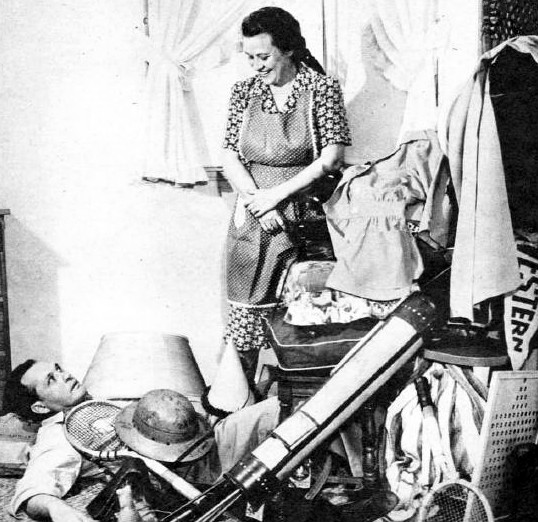
One Saturday when I was twelve, my mother, brandishing a dust mop, flushed a mouse out of my Fibber McGee’s closet.
My cat, Ashley, brought in as a consultant, caught the mouse, his first, and pranced toward me with his offering.
I screamed and jumped onto the bed.
Ashley dropped the mouse.
The mouse ran back into the closet.
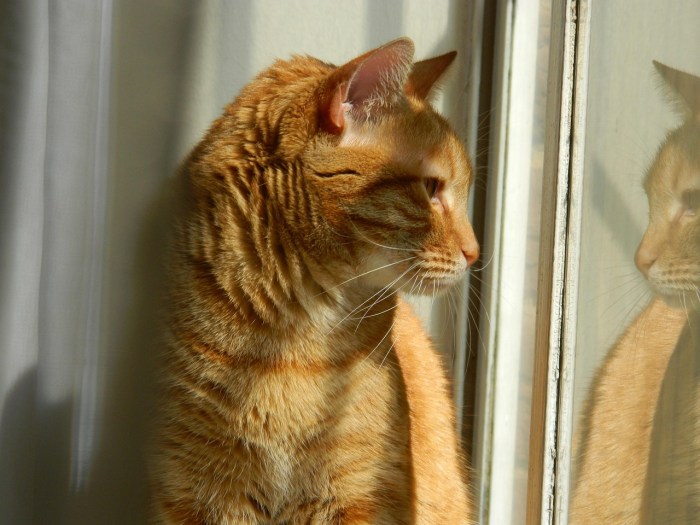
Ashley spent the rest of the afternoon sitting on the windowsill, staring out across the yard, refusing my mother’s pleas to try again.
“Ashley was proud of himself. He was bringing you a present. You hurt his feelings.” My mother spent the rest of the day glaring at me. It wasn’t about Ashley’s feelings.
Ashley resigned from his post as Head of Household Rodent Control.
I spent the rest of the day trying to civilize the closet.
I have no idea what happened to the mouse.
I don’t remember Fibber McGee’s closet myself, but I was told it was a dead ringer for mine.
Listen to recordings of over 1,000 episodes of Fibber McGee and Molly at Internet Archive. (And if you come across the episode in which the phrase “Politics makes strange bedfellows” generates some confusion and considerable laughter, please leave its number in a comment.)
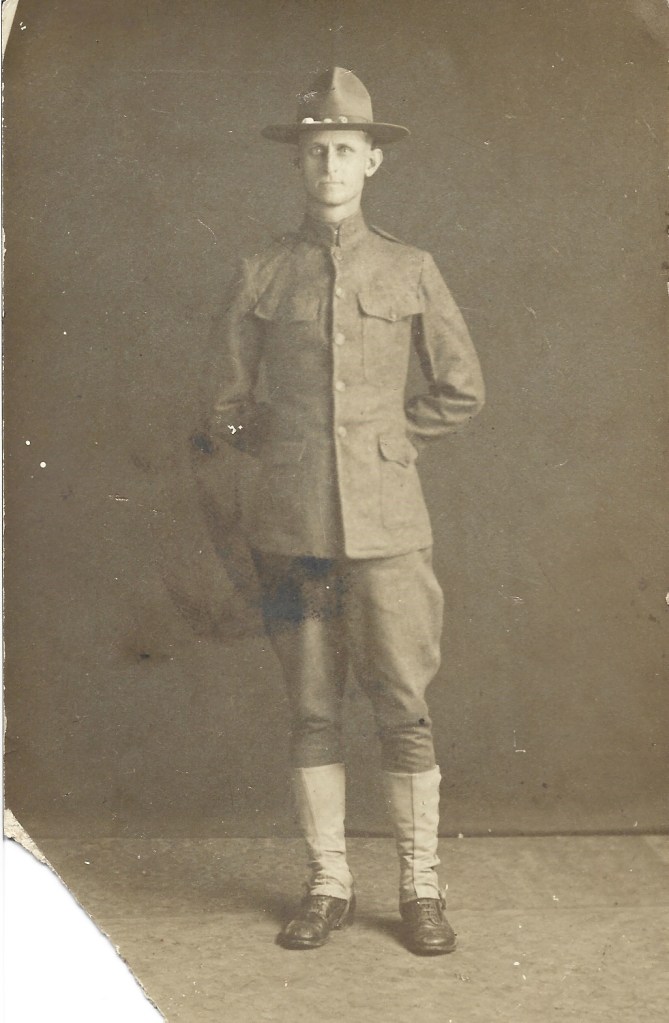
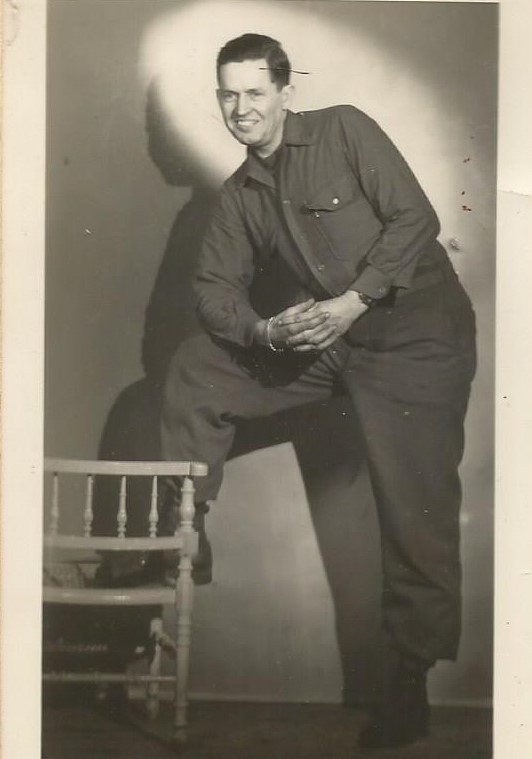
My father, Billie Waller, volunteered for the U.S. Army early in 1941.
He served in World War II in Northern Europe. He drove onto Omaha Beach on June 19th, 1944.
He refused all promotion.
He said the coldest winter he’d ever known was the one he spent in Cologne.
He repeatedly fell for a prank played by fellow soldiers: Knowing he had lost his sense of hearing, they would signal that a bomber was approaching and run; then, when he dived into a foxhole, they laughed. When Major Yarborough, the officer he drove for, finally happened to see, and so realized that one man under his command couldn’t hear and others were endangering him, he got the one out of harm’s way and disciplined the rest (how the Major did the latter, I don’t know).
My father was sent from the front lines in Germany to spend the last months of the war as an ambulatory patient in a Paris hospital, deaf from bomb concussion.
He arrived in Dallas, where my mother was living and working, before dawn on October 23, 1945, and handed his hearing aids to his mother-in-law with instructions not to tell my mother. Mother-in-law told. After several days of yelling to make herself heard, my mother told him to get the hearing aids and wear them. He’d been afraid she wouldn’t love a deaf husband.
He gave my mother his uniforms and said, “Get rid of these.”
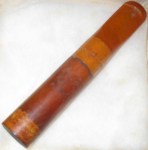
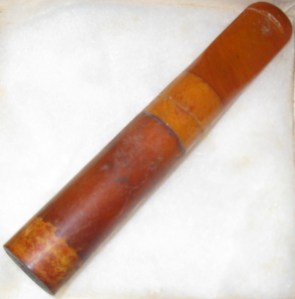
He kept his dog tags, some foreign coins, and a cigar holder given him by a Belgian farmer.
He delighted his mother-in-law by saying, “Oh la la!”
He had dinner ready every night when my mother got home from work. He specialized in chocolate pies topped by a mountain of meringue. Removing one from the oven, he flipped it upside-down onto the oven door and had to serve it as a pudding.
He was turned down for a job in warehousing because he was deaf (ironic, since he later worked in supply in Air Force Civil Service). He got a job in a toy store, where he sold a tricycle to a couple with a little boy. After the sale, he learned the trike was a demo, the only one the store had, and the only one it was likely to get in the foreseeable future. Having been overseas, he wasn’t familiar with shortages on the homefront. (My mother said if he had known, he’d have been tempted to sell it anyway, because he believed little boys who wanted tricycles shouldn’t have to wait.)
On May 1, his birthday, he took the day off and spent it with Yarborough (no longer Major) in Fort Worth. When he didn’t return timely for the birthday dinner she’d cooked, complete with chocolate cake with fudge icing, my mother cried and cried. She realized later, she said, laughing, that at that point, my dad had lived with Yarborough a lot longer than he’d lived with her, and that the two men probably had more in common.
After six months in Dallas, he achieved the dream that had kept him going throughout his years away. If my mother had worked for another six months, she would have had reinstatement privileges with Civil Service, but she didn’t hesitate. The San Marcos River was the only place he wanted to be, or would ever want to be. They moved to Fentress.
My mother said that of all the men she knew who served in World War II, he was the least changed. He came home and was again just Bill, with the quiet, dry sense of humor and the twinkle in his blue eyes. He put the war behind him and went on with life.
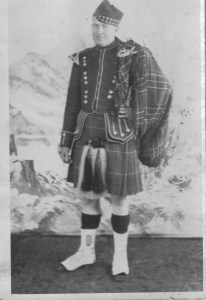
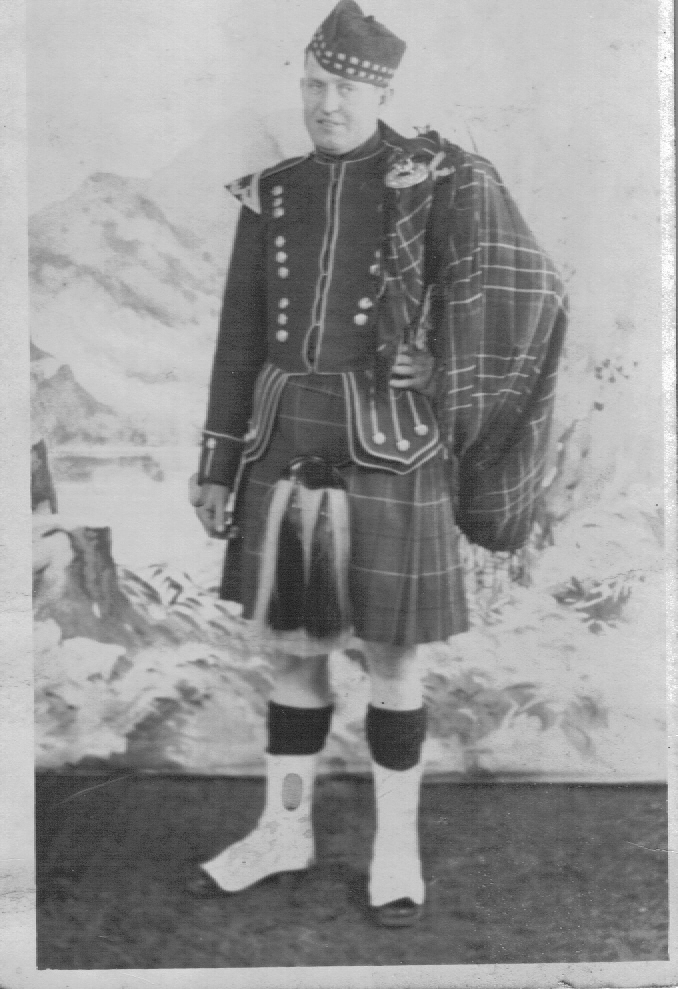
When he spoke of his service, he confined himself to people he’d known and the lighter side of daily life. While stationed in Scotland he and some friends had their pictures taken in traditional dress. He said one of the men, when changing back into uniform, forgot to take off the socks, and got back to the base wearing the photographer’s argyles.
He made a few observations: He respected General Omar Bradley but had a low opinion of Patton.
But he didn’t share stories of combat. He’d written my mother, “I’ve seen things you wouldn’t believe. I’ll tell you when I get home.” He never told.
Two remarks he made years later suggest why:
My mother told me about the first: When his brother Donald and others were talking about looting that occurred on the battlefield, my father, who’d been silent, suddenly said, “I’ve seen them cut off fingers to get rings.”
He made the second comment in my presence: My uncle’s stepson, who had served in the military but seen no combat, was looking forward to watching the movie Anzio on television. He said, “I can’t imagine hitting the beach and running into enemy fire like that.” My father replied, “There’s nowhere else to go.”
Such memories aren’t conducive to going on with life.
In 1964, when President Eisenhower’s memoir of D-Day and the Invasion was published serially in the San Antonio newspaper, he read it. Occasionally, he said, “No, that’s not quite right . . .” or, “He’s forgotten about . . .”
The one thing he couldn’t leave in the past was his deafness. The hearing aid didn’t filter out ambient noise, and he often walked out of gatherings–family get-togethers, wedding receptions, church dinners–that he would otherwise have enjoyed. He left Civil Service because his job at the time required taking sensitive, detailed information over the telephone, and he was afraid of making a mistake, which could have cost lives.
In 1967 and 1968, surgery at the VA hospital in Houston restored hearing in both of his ears and allowed him to lead a normal life.
In the summer of 1981, he finally expressed a desire to attend a reunion of the men he’d served with. An angina attack sent him to the hospital that weekend instead. He didn’t get another opportunity to see them again.
***
The cigar holder lived–and still lives–in the silver chest. I’ve known about it practically all my life and occasionally took it out and examined it when I was a child–but it took decades for me to realize its meaning. The farmer didn’t give a cigar holder to just some young man passing through; he gave it to an American GI, one among thousands he’d waited and hoped for, who was risking his life to free the Belgian people, and all of Europe, from the tyranny of Nazi Germany. The cigar holder represented gratitude, and more. In my mind’s eye, I see my my father and that farmer talking about the weather and how the crops were doing–if any arable land hadn’t been overrun by bootsoles and tanks. They’d have been speaking different languages, of course, but the language of farmers, and of friendship, is universal. And since my father was involved, they’d also have been laughing.
***
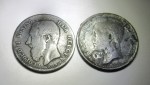
Two 50-centime Belgian coins.
Left, the profile of King Leopold II, dated 1888 or 1886.
Right, the profile of King Albert, date obscured by tarnish. Albert succeeded Leopold in 1909.
A dose of silver polish and elbow grease and more will be revealed.
AMERICAN Y.M.C.A.
ON ACTIVE SERVICE WITH THE AMERIAN EXPEDITIONARY FORCE
July 23, 1918
Dear Mother and Sisters,
After a lengthy but very interesting overseas journey, we at last arrived at our point of destination. Perhaps you can imagine how proud we were to see land after a weeks ride on a crowded boat; and I want to say right here that there is no prettier country under the blue sky than that with which these people are blessed and for which they are making a sacrifice to hold. Any picture you might imagine I think would hardly do the real France justice.
The streets of the city where we landed, and through which we marched to our camp on the outskirts, was lined with old men, women and children, for that is about all there is left to welcome the soldiers.
We are comfortably located in tents now in the suburbs of a city of 100,000 population, a very pretty place. We are provided with plenty to drink, good water, I mean, plenty of good fresh meat and lots of other good things to eat. The Y.M.C.A. here, as in the states, look after our interests in the usual way. The hospital accommodations are excellent, but so far, fortunately, few of us have had to avail ourselves of their service.
Altho I have seen very little of the country as yet, I can readily see why these people are so patriotic and so willing to make sacrifice for their country; it is such a pretty and prosperous land. Picture some large & irrigated truck farm and you have an idea of the appearance of this country It is harvest time now, and the people are blessed with an abundant crop. They grow most everything there is to eat.
On the surface there is little evidence of grief or mourning on the part of these people, not withstanding the fact that most every family have lost one or more members. The women and children, for that is all you see, except occasionally a few return from the front on a short furlough, are always up and going, and the spirit of self-sacrifice and determination is such that defeat for them is out of the question.
Mama, we are quite a ways from the firing line now and as yet have seen little of the real war that you read of in the states; yet we are close enough to see the effects and to feel that not all of the paper reports are fiction. I don’t know just how long we shall remain here. But for my part, I am anxious to get into the very thick of it all.
Our branch of the service affords us an opportunity so see a great deal of the country–to see history in the making, to learn the custom and characteristics of the people first hand.
Now Mama, regardless of how close to the front we are placed, or what kind of work we shall be called upon to do you should not worry in the least about me but rather be proud that you can contribute in this way, what little I may be able to do, to this cause, and share with me the praise, if any, and the blessing that all who serve, keeping in mind the high ideal for which we are here, shall receive.
I have never been in better spirits nor in better health. The weather is fine, very similar to N.Y. Over coats are comfortable at times. I shall not write more now for I don’t know how much will pass, and too there is some poor censor that will have to read this with scores of others. Take good care of yourself, and give my love to all the family.
With lots of love to you and sisters from
Your loving Son
Henry
*
Henry Waller was my grandfather’s younger brother. What I know about him:
He was born in 1887, in Guadalupe County, Texas. His parents were Ophelia Ann Graham Waller and Edward Pettus Waller. He served as either superintendent or principal of the rural school at Staples, Texas, near his family’s farm.
Thirty years old when the United States entered World War I, he enlisted in the army and served overseas. A transcription of a letter he sent to his mother and his sisters, Ethel and Jessie, appears above.
He was already drinking to excess when he enlisted. By the time the war was over, his alcoholism had progressed so far that he refused to return home–because, he said, he didn’t want his mother to see what he’d become.
He lived the rest of his life in New York City. I have a snapshot of him standing with friends, wearing a straw katie and looking well and happy.
I don’t know how he supported himself, but there came a time when he was unable to do so, and when his family in Texas could no longer support him adequately. In 1933, he committed suicide. He is buried at the Masonic Cemetery in Prairie Lea, Texas.
How much his experience in combat contributed to his alcoholism, I don’t know.
You may have seen some of this content in previous posts. Please forgive any repetition. I’m starting a new project and feel I should explain myself.
***
As I’ve said before, I grew up in the small Central Texas farming community of Fentress. In the 1950s and ’60s, most of the residents were old–elderly would be the polite term–but these were old. And interesting. They sat on porches and in living rooms and talked about cotton and boll weevils and playing dominos at Home Demonstration meetings. They talked about relatives and neighbors–sometimes imparting sensitive and pretty juicy information. And they talked about the past. Local history. Their history.
I listened.
Now I want to record as many of the stories as I can.
My main source is my great-aunt, Bettie Pittman Waller, who moved to Fentress in 1902, when she was sixteen, the first girl in the newly founded community. She held the history of the town in her amazing memory. But, although she could recite the facts with textbook accuracy, her stories focused on people, old friends and neighbors, and the little dramas of daily life. Many stories were funny. As she spoke, Great-uncle Maurice–accent on the first syllable–the quietest and sweetest man imaginable–sat in his recliner, shaking with silent laughter.
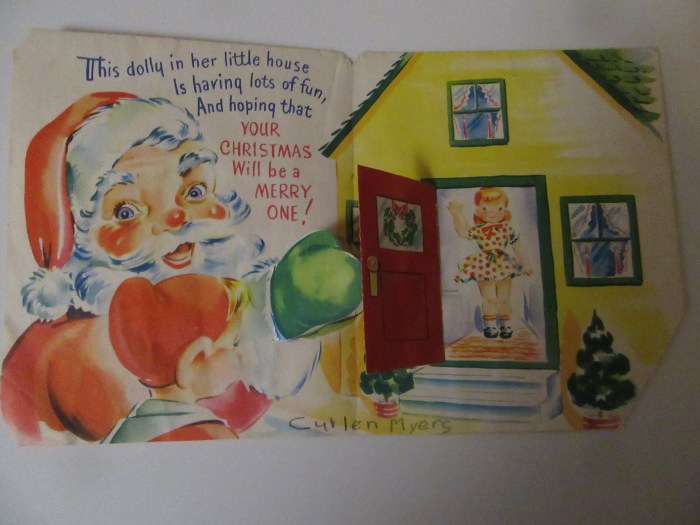
I’m always open to additions and corrections and will make necessary adjustments. Cullen Myers Dauchy, Sally Barber, Ann Barber, are you listening?
These posts might not interest anyone but a small group who have connections to the town. But I’m going to record the the ones I remember before they’re lost, and this is the best venue I have.
Handbook of Texas, and excellent publication, offers the the basics, a few paragraphs, names and dates, just the facts.
And I pray I don’t step on any descendant’s toes. If they ever happen to read the posts.
***
To show I’m willing to air my own family’s dirty laundry along with everyone else’s,* I begin with a story about my Uncle Joe, my father’s oldest brother. I don’t think he would care, because he, too, was a great storyteller about friend and foe alike. And he didn’t mind being the main character.
***
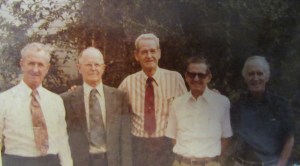
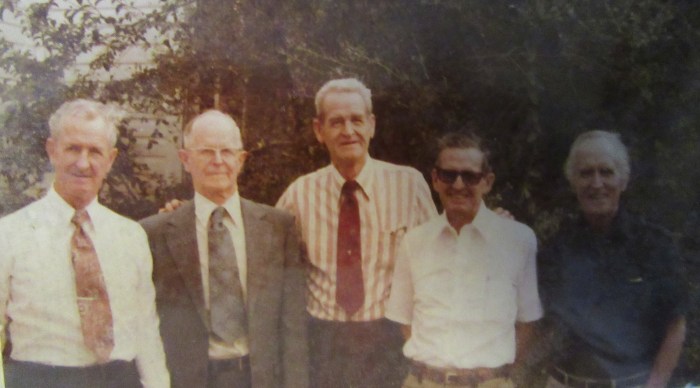
Joe Waller, Rob Waller (first cousin), Graham Waller, Bill Waller, Donald Waller, ca. 1980.
Joe Waller was born in 1913, the oldest son of Frank Waller and Vida Woodward Waller. His mother died when he was nine; there were five younger children–Maurice, 7 years old; Billie, 5; Donald, 3; and Graham, 8 months.
My grandmother’s sisters wanted to take the boys, but each had several children of her own and couldn’t take all five.
So my grandfather and and the children moved across the San Marcos River to town. A room was constructed over the garage next to Grandmama’s (his mother’s) house for their bedroom. The boys were cared for by Grandmama and Aunt Ethel, my grandfather’s older sister.
This was probably when they became generallerery known as the Waller boys, a label that followed them the rest of their lives. Several women in town also described them as “the sweetest things.” I can attest to that.
Some time later–I don’t know exactly how long–my grandfather moved back to the farm, which was very close to town as the crow flies and just a bit farther by road. (But considerably longer when rain turned the road to mud or the river rose out of its banks.) My grandfather loved his sons, never a doubt about that, and saw them almost daily–he ate most of his meals at his mother’s house–but as a father, he followed a sort of laissez-faire doctrine, leaving most practical parenting to his mother and his sister.
When Uncle Joe was a teenager, he turned what family members termed “wild.” I gather that having a rather detached father led in part to rebellion. And like his brothers, he loved Grandmama, a sweet woman with plenty of experience in raising boys, but I suspect he clashed with Aunt Ethel; lots of people, including her siblings, did. She was eminently clashable. In addition, she doted on the younger two, who were still baby-cute, but was never kind to the three older boys; she wasn’t physically abusive, but love and kindness weren’t part of her bargain.
Anyway, Uncle Joe fell in with some local boys who were described as “wild.” Joe followed their lead.
(This is where the story veers from serious to ridiculous.)
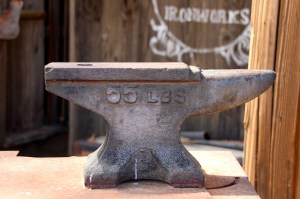
One night they drove to Seguin, a small city about twenty miles to the west, got likkered up, and stole an anvil.
I repeat, an anvil.
Why would anyone steal an anvil? They’re heavy and, I would think, impossible to fence. And of little use to a bunch of teenagers.
They were caught and arrested and spent the night in jail.
The next morning, word came that the boys were in the Guadalupe County Jail. Their fathers gathered at the Waller store, where Uncle Maurice was working, to decide what to do. Uncle Carl, an older Waller brother, was there, too.
As the fathers conferred, Uncle Carl repeatedly put in his oar: “Leave them in jail. Just leave them there. Teach them a lesson. Leave them.”
Then someone mentioned that Carl, Jr., known as Bubbie Carl, was one of the jailbirds, and his father changed his tune. They must go to Seguin right now and get those boys out.
When Uncle Carl was agitated, he fidgeted with the waistband of his trousers. Aunt Bettie, who was among the observers, said she thought he was going to pull them clear up under his armpits.
I don’t know what happened next. I assume the boys were brought home and suffered familial consequences. Or some of them did. I believe my grandfather became undetached and meted out appropriate punishment. And then went out behind the barn and died laughing about the anvil.
The rest of the story, or part of it: The Case of the Anvil was Uncle Joe’s only brush with the law. He later worked in the Civilian Conservation Corps, then with a friend rode the rails to California, got a job, and married Aunt Laura. After eighteen years in California, he moved back to Fentress, built a house, became the postmaster, and in his spare time raised cows, one of whom he named Loretta. (They all had names.) He also had a Jersey milk cow named Two Spot (she sported two spots somewhere on her anatomy) who offered to hook everyone but Uncle Joe and my father. I was scared to death of her.
But more about Uncle Joe in a future post, which will include a section about his testifying before a Senate subcommittee. Purely informational. He wasn’t in trouble. Other people were.
***
*I don’t really know about anyone else’s dirty laundry.
Fentress Memories (aka My Visiting [and Much Older] Worden Cousins, Who Had a Lot More Fun Than I Did, Because I Didn’t Blow Up Coke Bottles or Bring Home a Stray Dog That Was Foaming at the Mouth or Hotrod Down the Street with My Baby Cousin (Me) in Her Stroller or Anything Else That Would Have Gotten Me Shut Up in My Room Until I Was Thirty-Five)
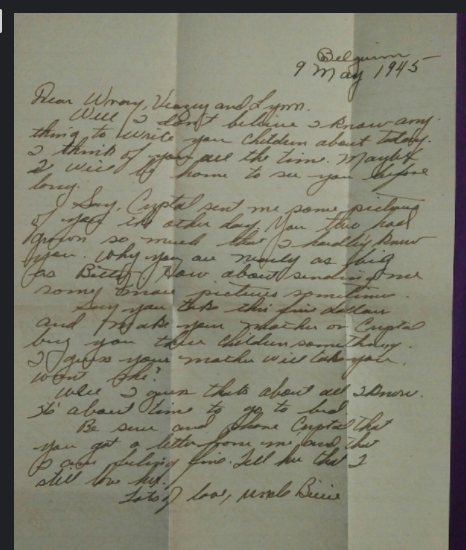
A letter my dad wrote to my cousins Wray, Mary Veazey, and Lynn Worden in Dallas while he was stationed in Europe during World War II. He’d been away from home since November 1942.
Belgium
9 May 1945
Dear Wray, Veazey, and Lynn,
Well, I don’t believe I know any thing to write you children about today. I think of you all the time. Maybe I will be home to see you before long.
Say, Crystal sent me some pictures of you the other day. You had grown so much that I hardly knew you. Why you are nearly as big as Betty. How about sending me some more pictures sometime.
Say you take this five dollars and make your mother or Crystal buy you three children something. I guess your mother will take you, won’t she?
Well I guess that’s about all I know. It’s about time to go to bed.
Be sure you phone Crystal that you got a letter from me and that I am feeling fine. Tell her that I still love her.
Lots of love, Uncle Billie
***
The last six months or so of World War II, my father was an ambulatory patient in Paris. He’d gone deaf from bomb concussion. For as long as possible, he hid the disability from his superiors. His fellow soldiers, however, amused themselves by running for foxholes, then laughing when Daddy jumped in. One day, Major Yarborough, for whom he drove, saw them. He took Daddy out of combat and sent him from Germany to a hospital in Paris. What happened to the others for tricking him into thinking bombs were falling, I don’t know, but I understand it wasn’t pretty.
I presume he was in Belgium on the way to Paris. He was slated to leave for the States asap but didn’t get to Dallas, where Mother was living, until October 23, 1945, the day before their third wedding anniversary.
My father was supposed to be released from service in San Antonio, so my mother had gone there, where she stayed with her aunt, uncle, and grandmother, and made cake after cake. When she got word Daddy would be coming to Dallas instead, she cried. Sam, her uncle, patted her head and told her to pack her suitcase and he would take her to the bus station.
The last time my dad had been home, the family had been living in San Antonio, where my mother and grandmother worked in Army Civil Service. When the Army moved to Dallas, they moved, too. So my father knew only the address. My grandmother and her younger daughters, Barbara and Betty, lived in the main house. My mom lived in a little house in the back yard.
On the way through my grandmother’s house, my dad handed her his hearing aids and sad, “Don’t let Crystal know about these.” My grandmother, of course, told my mother as soon as possible.
After several days of shouting, Mother mentioned the hearing aids and said she thought he ought to wear them. He was embarrassed, and remained so for several years. One ear was so far gone he didn’t bother with the aid. He finally made peace with the other one and told small children who asked that it was his telephone. When he took it off at night, he was sensitive to vibration but otherwise was gone. To make him hear her, Mother had to put her mouth next to his “good” ear and shout. Twenty-plus years later, a surgery to treat his kind of hearing loss was being taught by the doctor who developed it at the VA hospital in Houston. My dad, considered a good candidate, had the surgery, and his conversational hearing was restored. He said the only negative was that for a time the chirping of birds nearly drove him crazy.
When my cousins heard Uncle Billie was home, they declared a school holiday and hit my grandmother’s doorstep. Mary Veazey was seven and Wray was six. I don’t know whether they remembered him or had heard enough to think they did. I’ll add that they wrote to him, too, even though in the early years, Wray’s letters were scribbled. Lynn, the youngest, was born after he shipped out for the East Coast.
The remark about their being nearly as big as Betty was a joke of sorts. She was my mother’s youngest sister, only eight years older than Mary Veazey, and as an adult was five feet tall. It didn’t take long for any of her nieces and nephews to grow as tall as Betty. Even I got there.
***
The photos of my cousins were taken at Christmas in 1957, twelve years after they received the letter
***
Packing for our recent move, I came across the cigar holder a Belgian farmer gave my father when he passed through after the Normandy Invasion. It’s a valued keepsake.
***
Thanks to my cousin Denise Worden Allegri for retrieving this letter from her father’s files and sharing it with her aunt Mary Veazey, who shared it with me.
December 6 of my freshman year, possibly to announce I would fail all my final exams and all my courses. I thought it best that the parents be prepared.
By the end of the second semester, my mother had stopped believing me.
Mass communication is easy when your uncle is the postmaster. See upper left corner.
Later, maybe when Uncle Joe bought new mailboxes, our box number changed from 46 to 44. At some point, our phone number changed from 2622 to 2384.
I can’t remember my current cell phone number, but I do remember how to call home in 1970. I remember some of the answers on that biology final, too.
We’re moving again, so I’m finding stuff I ought to throw away but can’t.
My father, Bill (Billie) Waller, May 1, 1915 – September 8, 1983
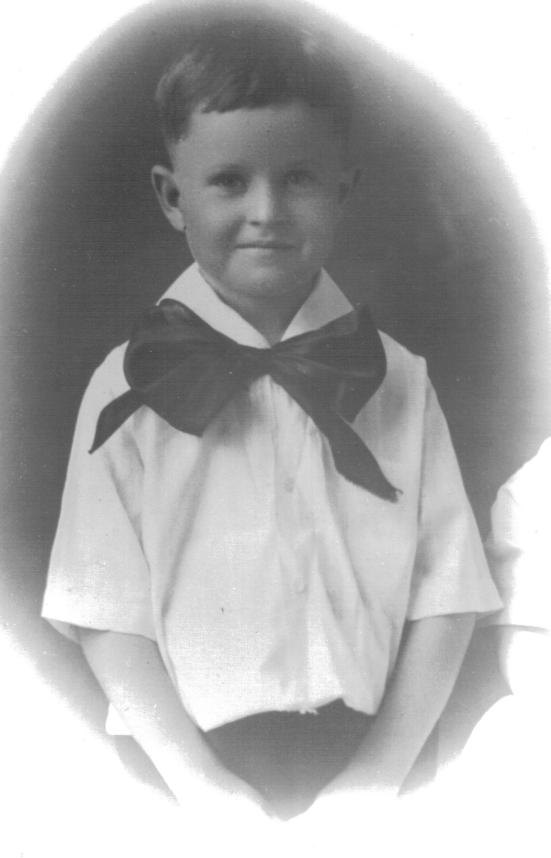
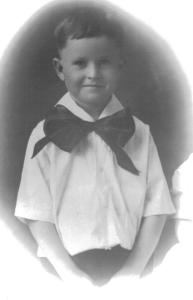
Billie Waller, ca. 1921
I remember, in no particular order–
He loved horses. When he was in the saddle, they knew who was in charge. He didn’t have to force them.
He loved driving—down backroads to see how much it had rained, or just for the pleasure of driving. He said my horse Scarlett “rode like a Cadillac,” his highest praise. He appreciated a smooth ride. Scarlett was the only Cadillac he owned.
When children started school at seven, he started at five. His mother had just died, and sending him to school with the two older brothers was easier than keeping him at home with the two younger. He had to repeat first grade.
He quit school before his senior year to farm full-time. His father didn’t think graduating was important. No one else could have convinced him to finish—except maybe one of his mother’s sisters, if she’d thought about trying.
One of his high school teachers told me, “Your daddy was just terrible. He said the funniest things. I was only couple of years older, and he was so funny, I never could get mad at him.” It was genetic. He got it from his mother’s family.
Early 1940s
He created ridiculous fictions my mother then repeated all over town. (“Bill Waller, I am never going to believe another thing you say.” She always believed it.) He learned the art from two his of his maternal uncles.
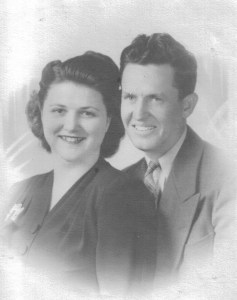
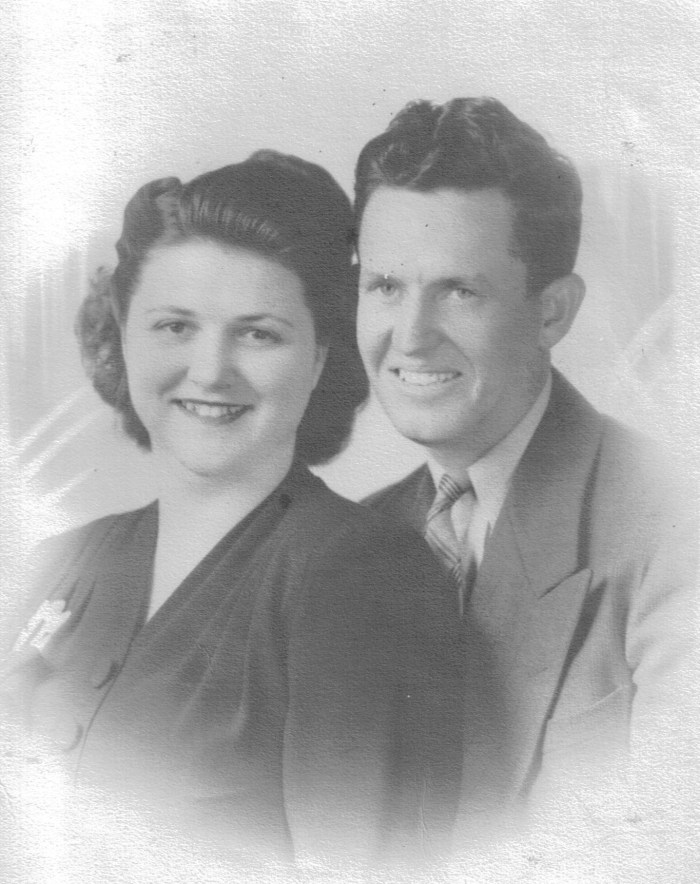
My parents, Crystal Barrow Waller & Billie Waller, October 1942.
He always gave me five-dollar bills to go to movies that cost fifty cents, including popcorn and Coke, and told me to keep the change. (I didn’t.)
He believed dogs and cats belonged outside but when the Siamese draped herself across his feet in bed at night, he let her lie. The Collie didn’t let him or his pickup out of her sight. He made sure she was in the truck before he left in it.
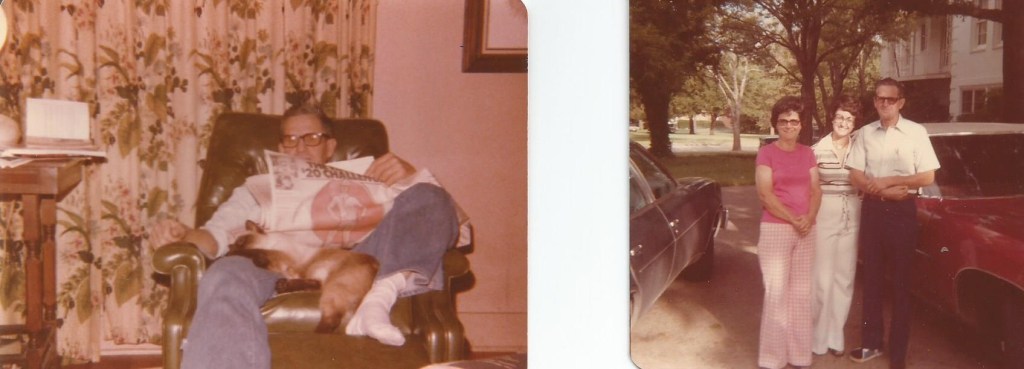
At home with Nicole, the Siamese, an uninvited but kindly tolerated guest, late 1960s; and with Crystal and Kathy, ca. 1974.
When I called home to say I’d locked the keys (and the spare keys) in the car, he rescued me, no matter what the time or how long the drive, without a word said. Every time.
He pointed out spelling errors on signage. The most memorable was tresspassing, on a sign commissioned by the local water company.
He said he spent half of his life waiting for me to find my shoes.
He told me to keep plenty of money in my purse and the gas tank full, but when I said shouldn’t we fill up before leaving Seguin, he said we’d wait till we got home. We ran out of gas on the country road two miles short of our destination, with only maize fields and a river between us and fuel. He walked; my dress shoes and I waited in the car.
He loved being outside and doing manual labor—cutting brush, stretching barbed wire, plowing and planting, watching the soil turn, working cattle. After a day of doing manual labor for a salary.
He made stunning chocolate and lemon meringue pies.
He liked sardines but said they should be eaten on the riverbank with a can of pork-and-beans.
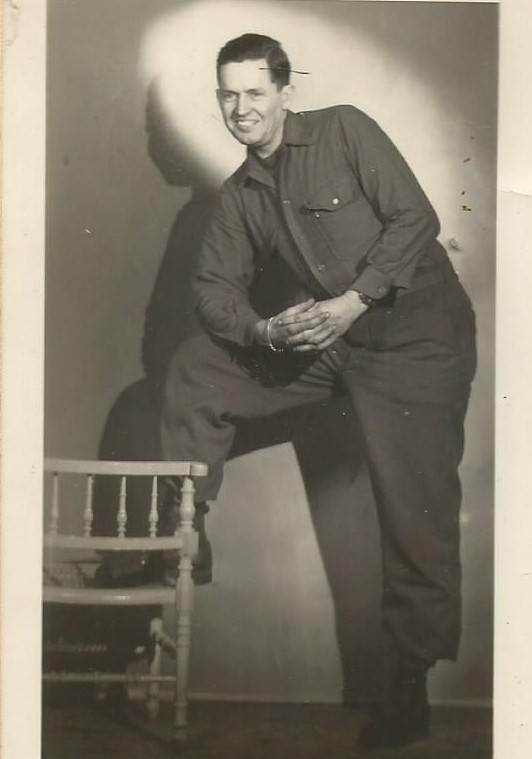
In uniform, early 1940sPvt. Bill Waller, Scotland, ca. 1943-44 (U.S. Army, not British)
He sent me to college, including three years in a dorm, financing it by periodically selling one of Opal’s offspring. Opal was a White-faced Hereford a neighbor had given me when I was eleven after her mother rejected her at birth.
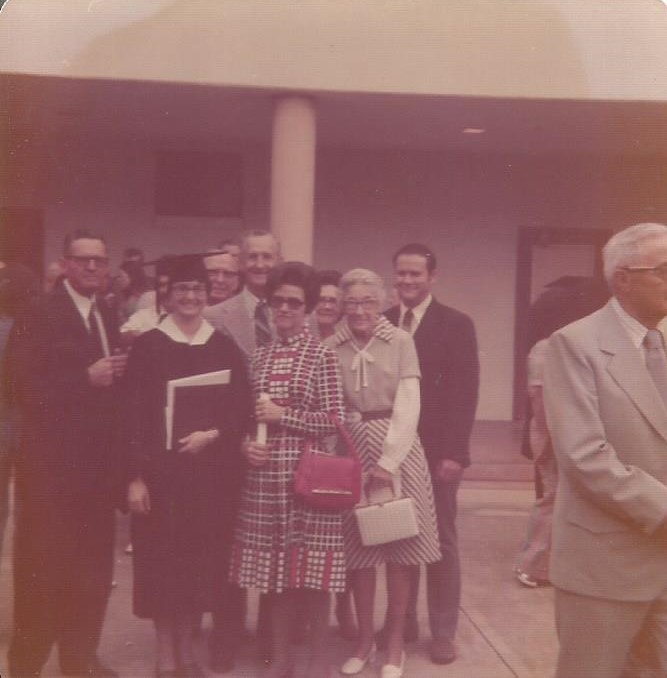
SWTSU graduation, August 1973. Bill, Kathy, Joe (“Bub”) Dauchy, Joe Waller, Crystal, Mary Veazey Worden, Aunt Bettie Waller, Jim King.
When his brother called from up the street to say my grandfather, who lived next door, had set fire to a pile of brush in the small pasture next to his house, and it was getting dark and the wind was getting up, and somebody ought to do something, but he had to live next door to him . . . he drove two blocks, dragged a water hose through the yard, and said, “I’m putting out that fire before you burn up the whole town.” He was the only one of five sons who could do that and not get in trouble. He was the only one who would risk getting in trouble. (Trouble being a brief parental cold shoulder.)
He read the newspaper starting at the back. He read every word of local “county” papers, right down to the phone numbers in the want-ads. He read magazines. No books. Until he retired, when he picked up my copy of I Know Why the Caged Bird Sings and plowed through it. So I started giving him books.
He came home from World War II deaf from bomb concussion. Because his hearing aid didn’t filter out ambient noise, and he was embarrassed to have to ask people to repeat what they’d said, he left church dinners, large family gatherings, and other social events, early, often just taking off and walking home by himself. He quit a job that depended on his using the telephone, because he thought he might get information communicated to him—serial numbers of airplane parts—wrong, and cause a tragedy. When he took off his hearing aid at night, he was gone.
When I was eleven, his hearing aid broke. He sat through the public school week evening program in the school auditorium and heard absolutely nothing.
After twenty years of deafness, he had surgery to restore conversational hearing and his original personality surfaced. He enjoyed mixing with people. He engaged in long telephone conversations with friends. He got a kick out of Archie Bunker.
He watched The Muppet Show every Saturday evening. Every time Kermit the Frog flung his arms around and said, “Ya-a-a-a-a-a-ay,” he shook with silent laughter.
He stood in the churchyard after services checking the dates on inspection stickers on windshields, just killing time. Occasionally he found one that had expired.
He was good to old ladies. He got their cats out of trees He charged Miss Blanche’s ancient car’s ancient battery every six months or so (because she drove only every six months or so). She called every Halloween and said, “Tell Bill to get up her and get some popcorn balls before the kids get them all.”
He worked best alone, I think because, although he could do a multitude of things, he figured out how to do them as we went along. He passed that gene along to me.
He was a gregarious loner.
He was solid and dependable.
He made us laugh.
He died suddenly and unexpectedly and too young.
Four brothers and a cousin: Joe Waller, Rob Waller, Graham Waller, Bill Waller, Donald Waller, ca. 1980.
Let them bury your big eyes In the secret earth securely, Your thin fingers, and your fair, Soft, indefinite-colored hair,— All of these in some way, surely, From the secret earth shall rise; Not for these I sit and stare, Broken and bereft completely; Your young flesh that sat so neatly On your little bones will sweetly Blossom in the air.
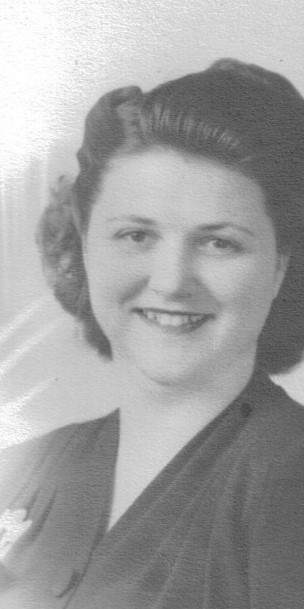
Crystal Barrow Waller, 1942
But your voice,—never the rushing Of a river underground, Not the rising of the wind In the trees before the rain, Not the woodcock’s watery call, Not the note the white-throat utters, Not the feet of children pushing Yellow leaves along the gutters In the blue and bitter fall, Shall content my musing mind For the beauty of that sound That in no new way at all Ever will be heard again.
Sweetly through the sappy stalk Of the vigorous weed, Holding all it held before, Cherished by the faithful sun, On and on eternally Shall your altered fluid run, Bud and bloom and go to seed; But your singing days are done; But the music of your talk Never shall the chemistry Of the secret earth restore. All your lovely words are spoken. Once the ivory box is broken, Beats the golden bird no more.
Joe Waller, Rob Waller, Graham Waller, Bill Waller, Donald Waller, ca. 1980.
Bill, fourth from the left, is my father. Joe, Graham, and Donald are my uncles. Collectively, they were known as “the Waller boys.” There were a number of other Waller boys in town, but these four, along with their brother Maurice, who died in 1952, were the.
Rob is their first cousin.
The snapshot was taken at the Fentress United Methodist Church homecoming, ca. 1980. That was the last time they were all together.
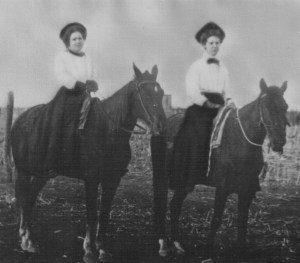
Vida Woodward Waller (my grandmother) & Jessie Waller, ca. 1910
Frank Waller (Dad), ca. 1952
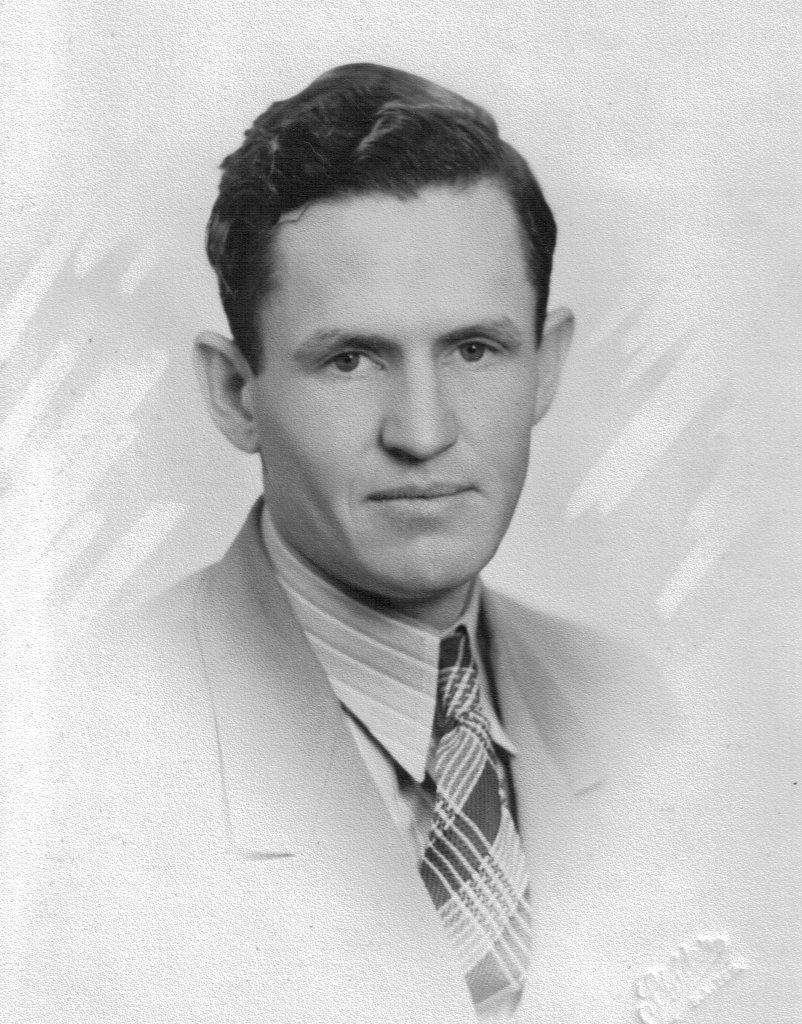
Billie Waller, ca. 1920
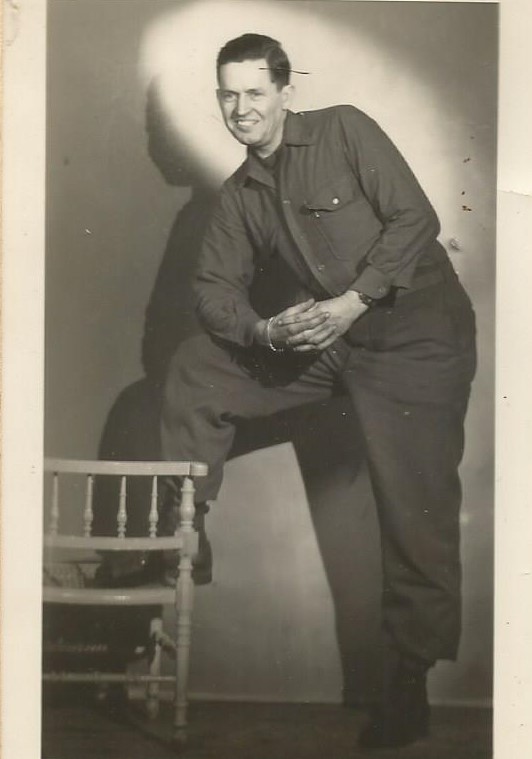
Billie Waller, ca. 1943, while stationed in Scotland
A slow drip leading to a leaking pipe leading to several brittle pipes and serious drips, and finally to a plumber, have brought contractors in to cover holes left in the drywall of the laundry room, and appreciation for a landlord who responds to problems without delay.
With strangers in the house, William is lurking behind the cedar chest. Ernest is folded up on the bottom shelf of an empty bookcase still hidden by boxes and facing the patio window. They don’t enjoy the process. I do.
I grew up calling drywall sheetrock. Well into adulthood when drywall cropped up, I asked what had happened to sheetrock and learned that it’s properly Sheetrock. More properly it’s Sheetrock™, a trade name that’s become a generic term like Kleenex (Kleenex™).
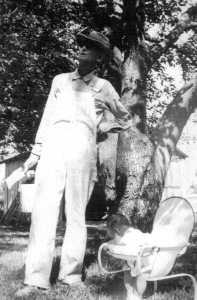
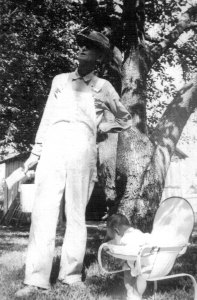
Frank Waller, aka Dad, dressed for painting me dressed for watching, ca. 1953.
I learned about Sheetrock in early childhood because my grandfather, sometimes assisted by my father, did remodeling and repair around town. Once or twice I got to watch.
Dad was meticulous. Unlike some I’ve seen, seams he taped and floated disappeared, the drywall mud flush with the Sheetrock. Seams in my parents’ living room remained invisible for a good fifty years.
When he painted, the brush moved slowly from side to side, no slopping of paint onto floors, windows, or doorknobs. Stray paint was immediately cleaned up.
During my family’s brief sojourn in Del Rio, we lived across the street from a young man who, post-high school, had briefly lived on the farm with Dad after his parents moved away from Fentress. While visiting, Dad found Dick painting the walls of his kitchen but getting paint on the ceiling, where it didn’t belong. Dad took the brush out of his hand and finished the job himself.*
(My father was almost as particular. He and my mother stopped in to see neighbors who were hanging wallpaper. My dad had to leave because he said they weren’t using enough paste, and the paper was going to fall off almost before they got it up. He couldn’t watch.)**
When Dad was painting Dr. Luckett’s clinic, I dropped by and insisted on helping. He tolerated more from his nine-year-old granddaughter than from adults, and handed me a brush. He knew I wouldn’t last. After about twenty minutes, I stopped to play with a ball of putty, (unsuccessfully) keep my puppy, who had followed me to town, from getting into the paint, and generally get in the way. Not long after that, I went home to air conditioning. My parents had recently elected to move back home from dry Del Rio, and the South-Central Texas humidity was killing me.****
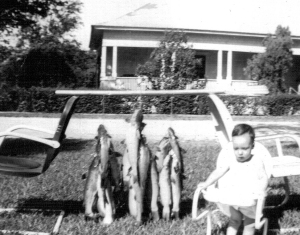
Me with San Marcos River catfish caught by Frank Waller (still aka Dad).
Dad was famous for taking off in the middle of a job to go trotline fishing. Family shook their heads and said, “Well, that’s just Dad.” If people complained, they did it out of our hearing. Many were relatives—extended family lived all over town—and they expected him to disappear for a while.
Or he might have shared his fish. He caught enough to spread some around.
Once in early spring, he did some work for a sister- and brother-in-law who had a peach orchard beside their house. His helper said, “Mr. Frank, I sure wish we were going to be here when those peaches get ripe.” Dad said, “Don’t worry. We will be.”
For years, I thought leaving like that was a character flaw. When I heard that other contractors sometimes take time off in the mid-project, I thought it was a tall tale. People who worked for me finished in a timely fashion. Then a fellow who was repainting the door of a previous apartment—the blazing west sun hit it in summer, so it required paint that wouldn’t peel—told me he did a lot of painting, but he took off and went fishing whenever he wanted, and he didn’t ever apologize for it either. Business as usual, I guess.
The Sheetrock people have gone. They left no sign they’d been here. Dad would be pleased.
###
*My grandfather had other crotchets, too. My mother claimed that when he was driving down the road and saw a sunflower, he would stop and pull it up. (Farmer.) He let most things go much further than other folks would, but certain things he could not abide.
**As to my father’s other requirements: After retiring, he worked for some farmers he was acquainted with, hauling maize from the field to wherever it went.*** He enjoyed driving, and he liked the men, but after a week or so he resigned. He said they let Johnson grass grow up at the edges of their fields. (Farmer.) He wasn’t obsessive about anything else, but his fields had to be clean, and his fences tight, with sturdy cedar posts and six strands of barbed wire, so his cows couldn’t escape, except for big, fat, sleek Hereford Opal, who lay down and rolled under. Impossible, we thought, but he finally caught her in the act.
***Once upon a time, I knew where maize went, maybe. But I wasn’t a farm girl, and I was busy reading in the air conditioning and didn’t pay attention. I wish had, because now when I set a story in a rural area, I have to look things up.
****After a zillion years, the humidity is still killing me.
“Whenever I find myself growing grim about the mouth; whenever it is a damp, drizzly November in my soul; whenever I find myself involuntarily pausing before coffin warehouses, and bringing up the rear of every funeral I meet; and especially whenever my hypos get such an upper hand of me, that it requires a strong moral principle to prevent me from deliberately stepping into the street, and methodically knocking people’s hats off—then, I account it high time to get to sea as soon as I can. — Herman Melville
When it’s November, I give thanks summer is over and 100-degree weather temporarily behind us.
This November I gave thanks for the veterinarian.
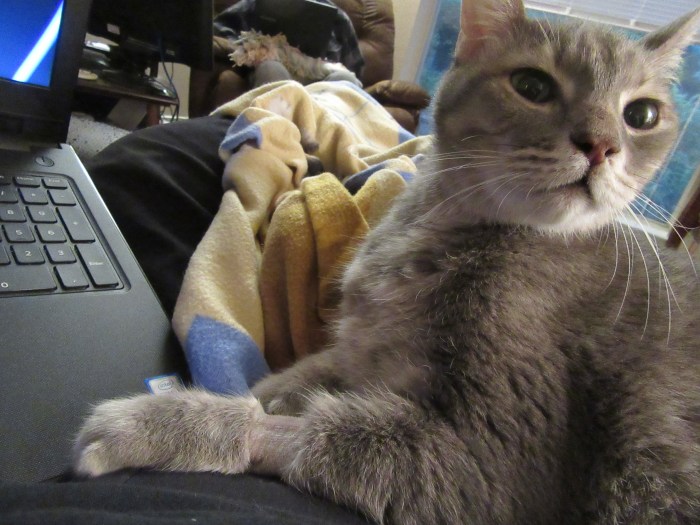
While was in Dallas at a writing conference, David noticed symptoms of diabetes and took Ernest in for confirmation and treatment. I asked how he got the cat into the carrier. “With great difficulty,” he said.
After I returned home, we took him back to the doctor for gastric problems related to his new dietary regimen. The next day, he seemed to be in worse shape, so we took him back. Because he doesn’t like injections any more than he likes the carrier, we hadn’t been able to give him insulin, so that afternoon, before releasing him, the vet gave him a shot.
That night about midnight, in the dark, I stepped on a furry mass beside the bed and turned on the light. Guess who. Ernest. That was a surprise, since he usually sleeps under the bed. When I picked him up, another miracle occurred—he tolerated it. He doesn’t like to be picked up and held either. He felt like a rag doll. David rubbed honey on his gums, and we headed for the animal ER/hospital (where he went several years ago after eating thread).
By the time we arrived, his blood sugar was 25, so he stayed for an IV and monitoring. At dawn–6:00 a.m., but it felt like dawn—we took him back to our vet for further monitoring. At 5:00 p.m, on the vet’s advice, we delivered him to the hospital for 24 to 36 hours of monitoring. The vet who had given him the insulin was amazed his glucose plummeted like that. The next afternoon, we picked him up.
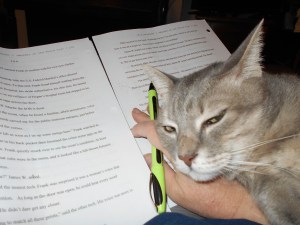
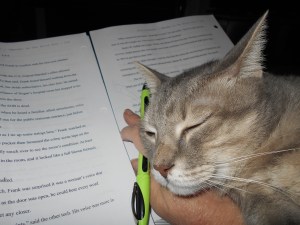
Over the next two days, I functioned as a lap.
He’s doing well now. We hoped his diabetes could be controlled by diet, but he’s taking injections from David as if they’re no big deal. We watch him for hypoglycemia.
I don’t know whether I could inject him. He and David have always been buds. David is calm, so in David’s sphere, Ernest is calm. I energize him, so he marches around on me and sits on the arm of the chair and pulls on my sleeve. To give him his due, he’s learned to “liiiiiieeeeeeee dowwwwwwwwwwwn” after hearing me plead not too many times. But he has no intention of learning, “Stop pulling on my sleeve.”
On the topic of energy, since retiring, I’ve realized I energized my students, too, more’s the pity. They didn’t need energizing.
Anyway, November, to me, will always be The Month of the Hypoglycemic Cat.
And on a less alarming note, the The Month It Is Cooler, and in 2019, Damp and Drizzly, and Sometimes Even Rainy, Which is Nice.
*
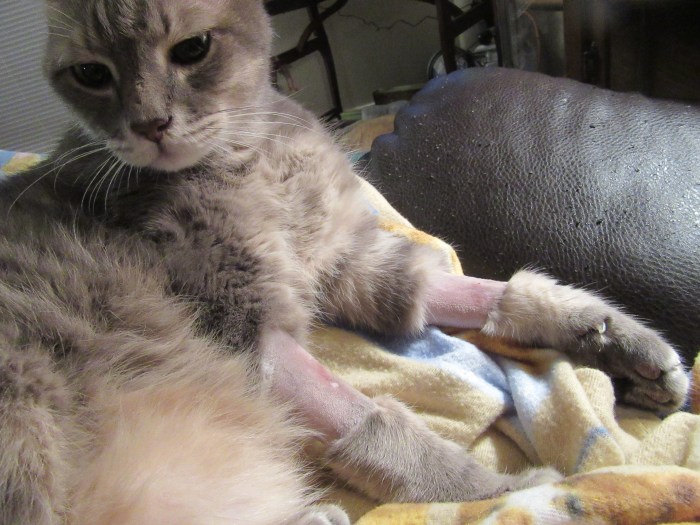
I shouldn’t say this, lest it embarrass him, but in the hospital, Ernest’s legs were shaved so veins could be accessed, and now he looks like a 1950s lady wearing a fur coat with three-quarter sleeves and gauntlet gloves.






 M. K. Waller