Day 3

I went to the woods because I wished to live deliberately, to front only the essential facts of life, and see if I could not learn what it had to teach, and not, when I came to die, discover that I had not lived. ~ Henry David Thoreau, Walden

I start this post at 9:10 a.m. I shall finish and publish within the hour.

Note I do not say which hour. Starting early means only that I have longer to dither.

I’m good at dithering. In the three hours I’ve been awake, I’ve managed to read two e-mails and several hundred quotations from Word of the Day. After reading about hyperbolic, I clicked the little button that says Quote of the Day. Then I clicked the little button that says Random Quote. Then I clicked the Random Quote button several hundred times more. It wasn’t procrastination so much as hypnosis.

No, I give myself too little credit. I was looking for the secret to life. I’ve always believed that finding just the right book would solve all my problems. I would read it and thenceforward live serenely and productively and know where my car keys were at all times.

Recently, to streamline things a bit, I’ve downsized the search from a book to a quotation.

But I’ll have to look beyond Random Quotes. It produced a lot of Emerson, Thoreau, Pope, Philip Larkin, T. S. Eliot, Wallace Stevens, and H. L. Mencken, but only two Emily Dickinsons and one Eleanor Roosevelt. In fact, the one woman who kept cropping up was Anne Sexton. A person looking for the secret to life should steer clear of Anne Sexton. Especially before breakfast.

And as far as Henry David Thoreau is concerned, I haven’t been able to feel complete confidence in him since I learned that while he was out in the woods simplifying and being self-reliant, an aunt back in Concord was washing and ironing his shirts.

I respect Thoreau. He sheltered runaway slaves. He spent the night in jail rather than pay taxes to a government that endorsed slavery. He would have stayed in jail longer had not relatives gone behind his back and paid the fine. His Civil Disobedience has influenced the course of history. I respect him for that major contribution. Walden, however, might read a bit differently if the author had been required to spend time down at the pond pounding berry stains out of his shirts with a rock.

And maybe he did. I’ll admit I’ve never seen the factoid about the shirts in print. But the English professor who tossed out that detail was a formidable scholar, and all his other pronouncements have proved correct, so I have no reason to doubt him on this.

Really, though, I sometimes wish he had left it unsaid. Because when I read or hear about Thoreau’s grand experiment, I automatically think, But some woman washed his shirts.

Which is cynical of me, and not at all nice. Oh well. I am working on that. And I have been reading Anne Sexton.

The ATM at the bank right in the middle of Concord, Massachusetts, is named The Simplifier. Just thought I’d throw that in.

Now see what’s happened? I started out to write a quick post about writing quickly, and I ended up ranting about Henry David Thoreau’s laundry. And it’s already thirteen minutes past my deadline.

I’ll try again tomorrow.

12:10. An interruption. Some revision. Three hours over the deadline.

I’ll quit while I’m ahead.

590

NaNoWriMo, MRI, TBF, and WLT

I’ve spent the past week writing and rewriting a post about attending the Texas Book Festival. No matter how many times I revised it, it sounded dull and complaining. Actually, it sounded worse than complaining, but if I use the word I have in mind, I would be crossing a line drawn in the sand years ago by both my grandmother and Emily Post, a Rubicon of sorts, and then who knows what might happen to my personal lexicon. It’s a slippery slope.

Suffice it to say the day was HOT and we got the last space in the parking garage, on the eighth level, and then found the elevator out of order. On the plus side, I visited with Sisters in Crime members Russ Hall and Sylvia Dickey Smith and got an autographed copy of Sylvia’s latest novel, A War of Her Own. On the minus side, Russ and Sylvia thought it was just as HOT as I did. They’d been inside that tent for two days as opposed to my two minutes. After taking a couple of pictures, I suggested that David get the car and pick me up. He did. He reported he climbed fourteen flights of eight steps each. I thanked him and turned the AC up to gale force. We ended at the Magnolia, where David got his omelet.

It still sounds like complaining.

Never mind.

I’ve signed up to participate in NaNoWriMo–National Novel Writing Month–which begins November 1. The goal is to write a 50,000-word novel by midnight on November 30. Write-ins are planned all over the Austin area at coffee shops, bookstores, and libraries. The Writers’ League of Texas will hold a lock-down (or maybe a lock-in) one night from 7:00 p.m. to 7:00 a.m. I’ll go to write-ins but not the lock-down. I get claustrophobic thinking about being locked down, even metaphorically. It sounds too much like getting an MRI. It also sounds a lot like graduate school. Been there, done that.

Modified Rapture! I just checked the WLT Facebook page to find the date of the lock-down and instead found the sentence I wrote last Sunday at the TBF. On my way out, I picked up a prompt at the Writers’ League table, sat on the curb and wrote the rest of the sentence, then tossed it into the fishbowl. And voila! There it appears, among the Top 10. It’s #8. The honor is not on a par with publication of a book, of course, but it’ll do quite nicely for the time being.

To prepare for November 1, I’m reading  No Plot? No Problem: A Low-Stress, High Velocity Guide to Writing a Novel, by Chris Baty, founder of NaNoWriMo. He offers many valuable suggestions for surviving the month. One, however, should be excised before the book goes into another printing, namely the section headed “Eating Your Way to 50,000 Words,” which includes the sentence, “Allowing yourself loads of restaurant meals, sugary treats, and exotic beverages is the best way to keep your spirits high during the exhausting mental acrobatic routines you’ll be pulling off next month as you write.”

Restaurant meals and exotic beverages might work, but if I want to keep my spirits high, I’ll stay away from sugar. Last week is proof. Again. After a period of abstinence from white stuff, I ate a slice of bread, and in five days I was tripping down the primrose path arm-in-arm with a jar of red plum jam. It was not coincidence that the day after my rendezvous with said jam jar, I decided I should make a bonfire of all my pages, destroy my files, and give up writing altogether.

Lacking the energy to do all that, I took the pledge one more time, ate meat and green stuff, and the next day was back at the laptop.

My advice to anyone trying to do anything in thirty days: stay off the sugar and most of its relatives.

I have decades of experience in this area. With every paper I wrote in grad school, I put on five pounds and then spent several weeks taking it off. Sometimes losing it took longer. I carried Lord Tennyson around for months.

To Mr. Baty’s credit, the photo on the back cover of his book suggests that he’s never had a problem with sugar. If he were told of its poisonous properties, he might add a footnote saying readers should consult their medical professionals before eating their way to 50,000 words.

It’s after 2:00 a.m., and I swore Saturday morning that I would be in bed before midnight. I need to end this post but can’t figure out how to do that. Possibly because the post has no point. Probably because it’s after 2:00 a.m.

So I shall simply declare this is the end.

THE END


Adapters, palm pads, and bezels

The prodigal laptop has returned.

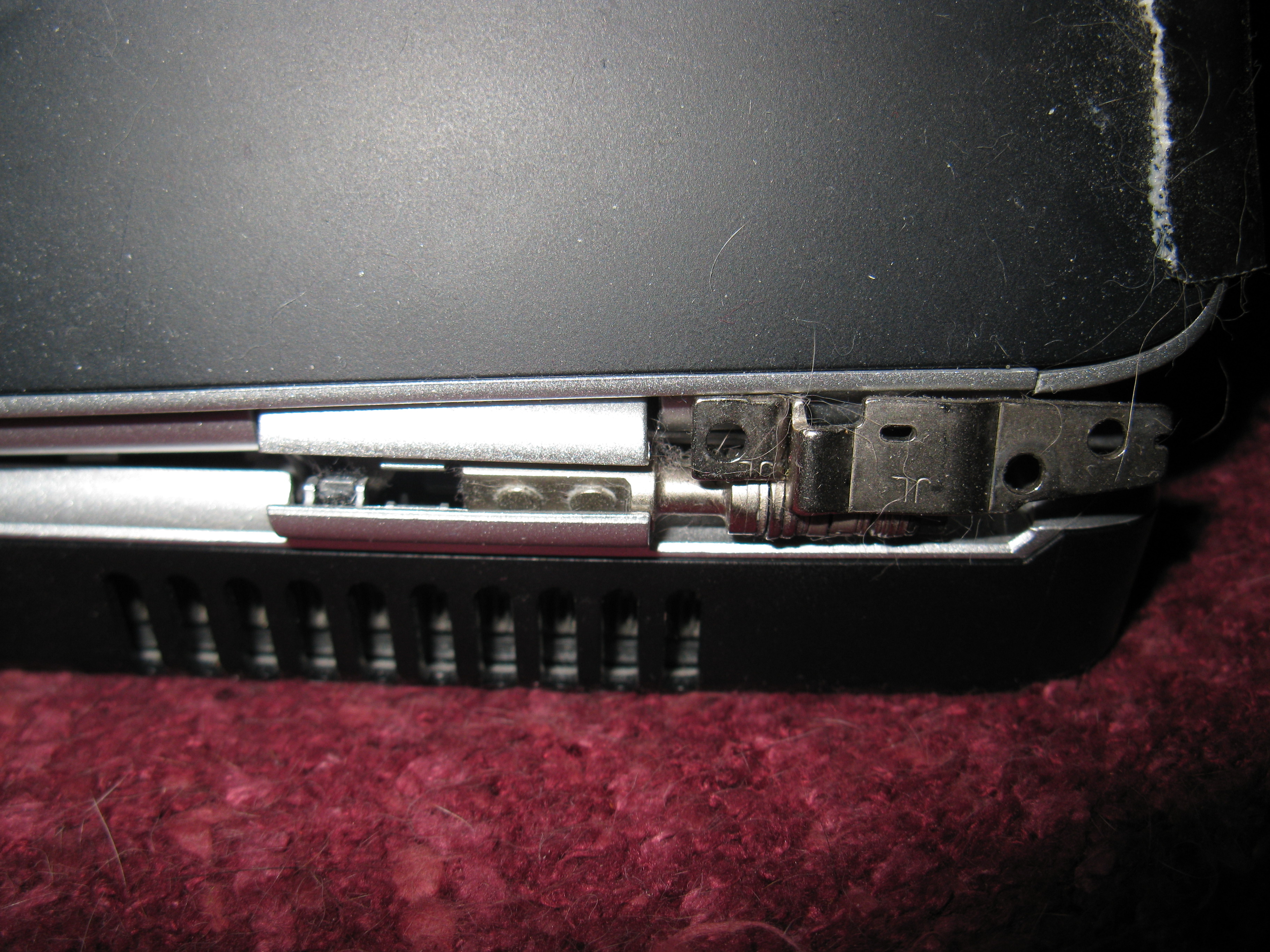
It’s been on a six-day retreat in Houston, getting its hinges fixed. Several weeks ago, one of them popped and bad things ensued. Bits and pieces in the back loosened and bent, and the monitor started to come apart at the seams. I was afraid it was going to spit little internal organs all over the carpet.


Another fine mess…

Did you know that when you edit a monthly newsletter, you have to produce a newsletter every single month?

Well, you do.

You don’t publish an August issue and then just rest on your laurels.


In thirty days–fewer than that in February–another month rolls around, and you’re supposed to come up with something new. People expect it. They don’t want to read about last month.

Truly, there is no rest for the weary. Or for the wicked.
I am wicked.
I moan and whinge about the drudgery–Double, double toil and trouble–but once I start working, I also start having fun. I lose track of time. The latest issue missed my self-imposed deadline not just because the computer fell by the wayside, but because I kept tweaking: a link here, a comma there, delete this, insert that, bold this, italicize that, change black to red, red to black.
Eye of newt, toe of frog, wool of bat, tongue of dog…

 With fire burning and cauldron bubbling, and so many poisoned entrails, as well as thesaurus.com, at my disposal, I didn’t want to call it quits. Once again, I stayed up later than late, but I wasn’t laboring. I was playing. Concocting a brand new potion. Elixir. Charm. Beguilement.

If you want the pure, unadulterated version of my writing process, there it is.

And in a couple of weeks, it’s back to the cauldron again.

This time, though, there’s potential for sanity.

For the past couple of months, the assistant editor and I have been running as fast as we could to stay in the same place. Before the next issue comes out, we’re going to meet, discuss goals, nail down a format. I’ll show her what I can about using WordPress. She’ll come up with more good ideas. I’ll write them down so I won’t forget.

After we confer, the whingeing could abate.

But it won’t.

Because, contrary to decades of experience, I think I can do everything in five minutes.

Because my brain kicks in–really–at the last minute.

Because I do my best work–really–between 10:00 p.m. and 4:00 a.m.

Because I have these flashes of cock-eyed optimism that temporarily override my normally rational, pessimistic nature.

Because I like to whinge.

I mean, what do you think those Weird Sisters were doing, stirring that cauldron, waiting for Macbeth to wander in for a consultation? They were whingeing. It’s a good Scottish word, and they were Scottish Sisters, and, no matter how much pleasure they derived from their culinary endeavour, they’d been standing over a hot stove all night. Furthermore, quality frog toes aren’t easy to come by. What’s not to whinge about.

So expect no change. Proper prior planning may prevent weariness, but it won’t improve my character.

I’m wicked. And it’s comfortable. And I think it’s what I want to be.

********************

…considering what you have to work with

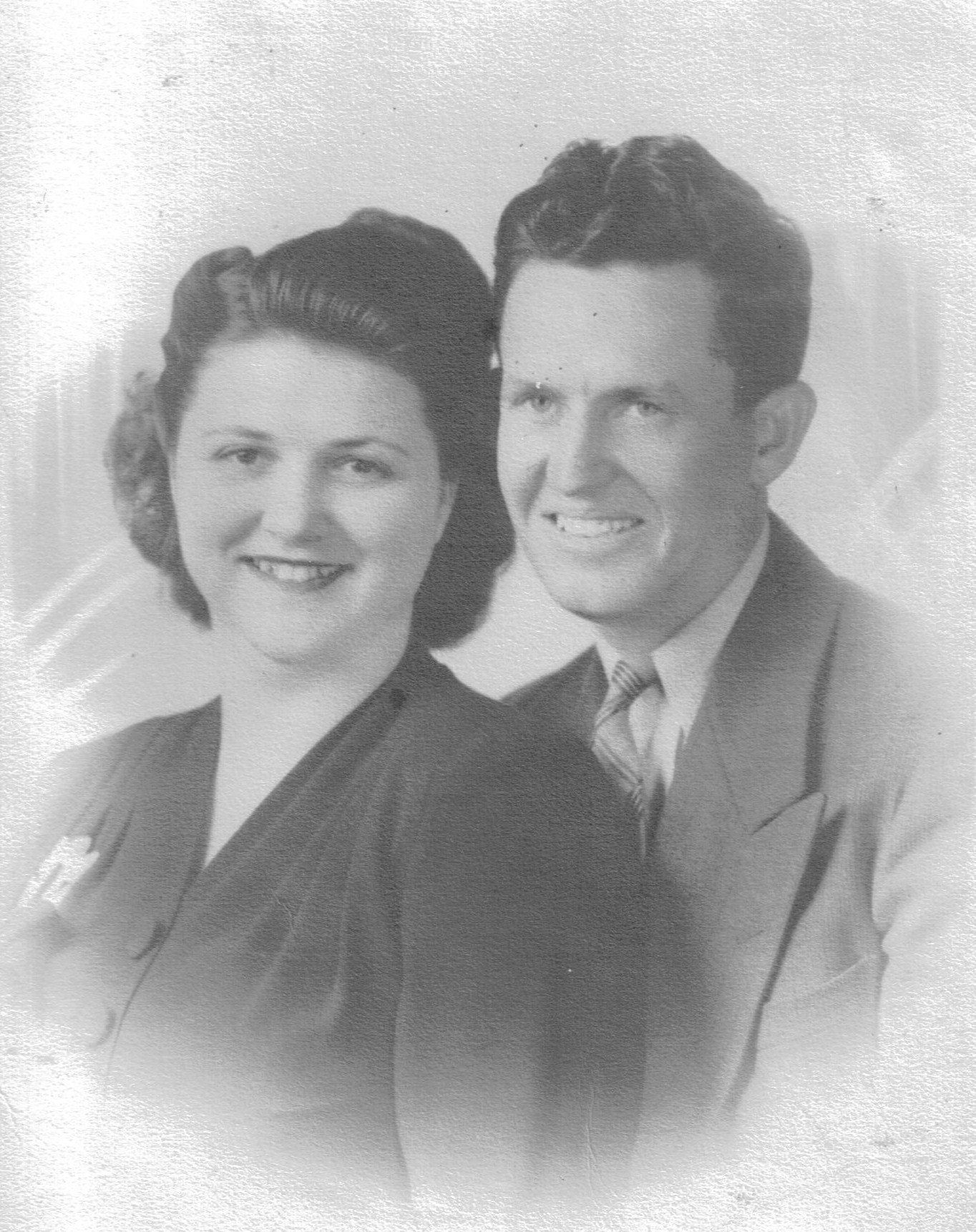
Crystal and Bill Waller. October, 1942

My mother told a story about the first time she hosted Thanksgiving dinner in her own home. She’d laid out the china and the crystal and the sterling and the silver gravy boat my grandmother insisted every married woman must have (even when the married woman was going to live near an oil field where the silver would immediately turn black.)

Finished with the table, she indulged in whimsy. She went outside and picked some purple wildflowers she thought particularly unattractive. (“Ugly” was her exact word.) She arranged them and placed them on the table.

When my grandmother arrived, Mother said, “What do you think of my centerpiece?”

My grandmother, missing the humor, replied, “Well, dear, I think you did as well as can be expected, considering what you had to work with.”

That line entered the Waller Book of Familiar Quotations. We used it for every achievement: making pies, mowing the lawn, climbing on top of the house to turn the TV antenna, explaining first semester grades from college: I did as well as can be expected, considering what I have to work with.

I wish my parents could read that story. I wish they could see other things I’ve written. They would laugh at Miss Pinksie Craigo whacking her cane against a chair, and Mr. Archie Parsons using his favorite (marginally) un-blasphemous expletive, and Aunt Lydia…Oh my, I can just imagine them reading about Aunt Lydia.

Some old ladies are worth more than an ode. Some, however, are marked 75% off–too good to resist.

My parents were generous. They gave me language and laughter. I think they would approve of the way I’m using them. They would be pleased to know I’m trying.

If I could ask, I believe they would also grant permission: We gave you words. Use them as you will. No secrets. No holding back.

With such a blessing, a writer doesn’t have to be ruthless or to rob anyone.

She just has to do as well as can be expected, considering what she has to work with.

What’s an old lady worth?

The writer’s only responsibility is to his art. He will be completely ruthless if he is a good one….If a writer has to rob his mother, he will not hesitate; the “Ode on a Grecian Urn” is worth any number of old ladies. ~ William Faulkner

One of my instructors, citing William Faulkner’s statement that good writers are ruthless about their art, asked the class whether there were any subjects we could not write about.

William Faulkner
Image via Wikipedia

One of the students came up with an extensive, and very funny, list of things she couldn’t write about.

But for anyone aspiring to publish, it’s a serious question.

In her memoir, Limbo, A. Manette Ansay writes that to tell her story, she had to tell a story about her father as well. It was a memory so painful  that he disclosed it to her only when she was experiencing a deep personal crisis and he believed hearing it might lessen her pain. If he hadn’t given permission to tell his secret, she would not have written her memoir. Her father was more important than her art.

Against all the rules, I’ll digress to say that Limbo is a wonderful book, and everyone reading this post should run to wherever you go and borrow or buy one. I borrowed the book from my library, when I had one, and received no perks for stating this opinion. I say this in a spirit of full disclosure and a certain amount of pique that I have to say it at all. (Actually, since this isn’t a review, I probably don’t have to say it, but I’ve always wanted to use the word pique, and this way I have an excuse to do so.)

Back to the original topic. Because so much of my so-called inspiration comes from people I’ve known or heard about, I’ve spent a fair amount of time thinking about what I can’t write about. Is there anything in my life or that of my family that would be best left alone? Is there anything I cannot use as fodder? Anything really really good that, if I were lucky enough to get it into print, might be considered indiscreet? I can use my grandfather’s roll-your-own Bull Durhams and my Cousin Ruth’s statuesque leg, but is there anything that simply must not find its way into the bookstores?

General Robert E. Lee mounted on Traveller, hi...
Image via Wikipedia

I’m talking about family here.

Of course there are things I can’t write about.

In my case, family includes a whole raft of people I’m not related to, I hardly know, or I’ve merely heard about from other people. For example, my grandfather once knew a man who, as a boy, saw General Robert E. Lee sitting astride Traveler.

There’s nothing wrong with writing about a boy seeing Traveler (who both my grandfather and I knew was much more important than General Lee), but, for the purposes of my art, I consider that boy part of the family. It’s complicated.

Anyway, back to the question, What can’t I write about?

Like many other answers, it depends. Fiction allows–requires–the writer to stretch the facts to get to the truth. Characters aren’t people. Plot isn’t memoir. With that kind of leeway, the possibilities are endless.

And let’s face facts. I am neither a William Faulkner nor an A. Manette Ansay, and I’m in no danger of producing anything that will cause readers to confuse me with Keats. Or even with Janet Evanovich, more’s the pity.

Still, if I were forced to give a straight answer to the question, I would agree with Ms. Ansay.

Whenever I read Faulkner’s declaration, I think of “Ode on a Grecian Urn.”

Bold lover, never, never canst thou kiss,
Though winning near the goal – yet, do not grieve;
She cannot fade, though thou hast not thy bliss,
For ever wilt thou love, and she be fair!

Keats took comfort from the urn. I take comfort from the poem. “When old age shall this generation waste,” those things of beauty will continue to delight. It’s difficult to put a price on that.

But then I think of all the old ladies I’ve known.

From what I’ve read about him, I believe even Keats would consider them worth more than an ode.

Is there anything you can’t write about?

~~~~~~~~~~~~~~~~~~~~~~~~~~~~

Another disclosure: Zemanta didn’t help me write this post, but it did provide the pictures and the link below, which accesses an audio archive of William Faulkner’s lectures and speeches. According to the accompanying article, the author was “quite the wit” and would “routinely slay audiences.” I’d planned to say I felt guilty for using Zemanta, but I’m so pleased at getting to hear Faulkner speak that I’m going to allow Z to assist me as often as it wishes.

Image of William Faulkner by Carl Van Vechten,  Library of CongressPrints and Photographs DivisionVan Vechten Collection, reproduction number {{{2}}}

Image of Gen. Robert E. Lee, September 1866, author unknown; [Public Domain]; file has been extracted from an original image in The New Student’s Reference Work:Image:LA2-NSRW-3-0037.jpg.

Image of Grecian Urn by John Keats (1795-1821) (http://www.flickr.com/photos/litmuse/64111434/) [Public domain], via Wikimedia Commons


It’s not an excuse. It’s a reason.

The last time William appeared here, he had sat on the keyboard and turned the working title into gobbledygook.

I suppose tonight’s activity is progress.

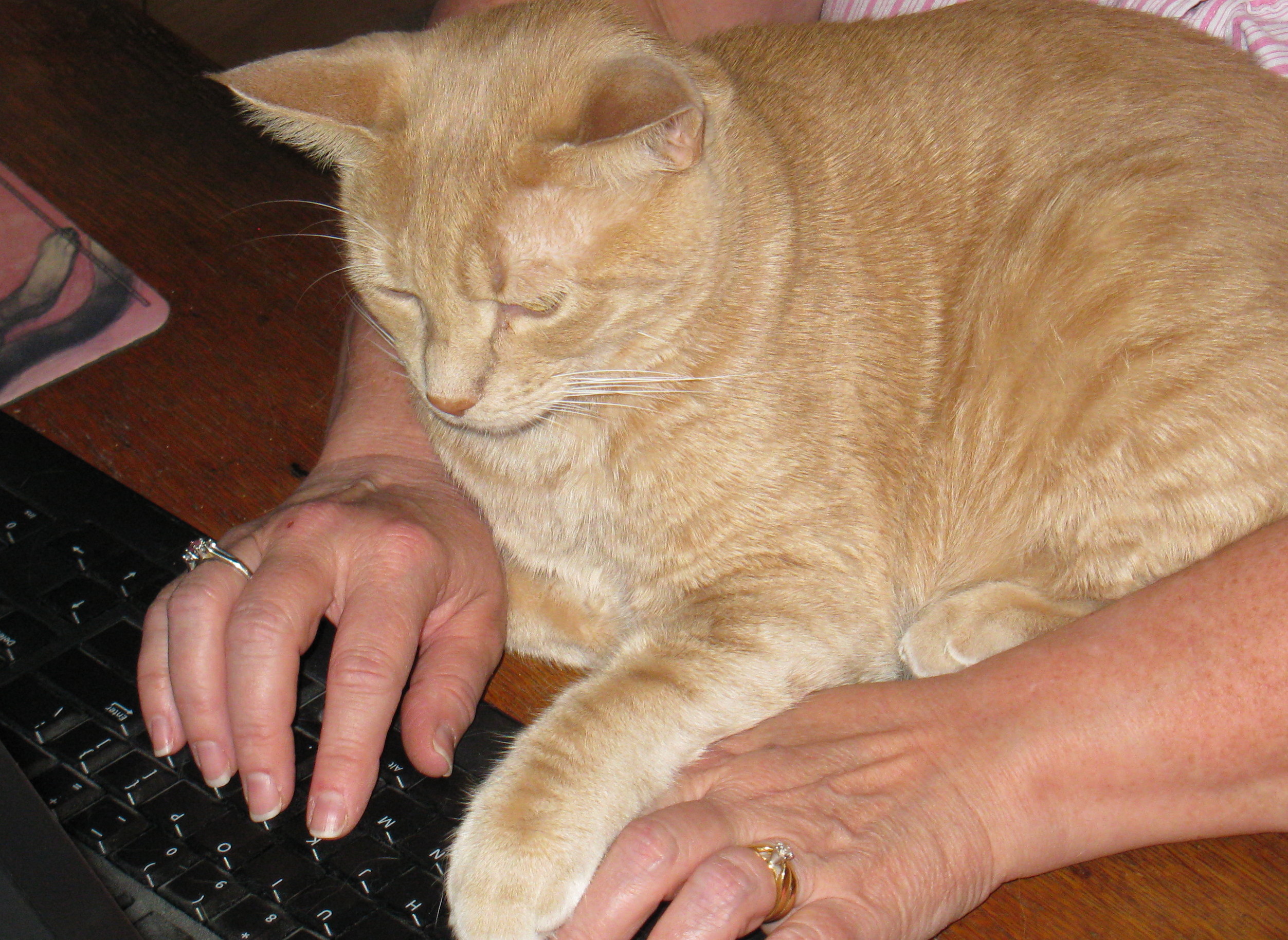
Yes, I know it’s progress. Because a year ago at this time, his hobby was lying across my lap and biting my fingers. Lunge-chomp-lunge-chomp. Tonight he’s helping.

But Just for the Hell of it Writers meets tomorrow morning, and my promise (to myself) to finish my critique chapter early and, for once, get to bed at a reasonable hour is vaporizing even as I type.

Especially since I took a half-hour out of the evening to prepare this post. That’s okay. It was necessary. I needed a break.

I also needed to memorialize this event so in a couple of years I can look back and say, Wasn’t that darling of him?

Because it’ll be a couple of years before I think so.

***********************

Note: That isn’t dust. We have a super-duper fancy two-toned gray-and-black keyboard.

***********************

Update: Two hours later: I heard growling and turned to find William and Ernest arguing over a cricket. Ernest grabbed it and shot up the stairs. I grabbed a paper towel and ran after him, hissing, “Spititoutspititoutspititout.” At the first landing, after some indecision, he let it go. The cricket is no more. David was asleep but probably isn’t now.

Move over, Cyd Charisse

I received a phone call last week from Lucia Zimmitti, an editor who spoke at the Texas Trail Writers Roundup this spring. In mid-July, I’d sent her the first five pages of my manuscript. She reported that she’d read them and that they’re ready for query. She said she believes agents who read them will ask to see more.

Music to my ears. I was reluctant to tell her how long I’ve worked and how many revisions it’s taken to get those five pages agent-ready. Lucia said not to worry about time, that some novels are ten years in the making. Actually, it’s the ten years part that worries me, but I know it’s going to take as long as it takes.

After discussing specifics, Lucia asked how much more I have.

A pile of pages. A stack of scenes. Words, words, words, but not in order.

I described where I am in the process and told her how I work. She said not to worry.

When I hung up the phone, I was tempted to dance around the apartment.  But I didn’t. My feeling of ecstasy wasn’t pure. It was an alloy, producing calm rather than chaos.

It’s good when people like what I’ve written. But having a professional say those pages show promise is more than good. It’s validating. It means the time, the effort, the embarrassing, sick-making drafts aren’t wasted.

It means that when people ask what I do, I can drop the self-mocking half-smile, the apologetic, “I’m working on a novel. But of course, EVerybody in Austin is working on a NOvel.” I can look them in the eye and say, “I write.” I can remove the quotation marks from “novel.”

I’m tempted here to insert the usual disclaimer: It’s only five pages. I haven’t completed the manuscript. The five present-perfect are future-imperfect–because, with all the twists and turns of drafting, they will have to be tweaked.

But I won’t apologize. Hearing Lucia’s assessment of the intro to Chapter One changed how I perceive both my writing and myself. I’m no longer a dilettante. I’m a writer. I have goals to meet, a manuscript to finish, and no room for excuses.

Figurative language isn’t my forte, but to clarify, I’ll give it a shot.

It’s like when I was ten years old and my Uncle Donald took me out to a pasture in his beat-up 1950 Chevy pickup and taught me to drive. I started out popping the clutch (“Let it out sloooow.“), grinding the gears (“Put in the CLUTCH!”), killing the engine (“Give it some GAS!”), turning the key, popping the clutch, jolting the passenger, bouncing across old furrows. But after a few lessons I got the hang of it and was driving along the turn row, changing gears without incident.

A couple of months later, my father put me behind the wheel of a ’56 Bel Air, which had fewer gears and no clutch at all, and let me drive home from the farm (“Don’t rush up to the stop sign, eeease up to it.”) In due time, I got my license and soon was cruising down the freeway, feeling like a driver.

After I’d invested time, energy, and angst wrestling with the clutch and grinding the gears, finally holding that license brought not only satisfaction but also a feeling of maturity.

The future won’t be a joyride. There will be (here comes the disclaimer) traffic jams and detours and wrong turns down one-way streets. And worse. Like the time I was on my way to the university and my car slid on a patch of once-in-a-decade Texas ice and landed in the ditch facing the wrong direction, right across from my father’s workplace. (“I told you to go slow.” “I DID. I was just doing 50.”)

When Lucia and I finished speaking, it was as if she’d handed me a license to write. I felt settled. Serene. Competent. Equipped for the task at hand.

Cyd Charisse, move over. I feel a dance coming on.

**********

Lucia Zimmitti is president and founder of Manuscript Rx.

P.S.  I did not try to perfect the first five pages before moving on. I obsess and compulse, but not to that extent.


Just for the Hell of It Writers adopt motto*

*Motto: a short phrase that usually expresses a moral aim or purpose. Or, in this case, an immoral aim or purpose. Or an amoral one. Whatever. Anyway, writing is high on our to-do list, and tomorrow is most assuredly another day.**

**JFTHOI Writers–at least the one responsible for this blog–hope readers understand that (1) irony is the spice of life, and (2) we write a lot more than we let on, and (3) the process is more fun when we can laugh about it.

-0p[bgggggggggggggggggggggggggggggggggggggggggggggggggggggggggggggggggggggggggggggggggggggggggggggggggggggggggggggg=]kkkkkkkkkkkkkkkkkkkkkkkkkkkkkkkkkkkkkkkkkkkkkkkkkkkkkkkkkkkkkkkkkkkkkkkkkkkkkkkkkkkkkkkkkkkkkkkkkkkkkkkkkkkkkkkkkkkkkkkkkkkkkkkkkkkkkkkkkkkkkkkw2

William and I had a fight over which of us would occupy the recliner.

I won.

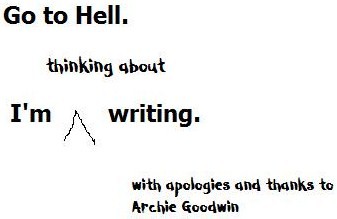
William retaliated by sitting on the keyboard and retitling this post.

I should have trashed it. Instead, I publish it as an example of the limitations under which I operate.

Building bridges, forming bonds

When I was teaching English, I arranged for students to have pen pals. I don’t remember the details–whether I required them to participate in the project or promised those who did extra credit. I might have simply offered to send names to an agency to be matched with potential correspondents.

I do remember why I did it. I wanted to show them that writing could be fun. I wanted them to see it as more than essays and research papers, to understand that it could build bridges and form bonds and open new worlds.

I also wanted them to write freely, without fear of judgment, so after getting them started, I withdrew from the project.

Last week I received an e-mail from K.M., one of those students. She told me she and her pen pal have been corresponding for twenty-eight years. He’s coming from Australia this month to meet her.

She said she’s thrilled and ended with, “Thank you!”

I’m thrilled, too. Consider: how many letters, how many words they’ve written; how much they’ve learned; how much they’ve shared; how much has changed since they stamped and mailed those first envelopes. They’ve gone from pen and paper to e-mail. They’ve moved from adolescence to adulthood. Twenty-eight years. My mind boggles just thinking about it.

But I don’t deserve thanks. I spent probably less than an hour on the project. I got things going.

K.M. and her pen pal did the rest. They took an exercise and made it real. The bridge, the bond, the new world–everything I wanted for them, they did.

So thank you, K.M., for writing, and for telling me the rest of the story.

That’s one of the finest gifts I’ve ever received.

A nice turn of events

I learned yesterday evening that my story “Personal Experience” won the second place prize in the Fiction: Short Story category of the 2010 Brazos Writers Writing Contest.

My critique partner’s story, “Taffy Lomita,” won first place and will be published online.

CP and I are officially Pleased With Ourselves. I’ve given myself permission to remain that way for at least a week.

Les Liaisons Dangereuses, or The writerly thing to do

Cats are dangerous companions for writers because cat watching is a near-perfect method of writing avoidance.  ~Dan Greenburg

I returned home from Just for the Hell of It Writers filled with enthusiasm for the next assignment. Sat down in the recliner, put my feet up, booted up the laptop, read e-mail, checked a couple of blogs, and opened to write is to write is to write. I planned to compose a brief post about characterization–specifically, my reluctance to allow Molly, my protagonist, to exhibit less-than-stellar qualities, such as being human.

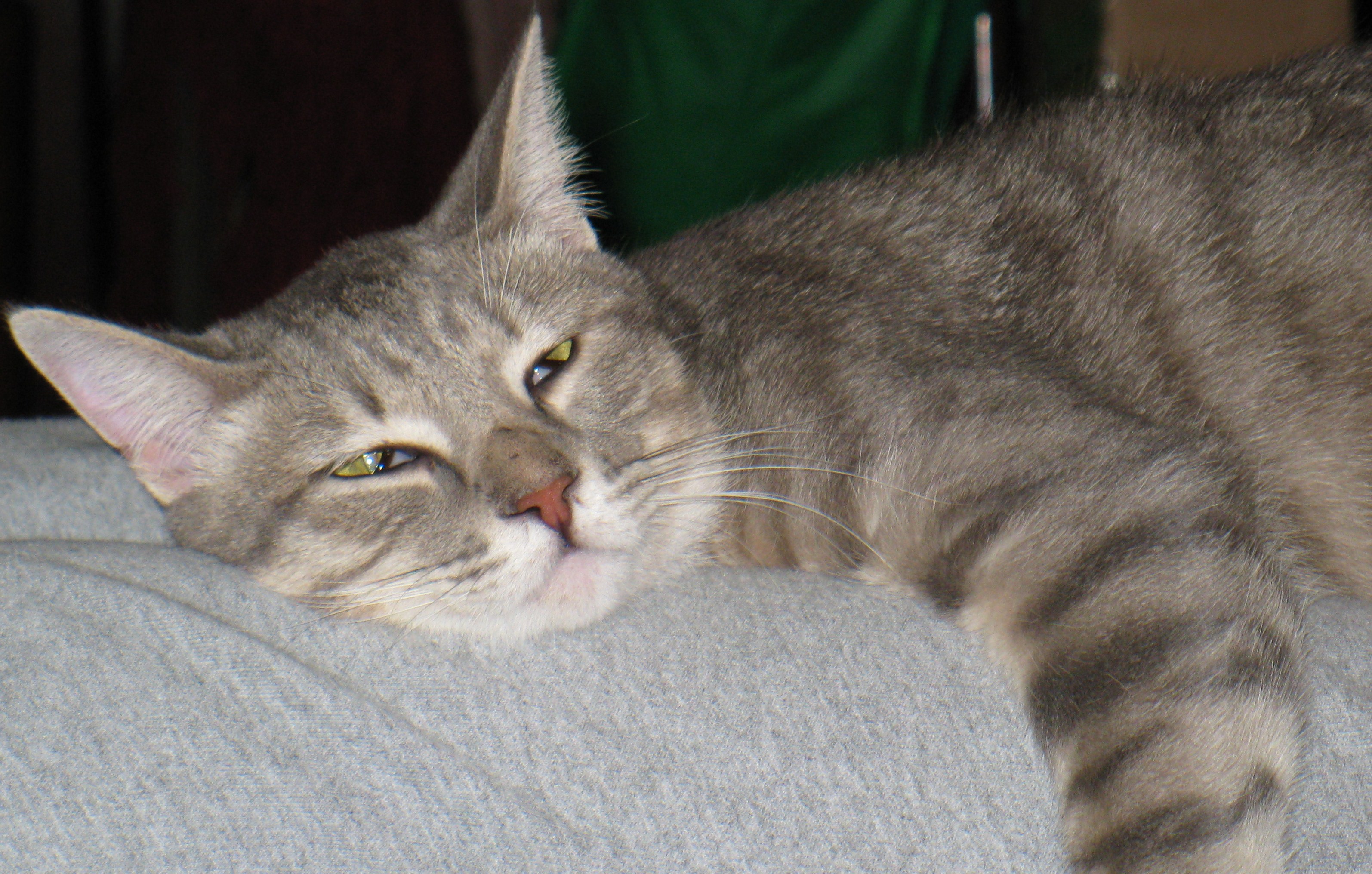
Before I could start, however, Ernest climbed into my lap. With the laptop already there, he didn’t have an easy time. He never does. But he made it.

So here I sit with a fuzzy gray tiger draped across my left forearm and wrist, cutting off blood flow to my hand. I don’t know how much longer my fingers will function. I don’t know how much longer this post will function either, because Ernest just touched something–a hot key or some other doohickey outside my sphere of knowledge–and it vanished. I’m lucky he didn’t delete it. Sometimes he does. When it comes to writing, cat watching is the least of my worries.

If he were on my left, I’d be fine with the arrangement. He used to perch there. But a couple of weeks ago he changed sides. As a result, I can’t use the mouse, and I have to bend my index finger at an unnatural angle to reach the touchpad. Periodically he throws his head back to let me gaze into his green, green eyes. That means he wants his ears scratched. 


I’ve tried moving him to the left, but he’s heavy and muscular, a feline Jesse Ventura. He’s also the master of his fate and the captain of his soul. After losing three consecutive matches, I gave up.

If you’ve read this far, you’re probably wondering why I don’t evict him from my person altogether.

It’s complicated.

There’s guilt. Yesterday I found him on the dining room table trying to eat a length of purple ribbon. I clapped my hands. That scared him. I spent the next five minutes trying to apologize. He spent the next five minutes evading capture. Then I realized that I’d forgotten to put out catfood on schedule, and that his acting out might have been caused by low blood sugar. I also considered that William, who has a wry sense of humor, might have dared him to jump onto the table. Ernest is impulsive, and I hadn’t taken into account the possibility of diminished capacity. I’m still making amends. 


Then there’s the purr. I’ve read that the vibration guards against bone loss and muscle atrophy. Some authorities believe that holding a purring cat benefits human tissue as well. Holding Ernest could protect my writing arm against osteoporosis. 


Furthermore, allowing cats a bit of leeway is a writerly thing do. Charles Dickens’ cat, Wilamena, had kittens in his study; the kitten Dickens kept later became his companion while he wrote. Raymond Chandler’s Taki, whom he called his “secretary,” sat on manuscripts he was trying to revise. T.S. Eliot sent his cats to Broadway. Mark Twain couldn’t resist cats, “especially a purring one.” I don’t know whether Garrison Keillor has cats, but he joined with the Metropolitan Opera’s Frederica von Stade to make an entire CD of cat songs (“Songs of the Cat”), and Bertha’s Kitty Boutique is one of The Prairie Home Companion’s most prominent sponsors. I can’t think of better role models than Keillor, Twain, and Von Stade. 


Finally, I allow Ernest to walk all over me because I’m concerned about mental and emotional balance. My own. Sigmund Freud emphasized the cat’s importance in coping with the stresses and strains of modern life: “Time spent with cats,” he wrote, ” is never wasted.”

Freud might not have known much about women, but he had a thorough grasp of cats.

Since I began this piece, Ernest has jumped down, back up, down, back up, and down again. William, who, bless his heart, parks on the left, has visited twice.

It’s not always easy to remember my reasons for being a doormat, especially the one about balance. But when the conscious mind fails, the subconscious defaults to guilt.

Well. Once again I’ve written about not writing. Once again the obstacle has been cats.

Greenburg is right. They’re dangerous companions.

*************

Sources:

Famous Cat Loving Authors and Pet Names

www.twainquotes.com

Wikipedia: Songs of the Cat

Thinkexist.com (Freud)

Thinkexist.com (Greenburg)

Frederica von Stade, Mezzo-Soprano

[Full disclosure: If I had my druthers, I’d emulate Miss Von Stade instead of the writers. She gets paid to sing, she doesn’t have to make up the words as she goes along, her picture appears on the front cover, the Amazon reviewers simply gush at her “magnificent” voice, and she doesn’t have to read Bird by Bird twice a month to keep her spirits up. What’s not to emulate?]

Many thanks to the author of “Invictus.” If we ever get a brother for William and Ernest, we’re going to name him Henley.


Promises, production, and pain

Last week CP and I made a pact to write at least 100 words a day.

When I began this manuscript, I wrote at least 500 words a day. But with one thing and another, over the months, production slipped. So, although 100 seemed paltry compared to what I used to do, or what I could or should do, I thought it a reasonable  minimum, small enough not to feel threatening or to spark the dreaded Writer’s Block.

If I’d known I was going to rejoin Curves today, however, I would have held out for only fifty.

I made one Curves circuit, fifteen minutes of pushing and pulling against hydraulic resistance. Twice would have possible but stupid. In the first place, I have no sense of proportion. No shades of gray. It’s all or nothing. If I’d stayed, I would have ended up putting every scrap of energy I possessed into doing battle with those machines. And at the end of the day, I’d have felt worse than I do now.

In the second place, …I’ve forgotten what’s in the second place.

That’s an indication of how fit I am to add 100 words to Molly’s story before I crater.

But a pact is a pact. Is a pact.

Rats.

Humility check

In the previous post, I wrote a paean to myself in honor of receiving a positive critique in a recent manuscript contest. I was shameless. Because the judge wrote Fannie Flagg twice on the score sheet, I used the name five times in my anthem.

I was moved to lavish self-aggrandizement by memory of my mother, who often quoted Damon Runyon: “He who tooteth not his own horn, the same shall not be tooted.”

Today I do a bit of un-tooting. Below is a list of things the song of myself didn’t include.

1. My entry did not advance to the finals.

2. The judge read only the first ten pages of the potential novel.

3. When the judge said that to get an agent I’ll have to find one who “gets” Texas and the South, she meant she “gets” Texas and the South and, as a result, my small-town setting and my dialogue.  If she’d been unfamiliar with the vernacular, I wouldn’t have fared so well.

4. The selection process is subjective. I once wrote an entire post on this topic, but the story bears repeating: Five years ago an entry I submitted received a score of 80. The next year, in the same contest, the very same (unrevised) entry garnered 18 points. Judge #1 said the entry was funny. Judge #2 said that I should take a lot of workshops, read more books, and use MS Word to identify my egregious grammatical errors. And that my pre-teen protagonist’s parents were guilty of child abuse.

Oh dear. I thought I’d made peace with that. My point: if I’d drawn another judge this year, I might have come out with a much lower score, and my paean would be different in both tone and content.

5. In a sentence beginning, “My concern,” the judge says she “would have liked” something that last year’s judge, who read version #1 of the ten pages, would have liked as well. I’ll have to fix that–change the material without sacrificing the current dialogue, pacing, tone…

6. The novel isn’t a novel. It’s potential. It’s a WIP.

7. There’s many a slip ‘twixt the cup and the lip.

To summarize–Opening that envelope and finding compliments inside encouraged me. It lifted my spirits. It showed me a glimmer of hope.

But it didn’t complete the manuscript, get me an agent, offer me a contract, hand me an advance, put me on the best-seller list, fill my coffers to overflowing, or ensure me a spot on Letterman.

In short, I have work to do. Continued self-aggrandizement will only get in the way.

After all, I’m already fighting background noise. Radio station KFKD plays continuously in my right ear, reciting my virtues. The constant yammering makes it hard to focus.

On the other hand, the “rap songs of self-loathing” pouring into my left ear don’t exactly speed me on my way either.

So I’ll take the critique sheet from the envelope, and with a loving hand smooth it flat, and place it in a spot where it will be visible as I write.

Fannie Flagg has been in the back of my mind for years. It’s time to move her right up front.

********************

Thanks to Ann Lamott, author of Bird by Bird: Some Instructions on Writing and Life, for exposing radio station KFKD for what it is.