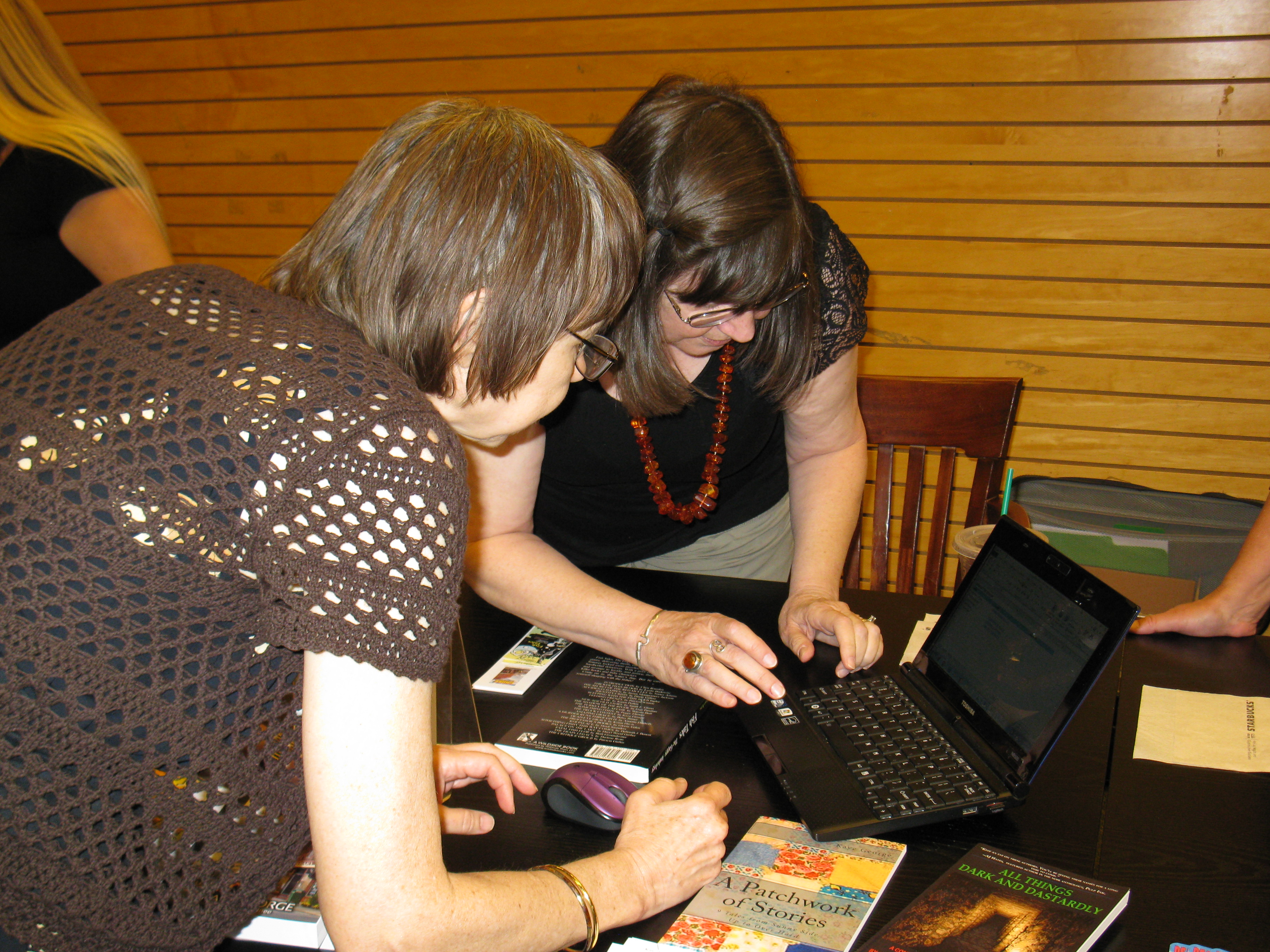
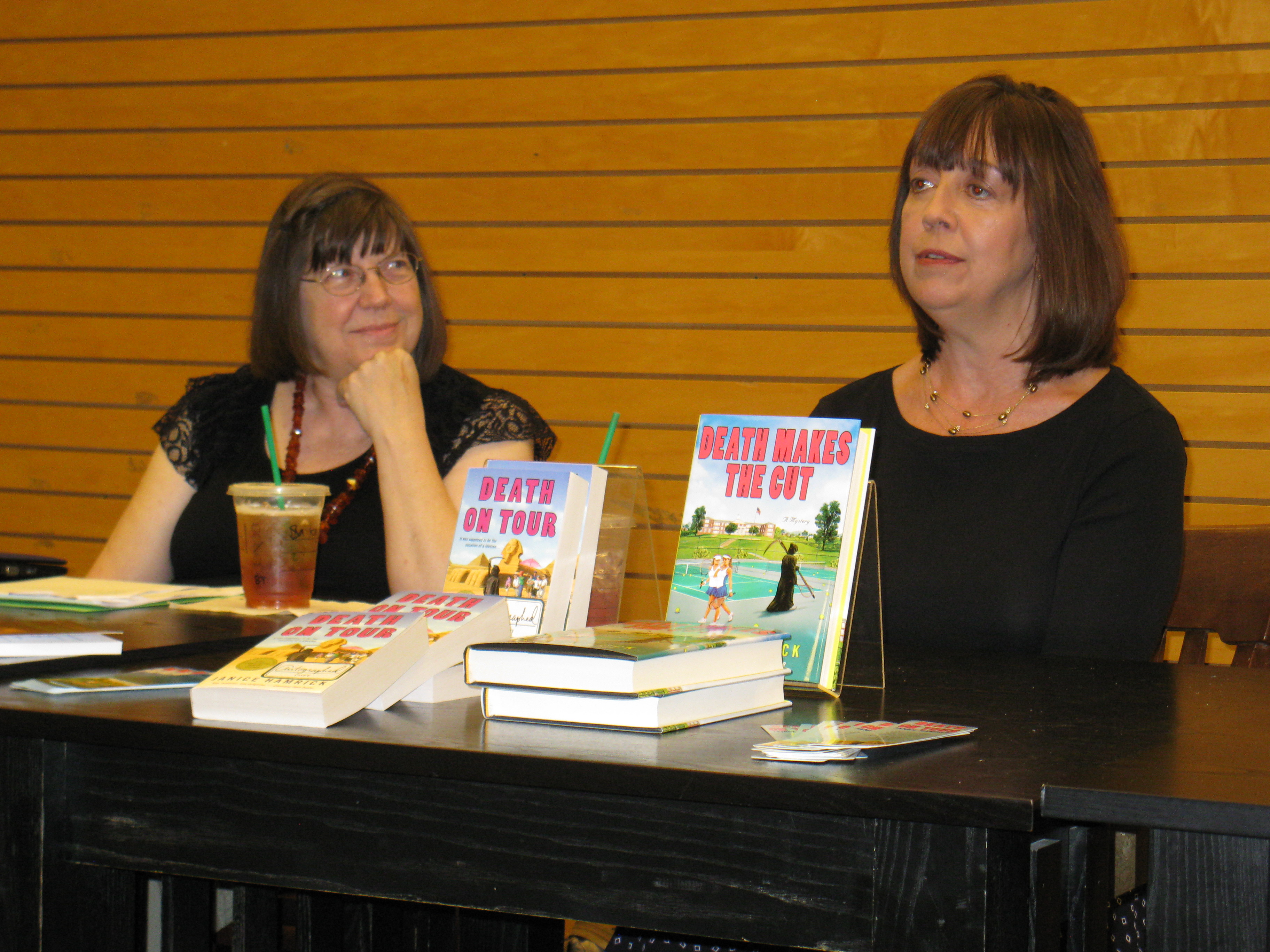
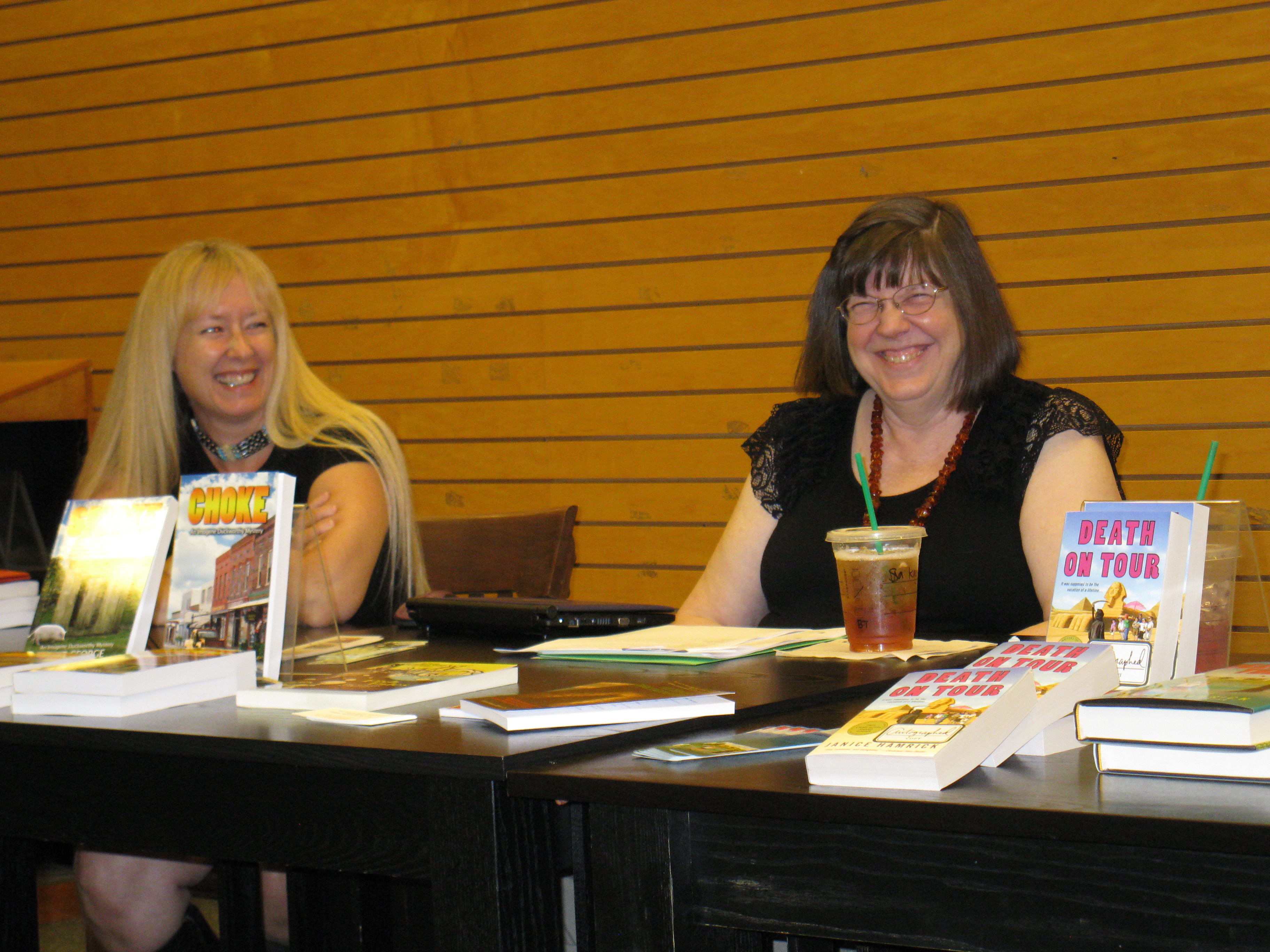
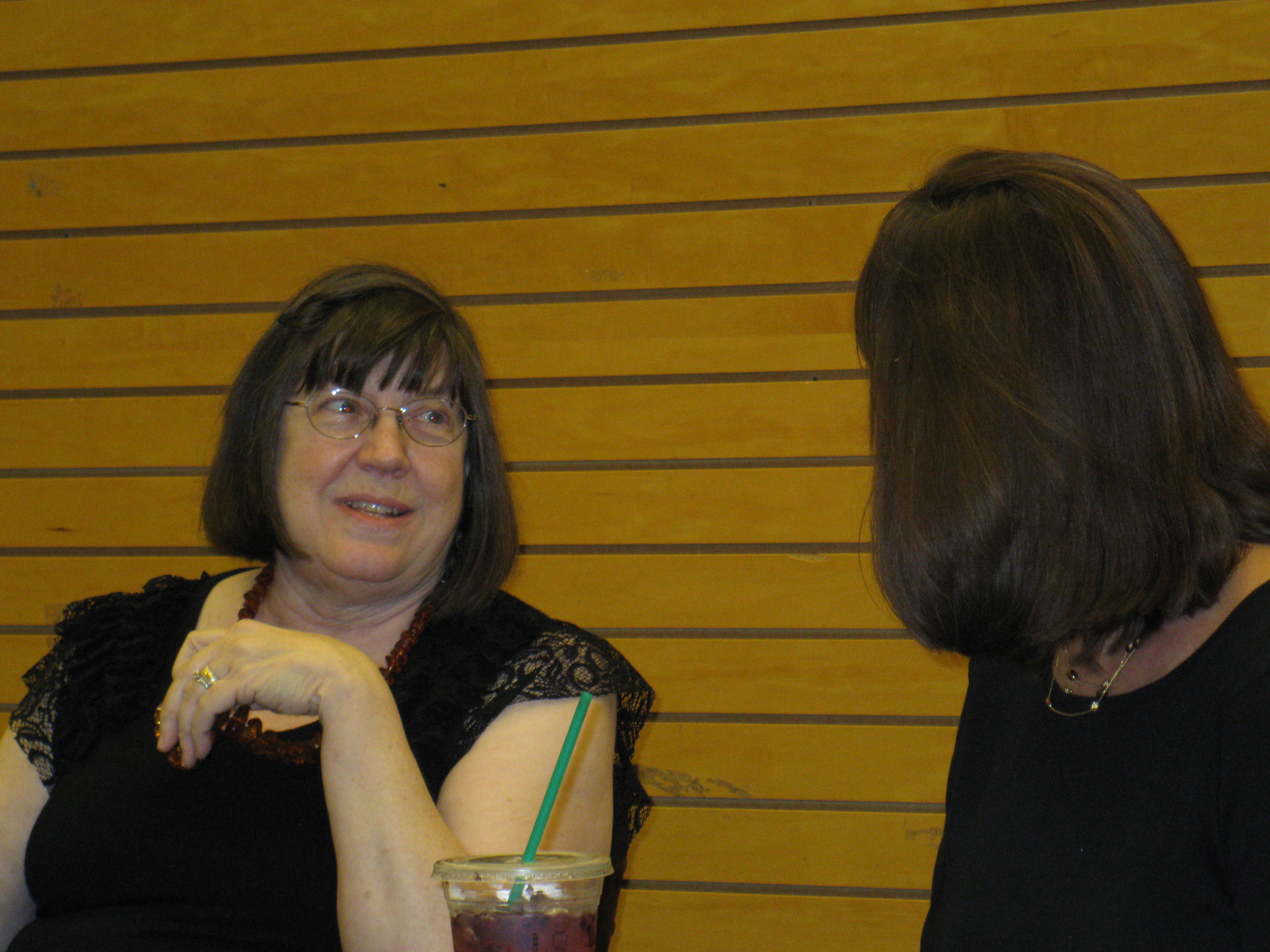
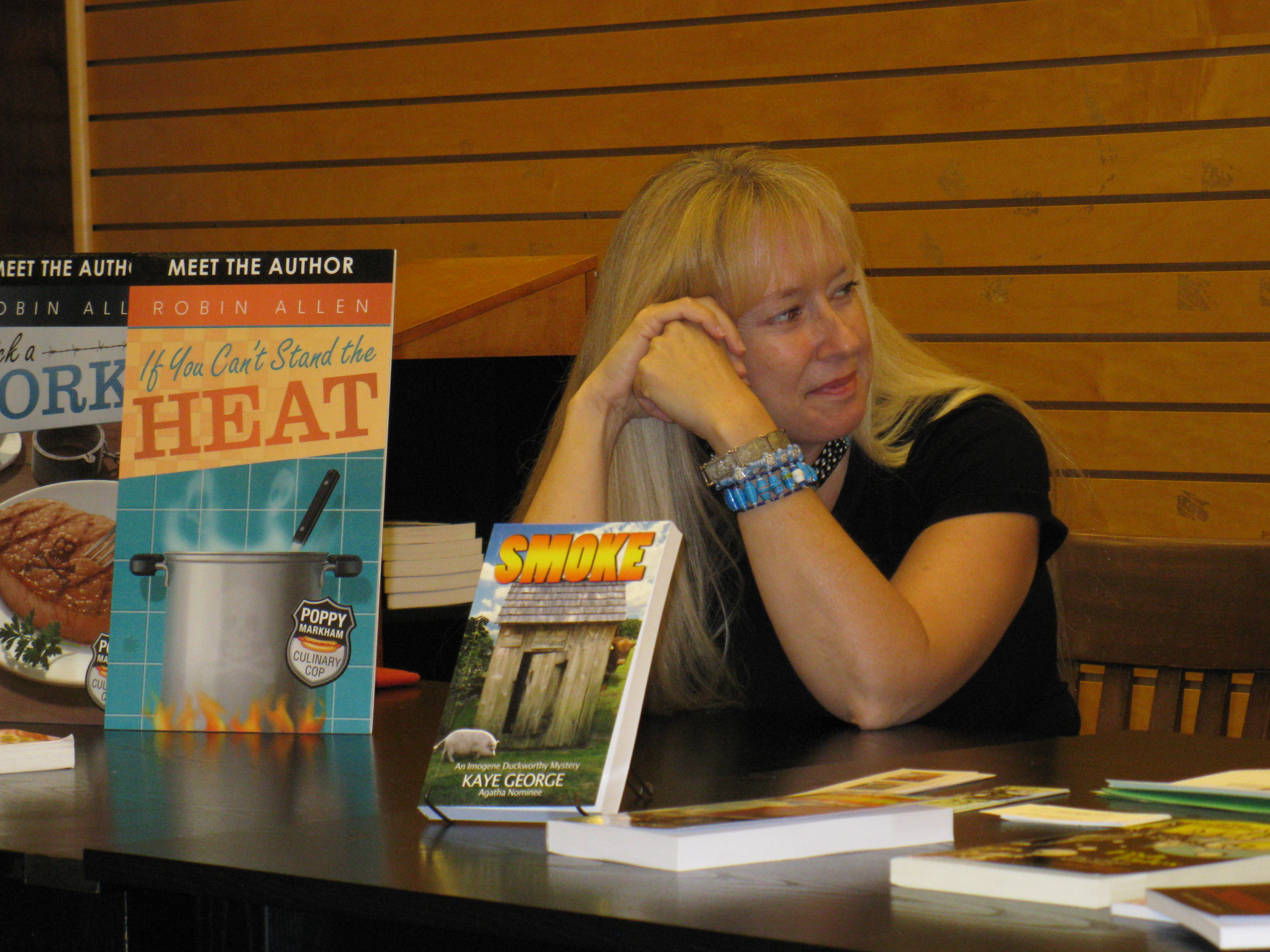
If you read the previous post, reblogged from Gale Albright’s Visions and Revisions, you know mystery novelist Kaye George attended the Austin Mystery Writers meeting last week. Kaye, who for a number of years served as AMW’s Grand Pooh-Bah, moved to Tennessee last winter, leaving Gale and me forsaken and forlorn.
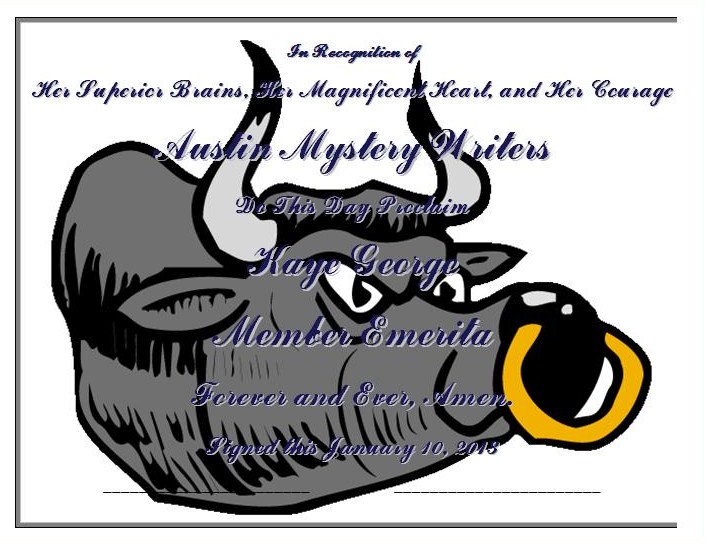
At the Last Lunch, celebrated at the Elite Cafe in Waco, Gale and I presented Kaye a certificate declaring her Member Emerita. It was supposed to say Grand Pooh-Bah Emerita, but, distraught over her impending move, I forgot that part.
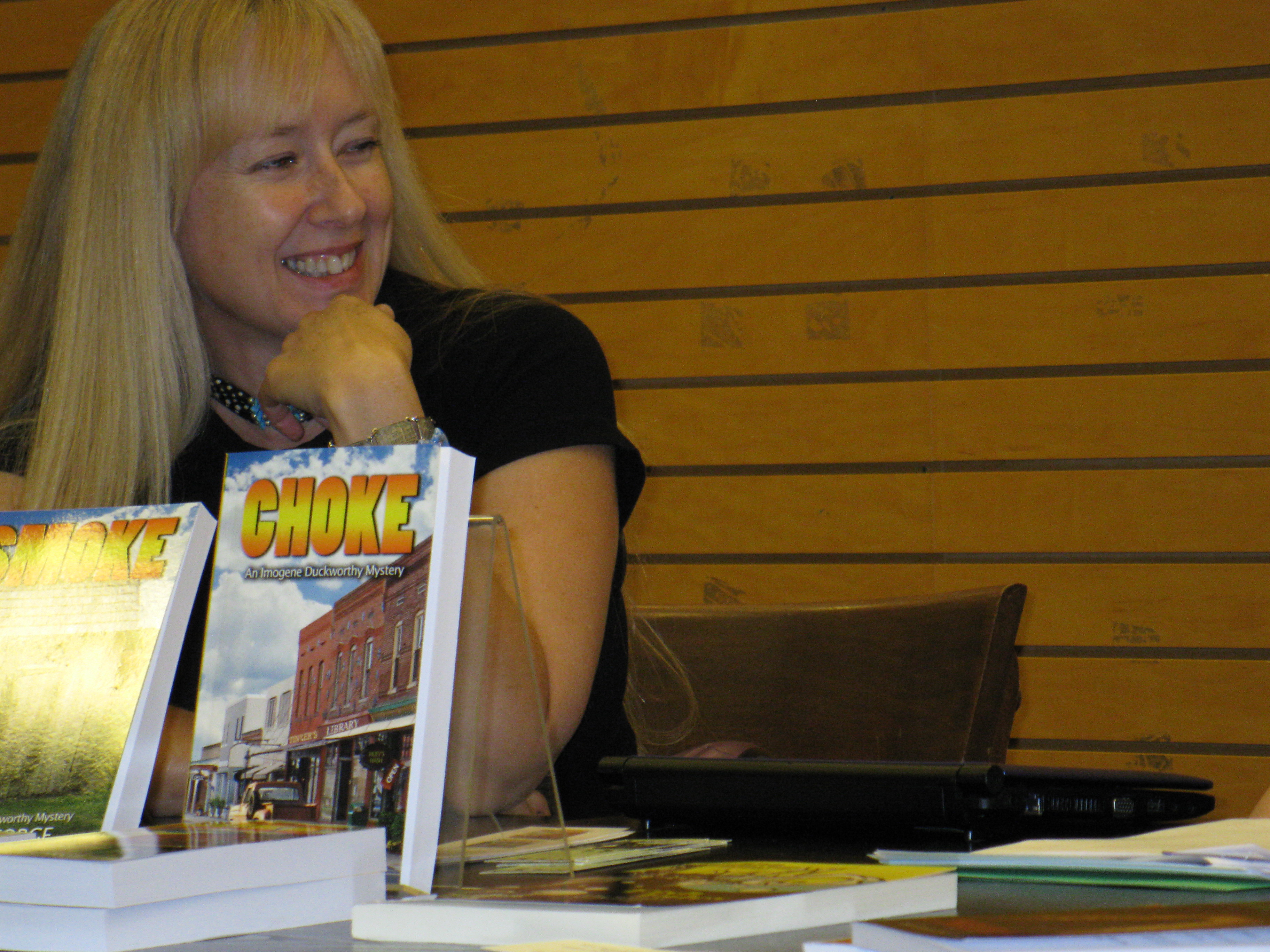
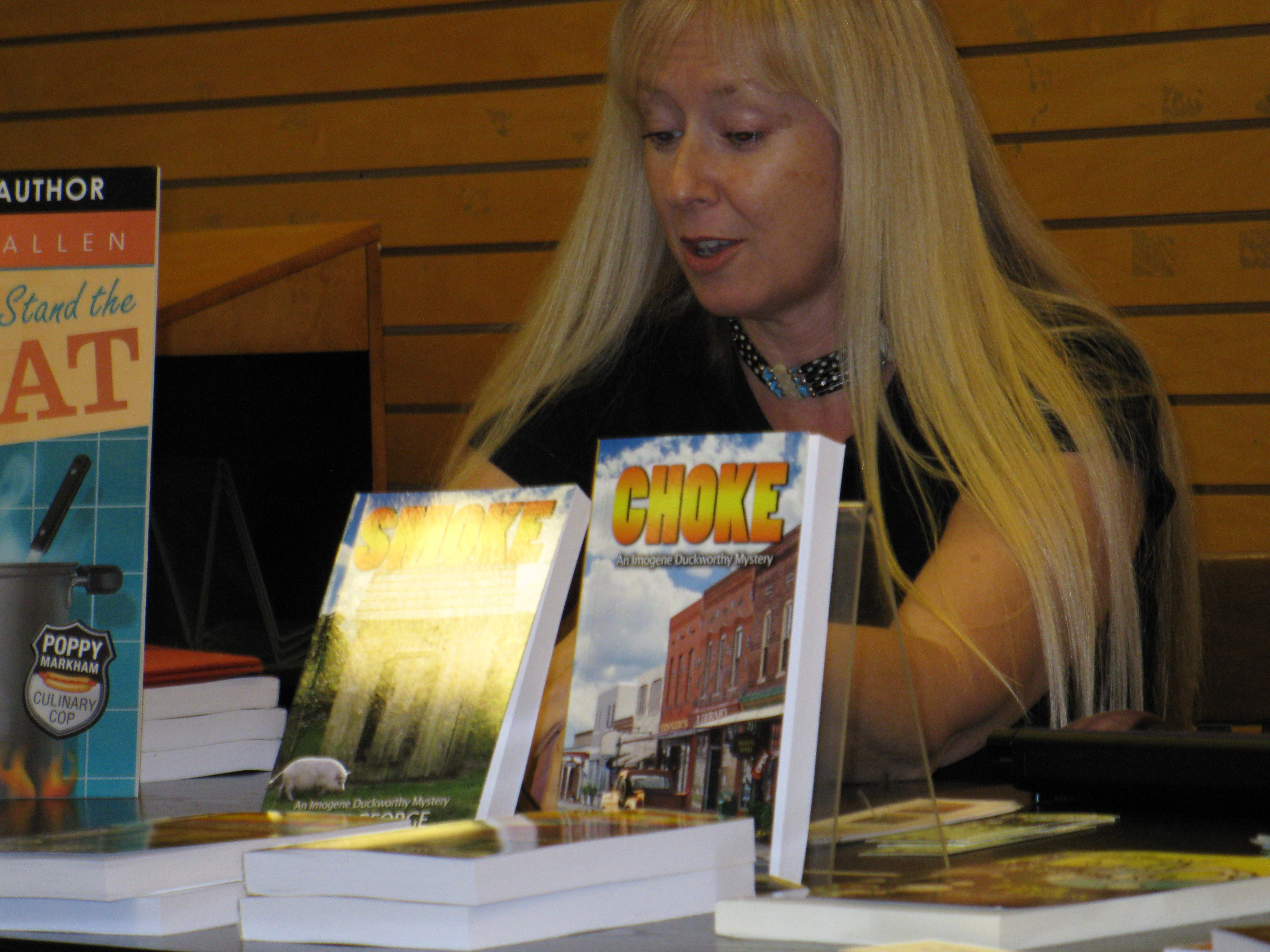
The bull pictured on the certificate is an homage to Kaye’s first published novel, CHOKE, in which heroine Imogene Duckworthy narrowly escapes death by goring. I don’t believe that’s a spoiler, since Immy later appears in both SMOKE and BROKE.
Gale and I were foolish to suffer so over our friend’s disappearance because, thanks to the miracle of email, social media, and the Eyes of Texas, which are perpetually upon her, Kaye cannot get away. She’s been gracious about our continued presence in her life. She even suggested AMW publish an anthology of mystery stories, and so we shall. Each member has agreed to write two stories related to a central theme.
The prospect of putting out an anthology is exciting for those of us who haven’t published widely (roughly four of the eight current AMW members), but for me it’s also stressful: What if I can’t deliver? What if I’m already written out? What if I have to tell Kaye George the dog ate my homework? She knows I don’t have a dog.
At this point, I should tell a story related to the questions raised in the preceding paragraph. But it’s nearly 4:00 a.m., David just exchanged sleeping on the couch for sleeping on a bed, and I’m left downstairs hearing, sort of by default, Marvin Hamlisch first say that the music of the ’80s exemplifies our country’s return to family values, and then introduce a very old person I don’t recognize to sing “Under the Boardwalk.”
In other words, I’m outta here. The story will wait until tomorrow.
***
Oh, jeez. Now they’re singing “Jeremiah Was a Bullfrog.” Those family values just won’t quit. What are the PBS folks thinking?
I have to retire now, before we all drown in sarcasm.
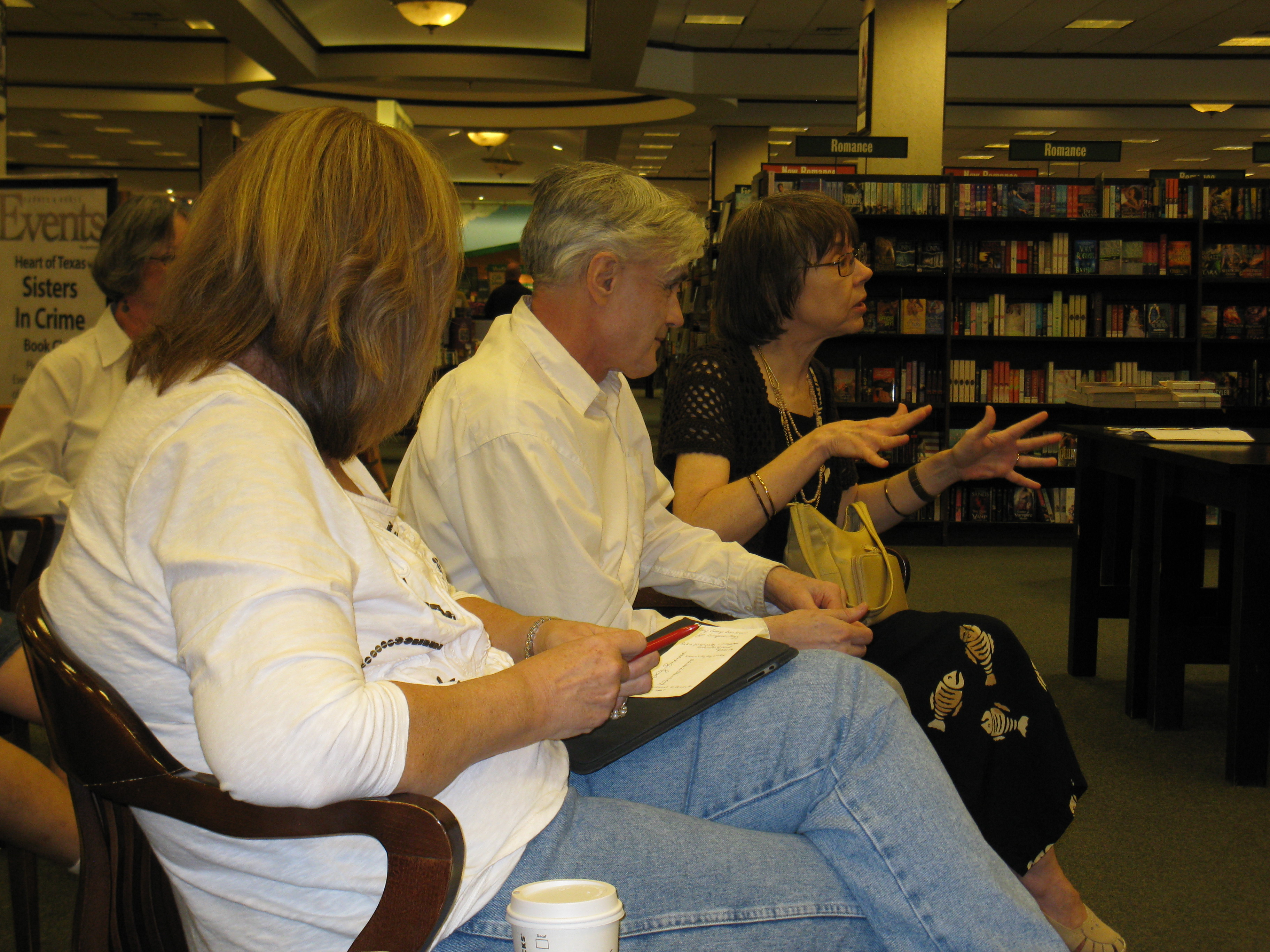
The members of Austin Mystery Writers were clustered at their literary haunt in the BookPeople café on Thursday morning, eagerly awaiting the arrival of famed author and Grand Poobah emerita Kaye George.
“Gosh,” I said to the group. “I hope she remembers the little people.”
I need not have worried. With all her usual charm and warmth, Kaye George appeared wearing a big fedora, carrying a giant magnifying glass, and blinding us with her dazzling smile.
We had missed Kaye George. Once a guiding beacon in AMW in Austin, she had moved to Waco, then Knoxville, Tennessee, too far away to attend the weekly critique group meetings.
However, that didn’t stop Kaye from being an active participant in AMW. She’s still a major player in the group, we’re glad to say.
Kaye George has been an inspiration to fellow writers. She fought hard to become a published author
I never wrote a word that I didn’t hear as I read.
~ Eudora Welty
*
Familiarity. Memory of the way things get said. Once you have heard certain expressions, sentences, you almost never forget them. It’s like sending a bucket down the well and it always comes up full. You don’t know you’ve remembered, but you have. And you listen for the right word, in the present, and you hear it. Once you’re into a story everything seems to apply—what you overhear on a city bus is exactly what your character would say on the page you’re writing. Wherever you go, you meet part of your story. I guess you’re tuned in for it, and the right things are sort of magnetized—if you can think of your ears as magnets. I could hear someone saying—and I had to cut this out—”What, you never ate goat?” And someone answering, “Goat! Please don’t say you serve goat at this reunion. I wasn’t told it was goat I was served. I thought—” and so on, and then the recipe, and then it ended up with—I can’t remember exactly now—it ended with, “You can do a whole lot of things with vinegar.” Well, all these things I would just laugh about and think about for so long and put them in. And then I’d think, that’s just plain indulgence. Take it out! And I’d take it out.
The day Eddy Cranny got himself murdered started bad and went downhill from there . . . especially for Eddy. ~ Janice Hamrick, Death Rides Again
Janice Hamrick
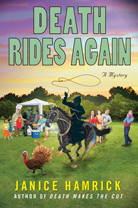
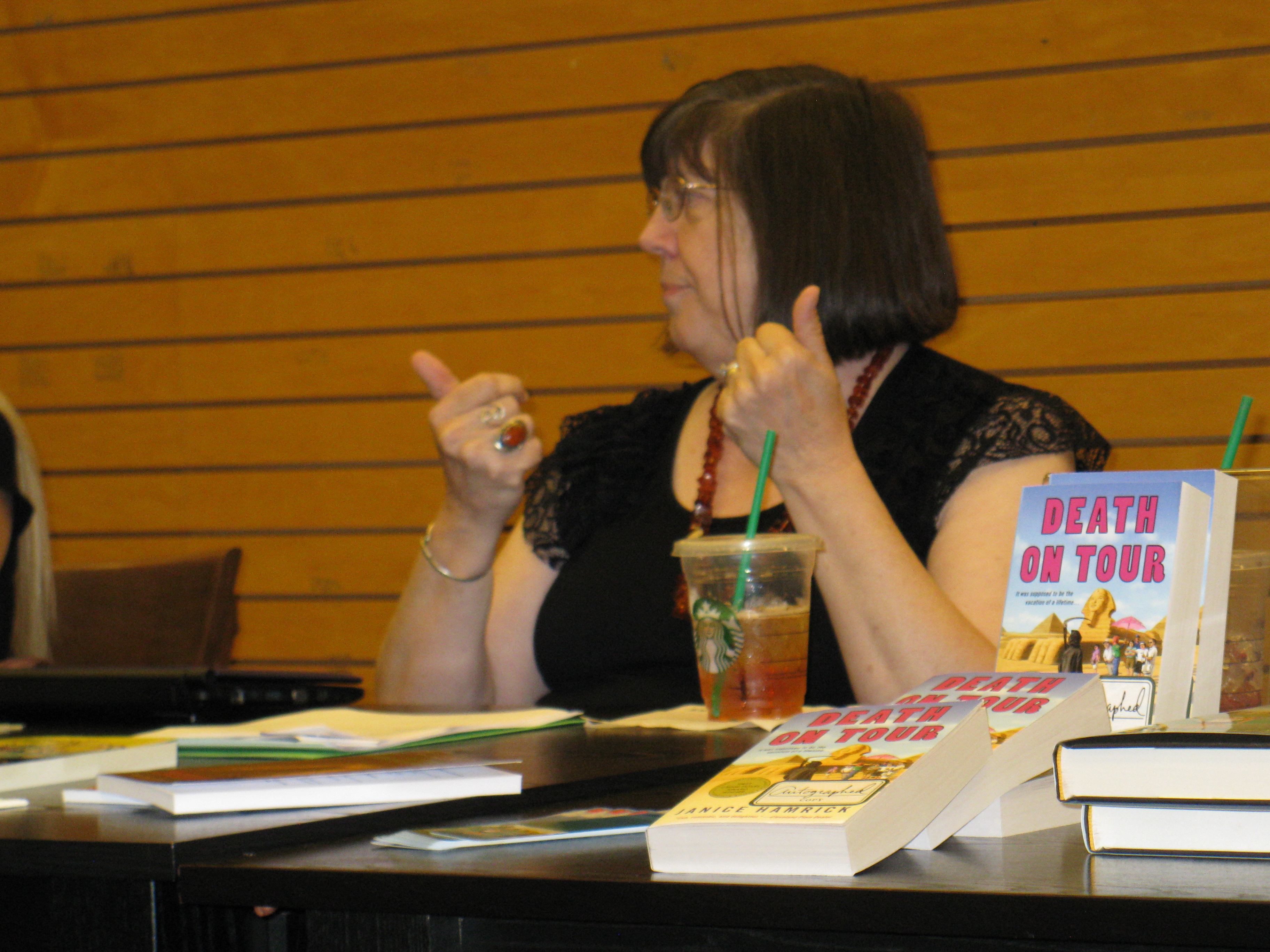
When I reached the second floor of BookPeople for the June 19th launch of Death Rides Again, Janice Hamrick’s latest mystery novel, my day turned around and started uphill at a gallop.
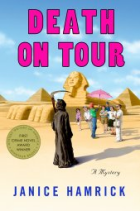
Janice, who lives in Austin, made news in the writing–and reading–communities when the manuscript of her first book, Death on Tour, won the 2010 Mystery Writers of America/Minotaur Books First Crime Novel Competition. Published in 2011, the novel was nominated for the 2012 Mary Higgins Clark Award and the Romantic Times Reviewers Choice Award.
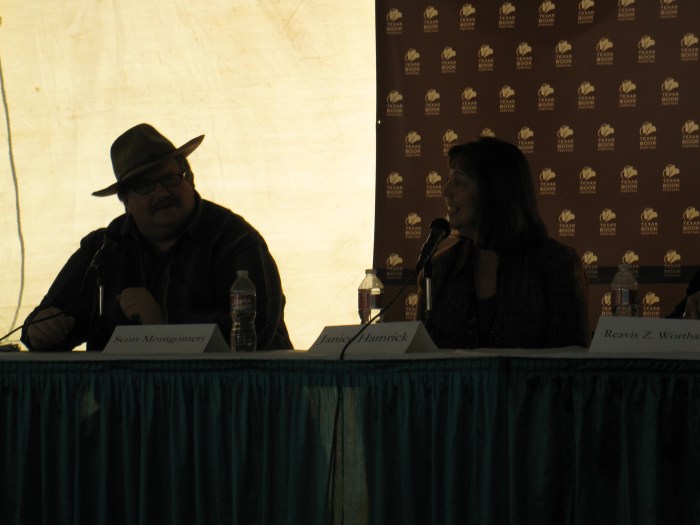
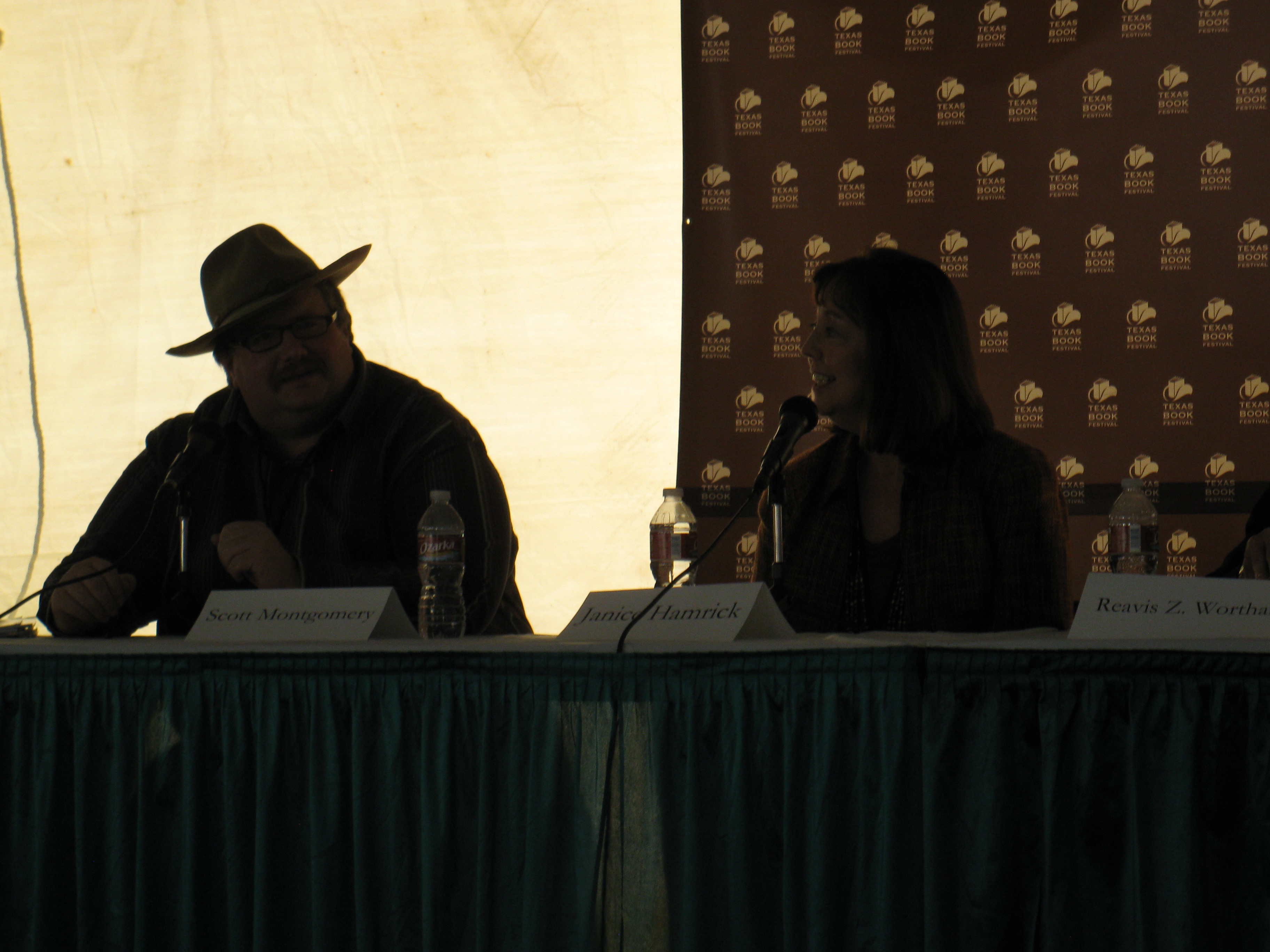
Scott Montgomery and Janice Hamrick, 2012 Texas Book Festival
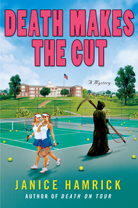
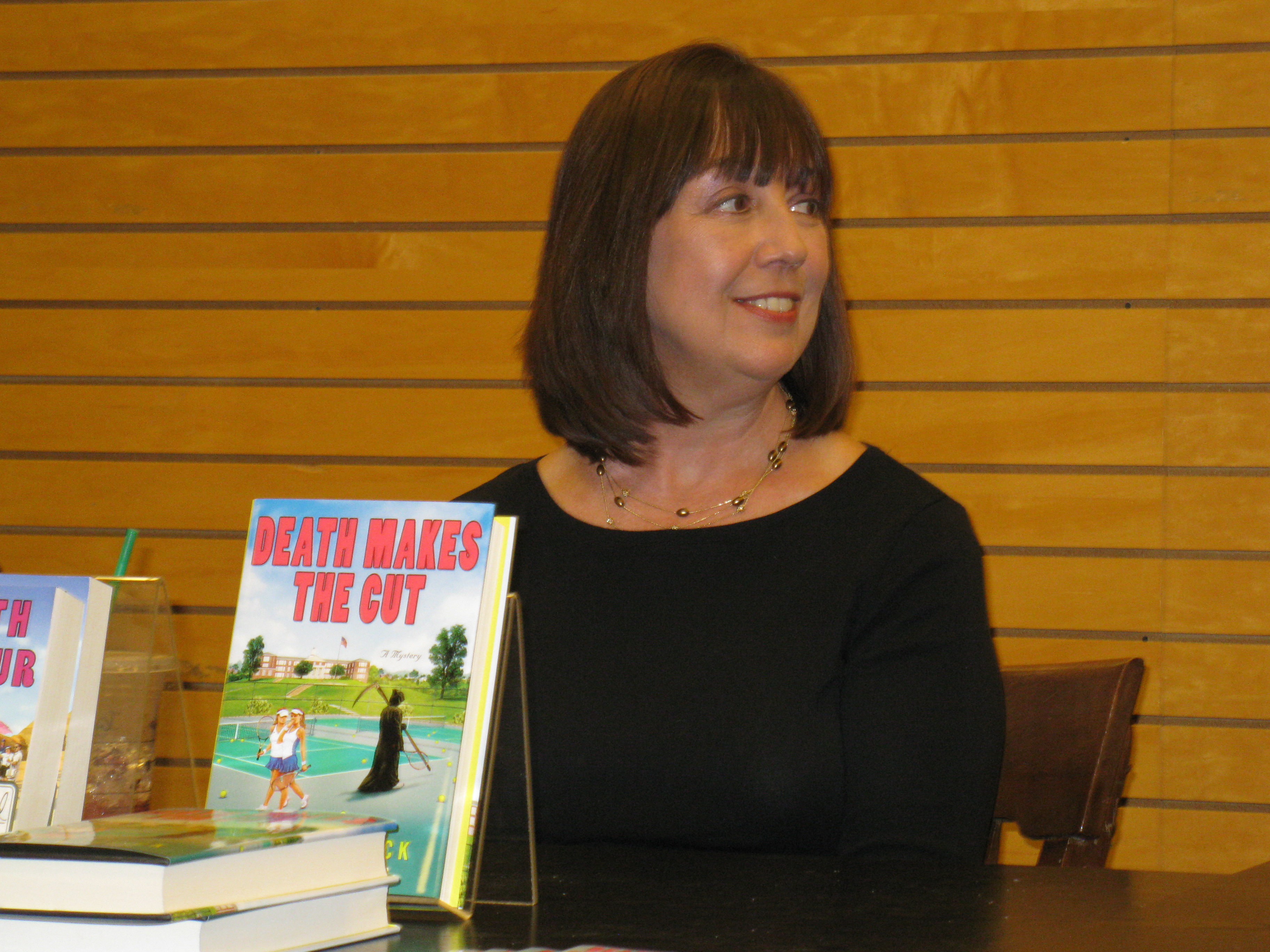
In 2012, Janice followed Death on Tour with Death Makes the Cut. Now she presentsthe third in the Jocelyn Shore series, Death Rides Again.
Critics have been complimentary. So have readers. From her tour of Egypt, to the high school where she teaches, to a family reunion at her Uncle Kel’s ranch, main character Jocelyn Shore has a talent for solving murders and gathering fans as she goes.
At the book launch, Scott Montgomery, Crime Fiction Coordinator of MysteryPeople, BookPeople’s store-within-a-store, interviewed Janice before an audience of mystery lovers. This was the second time I’ve seen the two together: at last fall’s Texas Book Festival, Janice appeared on a panel Scott moderated. The subject was using humor in mysteries, something Janice does well. (See quotation from book, above.)
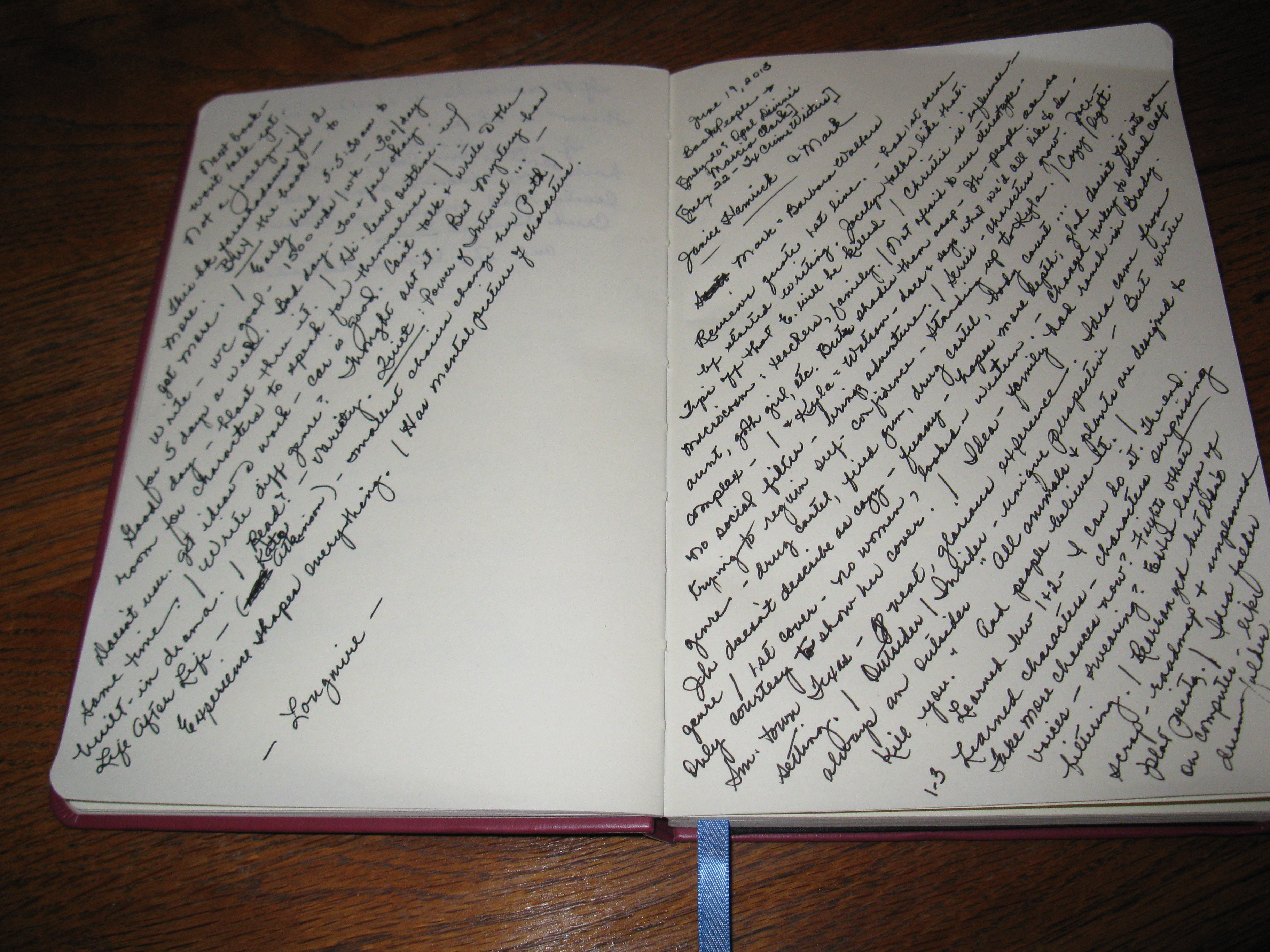
I took copious notes, as I always do on such occasions. The conversation ranged far and wide, however, and my notes comprise two pages of scrawl, on the diagonal, a series of jottings devoid of connective tissue. Turning them into paragraphs would take several hours and considerable energy (for reason, see “Why I Am Not a Journalist”), so I’ll share a few bullets:
Janice got the idea for Death on Tour from a trip she made to Egypt (during which no one was murdered). The idea for Death Rides Again came from a setting–her family’s ranch near Brady.
Some reviewers class the Jocelyn Shore novels as cozy mysteries; others don’t. Janice is glad the books aren’t easily categorized. She describes them as funny but hopes they have more depth than the typical cozy.
Asked what she learned while writing the series, she said that between Death on Tour and Death Makes the Cut, she learned, “I can do it.”
She’s working on another book–not a Jocelyn Shore–but she doesn’t talk about that one yet.
Janice rises about 5:00 a.m. and writes before going to work. She sets out to write 1500 words a week: 300 words a day, five days a week. On a bad day, she says, she can produce 300 words and feel okay. On a good day, she can “blast right through” her goal.
Now this is where things get personal. I began this post by saying my day went uphill because I attended the book launch.
Goals have never been my friends. Most people find them energizing. To me, setting goals is stimulus for digging in my heels, heading off at a 45-degree angle from the rest of the group. When my CP, who likes goals and thinks I should like them too, makes me set some for the coming week, I growl, scribble in my notebook–almost, but not quite, singing Nyah nyah nyah to myself–and then ignore them.
But Janice’s description of her 300-word goal–low enough to attain and feel good about, low enough to sometimes blast right through–spoke to me. Her system is so logical, so sensible, so humane. Sitting there in that folding chair, I heard the little light bulb above my head click on, and I said to myself, Well, d’oh.
So, on that basis, I’ve decided to jump into Round 3 of A Round of Words in 80 Days, the writing challenge that knows you have a life, with the following goal:
I will write 1500 words a week: 300 words a day, five days a week;
and this stipulation:
I will not rise at 5:00 a.m. to get the job done.
Now back to the book launch:
The question on the mind of nearly everyone in the audience was, What happens next?
When you’ve spent quality time with a character like Jocelyn, gotten to know her and her family, watched her fall in–and maybe out–of love, deal with matters of life and death, turn shaky post-divorce self-esteem to strong self-confidence–you don’t want the relationship to end. Three books, the number Janice contracted to write, aren’t enough.
So what might influence Janice’s publisher to ask for a fourth Jocelyn Shore novel?
The Jocelyn Store mysteries are available from booksellers listed on Janice’s website.
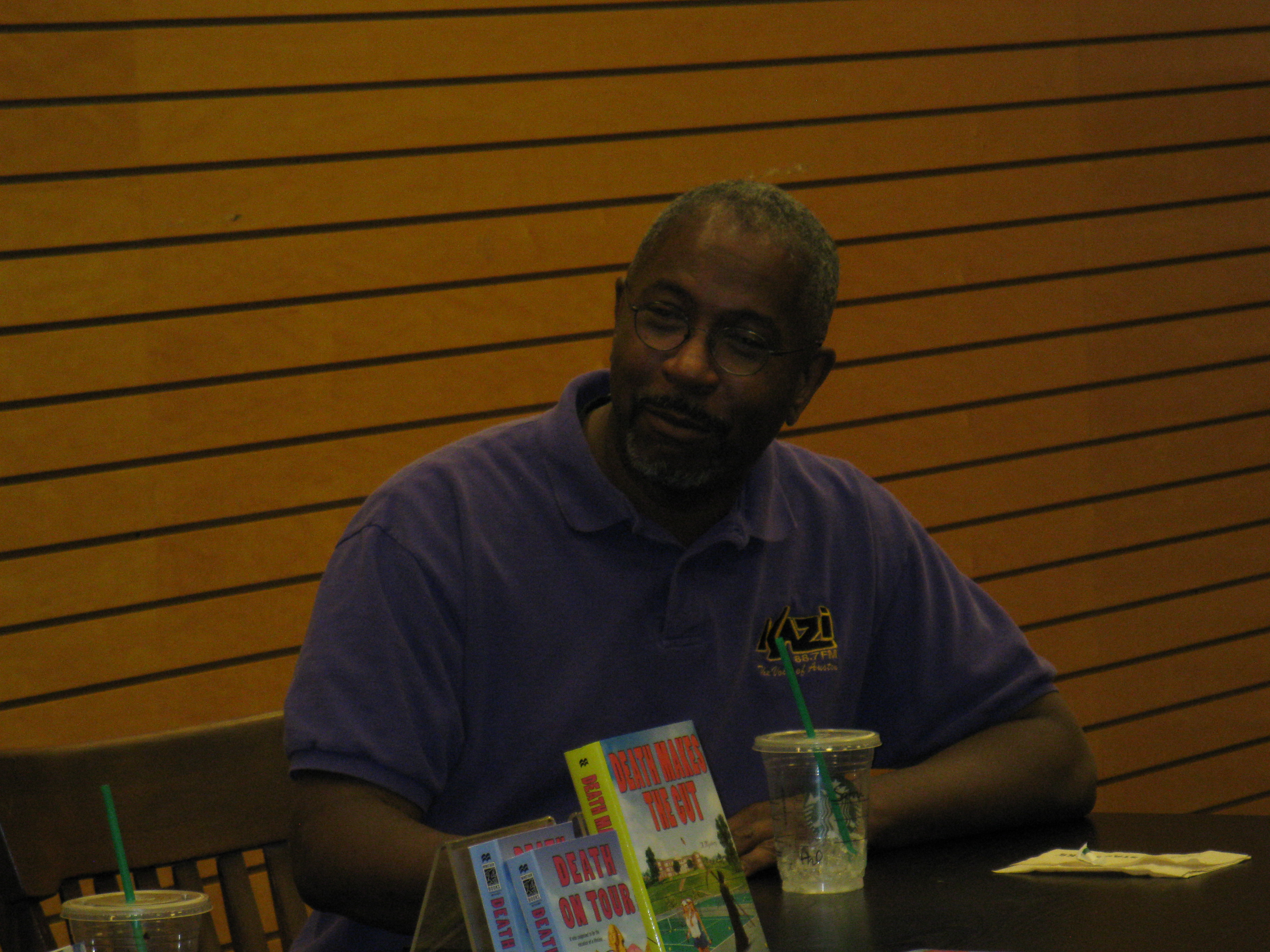
On Saturday, July 20, Janice and Hopeton Haye, host of KAZI Book Review, will appear at the Pflugerville Library for an interactive discussion about the Jocelyn Shore series, mysteries, and writing. On Saturday, August 31, she will sign copies of her books at the Round Rock Barnes & Noble.
***
For more information about A Round of Words in 80 Days (ROW80) click here.
To read what other ROW80 participants are writing, click here.
Deutsch: “Kopfschmerzen”. Die wohl berühmteste – stark von James Gillray beeinflußte – Arbeit in einer Reihe von sechs Blättern “medizinischer” Karikaturen, in denen Cruikshank Krankheiten als Teufelswerk brandmarkt. Erstmalig publiziert: 12. Februar 1819. Originalgröße: 210 x 255 mm (Photo credit: Wikipedia) George Cruikshank [Public domain], via Wikimedia Commons, PD-Art Yesterday Dominica felt faint, and Molly, my main character, steered her to a bench on the courthouse lawn and then dithered over what to do. She couldn’t leave Dominica, but she thought asking a passerby (of which there were none at the time) for help sounded lame.
Today, talking about treatments for migraines, one of my brilliant critique partners took a bottle of peppermint oil from her purse and passed it around. At the first whiff, I said, “Molly carries peppermint oil in her purse! She’ll use it to revive Dominica.”
In one fell swoop, I both saddled Molly with migraines and solved a knotty problem.
Despite all the time I’ve wasted scrolling through Facebook, I’ve received more from the site than I’ve lost. It’s allowed me to reconnect with students I taught thirty years ago.
Last night I was chatting with a member of the class of 1982. She gave me permission to link to her website. She didn’t give me permission to comment, but I will anyway. What can she do–flunk me?
I want to make it clear that I never taught Judy anything. I couldn’t have taught her anything. She already knew what she needed to know. She was a writer. A poet.
She entertained us periodically with essays describing her part-time job at a nearby country club. I have vivid memories of long, furry tendrils reaching out and wrapping themselves around her legs while she was cleaning out the walk-in refrigerator. Those memories, and others, told in nauseating detail, made me laugh even as I vowed to avoid that particular dining room.
In her junior year, Judy placed in a poetry contest at a nearby college. One of the judges said she’d wanted to place the poem higher, but it was too short. The next year, she won the competition with another poem–the same length as last year’s. I memorized it and later, when I was teaching at a local university, posted a copy of it on the door of my office.
After Judy graduated, I found her mentioned in an article in the Austin newspaper: UT student Judith Edwards had appeared at Eeyore’s Birthday Party in Pease Park wearing a python draped across her shoulders. The accessory seemed to me entirely appropriate. Her goals had never included conformity.
Browse through her poems and stories. You’ll get an idea of the pleasure I had being her student.
***
P.S. I hesitate to add this–I mean, I hate to give readers who live outside the United States such a…truthful…view of Texas, but if you have a mind to, read Judy’s story “The Big Texan.” She didn’t make it up. I wasn’t there, but I know it really happened.
Susan Woodring (short story) (Photo credit: suzanne carey)
It sticks with me because what Woodring says is true. Uncomfortably so.
She says if we write because we want something–wealth, fame, a room of our own, shoes–we’re destined to fail.
To write well, we have to ask what the story wants. We must write out of love.
I have at times worked according to the love principle: when I wrote an eight-chapter satire on life in the teachers’ lounge; my first couple of short stories; a segment of the Mystery in Four Parts for the annual Austin Sisters in Crime celebration; the daily assignments for the retreat in Alpine last year; the very first, and unspeakably horrible, draft of Molly; every post that appears on this blog. The less the product matters, the more I’m willing to consent to its requests, and the more I love to write.
My Friday critique partner and I even wrote the love principle into the title of our partnership. Recognizing that publication would not be a slam-dunk, we lowered our expectations–or as my thesis advisor once recommended, modified our aspirations–and named ourselves the Just for the Hell of It Writers.
Somewhere along the way, however, I meandered away from the ideal. I focused on getting it right the first time, being perfect, failing to trust that something would come from nothing. I wandered away from the playground and haven’t found my way back.
While wandering, I suggested to CP that we change our name to something more serious, more business-like, a name we could take out of our tote bags and flash around at writing conferences, a name that would look good on our resumes. After much discussion, we chose Waterloo Writers. We even voted. The motion passed unanimously, 2-0.
Ah, the pomp and the circumstance. One could almost hear the strains of “Land of Hope and Glory” replacing Willie Nelson from BookPeople’s speakers overhead.
(Epiphany: As I write this, a Frasier marathon, compliments of Netflix, plays on TV. I just realized I am a Frasier. Uptight. Perfectionistic. OCD. No wonder I’m not having fun.)
Anyway, I haven’t loved Molly for quite a while. I haven’t asked what she wants, and I’ve ignored her attempts to tell me. Even when she’s yelling. She yells a lot, all day every day. And at night when I’m trying to sleep. I can’t make her–or her passel of friends–shut up. No one else hears them.
Ignoring the cacophony takes energy. And sugar. Today the shouting was so intense I plowed right through the sticky, cloying chocolate thingies my husband bought at Wal-Mart to take to work for lunch. Enough for the next two days, he thought. Tonight, to make amends, I baked brownies, which I have already sampled. If I go to bed soon, they have a chance of lasting till morning.
Obviously sugar isn’t working. It never does.
Giving up isn’t an option either. In the words of another critique partner–one I consider my mentor–“Writing is part of my condition.” I may stray from the rule, but never from the desire. The voices in my head keep clamoring, and there’s just one way to calm them.
For this writer’s brand of schizophrenia, the only effective drug is the one Susan Woodring prescribes: love.
Plus, I would add, equal measures of faith and hope. The three have a history of joyful collaboration.
*****
Susan Woodring’s latest novel is Goliath(St. Martin’s, 2012). She lives in North Carolina. More information about Susan and her books is available on her blog.
*****
Picture of Susan Woodring by Suzanne Carey, via Flickr, CC BY- NC 2.0.
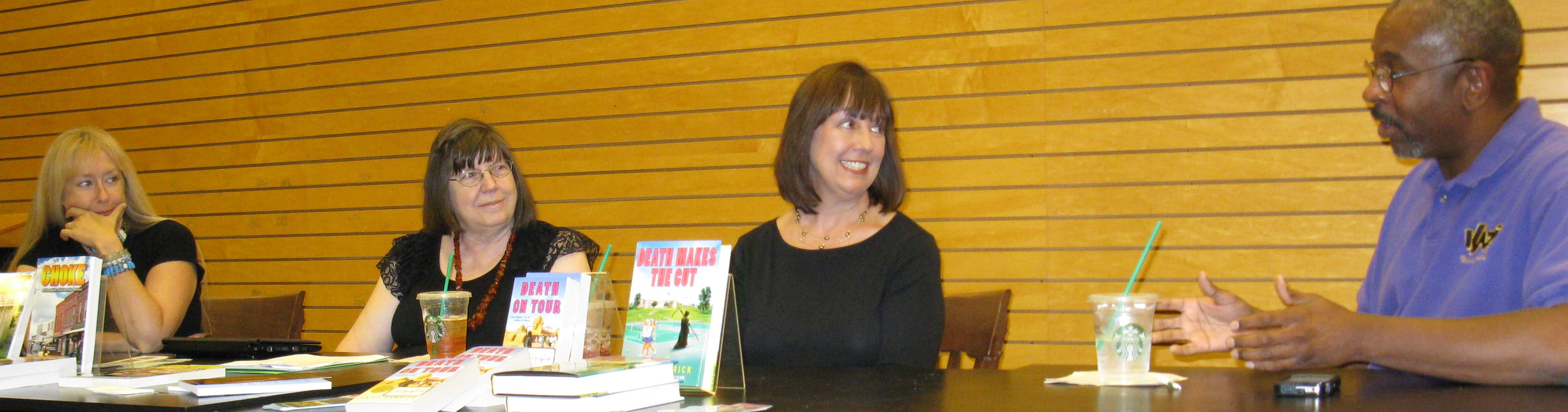
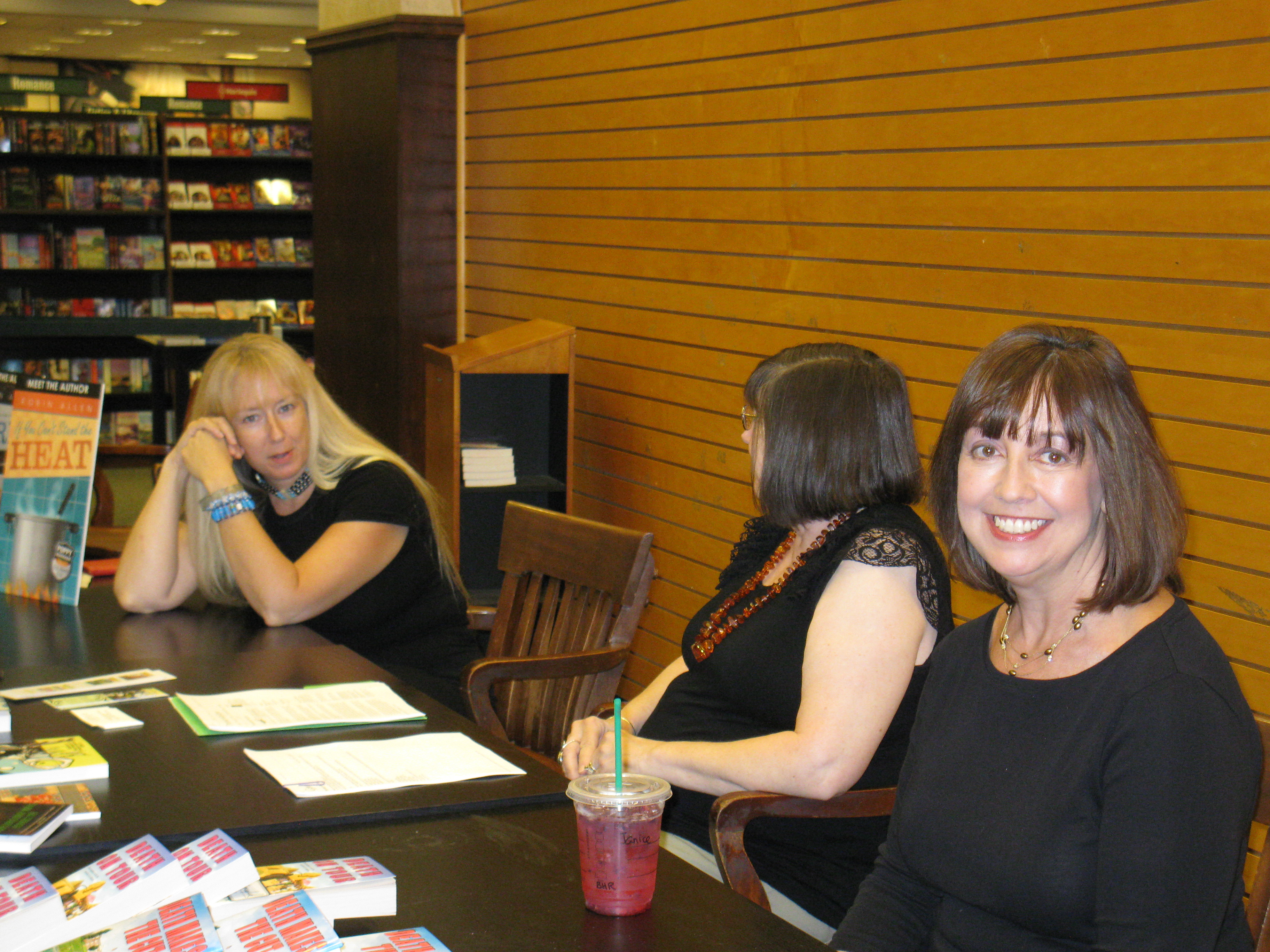
L-R: Robin Allen, Kaye George, Janice Hamrick, Hopeton Hay
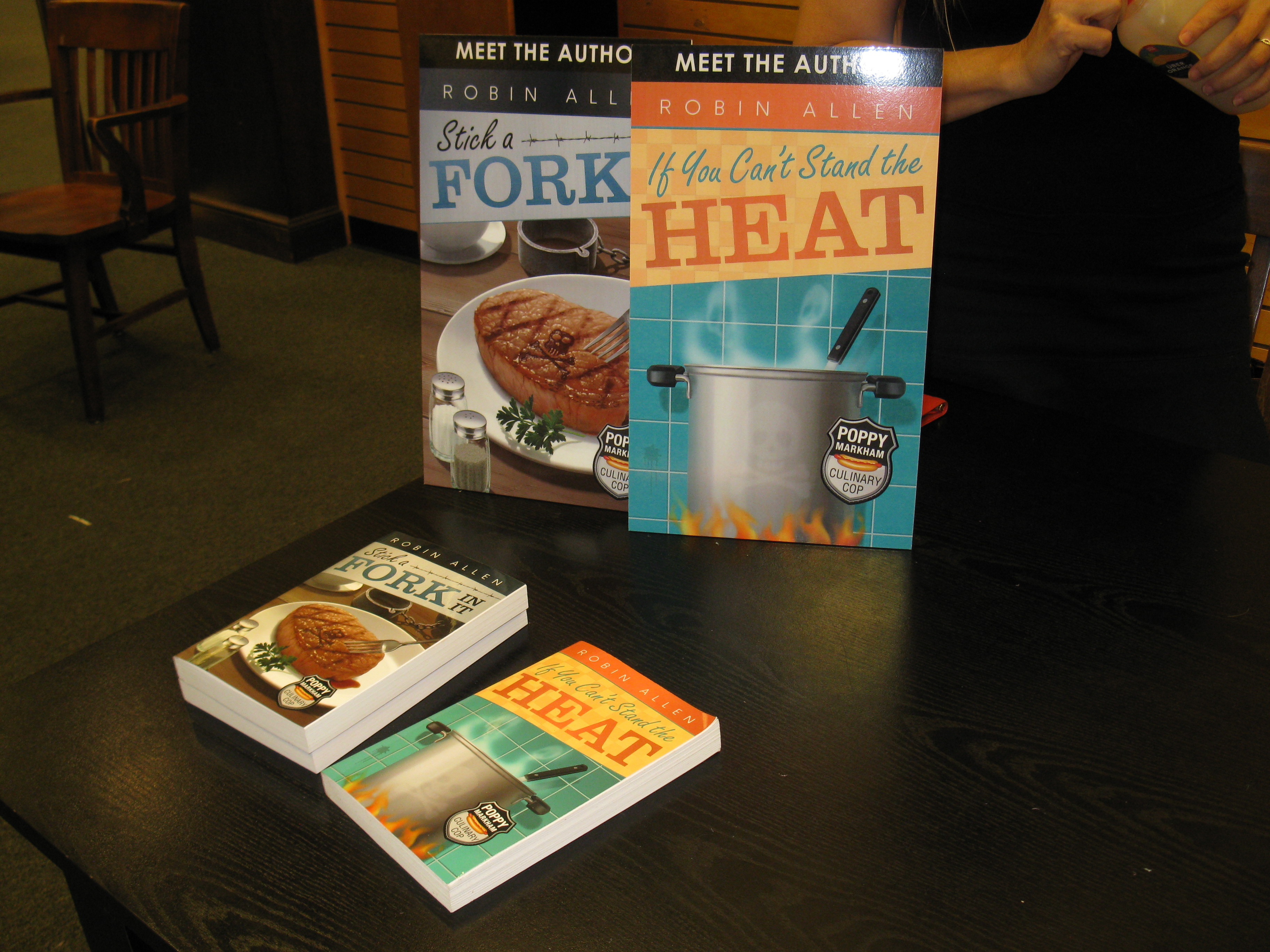
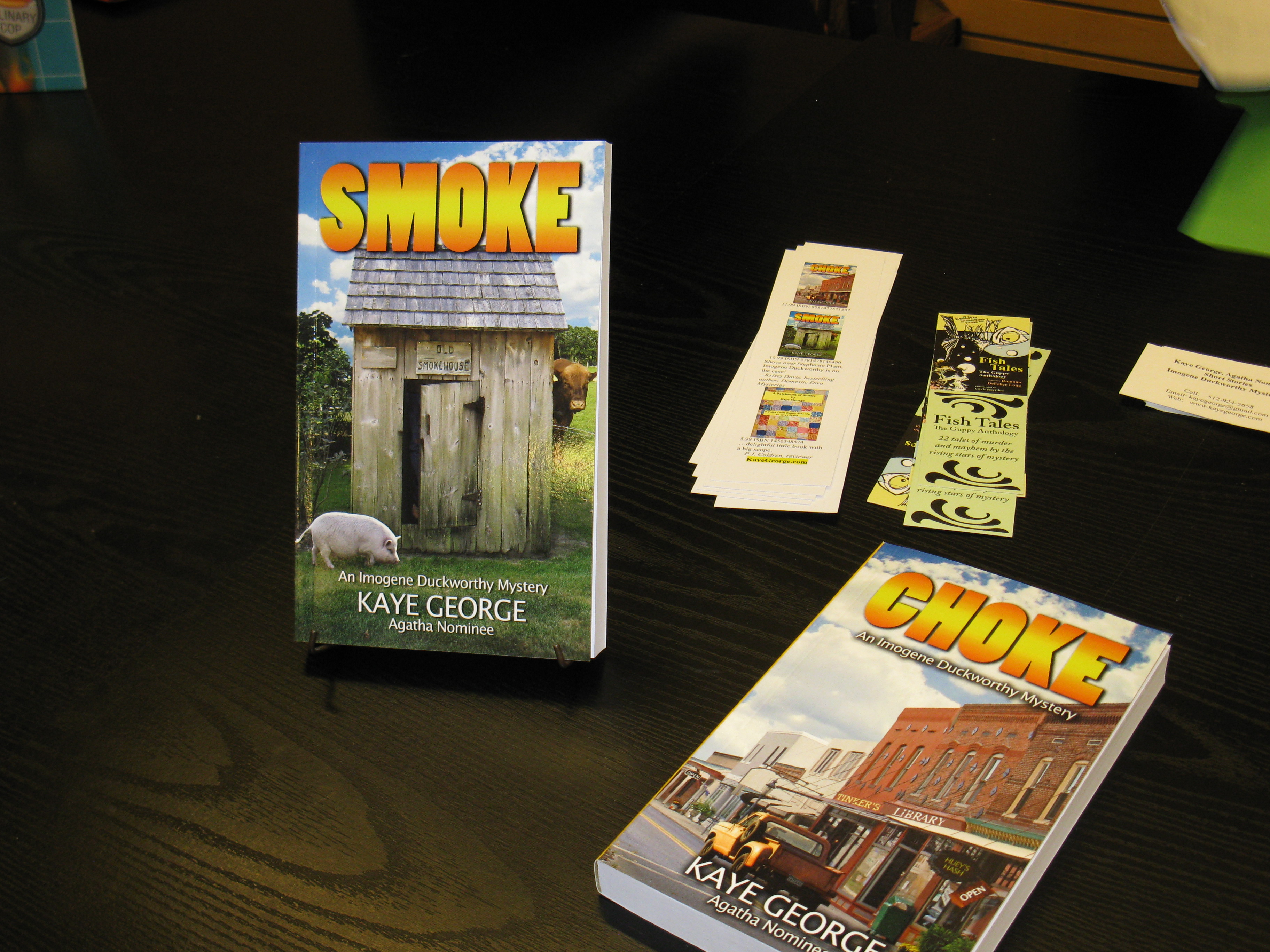
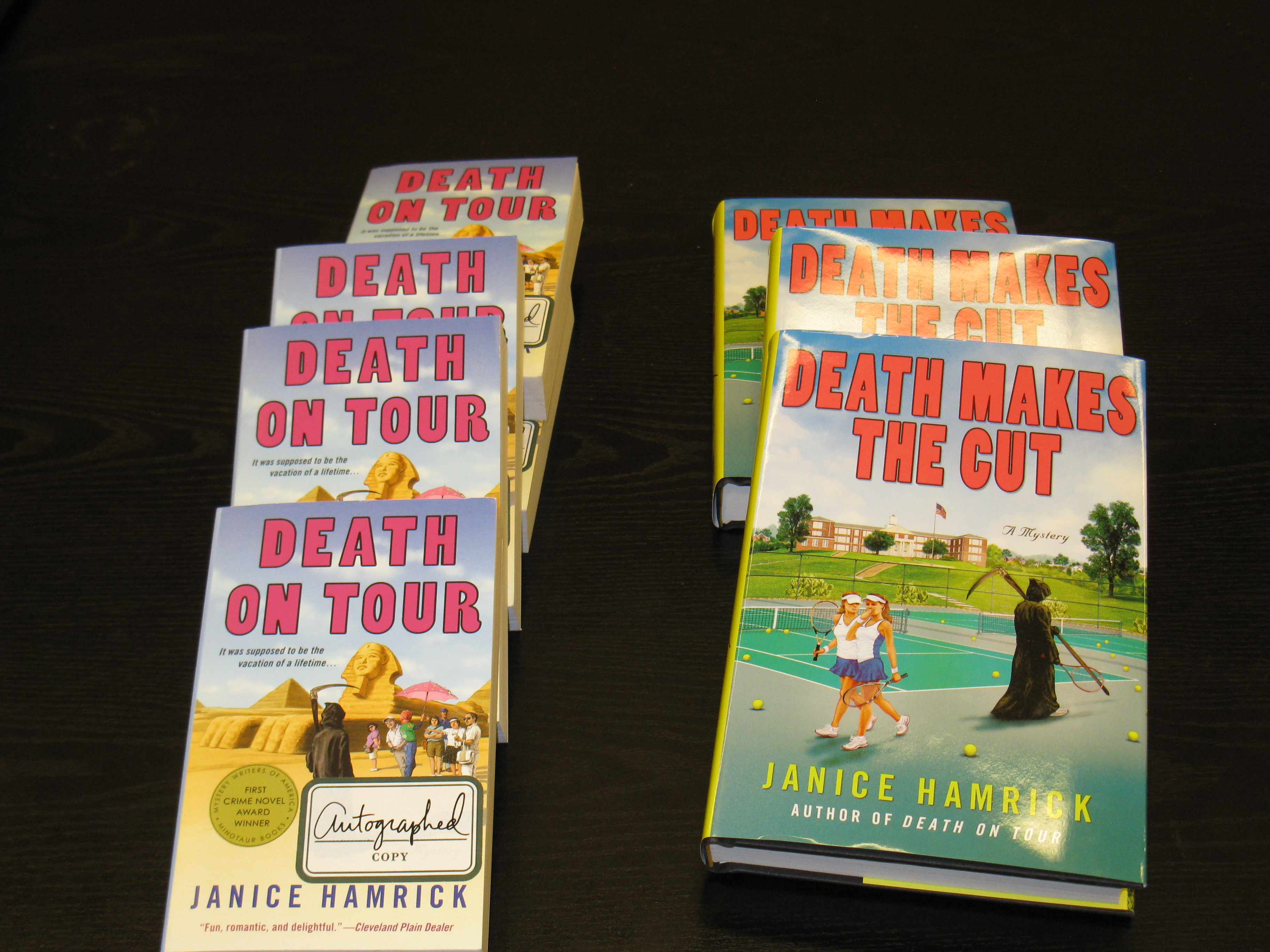
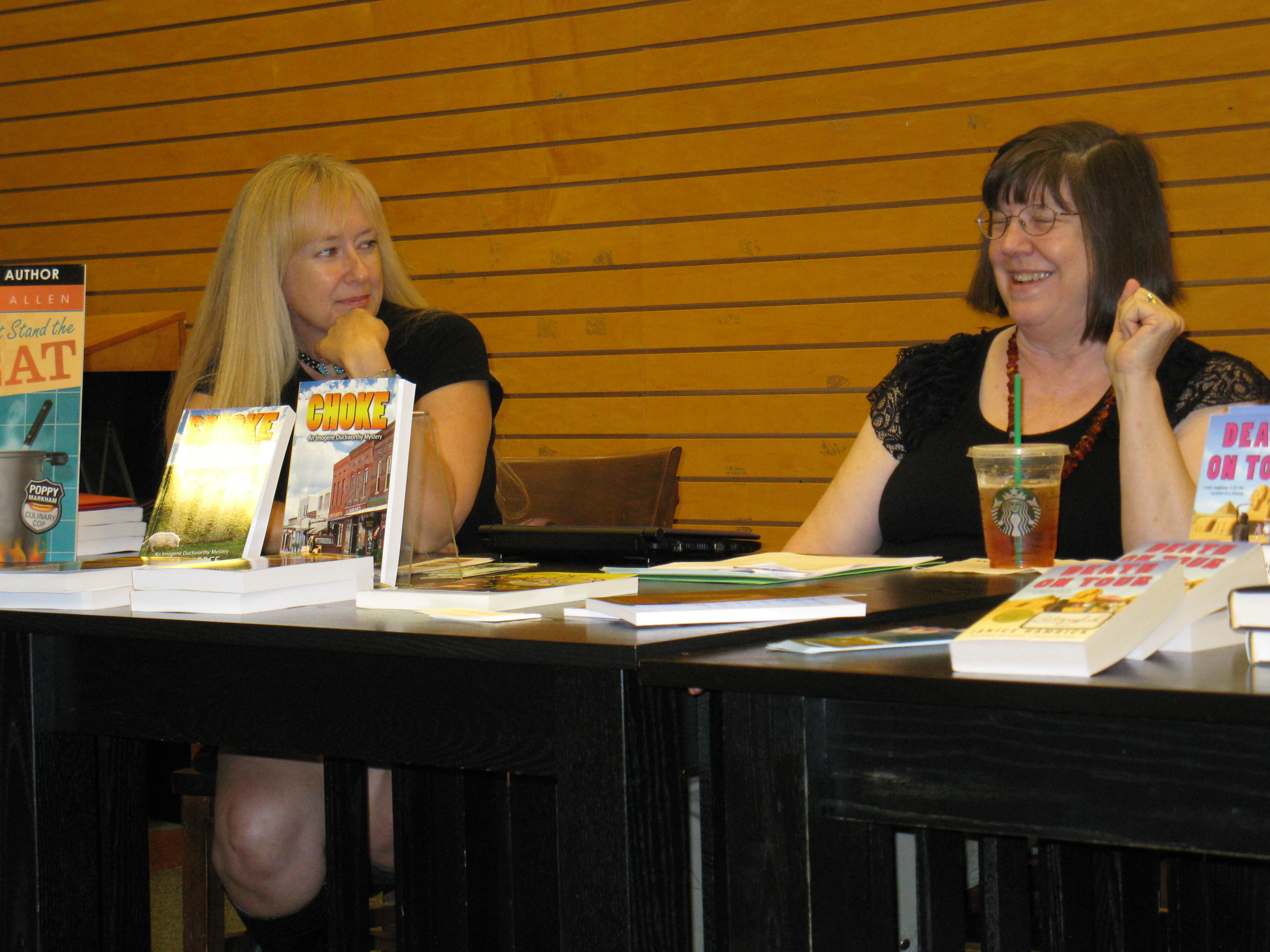
Sunday’s Sisters in Crime Heart of Texas Chapter presented a New Authors panel: Robin Allen (If You Can’t Stand the Heat: Stick a Fork in It), Kaye George (Choke; Smoke), and Janice Hamrick (Death on Tour; Death Makes the Cut). Hopeton Hay, host of KAZI Book Review, served as moderator.
Here, listed in no particular order and attributed to no particular panelist, are the tips I gleaned from the discussion:
If you don’t love a character, get him out of your manuscript.
Characters don’t always behave.
Publishing the first book makes writing the second easier.
There is no one correct way to write a book.
Characters come to life during the writing, not during the outlining.
Write characters worthy of subplots; they will carry the book.
Writing is torture.
Writing is necessary for good mental health.
Sexual tension between characters is hard to sustain over time, but marriage ends things.
Publishers encourage authors to have a social media presence.
Publishers discourage authors from having a social media presence.
Publishers don’t market books.
Authors must actively market in order to sell books.
Without limitations on time, it’s easy to screw around all day.
Agents don’t know everything.
Plot in advance but be willing to change the plan.
Writers who pants successfully have a lot of the plot in their heads.
Not everyone needs to write daily.
Sometimes a character disappears without telling the writer where he’s gone.
Writing a novel requires large blocks of time.
Writing a novel can be done in twenty-minute segments.
Experience makes a difference.
Establish a writing calendar.
An excellent manuscript doesn’t ensure publication.
Promotional photo of Tallulah Bankhead. (Photo credit: Wikipedia)
I owe A Round of Words in 80 Days (ROW80) another Wednesday check-in. Fortunately, I finally have something significant to report.
My original goals were to sleep (get to bed before midnight, I believe); eat well (get off the white stuff, processed foods, added salt, sweeteners); and show up at critique meetings with something to be critiqued (in other words, write).
Before I discuss progress, I’ll note that Austin Mystery Writers (AMW) is alive and well. Several members have been on hiatus, dealing with other projects (such as work), another can’t attend regularly (again, work), and this week our Grand Pooh-Bah moved a hundred miles to the north. Only two non-Pooh Bahs remained to stay the course, and we considered four eyes insufficient to ferret out the flaws in our respective manuscripts.
Last night, however, concern vanished. Two new members joined us, a third has promised to drop in next week, and two others have listed themselves as maybes.
American writer Dorothy Parker (1893-1967) (Photo credit: Wikipedia)
Being in a critique has been a good experience for me. In addition to ideas and advice, I’ve received encouragement and support for my writing and for my personal life. My partners have helped me over some rough spots in the past couple of years.
I’ve also learned a lot. Since we’ve been together, one partner has published a novel and has more in line for publication. Two others have completed manuscripts. While in one sense I’ve been stalled–scrambling down bunny trails, trying to get my plot under control–I’ve learned about the business of writing.
As to my own WIP: Pieces continue to fall into place. Listening to a presentation at the Austin Sisters in Crime meeting last Sunday, I had a brainstorm–a detail that would make a central character’s motivation much more credible. I flipped to the next page in my notebook and scribbled it down. I’ve also had another idea about reframing the novel to update it a bit. When I realized that Molly hadn’t once, in nearly three hundred pages, gone online, I pulled out Chapter One and inserted Internet.
Today I retyped Chapter One. The experts say not to do that–especially considering the number of times I’ve rewritten it, trying to get the foundation right–but I’m not revising so much as remembering. It’s been through many incarnations, and typing requires me to read more closely than I would if only my eyes were involved. I’ll continue this process for three or four more chapters, inserting new segments where appropriate (I hope!). Projected changes add originality. They give Audrey Ann, a minor character, more opportunity for mischief-making. Audrey Ann is a hoot, and I look forward to spending more time with her.
(One of my critique partners suggested Audrey Ann would make a good victim, but she’s too much fun to kill. Very much like my first intended victim, whom I couldn’t bring myself to knock off. If this becomes a trend, I’m in big trouble.)
I’ve added a progress meter to the sidebar on the left. Five percent represents progress on the current draft–in other words, what I retyped today. I’ve been working on this project, and talking and writing about it, for a long time. I don’t want to give the impression that I’ve eked out just four thousand words.
Now, as to my plan for eating real food: Sometimes I have and sometimes I haven’t. I have, however, dropped nineteen pounds since the first of the year, so I claim at least modified success.
(Who am I trying to kid? I rock.)
Regarding sleep: It’s after 1:00 a.m. No excuses.
One last thing about Austin Mystery Writers: When the other left-behind critique partner mentioned we might need to put several of the coffee shop’s tables together to handle the potentially large turnout, it occurred to me that if we works things right, AMW could become the Austin equivalent of the Algonquin Hotel’s Round Table. A heady thought. Critique partner said I could be Dorothy Parker. She wants to be Tallulah Bankhead. I wish I could be the glamorous one, but with my evil tongue, Dorothy P. is right down my alley. More’s the pity. I’ll try to be nice.
Question: If you combined Lucille Ball with Inspector Clouseau, what would you get?
Answer: Imogene Duckworthy, amateur PI and main character of Kaye George’s new mystery, CHOKE.
Immy is a delight–the 22-year-old unwed mother of 3-year-old Nancy Drew Duckworthy (Drew), she lives with her retired-librarian mother, Hortense, in Saltlick, Texas; slings hash at her Uncle Huey’s cafe; and wants with all her heart to be a detective like her “dead sainted father.”
When Immy up and quits her job (Huey wants her to work double shifts again), and then explains her sudden unemployment by telling Hortense that Huey pinched her bottom (well, he DID pinch the other waitress’s bottom), Hortense heads to the cafe to give Huey what-for. Then Huey is murdered, the police take Hortense to the station, and Immy has her very first case. Guided by the Moron’s Compleat PI Guidebook, she sets out to find the perp.
The Moron’s Compleat PI Guidebook says nothing about staging a jailbreak, holing up in a Cowtail motel, or color-coding her list of suspects. But it does mention disguises, just what Immy needs to investigate on her home turf. An outfit that combines “Buns of Foam” with “Boobs and Belly,” however, leaves the amateur PI in need of the Jaws of Life, and the reader in stitches.
Kaye George’s CHOKE is a different kind of mystery. In most detective novels, the reader watches the sleuth-protagonist work his way through chapter after chapter, picking up clues and discarding red herrings, until he finally comes up with the answer. In CHOKE, however, the reader picks up clues while watching the gullible, ultra-literal, but enthusiastic Immy charge through to the solution while remaining blissfully clueless.
With CHOKE, first-timer Kaye George has accomplished something special: an original mystery, an original Immy, and a novel that leaves readers laughing and wanting more.
FTC Disclaimer: No one gave me this book. I bought it with my own money. Kaye George is one of my critique partners, but our relationship did not influence my review. I did not tell her how to write CHOKE, and she did not tell me what to write in my review. In fact, I never even critiqued the manuscript, and my introduction to the novel came when my copy arrived in the mail. I wish I had critiqued it, because I would like to take credit for “Boobs and Belly,” and the part about the letter opener, and the chicken. But the whole thing was Kaye’s idea. Even the orange pickup on the cover.
I received a phone call last week from Lucia Zimmitti, an editor who spoke at the Texas Trail Writers Roundup this spring. In mid-July, I’d sent her the first five pages of my manuscript. She reported that she’d read them and that they’re ready for query. She said she believes agents who read them will ask to see more.
Music to my ears. I was reluctant to tell her how long I’ve worked and how many revisions it’s taken to get those five pages agent-ready. Lucia said not to worry about time, that some novels are ten years in the making. Actually, it’s the ten years part that worries me, but I know it’s going to take as long as it takes.
After discussing specifics, Lucia asked how much more I have.
A pile of pages. A stack of scenes. Words, words, words, but not in order.
I described where I am in the process and told her how I work. She said not to worry.
When I hung up the phone, I was tempted to dance around the apartment. But I didn’t. My feeling of ecstasy wasn’t pure. It was an alloy, producing calm rather than chaos.
It’s good when people like what I’ve written. But having a professional say those pages show promise is more than good. It’s validating. It means the time, the effort, the embarrassing, sick-making drafts aren’t wasted.
It means that when people ask what I do, I can drop the self-mocking half-smile, the apologetic, “I’m working on a novel. But of course, EVerybody in Austin is working on a NOvel.” I can look them in the eye and say, “I write.” I can remove the quotation marks from “novel.”
I’m tempted here to insert the usual disclaimer: It’s only five pages. I haven’t completed the manuscript. The five present-perfect are future-imperfect–because, with all the twists and turns of drafting, they will have to be tweaked.
But I won’t apologize. Hearing Lucia’s assessment of the intro to Chapter One changed how I perceive both my writing and myself. I’m no longer a dilettante. I’m a writer. I have goals to meet, a manuscript to finish, and no room for excuses.
Figurative language isn’t my forte, but to clarify, I’ll give it a shot.
It’s like when I was ten years old and my Uncle Donald took me out to a pasture in his beat-up 1950 Chevy pickup and taught me to drive. I started out popping the clutch (“Let it out sloooow.“), grinding the gears (“Put in the CLUTCH!”), killing the engine (“Give it some GAS!”), turning the key, popping the clutch, jolting the passenger, bouncing across old furrows. But after a few lessons I got the hang of it and was driving along the turn row, changing gears without incident.
A couple of months later, my father put me behind the wheel of a ’56 Bel Air, which had fewer gears and no clutch at all, and let me drive home from the farm (“Don’t rush up to the stop sign, eeease up to it.”) In due time, I got my license and soon was cruising down the freeway, feeling like a driver.
After I’d invested time, energy, and angst wrestling with the clutch and grinding the gears, finally holding that license brought not only satisfaction but also a feeling of maturity.
The future won’t be a joyride. There will be (here comes the disclaimer) traffic jams and detours and wrong turns down one-way streets. And worse. Like the time I was on my way to the university and my car slid on a patch of once-in-a-decade Texas ice and landed in the ditch facing the wrong direction, right across from my father’s workplace. (“I told you to go slow.” “I DID. I was just doing 50.”)
When Lucia and I finished speaking, it was as if she’d handed me a license to write. I felt settled. Serene. Competent. Equipped for the task at hand.
Cyd Charisse, move over. I feel a dance coming on.
**********
Lucia Zimmitti is president and founder of Manuscript Rx.
P.S. I did not try to perfect the first five pages before moving on. I obsess and compulse, but not to that extent.
Little do ye know your own blessedness; for to travel hopefully is a better thing than to arrive, and the true success is to labour. ~ Robert Louis Stevenson
In April, I received the Silver Lining Award from writer and freelance editor Helen Ginger. Her blog, Straight from Hel, offers advice and information about writing and writers, books, publishing–there’s “God’s plenty” here for the writer, aspiring or experienced. Helen posts daily, and she also contributes to The Blood-Red Pencil, another blog I follow.
The Silver Lining Award was a surprise. I couldn’t wait to display it on to write is to write is to write and to pass it on to other bloggers.
But I ran into an obstacle. I didn’t know how to display it. I knew to use a widget, but how to grab or capture or whatever to get the proper code to put into that widget was outside my realm of experience. I knew I had to get the image to my computer. I knew I wasn’t supposed to link to the image on Helen’s blog. I knew I had to have its URL. Actually, all of this was inside my realm of experience, because I’d done something similar a couple of months before. I had just forgotten what and how.
The obvious thing to do in such a situation, after googling for instructions and increasing the confusion, is to ask for directions.
I don’t ask for directions. Anyone who has ever taken a road trip with me will vouch for that. When I get lost, I drive around until I find what I’m looking for. When lost in cyberspace, I click around.
So I clicked for a couple of hours. After engaging in mind-clearing activities, I clicked some more. I took a break and wrote a blog post about silver linings. I reminded myself this was not rocket science; it was a simple procedure. The next day, I clicked again. After skipping a few days, I clicked some more. I went to a conference. I spent a week recovering from the conference. I clicked. I fell into the Slough of Despond and decided I would never write again. I crawled out and decided I would. The entire time, both clicking and non-clicking, I was straining to dredge up the technical details of that brief moment of competency only sixty days past.
And all the while, the still, small voice was whispering, “Ask.”
But the truth is–and now I’m exposing my darkest secret–I like clicking around. I have such a feeling of accomplishment when things fall into place. I bump into all kinds of serendipities along the way. And I’m too ornery to give up. I can’t help that last thing. It’s genetic.
Sometimes it’s also a failing. I’m working on it.
Anyway, I finally discovered how to display the Silver Lining Award on my blog. Laboring along the road to discovery was an accomplishment. It was, in fact, a silver lining.
To Helen, a belated public thanks for giving me the this award. I’m supposed to pass it on to five other people. I nominate the following bloggers for the Silver Lining Award:
Our weekly movie on DVD was about John, a young editor sent to Italy to persuade Robert, a famous writer, to end a twenty-year hiatus and start writing again. It’s a sweet story with all the necessary ingredients, including John’s falling in love with Robert’s daughter, Maria, and Robert’s encouraging John to leave publishing and concentrate on his own writing.
There was also the requisite hitch in the romance: Maria told John that, although she loved him, she couldn’t go to London with him because she didn’t belong there. And she didn’t show up at the railroad station to tell John goodbye.
That’s when I perked up. It appeared there might be a realistic ending. John wasn’t yet a published writer, and he wasn’t a risk-taker. That kind of person doesn’t throw away a stable career for a beautiful girl and a typewriter.
But when it comes to romance, movie makers don’t like risk either. Boy-meets-girl rarely turns into girl-tells-boy-she-won’t-go-with-him-and-boy-leaves-anyway. Writers share the characteristic. Even Charles Dickens couldn’t end Great Expectations as he wanted. Advised that the public wouldn’t be pleased to see Pip and Estella go their separate ways, he revised asap. Nobody wants the audience to go away mad.
Understanding caution, I doubted the chance of a realistic conclusion. John was still at the station. There was plenty of time for Maria to show up with her suitcase. There was also the possibility that when John boarded the train, he’d find Maria waiting for him.
I watched. John got on the train, put his suitcase on the overhead rack, and sat down. An old woman carrying a birdcage sat down across from him. No Maria. The train pulled out of the station.
They’ve done it, I thought.
Then John spoke to the old lady, and the old lady spoke to John, and a light appeared in John’s eyes. He looked out the window and saw Maria on horseback, loping alongside the train. She held the reins of a second horse, its saddle empty. John pulled the emergency cord, jumped off the train, mounted the riderless horse, and loped back to the village with the beautiful girl to resume typing.
It was lovely.
And I spoiled it by shouting, “Don’t forget your suitcase!”
That exclamation exemplifies the difference between me and the scriptwriter. I worry about suitcases. I worry about paychecks. I worry about horses. My father didn’t let me run a horse on unfamiliar terrain. He said the horse might step in a hole and break a leg, or throw me off. He didn’t think much of horses in parades either, because they might slip on the pavement, especially if they were shod. When I see a mounted sheriff’s posse in the Tournament of Roses Parade, I cringe.
Lest anyone blame my father for my nitpicking, I offer another example to show I didn’t need instruction: Every time I thought about running away from home (which I considered once a week the year I was four), I got hung up on one detail: I didn’t know how to work a can opener.
Anyway, when it comes to stories, I have a handicap. I see the holes, the lapses, the flimsy, the far-fetched. I never believed Carson Drew really let Nancy leave home by herself. After the time she went detecting and ended up locked in the back of that truck, she was either grounded or sent to a convent. And when I see a man run away from his suitcase, my suspended disbelief goes plop.
That’s a shame. I like happy endings. If John hadn’t stayed in Italy with Maria, I’d have been sad. I wanted ET to stay with Elliot, and Rhett to stay with Scarlett, and Gilly Hopkins to go home to Trotter, and all the terrorists and the hostages in Bel Canto to live in harmony forever.
But life doesn’t work like that. Nor do all writers. Some of them understand about suitcases.
Still, if the writer who conceived the story of John and Maria wasn’t thinking about me, he was thinking about the rest of his audience. He wrote for people who want romance, and he gave them the appropriate ending: boy got girl, girl got boy, horses cantered off into the sunset. Everyone was happy.
Including me.
Because, as David pointed out, John could always buy another toothbrush.

 If you read the previous post, reblogged from Gale Albright’s Visions and Revisions, you know mystery novelist Kaye George attended the Austin Mystery Writers meeting last week. Kaye, who for a number of years served as AMW’s Grand Pooh-Bah, moved to Tennessee last winter, leaving Gale and me forsaken and forlorn.








 M. K. Waller