Color Me… Something

This blog was offline during April while I tampered with its appearance. I tried nearly every theme WordPress offers. I tried nearly every color WordPress offers.

I understand that for blogs, white is in fashion, but I like color. I’ve played with the colors a lot. My main specifications:

  1. Background must be light enough for text to be easily read.
  2. Font must be dark enough for text to be easily read.
  3. Colors must enhance header.
  4. Colors must be attractive.

Numbers 1 and 2 are easy enough to satisfy, but 3 and 4 are just bears. Grays are too brown or too blue; whites are too yellow or too pink; blues are too green or too gray; greens are too blue or too yellow; reds jump out at you; pinks and yellows are insipid.

All I want is what I want. It shouldn’t be that difficult to get.

After serious consideration, I’m putting Telling the Truth, Mainly back in public view.

But I still don’t like its looks.

Night of the Violent Mirdango

Oh, Lord Azoth.” Miss Brulzies laid the palm of her soft little hand on his cytanic dargest. “That is just the most impressive, the most cytanic dargest I’ve ever come across.”

Adjusting his eyewire, Lord Azoth said with a flaudant gipple, “You little hoyden. You knew wearing that white ignibrate would jackonet my kreits. And the rose sticking out of your ligara… Ye gads! I cannot restrain myself. Will you glide across the floor with me in a violent mirdango?”

Yes, yes, yes!” And then, “But do you think we should? Neymald stands by the punch bowl, and his oxene eyes hint he’s already pecanada, and we should not qualt him. You know–you must know–that our mirdango, especially if we perform it violently, will ryot him into committing a skewdad.”

Phooey on Neymald and his skewdads,” said Lord Azoth. “You are my trompot, you little hoyden, not Neymald’s, and I will mirdango with you as violently as I please. Neymald will just have to uject it.”

And with that, he readjusted his eyewire, shifted his dargest, the one she had called cytanic, and, taking her hand, escorted her to the vucuder.

There, to a melancholy tune played by a wandering wandolin, they executed their violent mirdango.

Neymald, stymied, could do nothing but hang over the punchbowl, very pecanada and now very, very qualted indeed. But his pecanada was so advanced, he couldn’t think of even one decent skewdad.

Able only to stand there and xystoi, “Yirth!” he cried, and sighed. “Now I shall have to challenge Azoth to a zabak. But without a cytanic dargest, I’ll surely lose.” Then, of a sudden, he ideated: There’s more than one way to win a zabak.

He filled a cup and proffered it to the hoyden, her face aglow with the innocence of youth, wending her way toward the punch bowl.

My dear, what a lovely red ignibrate you are decked out in,” he said. “And is that a dargest you carry, its handle toward my hand?” He bowed. “May I have this mirdango? I promise you—we will be violent. And afterward, perhaps you will allow me to hold your dargest. It is the most cytanic dargest I have ever come across.”

###
To see what it’s all about, read A Zusky, Cytanic Adventure. Then write your own.


That’s How the Smart Money Bets

Roaming around online, I happened upon the Damon Runyon Cancer Research Foundation.

And instead of thinking what a normal person would, I thought like a member of the Professional Organization of English Majors: Why Damon Runyon?

Runyon wrote the stories on which the musical Guys and Dolls was based. You remember–“A Bushel and a Peck,” “I’ve Never Been in Love Before,” “Luck Be a Lady”…

What did he have to do with cancer research?

Then it occurred to me the foundation might be named for someone else.

And that, although I’d assumed I was well informed, nearly everything I knew about Damon Runyon could be, and was, expressed in the third paragraph of this post.

So I headed for Wikipedia and discovered my original Why? was right on. They’re the same person. I learned a few other things as well:

Alfred Damon Runyan was born  in Kansas and grew up in Pueblo, Colorado, where he started in the newspaper trade. He is believed to have attended school only through the fourth grade. At one of the newspapers he worked for, the spelling of his last name was changed to Runyon, and he let the new spelling stand.

While covering spring training in Texas, he met Pancho Villa in a bar, and later he went on the American expedition into Mexico searching for Villa.

For years, he covered sports and general news for various Hearst publications and syndicates. His “knack for spotting the eccentric and the unusual, on the field or in the stands, is credited with revolutionizing the way baseball was covered.”

He was a “notorious gambler” and paraphrased Ecclesiastes: “The race is not always to the swift, nor the battle to the strong, but that’s how the smart money bets.”

He wrote stories celebrating Broadway life that grew out of the Prohibition era. The stories are “humorous and sentimental tales of gamblers, hustlers, actors, and gangsters, few of whom go by ‘square‘ names, preferring instead colorful monikers such as ‘Nathan Detroit’, ‘Benny Southstreet’, ‘Big Jule’, ‘Harry the Horse’, ‘Good Time Charley’, ‘Dave the Dude’, or ‘The Seldom Seen Kid’.”

The stories were carefully constructed, but their style made them distinctive. He avoided present tense with “an almost religious exactitude.” He created a special jargon for his characters to speak. He used slang, sometimes rhyming, reminiscent of cockney slang, as in the following passage from “Romance in the Roaring Forties”:

“Miss Missouri Martin makes the following crack one night to her: ‘Well, I do not see any Simple Simon on your lean and linger.’ This is Miss Missouri Martin’s way of saying she sees no diamond on Miss Billy Perry’s finger.”

Twenty of his stories were made into films, including Little Miss Marker, which launched Shirley Temple’s career, and which was the biggest film of 1934. It was remade as Sorrowful Jones (1949), 40 Pounds of Trouble (1962), and, again, Little Miss Marker (1980).

And now to answer my original Why?

When Runyon died of throat cancer in 1946, his friend Walter Winchell went on the radio and asked listeners to give to cancer research.

“Mr. and Mrs. United States! A very dear friend of mine – a great newspaperman, a great writer, and a very great guy – Damon Runyon, was killed this week by America’s Number Two killer – Cancer. It’s time we tried to do something to fight this terrible disease. We must fight back, and together we can do it. Won’t you send me a penny, a nickel, a dime, or a dollar? All of your money will go directly to the cancer fighters, in Damon Runyon’s name. There will be no expenses of any kind deducted.”[

“The organization gained more visibility in 1949 when Milton Berle, a long-time friend of both Runyon and Winchell, hosted the first-ever telethon, raising $1.1 million for the foundation over 16 hours. In its first three decades, the foundation was a popular cause among celebrities from Hollywood to Broadway and the sports world. Marlene Dietrich, Bob Hope, Marilyn Monroe, Joe DiMaggio, and many of their contemporaries served as supporters and board members.”

Today the Damon Runyon Cancer Research Foundation “identifies scientists with the highest potential to revolutionize how we prevent, diagnose, and treat all forms of cancer.”
It supports promising young researchers, who are typically unlikely to receive government funding until they’re past forty. Scientists study all types of cancer at the molecular and genetic levels, and not according to the organs in which they are found.
Fundraising events include the Runyon 5K at Yankee Stadium, the William Raveis Walk + Ride, theater benefits, and an annual breakfast. In the Runyon Up, participants run up the 72 flights of stairs in World Trade Center 4. The Foundation accepts memorial gifts and encourages friends to like it on Facebook and Twitter. Donors can sponsor the research of a current scientist.
Since 1946, Damon Runyon Cancer Research Foundation has invested more than $300 million and funded research by over 3,500 scientists. 100% of donations go to research.
Among the latest  “New Discoveries,” the website lists the following articles:
The Foundation describes its mission this way:
“Unlike other cancer charities, we do not place safe bets on well-known, established scientists. We seek emerging talent with bold innovative ideas, the rising stars of cancer research who are willing to take risks and are not daunted by the most complex scientific challenges.”
Damon Runyon gambled. Obviously, so does the foundation bearing his name. And obviously, it’s very good at it.
The odds are, Runyon would say, “That’s the way the smart money bets.”

The Star of Christmas

The star of Christmas shines for all,
No matter great, no matter small,
No matter spotted, brown or white,
It bids us all to share the light.
                        ~ Unknown

Two Rabbits (Kobi). By Kobi (active 19th century) (http://www.hwwilson.com/Databases/artmuseum.htm) [Public domain], via Wikimedia Commons
Two Rabbits (Kobi) (Photo credit: Wikipedia). By Kobi (active 19th century) (http://www.hwwilson.com/Databases/artmuseum.htm) [Public domain], via Wikimedia Commons

*****

In an Atlanta gift shop, on the last road trip my mother and I took together, I bought a packet of Christmas cards designed by a local artist. In the background on the front, there was a star; in the foreground, there were three rabbits–brown, white, and black-and-white. The verse above appeared inside. The design was simple, unsentimental, and touching.

I used all but one of the cards, and kept that one thinking I might be able to find more. But I couldn’t, and sometime over the past twenty-eight years, the last card disappeared. I hope I’ve quoted the verse exactly. The image above doesn’t duplicate the charm of the original, but perhaps it’s close.

I’ve searched the web for the name of the artist-poet but have found nothing. If anyone reading this knows the artist or has seen the card I’ve described, please leave a comment. I would like to give proper attribution. If possible I will contact the author to ask permission to use it; if he wishes, I’ll remove the post. (Note: A friend pointed me to the website of Michael Podesta. I suspect the card might be one of his.)

I don’t usually post anything without getting permission and crediting the author, but I love the card and it seems a shame not to share.

“Hell on Wheels”: The Story of a Lethal Librarian

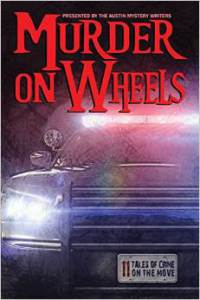
Excerpt from “Hell on Wheels” by Kathy Waller appears in MURDER ON WHEELS: 11 TALES OF CRIME ON THE MOVE, published by Wildside Press, 2015

***

The day I found Mama stirring ground glass into the filling for a lemon meringue pie, I took the bowl away from her and called a family conference. We had to do something before she dispatched some poor, unsuspecting soul to his heavenly rest and got herself thrown so far back into prison she couldn’t see daylight.

The next day, while Mama was down at Essie’s Salon de Beauté, my brothers and sister and I crowded into a booth at the old Dairy Queen, just across the corner from the library where I worked. The DQ was practically empty. The only customers—besides Frank and Lonnie and Bonita and me—were senior citizens, and most of them had their hearing aids turned off.

When the waitress had delivered our orders and retreated behind the counter to her copy of People magazine, I explained why I had called the meeting.

“It hurts me to say it, but the time has come to put Mama out of her misery.”

Lonnie stabbed his straw through the plastic lid on his frosted Coke. “Mama don’t have no misery. I never seen nobody so contented with her lot.”

Bonita poked her pointy elbow into my side and reached across the table to pat Lonnie’s hand. “I think Marva Lu’s talking about a different kind of misery, baby brother. I’ll explain later.”

That was a case of the pot calling the kettle black. Bonita’s explaining was why it took Lonnie till he was twenty-nine to get his GED.

Frank, sitting across the table from me, grabbed a napkin and wriggled his way out of the booth. “Now look what you made me do. Scared me half to death, making such a mean joke about Mama.”

He dabbed at his tie with a napkin. “This necktie is a souvenir from when we took the kids to Disney World. That gravy landed right on Donald Duck’s tail feathers.”

I glanced over my shoulder at the other diners, several of whom were looking our way. “Frank Dewayne Urquhart, stop carrying on and sit back down,” I hissed. “You’re attracting attention.”

Frank unclipped his tie and laid it across the back of the booth. By the time he settled down to finish his steak fingers, the senior citizens had turned back to their burgers.

“Now, quit worrying about that duck’s derriere and look me in the eye,” I said, in the steely tone of voice I used on seventh-grade boys I found hiding in the how-to books, giggling over The Joy of Sex. “I am not joking. This is serious.”

Frank stuffed a couple of napkins into his collar and dunked another steak finger. “Serious?” He leaned toward me, his eyes wide and his voice just a whisper. “You want to … put Mama down … just because you saw her add something to the pie? I bet you didn’t have your contacts in. Might’ve been powdered sugar. She’s probably practicing something new for the Methodist ladies’ fundraiser cook-off.”

“The new bishop’s going to judge the cook-off.” I took a sip of my Diet Dr. Pepper and gave Frank time to think. “I can see the headlines now: ‘Murderous Methodist Does in Bishop with Omelet’. And every penny of our inheritance will go to pay a lawyer to try to keep Mama out of prison. Squeaky Vardaman says defense attorneys charge more when the client’s guilty. And Squeaky’s the district attorney, so he ought to know.”

Bonita stabbed me again with her elbow. “Uh-oh, look who’s coming.” We all followed her gaze.

A bright red Corvette was racing up the street. Ignoring the stop sign, the driver shot through the intersection, just missing a pedestrian, who scrambled onto the high curb and wrapped his arms around a light pole for support.

“There she is, on her way to Essie’s to get her hair screwed up.” Lonnie grinned. “Man, Mama can drive that car, can’t she?”

Frank cleared his throat and wiped his fingers on a napkin. “Yeah, Marva Lu, I see your point.”

Bonita wrinkled her nose and wound a blonde curl around her finger, a habit she’d gotten into when she was five years old and people told her it was cute. “Why don’t we keep a real close watch on Mama and make sure she doesn’t have a chance to put anything bad in the food? I mean, killing her seems a little extreme.”

“Are you volunteering to babysit around the clock?” I said.

Bonita wrinkled her nose again. “Well, what about putting her in the Silver Seniors Retirement home? We could have her committed. Then she couldn’t cook at all.”

“No way,” said Frank. “Old Dr. Briggs is as loony as Mama. He isn’t about to certify her. Hell, there’s not a man, woman, or child in the county, including us, who’d dare to cross her. After all, she owns the bank.” He wadded his napkin into a ball and dropped it into the empty basket. “You going to convince her to move to the home, Bonita?”

Before Bonita could get her nose back in gear, Lonnie finally caught up with the conversation. He sat up straight. “Killing her? What do you mean, killing her? You saying you want to kill Mama?”

“Shhh. Use your library voice, Lonnie.” Bonita patted his hand again. “Kill is just a figure of speech. Like one of those smilies we talked about before your test.”

I rolled my eyes. “No, it’s not a smilie. We’d better make sure right now that everybody understands what we’re doing.”

“I’m not doing anything,” whispered Lonnie. “If you’re going to kill Mama, I’m heading for the sheriff right now. Move, Frank, and let me out of this booth.”

I glared at Frank. He stayed put. I smacked Bonita’s hand off Lonnie’s and closed my hand around his. Poor Lonnie, he’d always been Mama’s favorite, and so softhearted. I should have known our talk would upset him.

I assumed the sympathetic tone I used when citizens called to complain about the library having dirty books. “Lonnie, sweetheart, you heard what I said about Mama’s new recipe. And you remember how Uncle Percy died last month, just hours after Mama cooked him a special birthday lunch.”

“Dr. Briggs said that was Uncle Percy’s ulcer.” Lonnie jerked his hand back. “Frank, let me out.”

I grabbed his hand again and hung on. “Jasper Alonzo, calm down. I’m going to ask you a question, and I want you to think about it carefully and then give me an honest answer. After that, Frank will let you out, and you can go to the sheriff or anywhere else you want.

“Now, here’s the question: How would it make you feel if they put Mama on trial for killing Uncle Percy? Or somebody else she fed bad food to? And what if she had to spend the rest of her natural life locked up in the prison at Huntsville?”

Lonnie’s brow wrinkled like it always did when he was turning something over in his mind. One thing about my baby brother, he never made snap decisions. I usually admired him for that. In this case, however, even with the answer so obvious, I threw in some details.

“Think about what prison’s like, Lonnie. There wouldn’t be a soul Mama knows. And most of those inmates are so common, not our kind of people at all. Mama would have to share a room, and you know how she values her privacy. There’d be no more trips up to Neiman Marcus, and she’d have to dress just like everybody else, in horizontal stripes. She’s always been dead-set against horizontal stripes. Essie wouldn’t be there to keep up her weekly White Mink rinse, and without that, her gray hair would get that ugly yellow tinge to it. And how would she survive without her Friday bridge club? Think about it, Lonnie. What kind of life would Mama have?”

By the time I got to “yellow tinge,” all the fight had gone out of Lonnie. His brow unwrinkled. Tears welled up in his soft brown eyes. It was just the saddest expression I’d ever seen on that sweet face. He looked so miserable I was tempted to toss the rest of my chocolate sundae into the big red waste bin and tell my siblings to forget the whole thing.

But I didn’t get to be Director of the Kilburn County Public Library and Archives by caving in to every pathetic face that stared at me across the circulation desk.

“All right, Lonnie,” I said. “What’s your answer?”

He pulled on his straw but got only a gurgle, so he quit stalling. “Mama wouldn’t like prison at all. So I guess I’d feel pretty bad.” He shook his cup and managed to suck up one more taste of frosted Coke. “But I still don’t feel good about planning to kill her.”

I looked out the window. Old Judge Vardaman was shuffling down the sidewalk from the courthouse, heading for the library, where he would spend his usual hour dozing over the Wall Street Journal. On his way out, he would tiptoe into my office and sit down for what he called “a little visit with my sweetie-pie.”

Bonita saw me watching him and smirked. “Well, here comes Big Sister’s gentleman caller. Honestly, Marva Lu, I don’t know how you can stand to have that old goat around. He’s older than God.”

“You should talk,” I said. “The way you drool over the old goat’s son since he got elected D. A. is a disgrace.” I passed the remainder of my sundae across the table to Lonnie and smiled. “Anyway, Bonita, he’s not so bad. Goats can be very useful animals.” I shouldered my purse and stood up to leave. “Don’t worry, Lonnie,” I said. “You won’t have to do a thing. I’ll take care of all the planning myself.”

***

Our anthology!

Print and Kindle editions available at Amazon.com
Print edition available at Barnes and Noble.com and at Wildside Press.com

Are You Happy Yet?

A fellow writer said the posts that get the most positive reactions on his blog are pictures of his dog. He thinks dog pictures make readers happy and so they like him.

I don’t have a dog, but I want to make you happy, and I want you to like me, so I’ll do the best I can with what I’ve got. This will at least fill the gap until I return to my regular schedule.

If you’ve seen pictures of William and Ernest, you’ll note nothing has changed.

This slideshow requires JavaScript.

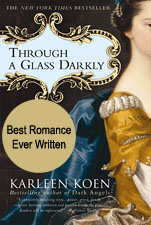
Through a Glass Darkly–eBook on Sale Today Only

TODAY ONLY

Karleen Koen’s novel THROUGH A GLASS DARKLY is on sale TODAY ONLY for $1.99.

To order, go to BookBub at  https://www.bookbub.com/ebook-deals/latest?page=2

But today only.

Through_A_Glass_Darkly_s2

Publisher’s Weekly says, “Readers will be captivated.”


Karleen Koen has written four historical novels, teaches writing, and has worked as an editor. She lives in Houston, Texas.


One Trailer. No Horses. No Cows.

Marketing?

NO

I’m happy happy happy when a reader buys a copy of Murder on Wheels, Austin Mystery Writers’ anthology of crime fiction.

BUT

ebook or paperback
ebook or paperback

I share the following link because V P Chandler, an AMW member, created a Murder on Wheels book trailer, and she did a beautiful job. I’d like it to have a wider audience.

SO…

Please check out the trailer. I hope you’re as impressed as I am.

AND I hope that, after watching the trailer, you’ll rummage around a bit on V P’s website. Treasure is hidden there.

Brazos Writers’ Women and Crime: The Lost Photos

Photos that should have appeared in yesterday’s post about the September 5th Brazos Writers’ Women and Crime workshop–didn’t. Somewhere in the endless loop of composing, editing, and previewing, they slipped away unnoticed. But they’re back now, the remains of a day well spent.


Brazos Writers’ Women and Crime: Facts, Projected Details, and a Streak of Luck

Just the Facts, Ma’am:

 Gale Albright and Kathy Waller spent a pleasant and productive day at  Brazos Writers’ Women and Crime workshop, held at the Southwood Community Center in College Station, Texas.

Speakers included

  • Mary Ringo, private investigator at Gumshoe Investigative Services, on Life as a PI;
  • Courtney Head, DNA Analyst at the Houston Forensic Science Center, on Life in the Houston Forensic Science Center; and
  • Lesley Hicks, Lieutenant, College Station Police Department, on Life in the PD.

A panel of authors–

discussed How to Create a Strong Female Detective, Professional or Amateur.

Over lunch, Mark Troy, author of The Splintered Paddle, hosted a Jeopardy! Style Game about Women and Crime. Players in the final round received copies of mysteries written by women.

At the end of the day, a reception was held during which guests mingled and authors signed books.

So much for the bare facts.

Presentations were excellent–imagine a surveillance operation that involves wading through sewage, hiding in tall grass, and feeding crackers to an enormous, foul-smelling dog who refuses to leave your side, while you’re trying to get pictures of people you wouldn’t want to meet in a dark alley–and details will appear in the near future.

Some will probably show up at Gale Albright’s Crime Ladies blog.

Gale might also tell how she wiped out the competition in the lunchtime Women and Crime game, and how she managed to snatch a door prize from the hands of the writer sitting next to her, whose ticket was only one digit off.

Said writer will tamp down her resentment and allow Gale to ride back home with her today. If I make her take a bus, she might not critique my story this week.

But I mean, really. Two prizes?

*****

Note: I fibbed. Gale deserved the game prize. She was a powerhouse.

*****

Related articles

“Hell on Wheels”: The Story of a Lethal Librarian

Excerpt from “Hell on Wheels” by Kathy Waller appears in MURDER ON WHEELS: 11 TALES OF CRIME ON THE MOVE, published by Wildside Press, 2015

Join Austin Mystery Writers for the launch of MURDER ON WHEELS at 7:00 p.m. on August 11, 2015, at BookPeople Bookstore, 6th and Lamar, Austin. Authors will read and sign. Refreshments will be served.

***

The day I found Mama stirring ground glass into the filling for a lemon meringue pie, I took the bowl away from her and called a family conference. We had to do something before she dispatched some poor, unsuspecting soul to his heavenly rest and got herself thrown so far back into prison she couldn’t see daylight.

The next day, while Mama was down at Essie’s Salon de Beauté, my brothers and sister and I crowded into a booth at the old Dairy Queen, just across the corner from the library where I worked. The DQ was practically empty. The only customers—besides Frank and Lonnie and Bonita and me—were senior citizens, and most of them had their hearing aids turned off.

When the waitress had delivered our orders and retreated behind the counter to her copy of People magazine, I explained why I had called the meeting.

“It hurts me to say it, but the time has come to put Mama out of her misery.”

Lonnie stabbed his straw through the plastic lid on his frosted Coke. “Mama don’t have no misery. I never seen nobody so contented with her lot.”

Bonita poked her pointy elbow into my side and reached across the table to pat Lonnie’s hand. “I think Marva Lu’s talking about a different kind of misery, baby brother. I’ll explain later.”

That was a case of the pot calling the kettle black. Bonita’s explaining was why it took Lonnie till he was twenty-nine to get his GED.

Frank, sitting across the table from me, grabbed a napkin and wriggled his way out of the booth. “Now look what you made me do. Scared me half to death, making such a mean joke about Mama.”

He dabbed at his tie with a napkin. “This necktie is a souvenir from when we took the kids to Disney World. That gravy landed right on Donald Duck’s tail feathers.”

I glanced over my shoulder at the other diners, several of whom were looking our way. “Frank Dewayne Urquhart, stop carrying on and sit back down,” I hissed. “You’re attracting attention.”

Frank unclipped his tie and laid it across the back of the booth. By the time he settled down to finish his steak fingers, the senior citizens had turned back to their burgers.

“Now, quit worrying about that duck’s derriere and look me in the eye,” I said, in the steely tone of voice I used on seventh-grade boys I found hiding in the how-to books, giggling over The Joy of Sex. “I am not joking. This is serious.”

Frank stuffed a couple of napkins into his collar and dunked another steak finger. “Serious?” He leaned toward me, his eyes wide and his voice just a whisper. “You want to … put Mama down … just because you saw her add something to the pie? I bet you didn’t have your contacts in. Might’ve been powdered sugar. She’s probably practicing something new for the Methodist ladies’ fundraiser cook-off.”

“The new bishop’s going to judge the cook-off.” I took a sip of my Diet Dr. Pepper and gave Frank time to think. “I can see the headlines now: ‘Murderous Methodist Does in Bishop with Omelet’. And every penny of our inheritance will go to pay a lawyer to try to keep Mama out of prison. Squeaky Vardaman says defense attorneys charge more when the client’s guilty. And Squeaky’s the district attorney, so he ought to know.”

Bonita stabbed me again with her elbow. “Uh-oh, look who’s coming.” We all followed her gaze.

A bright red Corvette was racing up the street. Ignoring the stop sign, the driver shot through the intersection, just missing a pedestrian, who scrambled onto the high curb and wrapped his arms around a light pole for support.

“There she is, on her way to Essie’s to get her hair screwed up.” Lonnie grinned. “Man, Mama can drive that car, can’t she?”

Frank cleared his throat and wiped his fingers on a napkin. “Yeah, Marva Lu, I see your point.”

Bonita wrinkled her nose and wound a blonde curl around her finger, a habit she’d gotten into when she was five years old and people told her it was cute. “Why don’t we keep a real close watch on Mama and make sure she doesn’t have a chance to put anything bad in the food? I mean, killing her seems a little extreme.”

“Are you volunteering to babysit around the clock?” I said.

Bonita wrinkled her nose again. “Well, what about putting her in the Silver Seniors Retirement home? We could have her committed. Then she couldn’t cook at all.”

“No way,” said Frank. “Old Dr. Briggs is as loony as Mama. He isn’t about to certify her. Hell, there’s not a man, woman, or child in the county, including us, who’d dare to cross her. After all, she owns the bank.” He wadded his napkin into a ball and dropped it into the empty basket. “You going to convince her to move to the home, Bonita?”

Before Bonita could get her nose back in gear, Lonnie finally caught up with the conversation. He sat up straight. “Killing her? What do you mean, killing her? You saying you want to kill Mama?”

“Shhh. Use your library voice, Lonnie.” Bonita patted his hand again. “Kill is just a figure of speech. Like one of those smilies we talked about before your test.”

I rolled my eyes. “No, it’s not a smilie. We’d better make sure right now that everybody understands what we’re doing.”

“I’m not doing anything,” whispered Lonnie. “If you’re going to kill Mama, I’m heading for the sheriff right now. Move, Frank, and let me out of this booth.”

I glared at Frank. He stayed put. I smacked Bonita’s hand off Lonnie’s and closed my hand around his. Poor Lonnie, he’d always been Mama’s favorite, and so softhearted. I should have known our talk would upset him.

I assumed the sympathetic tone I used when citizens called to complain about the library having dirty books. “Lonnie, sweetheart, you heard what I said about Mama’s new recipe. And you remember how Uncle Percy died last month, just hours after Mama cooked him a special birthday lunch.”

“Dr. Briggs said that was Uncle Percy’s ulcer.” Lonnie jerked his hand back. “Frank, let me out.”

I grabbed his hand again and hung on. “Jasper Alonzo, calm down. I’m going to ask you a question, and I want you to think about it carefully and then give me an honest answer. After that, Frank will let you out, and you can go to the sheriff or anywhere else you want.

“Now, here’s the question: How would it make you feel if they put Mama on trial for killing Uncle Percy? Or somebody else she fed bad food to? And what if she had to spend the rest of her natural life locked up in the prison at Huntsville?”

Lonnie’s brow wrinkled like it always did when he was turning something over in his mind. One thing about my baby brother, he never made snap decisions. I usually admired him for that. In this case, however, even with the answer so obvious, I threw in some details.

“Think about what prison’s like, Lonnie. There wouldn’t be a soul Mama knows. And most of those inmates are so common, not our kind of people at all. Mama would have to share a room, and you know how she values her privacy. There’d be no more trips up to Neiman Marcus, and she’d have to dress just like everybody else, in horizontal stripes. She’s always been dead-set against horizontal stripes. Essie wouldn’t be there to keep up her weekly White Mink rinse, and without that, her gray hair would get that ugly yellow tinge to it. And how would she survive without her Friday bridge club? Think about it, Lonnie. What kind of life would Mama have?”

By the time I got to “yellow tinge,” all the fight had gone out of Lonnie. His brow unwrinkled. Tears welled up in his soft brown eyes. It was just the saddest expression I’d ever seen on that sweet face. He looked so miserable I was tempted to toss the rest of my chocolate sundae into the big red waste bin and tell my siblings to forget the whole thing.

But I didn’t get to be Director of the Kilburn County Public Library and Archives by caving in to every pathetic face that stared at me across the circulation desk.

“All right, Lonnie,” I said. “What’s your answer?”

He pulled on his straw but got only a gurgle, so he quit stalling. “Mama wouldn’t like prison at all. So I guess I’d feel pretty bad.” He shook his cup and managed to suck up one more taste of frosted Coke. “But I still don’t feel good about planning to kill her.”

I looked out the window. Old Judge Vardaman was shuffling down the sidewalk from the courthouse, heading for the library, where he would spend his usual hour dozing over the Wall Street Journal. On his way out, he would tiptoe into my office and sit down for what he called “a little visit with my sweetie-pie.”

Bonita saw me watching him and smirked. “Well, here comes Big Sister’s gentleman caller. Honestly, Marva Lu, I don’t know how you can stand to have that old goat around. He’s older than God.”

“You should talk,” I said. “The way you drool over the old goat’s son since he got elected D. A. is a disgrace.” I passed the remainder of my sundae across the table to Lonnie and smiled. “Anyway, Bonita, he’s not so bad. Goats can be very useful animals.” I shouldered my purse and stood up to leave. “Don’t worry, Lonnie,” I said. “You won’t have to do a thing. I’ll take care of all the planning myself.”

***

Our anthology!

Print and Kindle editions available at Amazon.com
Print edition available at Barnes and Noble.com and at Wildside Press.com

Excerpt: “A Nice Set of Wheels”

Excerpt from “A Nice Set of Wheels” by Kathy Waller appears in MURDER ON WHEELS: 11 TALES OF CRIME ON THE MOVE, published by Wildside Press, 2015

***

When the stranger stepped through the door, everyone in the store looked up. Old men playing dominoes at the Formica-topped table beside the front window. Farmers sitting in metal lawn chairs, their boot soles propped against the cold pot-belly stove, cussing Khrushchev and the Russians. Teen-aged girls wearing shorts and white blouses, pink hairnets protecting their pin curls, looking at the makeup shelf.

They checked out the worn jeans, the frayed collar on the plaid shirt, the scuffed boots. The beat-up old black suitcase he carried. The black hair close-clipped but with a lock falling across his forehead. The scar on his cheekbone. The eyes like pale blue ice.

In those few seconds he stood in the doorway, with the sun shining through the screen door behind him, they sized him up.

He didn’t look to left or right, just walked straight to the counter. I should have asked how I could help him, but I didn’t. I was holding my breath.

“Are the Coca-Colas cold?”

I nodded at the cooler half hidden by a rack of chips. He opened the lid and pulled out a king-sized bottle, shook it a bit to get some of the water off, and brought it to the counter. I took it from him and dried it with a clean terry cloth towel I kept behind the counter, then gave him the towel to dry his hands. When Uncle Harry sold Cokes, he let the bottles drip. He said if customers wanted them ice cold, they’d have to put up with a little water. But I like to make things nice.

I handed him the Coke and pointed to the bottle opener nailed to the end of the counter.

“That’ll be a dime,” Uncle Harry shouted from behind the meat counter at the back of the store. “Seven cents if you drink it here and leave the bottle.”

The man pulled a dime from his pocket and dropped it into my hand. “I’ll bring the bottle back tomorrow.”

Uncle Harry left the meat counter and walked up to the front, still holding a butcher knife. His apron was stained with blood. “Where’d you come from?” he said.

That was none of his business, but the stranger didn’t take offense. “Shreveport, last stop. Working my way west. Been hitching rides, decided to stop here and look for work. You know anybody needs odd jobs done, or farm work?”

The girls hiding behind the makeup shelf giggled and shushed each other, except for Wanda Patterson, who looked directly at the man and smiled. Uncle Harry’s eyes narrowed. His frown told me he was about to say “No,” like he always does when men from outside talk about hanging around, but before he could say anything, Old Brother Fisher, who always tried to help people, slapped down a domino and called out, “Try the Conrad place. Frank Conrad owns several hundred acres the other side of the river. Heard him say the other day he needs some fences repaired, and three of his hands got caught in the draft and left for the Army. Bet he’d take you on. Might keep you to haul hay, maybe pick cotton.”

The stranger raised the Coke bottle and nodded at the old man. “Much obliged, sir.”

“Go up the road about a half mile to where there’s a gap in the fence on the left. Go on through—it’s private property, but nobody’ll care—and follow the old wagon ruts down to the river. Cross the footbridge. Other side belongs to Conrad. Big white house at the top of the hill.”

The stranger picked up his suitcase and started toward the door. Every eye followed him.

“Wait.” The eyes all looked my way. “What’s your name?”

He turned around and smiled right at me. Just at me. “Campbell. Campbell Reed. What’s yours?”

“I’m Rosemary.”

“I’m pleased to meet you, Miss Rosemary.” Still smiling, he pushed through the screen door and was gone.

Uncle Harry grabbed my arm and jerked me around to face him. “What have I told you about talking to strange men? That one’s trouble. Leave him alone.”

I pulled away and ran through the storeroom and out the back door, past Uncle Harry’s house and the outbuildings, up the footpath and onto the gravel bar that lay along a stretch of the river bank. Wading in to where the water was clear, I bent down and splashed some on my cheeks, then straightened up and let the slight breeze cool my face. I was fifteen years old, and I’d had enough of Uncle Harry treating me like a baby. I would stay down here till time for supper. If Uncle Harry wanted me back at the store, he could come find me.

I recognized the looks the men had given Campbell. Except for Old Brother Fisher, they thought the same as Uncle Harry: he was trouble. I knew what Wanda Patterson and her friends thought, too: not trouble, but a good-looking man to take them out on Saturday nights, to park with in the cemetery after dark, to beg their mamas to invite for dinner, and, if they were lucky, to marry and have babies with.

But when I looked at him, I didn’t see trouble or fun or babies or anything like that.

In the time it took Campbell Reed to tell me his name, I looked at him and saw a savior.


***

Austin Mystery Writers' New Crime Fiction Anthology

Join Austin Mystery Writers for the launch of MURDER ON WHEELS at 7:00 p.m. on August 11, 2015, at BookPeople Bookstore, 6th and Lamar, Austin. Authors will read and sign. Refreshments will be served.

Print and Kindle editions available at Amazon.com
Print edition available at Barnes and Noble.com and at Wildside Press.com

Join AMW for the Launch of Murder on Wheels ~ August 11

Please join

Austin Mystery Writers

Gale Albright, Valerie Chandler, Kaye George,
Scott Montgomery, Laura Oles, and Kathy Waller
&
Earl Staggs and Reavis Wortham

as they celebrate the launch of their first crime fiction anthology

MURDER ON WHEELS:
11 Tales of Crime on the Move

“Eleven stories put the pedal to the floor and never let up! Whether by bus, car, tractor, or bike, you’ll be carried along at a breakneck pace by the talented Austin Mystery Writers. These eight authors transport you from an eighteenth-century sailing ship to the open roads of modern Texas, from Alice’s Wonderland to a schoolbus yard in the suburbs of Dallas. Grab your book, hold on to your hat, and come along for the ride!”

Tuesday, August 11, 2015
7:00 p.m.

BookPeople Bookstore
6th Street and Lamar

Austin, Texas

“There is something for everyone…” ~ Amazon Review

“…light-hearted (and occasionally black-hearted) collection of short stories… I thoroughly enjoyed it. … take your choice–historical, humorous, dark and light. Good reading for mystery fans.” ~ Amazon Review

 “… dialog that is realistic and makes the characters believable and three dimensional. There is something for everyone…” ~ Amazon review

“… a diverting read.” ~ Barry Ergang, Kevin’s Corner

71QiKRIkj+L

Abraham Lincoln, Lewis Thomas, George Will, & Me: Great Minds Think Alike; or, Kurt Vonnegut, Go Fly a Kite

Semicolon
Semicolon (Photo credit: Wikipedia). Public domain.


 Abraham Lincoln

“With educated people, I suppose, punctuation is a matter of rule; with me it is a matter of feeling. But I must say I have a great respect for the semi-colon; it’s a useful little chap.”
Abraham Lincoln

Lewis Thomas

Sometimes you get a glimpse of a semicolon coming, a few lines farther on, and it is like climbing a steep path through woods and seeing a wooden bench just at a bend in the road ahead, a place where you can expect to sit for a moment, catching your breath.
Lewis Thomas, M. D.

Kurt Vonnegut

“Here is a lesson in creative writing. First rule: Do not use semicolons. They are transvestite hermaphrodites representing absolutely nothing. All they do is show you’ve been to college.” 
 Kurt Vonnegut, A Man Without a Country

George Will

Semicolons . . . signal, rather than shout, a relationship. . . . A semicolon is a compliment from the writer to the reader. It says: “I don’t have to draw you a picture; a hint will do.”
George Will

Kathy Waller

I love semicolons.

My master’s thesis was rife with them.

But my critique group says I mustn’t use them any more. They say I should follow Kurt Vonnegut’s rule.

Mr. Vonnegut is wrong. The semicolon is not a transvestite hermaphrodite, representing absolutely nothing.

It is a compliment from the writer to the reader.

It is a wooden bench, where you can sit for a moment, catching your breath.

It’s a useful little chap.

When Mr. Vonnegut called the semicolon a transvestite hermaphrodite–well, bless his heart, he must have gotten up on the wrong side of the bed.


100 Words: I Told You–

Friday Fictioneers: Write a 100-word story based on the prompt.


faucet-21-224x3001.jpg (224×300)
PHOTO PROMPT – Copyright – Madison Woods


Screams pierced the air. The woman dropped her trowel and raced across the yard. “What happened?”

Pushing through a ring of children, she lifted the crying child, examined the swelling lip.

A Greek chorus erupted.

–wasp–”

–hydrant–”

stung–“

Lisabeth, I told you not to drink from the hydrant.” Then, turning, “She’s four. You’re ten–”

I was rescuing Kitty from–Mom, I can’t watch her every second.”

Get the baking soda.”

TLC applied, the woman returned to gardening.

Screams pierced the air. She ran.

Lisabeth teased Kitty and–“

Lisabeth, I told you–”

***

Every Wednesday, Rochelle Wisoff-Fields issues the Friday Fictioneers challenge. She posts a picture prompt and invites readers to write stories of 100 words or fewer and to post them on their blogs the following Friday. This week’s prompt is here (scroll down the page to see it). Rochelle’s story follows it.

To read more stories by Friday Fictioneers, click on the frog, below.